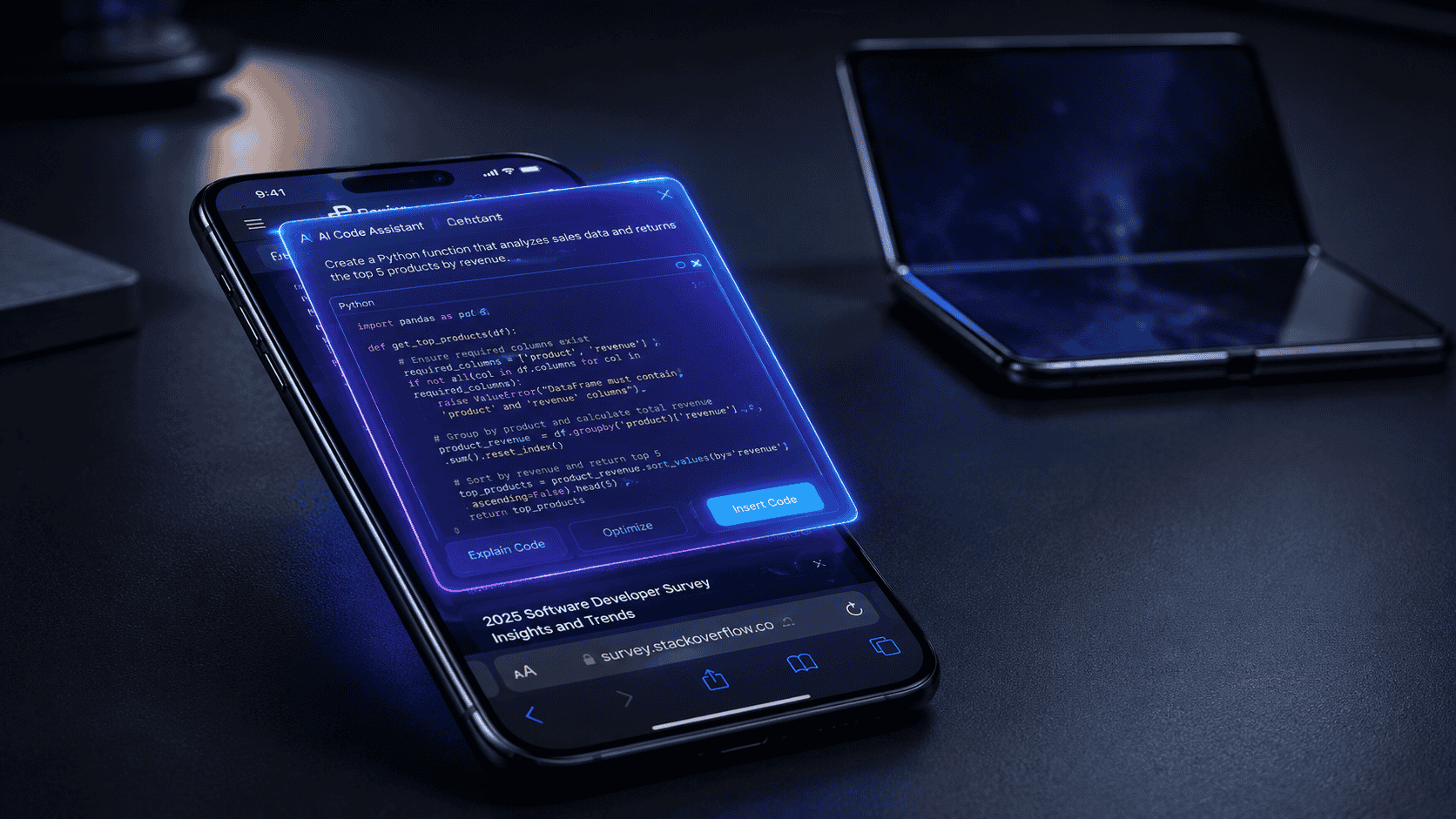
The latest developer preview lets you use AI to build custom browser tools instantly, while buried code confirms a dual-battery foldable iPhone is coming.
By UrduPure Tech Desk | July 21, 2026
The smartphone development ecosystem is shifting from manual coding to rapid AI generation, and Apple is officially leaning into the curve.
Just two weeks after its previous release, Apple seeded the fourth developer betas of iOS 27 and iPadOS 27 today, July 21. While beta updates often focus on under-the-hood stability, this release has fundamentally changed how users interact with their mobile browsers. It also contains buried hardware code that provides the clearest evidence yet of Apple's upcoming hardware roadmap.
For developers who routinely rely on automated tools and generative artificial intelligence platforms to construct scripts and application assets, the newest Safari feature is a massive workflow upgrade.
1. The End of Sketchy Third-Party Add-ons
The highlight of the iOS 27 Beta 4 release is a brand-new Safari feature internally dubbed "Describe an Extension."
Historically, if a user wanted to tweak how a website behaved, block specific annoying elements, or automate a web task, they had to rely on third-party extensions from the App Store. These third-party tools often demand sweeping privacy permissions, granting unknown developers access to a user's entire browsing history.
Apple has solved this by integrating native "vibe coding" directly into the browser.
Powered by the onboard Apple Intelligence engine, users can now open a prompt box in Safari and describe exactly what they want an extension to do using natural language. The OS then safely and instantly generates the required code, compiling a bespoke, sandboxed extension that runs strictly on the user's device.
Whether you need a script to extract analytical data from a web page, reorganize a chaotic user interface, or build a custom dark mode for a specific unoptimized site, you no longer need to hunt for a pre-made app. You just tell Safari what you want, and the AI builds it for you securely.
2. Hardware Leaks: The Dual-Battery Foldable
While the software features are exciting, the actual code within the iOS 27 Beta 4 framework is making even bigger waves.
Tech analysts probing the developer preview discovered hidden references to an entirely unannounced iPhone model architecture. The buried code specifically references a device structure that utilizes two separate, interconnected batteries powering a unified display interface.
This is the smoking gun the industry has been waiting for. It essentially confirms that Apple's long-rumored first foldable iPhone is actively being prepared for OS integration. Dual-battery configurations are the standard engineering solution for foldable clamshell and book-style devices—a design necessity that distributes weight and allows the hinge mechanism to function without severing a single, massive battery cell.
Combined with earlier supply chain rumors suggesting the largest ever iPhone screen is arriving next year, the beta code strongly indicates that Apple is preparing to unveil its foldable contender within the next few months to challenge Samsung's newly leaked Z Fold 8 Ultra.
3. What Else is in Beta 4?
Beyond the headline-grabbing AI tools and hardware leaks, the beta continues to refine the broader ecosystem.
Apple is actively tightening its privacy tools. Following intense media scrutiny regarding vulnerabilities in the "Hide My Email" feature, the beta patch notes indicate a comprehensive backend fix to ensure real email addresses are strictly masked across all iCloud+ routing services.
Additionally, iPadOS 27 is seeing massive improvements to its multi-tasking window management, ensuring that as developers test their app code in live environments, the transition between dual-screen testing and full-screen deployment is smoother than ever.
The Bottom Line The days of downloading bloated, privacy-invasive browser extensions are rapidly coming to an end. By giving users the power to "vibe code" their own safe, sandboxed browser tools, Apple is democratizing web development while leveraging AI to protect user privacy. And with undeniable proof of a foldable iPhone buried in the operating system, the 2026 hardware wars are officially heating up.