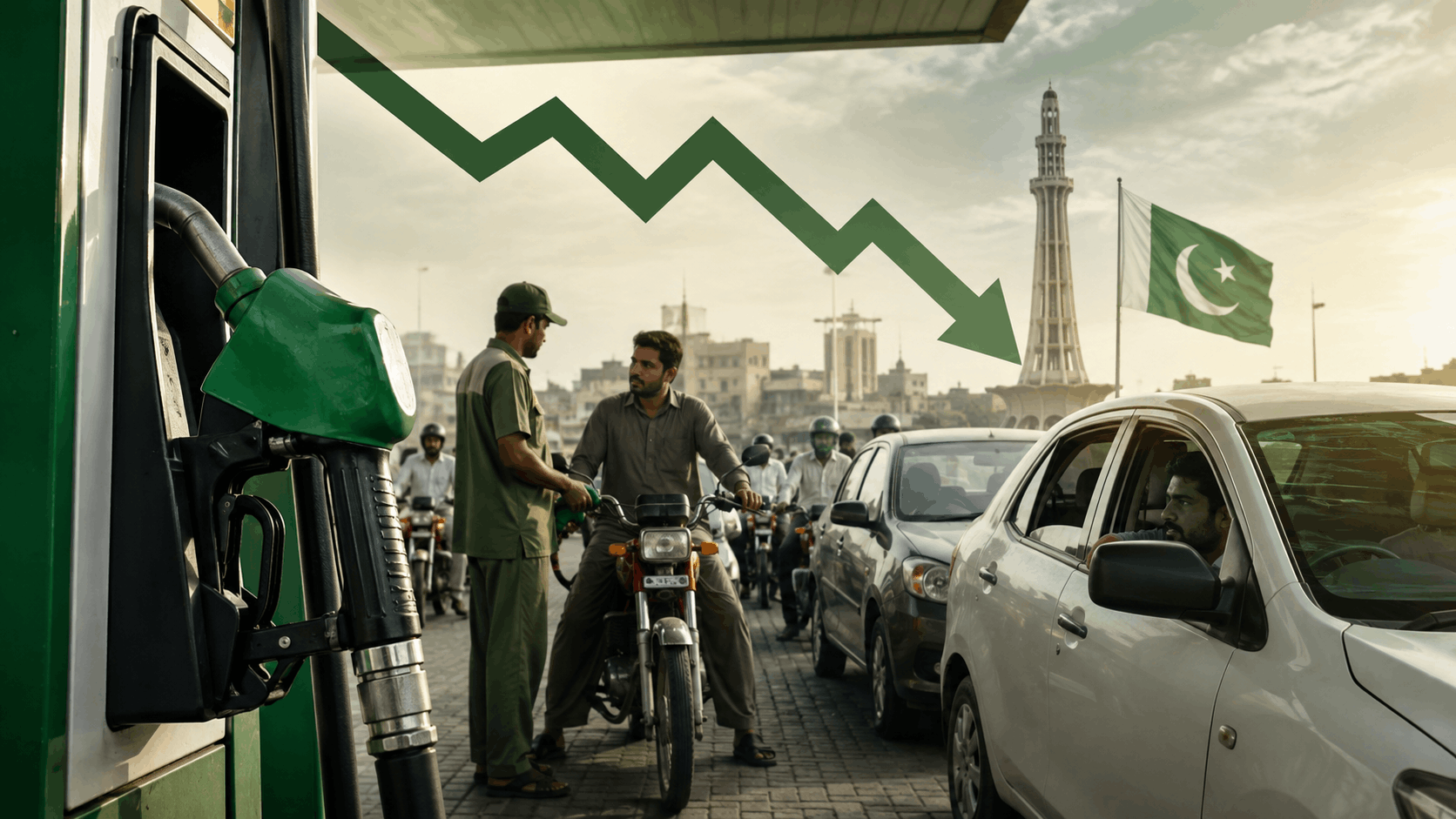
Petrol Price in Pakistan Drops to Rs329.82 Today
Pakistan reduces petrol and diesel prices for August 7
Pakistanis received some relief at fuel stations on Friday as the price of petrol was reduced by Rs3.19 per litre, bringing the new rate down to Rs329.82 per litre.
The price of high-speed diesel was also reduced by Rs1.50 per litre and now stands at Rs382.36 per litre.
The revised ex-depot prices became effective on Friday, August 7, 2026, following the latest calculation under Pakistan’s new daily petroleum pricing mechanism.
For motorists, the reduction means a small but immediate saving. However, the latest adjustment also highlights a major change in Pakistan’s fuel market: petrol and diesel prices can now move up or down far more frequently than under the previous fortnightly system.
New petrol and diesel prices in Pakistan
The latest prices are:
Petrol: Rs329.82 per litre
High-speed diesel: Rs382.36 per litre
Petrol reduction: Rs3.19 per litre
Diesel reduction: Rs1.50 per litre
Effective date: August 7, 2026
Before the latest revision, petrol was selling at Rs333.01 per litre, while high-speed diesel was priced at Rs383.86 per litre.
Petrol price falls after sharp increase a day earlier
The latest reduction comes only one day after petrol became significantly more expensive.
For August 6, the government had increased petrol by Rs4.45 per litre, taking its price from Rs328.56 to Rs333.01. Diesel, however, had been reduced by Rs2, falling from Rs385.86 to Rs383.86 per litre.
The August 7 petrol reduction of Rs3.19 therefore reverses most—but not all—of the previous day’s increase.
Compared with the August 5 price of Rs328.56, petrol remains Rs1.26 per litre more expensive despite today’s relief.
Diesel users have received a larger cumulative reduction. Its price has fallen from Rs385.86 to Rs382.36 over two revisions—a total decrease of Rs3.50 per litre.
This rapid movement demonstrates how quickly fuel prices can now change under the daily pricing system.
How much will motorists save?
The reduction will provide the following approximate savings to petrol users:
10 litres: Rs31.90
20 litres: Rs63.80
40 litres: Rs127.60
50 litres: Rs159.50
A motorcycle rider purchasing five litres of petrol will save about Rs15.95 compared with the previous price.
The reduction is welcome, particularly for commuters who travel daily. However, because petrol had increased by Rs4.45 a day earlier, consumers should view the latest cut as a partial reversal rather than a major long-term decrease.
Why are petrol prices changing daily?
Pakistan recently replaced its traditional fortnightly fuel-price review with a daily petroleum pricing mechanism.
Under the new system, the Oil and Gas Regulatory Authority calculates and publishes petroleum prices based on international market movements and the approved pricing formula.
Petroleum Minister Ali Pervaiz Malik said the system was introduced to increase transparency and allow changes in international prices to be reflected more quickly in Pakistan’s domestic market.
The government has said that the calculation uses the average Platts benchmark price over seven working days. OGRA is also expected to disclose the major components contributing to the final retail price.
This means Pakistani consumers may see frequent increases, decreases or periods of unchanged prices, depending on international fuel benchmarks and other components of the pricing formula.
Does daily pricing benefit consumers?
Daily pricing can benefit consumers when international petroleum prices decline because the reduction may reach the domestic market faster than it did under the fortnightly system.
Under the previous arrangement, consumers could wait up to two weeks before a decline in global prices was reflected locally.
However, the same mechanism also means that an international increase can reach Pakistani fuel stations quickly.
The system therefore offers faster adjustments, but not guaranteed lower prices.
Its success will largely depend on transparency, accurate calculations, regulatory oversight and whether fuel stations consistently implement the officially notified rates.
Will transport and food prices decrease?
The Rs3.19 reduction in petrol provides direct relief to private motorists, motorcyclists, ride-hailing drivers and businesses using petrol-powered vehicles.
The diesel reduction is particularly important because high-speed diesel is widely used in trucks, buses, agricultural machinery and commercial transport.
However, a decrease of Rs1.50 per litre is unlikely, by itself, to produce an immediate reduction in bus fares, freight charges or food prices.
Transporters generally respond more strongly to sustained fuel-price movements than to a single small daily adjustment. A longer period of falling diesel prices would be more likely to influence transportation costs across the economy.
Consumers should check the effective date
Daily fuel revisions also create a new challenge: a petrol-price post shared on social media can become outdated within hours or days.
Consumers should check:
The exact effective date
Whether the rate is petrol or high-speed diesel
The official OGRA notification
The price displayed on the fuel pump
The next scheduled revision
Old screenshots and forwarded WhatsApp messages may no longer represent the current price.
Fuel stations should charge according to the latest officially notified rate. Consumers should request a receipt and report serious overcharging to the relevant authorities.
What could affect the next petrol price?
Future fuel prices may be influenced by several factors:
International petroleum prices
Pakistan imports a significant share of its petroleum requirements. Changes in international petrol and diesel benchmarks can therefore affect domestic prices.
Pakistani rupee exchange rate
Petroleum imports are generally paid for in foreign currency. A weaker rupee can make imported fuel more expensive even when international oil prices remain relatively stable.
Taxes and levies
Petroleum levies, customs duties and other government charges contribute to the final price paid by consumers.
Freight and distribution costs
Transportation, dealer margins and distribution expenses are also included in the pricing structure.
Regional tensions
Conflict or disruption affecting important oil-producing regions and shipping routes can create sudden volatility in international energy markets.
Frequently asked questions
What is the petrol price in Pakistan today?
The petrol price effective August 7, 2026, is Rs329.82 per litre.
What is the diesel price in Pakistan today?
High-speed diesel is priced at Rs382.36 per litre.
How much has petrol been reduced?
Petrol has been reduced by Rs3.19 per litre from its previous price of Rs333.01.
How much has diesel been reduced?
High-speed diesel has been reduced by Rs1.50 per litre, from Rs383.86 to Rs382.36.
Why do fuel prices now change frequently?
Pakistan has introduced a daily petroleum pricing mechanism designed to reflect international market movements more quickly and transparently.
What happens next?
The latest reduction offers some breathing room, but fuel prices remain volatile.
For the public, the more important development is not only today’s Rs3.19 reduction. It is the reality that the amount paid at a petrol pump may now change repeatedly during the same week.
Consumers, transporters and businesses will need to watch each new OGRA update closely—because under the daily pricing mechanism, today’s relief does not guarantee tomorrow’s rate.
Petrol Price Pakistan, Petrol Price Today, Diesel Price Pakistan, OGRA, Fuel Prices, Pakistan Economy, Daily Petrol Prices, August 7 2026