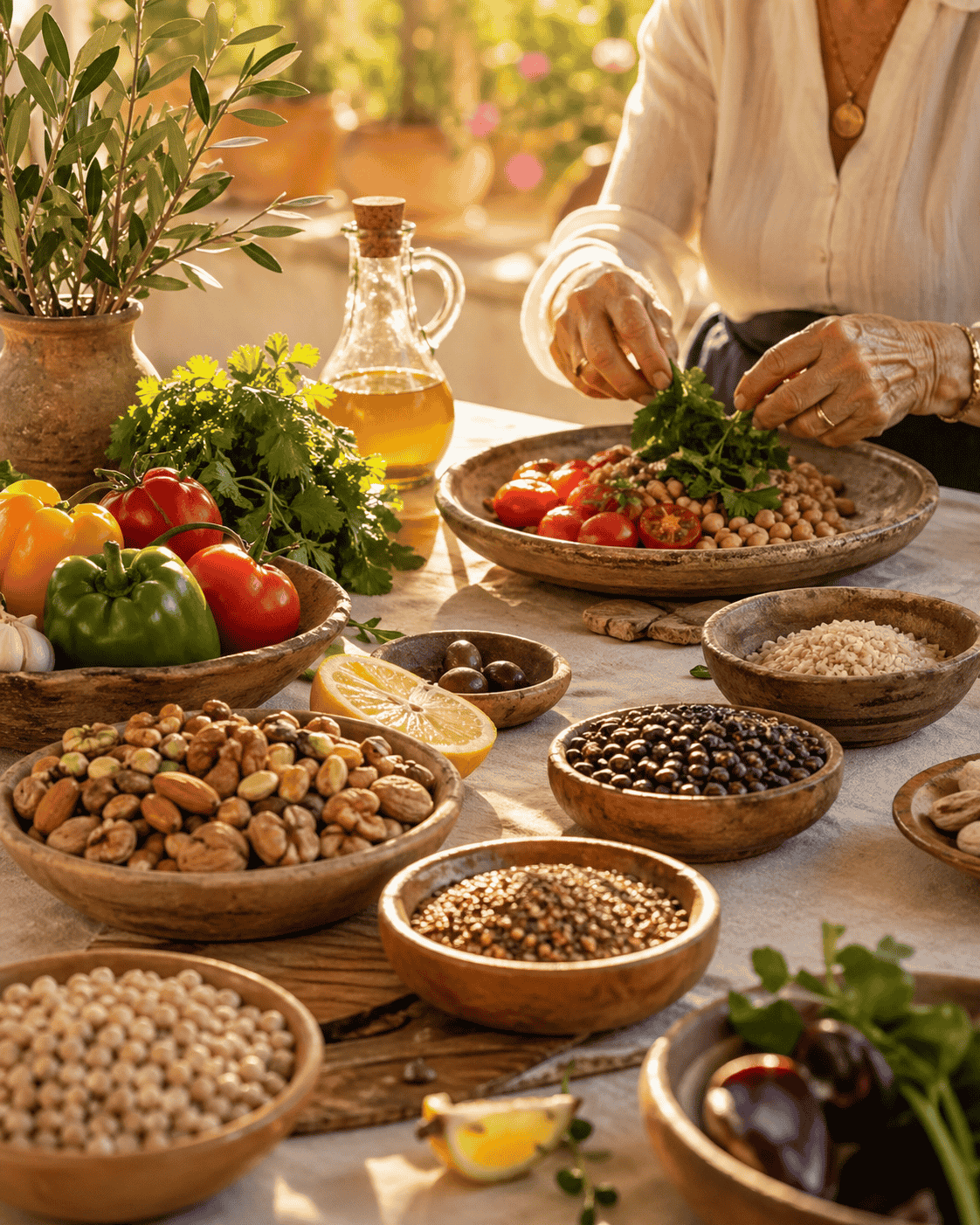
The 4 Foods Longevity Experts Eat Every Day — And the 4 They Always Avoid
The world's longest-living people don't follow fad diets or take exotic supplements. Their secret? A short list of foods eaten consistently, day after day.
Researchers who have spent decades studying the world's longest-lived populations — groups found in places like Sardinia, Okinawa, Loma Linda, and the Greek island of Ikaria — have uncovered a surprisingly consistent pattern. These communities, collectively known as Blue Zones, don't share the same culture, language, or geography. But they do share a plate.
Blue Zones founder Dan Buettner, alongside a team of longevity researchers, scientists, journalists, and public health experts, found that centenarians tend to ignore wellness trends entirely. Instead, they return again and again to the same handful of nourishing, whole foods — foods that have quietly sustained human health for centuries.
Here's what they eat — and what they largely don't.
The 4 Foods Longevity Experts Eat Daily
1. Whole Grains
Whole grains are the quiet foundation of every Blue Zone diet. Whether it's a bowl of steel-cut oats at breakfast in Loma Linda, barley soup in Sardinia, or brown rice in Okinawa, these complex carbohydrates show up at nearly every meal.
Foods like oats, brown rice, barley, farro, and true whole-grain bread do far more than just fill you up. They deliver steady, sustained energy without the blood sugar spikes that come from refined carbs, while also supplying dietary fiber that supports digestion, heart health, and metabolic balance. The key word here is whole — minimally processed, close to the way nature made them.
2. Nuts
Don't underestimate the humble handful of nuts. In Blue Zone communities, nuts appear as a daily snack or meal addition — just a small portion, but eaten with striking consistency.
A single serving of almonds, walnuts, pistachios, or peanuts delivers a powerful combination of healthy unsaturated fats, plant-based protein, vitamins, and minerals. Research has shown that eating at least five servings of nuts per week may reduce the risk of heart disease by up to 17% and lower the overall risk of early death by as much as 34%. The key is moderation — a small handful is the sweet spot.
3. Beans
If there's one single food that longevity researchers point to above all others, it's beans.
Across every Blue Zone, in every culture, lentils, chickpeas, black beans, and other legumes appear on the table — roughly one cup per day. It's not hard to see why. Beans are extraordinarily rich in fiber, complex carbohydrates, plant protein, iron, and B vitamins, all while being inexpensive and incredibly versatile. Studies have consistently linked regular legume consumption to lower rates of heart disease, diabetes, and several cancers.
Beans aren't a side dish in Blue Zones — they're often the main event.
4. Fruits & Vegetables
Rounding out the Blue Zone plate is a generous, colorful abundance of fruits and vegetables — five to ten servings per day, according to longevity experts. These aren't garnishes; they're the backbone of every meal.
Leafy greens — spinach, kale, Swiss chard, wild greens — are particularly prized for their dense concentrations of vitamins, minerals, and antioxidants. Vegetables form the bulk of most Blue Zone meals, while fruit serves as nature's dessert: sweet, satisfying, and rich in fiber and phytonutrients that fight cellular aging.
The 4 Foods Longevity Experts Avoid
Just as telling as what Blue Zone residents eat is what they don't eat. Four categories of food are conspicuously absent from the tables of the world's longest-lived people:
Sugar-sweetened beverages — sodas, sweetened juices, and energy drinks — contribute enormous amounts of added sugar with zero nutritional benefit, fueling inflammation and metabolic disruption.
Salty packaged snacks and processed sweets — chips, cookies, crackers, and shelf-stable desserts — are calorie-dense, engineered to override the body's natural satiety signals, and strongly linked to systemic inflammation.
Processed meats — bacon, sausage, hot dogs, and deli meats — represent one of the most studied dietary risks. Research consistently connects regular consumption to higher rates of heart disease, colon cancer, and shortened lifespan.
The "Permission with Parameters" Rule
Bob Wright, Director of Lifestyle Education at Hilton Head Health Wellness Resort and Spa, cautions against turning these guidelines into rigid, joyless rules.
"It's the things we eat the most that have the biggest impact on our health," Wright explains. "As unhealthy as a sweetened beverage might be, it can't hurt me if I only have one once in a while."
His approach: give yourself permission with parameters. Set natural, context-based limits that reduce frequency without creating deprivation. Wright, for example, allows himself a BLT — but only at a deli, which he rarely visits. He enjoys a hot dog — but only at a Major League Baseball game, which he attends just a handful of times a year.
The result? No guilt. No white-knuckling. Just a smart, sustainable framework.
The Bottom Line
The Blue Zones approach to eating isn't a diet — it's a lifestyle built on smart repetition, not perfection. By anchoring your daily meals around whole grains, nuts, beans, and produce; limiting how often ultra-processed foods appear on your plate; and granting yourself well-defined, guilt-free indulgences, you build a way of eating that you can actually sustain for life.
The centenarians of Sardinia, Okinawa, and Ikaria didn't discover a secret. They just kept showing up to the same simple, nourishing table — day after day, decade after decade.
That's the real longevity strategy.
Sources: Blue Zones research by Dan Buettner; expert commentary from Bob Wright, Director of Lifestyle Education, Hilton Head Health Wellness Resort and Spa.