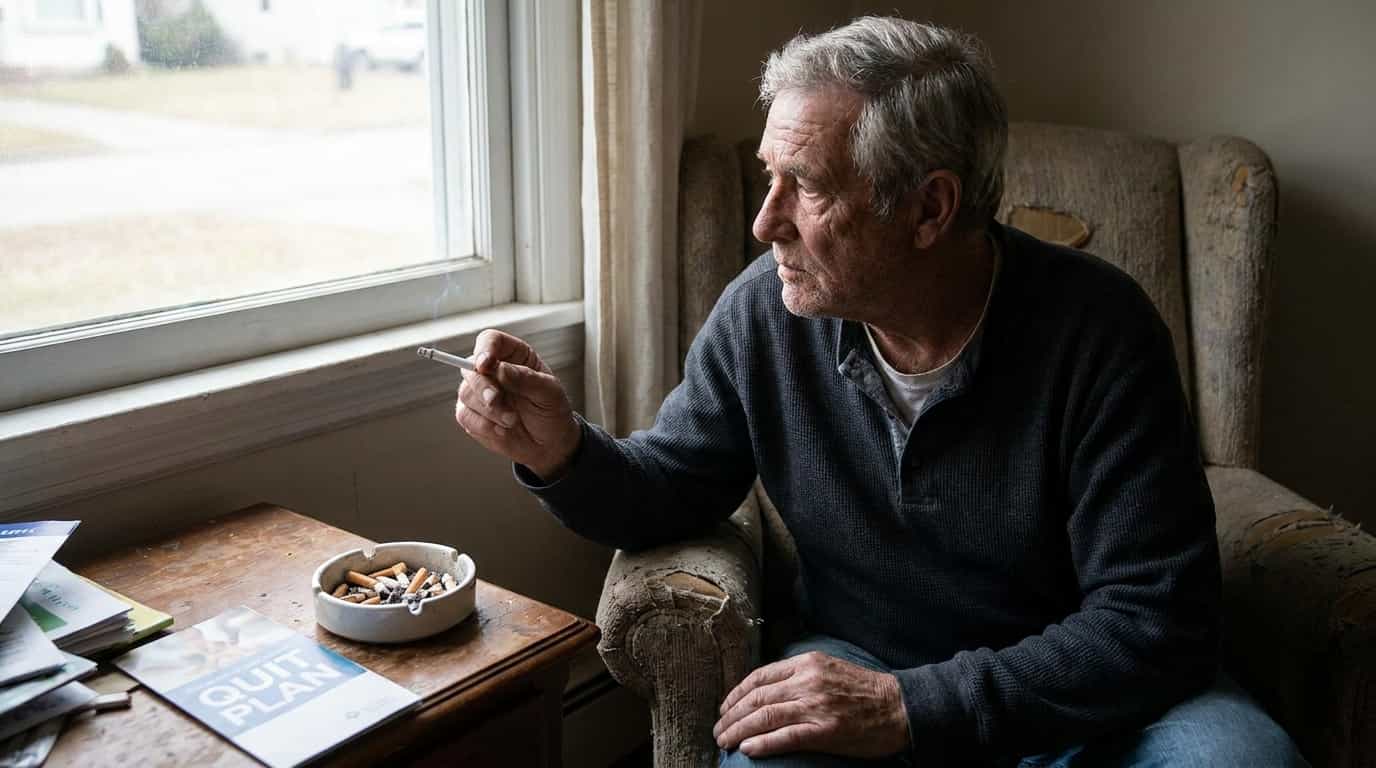
Can Your Body Really Recover After 30 Years of Smoking? Here's What Doctors Say
My uncle smoked for 34 years. Started at 17, stubbed out his last cigarette at 51. When he told his doctor he was quitting, the first thing out of his mouth was: "Is it even worth it at this point? Haven't I already done the damage?"
His doctor looked at him and said something he repeated to our whole family: "Your body has been waiting for this. It'll start the moment you stop."
That answer surprised him. It surprises most people. Because the assumption — the one millions of long-term smokers carry around quietly — is that after a certain number of years, the damage is done and quitting is more symbolic than medical.
That assumption is wrong. Provably, measurably wrong.
Here's what actually happens.
Does It Actually Matter How Long You've Smoked?
Yes. Of course it does. Three decades of smoking does real, lasting damage — to your lungs, your heart, your blood vessels, your cells. Nobody's pretending otherwise.
But "lasting" doesn't mean "permanent." And it definitely doesn't mean "irreversible."
The human body has a recovery capacity that is genuinely remarkable. Some of it kicks in within minutes of your last cigarette. Some of it takes years. But almost all of it starts moving in the right direction the moment you stop giving it new damage to deal with.
What Happens in the First 24 Hours After You Quit?
This part always shocks people.
Within 20 minutes of your last cigarette, your blood pressure begins to drop and your heart rate starts normalizing. Your circulation is already improving. Within 8 hours, carbon monoxide levels in your blood — the same gas that comes out of a car exhaust — drop by half.
By the 24-hour mark, your risk of a heart attack has already started to fall. Not months later. Not after you've proven your commitment. Twenty-four hours.
Your body doesn't wait to see if you're serious. It just starts.
What About the Lungs — Can They Actually Repair?
This is the big one. The question everyone asks, usually with a kind of braced resignation, like they're expecting bad news.
The answer is more nuanced than a flat yes or no, but it's largely good.
The cilia — tiny hair-like structures lining your airways whose job is to sweep out mucus and debris — begin recovering within weeks. They've been paralyzed and damaged by smoke. When the smoke stops, they start coming back. This is why many people cough more in the first few weeks after quitting. That's not your lungs getting worse. That's them cleaning house.
Lung capacity improves measurably within a few months for most people. The inflammation that's been sitting in your airways for decades begins to reduce. Breathing gets easier in ways that are genuinely noticeable — not just on a chart.
Now — severe emphysema, significant structural damage, scarring from COPD — these don't reverse. The architecture of the lung, once significantly altered, stays altered. But even people with existing lung disease breathe better after quitting, because the ongoing damage stops and inflammation reduces.
Less damage on top of damage is still an enormous win.

What Does Quitting Do for Your Heart After Decades of Smoking?
Smoking is relentlessly hard on your cardiovascular system. It narrows blood vessels, accelerates plaque buildup, raises blood pressure, and makes your blood more likely to clot. Thirty years of that adds up.
But here's what the research consistently shows: within one to two years of quitting, your risk of heart attack drops to roughly half what it was as a smoker. Within five years, your stroke risk approaches that of someone who never smoked.
Five years. That's not a metaphor or a motivational poster line. That's what the data shows.
According to the American Heart Association, the cardiovascular benefits of quitting begin almost immediately and continue compounding for years — regardless of how long you smoked before stopping.
Will Your Cancer Risk Actually Go Down?
This one matters enormously and deserves a straight answer.
Yes. Your cancer risk decreases after quitting — including lung cancer risk. Not to zero. Not immediately. But meaningfully, and progressively.
After ten years of not smoking, your lung cancer risk is roughly half what it is for someone who continues to smoke. Your risk of mouth, throat, esophageal, and bladder cancers also drops significantly. The cells that were on a slow march toward abnormality get a chance to stabilize when the chronic chemical assault stops.
Quitting doesn't undo what's already happened at a cellular level. But it stops the accumulation. And stopping the accumulation changes the trajectory.
What About Skin, Energy, and Everything Else?
Honestly, this is where a lot of long-term quitters are caught off guard by how good they feel, faster than expected.
Skin starts looking better within weeks — better circulation means more oxygen and nutrients reaching your face. The grey, dull complexion that smokers often develop gradually starts to lift.
Energy levels improve as your body stops spending resources managing constant low-level inflammation and carbon monoxide exposure. Taste and smell return, sometimes dramatically. People who smoked for 30 years report being genuinely surprised by how food tastes when they can actually smell it again.
Sleep quality improves. Resting heart rate comes down. Morning coughing — the brutal, hacking cough that long-term smokers know well — often reduces significantly within a few months.
So Is It Worth It After Three Decades?
Ask my uncle. He's 61 now, ten years out from his last cigarette. He runs a 5K every Saturday morning. He told me last year that the first time he did it without stopping, he stood at the finish line and cried — not because he was emotional about running, but because he couldn't believe his lungs let him.
His doctor was right. His body had been waiting.
Yours is too.
If you're thinking about quitting and wondering if you've left it too late — you haven't. The best time to quit was twenty years ago. The second-best time is today. That is not a motivational cliché. It is, quite literally, how the biology works.
👉 Also read: From Couch to 5K in 30 Days: The Complete Beginner's Running Plan for 2026