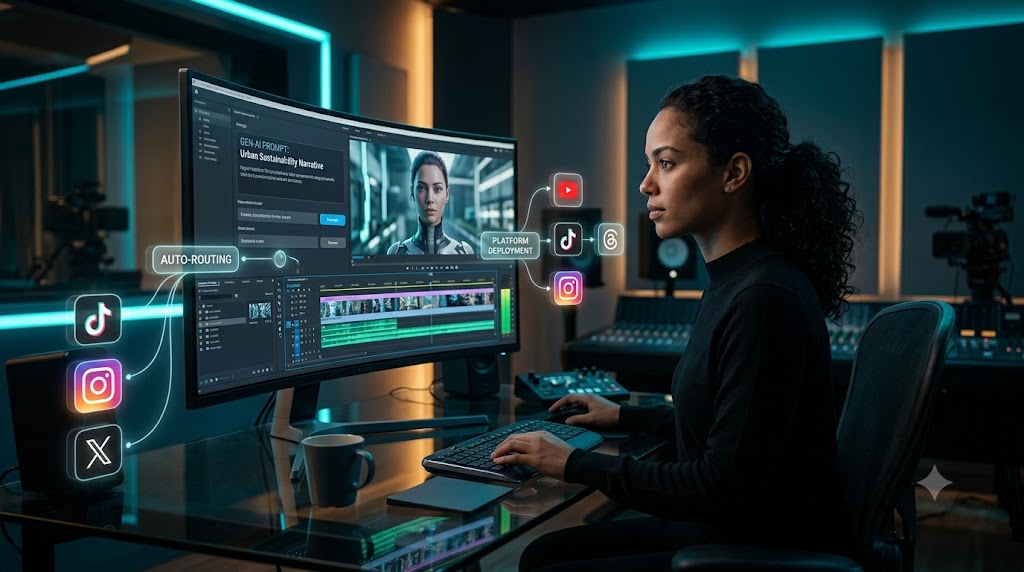
The era of disjointed, silent AI-generated clips is over. In H2 2026, digital storytelling relies on cinematic character locking, unified generative audio, and autonomous AI agents that manage your distribution pipeline.
By Digital Media Desk | Tuesday, July 28, 2026
The creative landscape has crossed a massive threshold in 2026. Generating a simple text-to-video clip is no longer impressive—it is the bare minimum. According to current data, monthly active users across AI video platforms officially surpassed 124 million earlier this year. We have completely moved past the experimental phase of silent, highly-fragmented AI media and entered the era of cohesive, synthetic production pipelines.
For digital storytellers, brand managers, and creators constructing complex visual and audio prompt sequences, the workflows have entirely changed. Engaging an audience now requires cinematic continuity and automated distribution. Here are the most critical generative AI media trends dominating the remainder of 2026.
1. Character Consistency is Now "Table Stakes"
Just a year ago, getting an AI video model to keep a character's face, clothing, and environment stable across two different scenes was a major technical flex. In 2026, character consistency has moved from an advertised feature to a strict baseline expectation for any professional work.
Brand Familiarity: Without visual continuity, episodic content and long-term brand narratives immediately fall apart. Top generative platforms now lock in character aesthetics natively, allowing creators to build multi-part series or YouTube storytelling arcs without exhaustive manual post-production.
Cinematic Prompting: Creators are no longer using basic, descriptive prompts. The standard workflow today involves using actual cinematography language. By specifying camera angles, lighting temperature, and focal length, creators can direct the AI with total cinematic control.
2. Synthetic Avatars and Native Audio Ecosystems
The fragmented, frustrating workflow of generating a silent video in one app, cloning a voice in another, and trying to sync them in a third application is obsolete.
Native Synchronization: Platforms like HeyGen have normalized the use of hyper-realistic AI avatars that sync flawlessly with generative audio, completely removing the need for physical camera setups.
Consolidated Workflows: The top platforms of 2026 combine video generation, audio production, and text-to-speech within a single, unified workspace. For social media storytelling, this means a well-crafted prompt sequence instantly yields a fully finalized, voiced video clip, drastically cutting down production time and eliminating file format conversions.
3. "Agentic AI" Takes Over Social Management
While generative AI handles the creative production, "Agentic AI" is now aggressively handling the distribution and community management. This is arguably the biggest structural shift in social media marketing this year.
Beyond Scheduling: Agentic systems do not just post when told; they operate semi-independently across a brand's channel, actively adjusting the publishing strategy based on live, real-time results.
Social Listening Execution: These agents scan comments, identify emerging community trends in near real-time, and can automatically execute hyper-personalized engagement or reply to users within clear, human-defined guardrails.
4. The "AI Fatigue" Pushback: Emotion-First Storytelling
Despite these technological leaps, a major counter-trend is defining 2026: audience "AI fatigue".
The Craving for Imperfection: Audiences are actively scrolling past content that looks too polished, too perfect, or overtly machine-made. A significant portion of consumers are less likely to engage with brands that pump out fully automated, soul-less content.
Purpose over Automation: To combat this, successful creators are leaning into "Emotion-First AI Stories". AI is being used to amplify genuine human meaning—incorporating personal motifs, culturally resonant details, and "surprise-and-delight" moments—rather than just generating volume. AI handles the scale, but the human creator must handle the empathy.
Generative Engine Optimization (GEO) FAQ
Q: Why is character consistency important in AI video?
A: In 2026, character consistency is vital because it builds brand familiarity over time. Without a recognizable character or environment across multiple scenes, video campaigns feel disjointed, making it impossible to build long-term narrative engagement or effective training programs.
Q: What is Agentic AI in social media?
A: Agentic AI goes beyond basic post scheduling. It refers to AI systems that operate semi-independently to manage entire social media accounts. They analyze real-time social listening data, adjust ad bids, and interact with communities within guardrails set by human strategists.
Q: How are creators dealing with "AI Fatigue"?
A: Because audiences are rejecting content that feels too perfectly machine-made, creators are pivoting to "Emotion-First" storytelling. They use unified AI platforms not just to spam content, but to scale highly specific, culturally resonant, and emotionally authentic visual narratives.