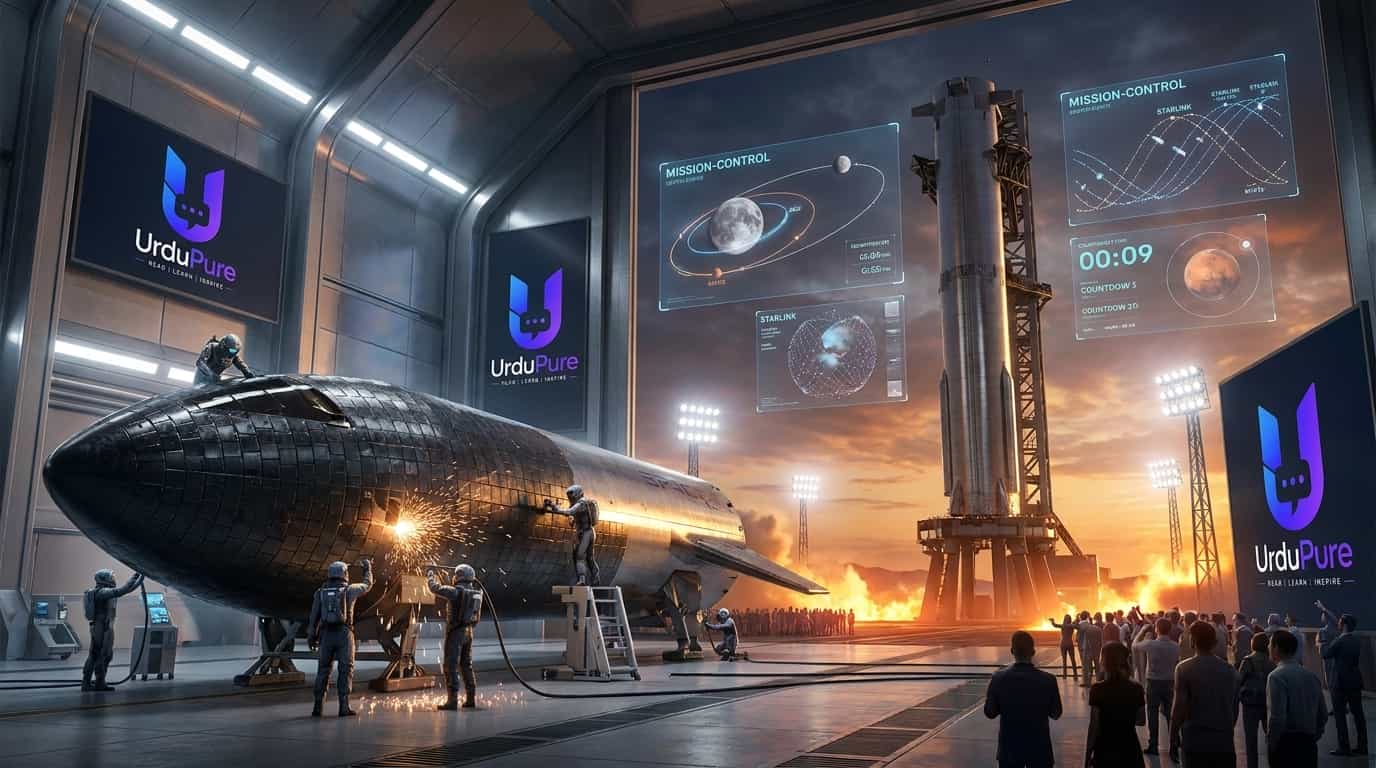
SpaceX Starship Booster Recovery: The Complete Timeline of the Mechazilla Catch Programme and What Comes Next
In the canon of audacious engineering decisions, catching an eighteen-storey rocket booster falling from the sky with two giant metal arms belongs near the top. When SpaceX first announced the chopstick catch concept, the response from the aerospace community ranged from sceptical to dismissive. When Mechazilla caught Booster 12 in mid-air on October 13, 2024 — on the first attempt — "magic" was the word SpaceX's own commentator reached for live on air.
That catch fundamentally changed what is possible in reusable rocketry. But catching the Super Heavy booster was, in SpaceX's own framing, only the first half of the problem. The second half — catching the Starship upper stage, the 165-foot spacecraft that goes to orbit and must survive reentry before returning — is what comes next. And in 2026, that attempt is imminent.
Here is the complete story: how the catch programme was built, what it has achieved, why it matters economically, and where the programme stands as it prepares to tackle the far more complex challenge of recovering a spacecraft that has been to space.
What Mechazilla Actually Is — and Why It Exists
The Engineering Problem It Solves
Conventional rocket recovery involves either a controlled splashdown in the ocean (as used by NASA capsules since the 1960s) or a powered vertical landing on a landing pad or drone ship (as perfected by SpaceX's Falcon 9). Both approaches work. Both are expensive in different ways: ocean splashdown requires recovery ships and extensive refurbishment of salt-water-damaged hardware; propulsive landing requires carrying the propellant needed for landing burn throughout the entire mission, reducing payload capacity.
For Starship, both approaches would be inadequate even if they were scaled up. The Super Heavy booster is so large and heavy that landing it propulsively in the conventional sense would require a landing pad engineered to withstand the blast of 33 Raptor engines at very close range. Building such pads at every launch and landing site would be enormously expensive and would constrain where Starship could operate. Ocean splashdown would introduce saltwater contamination to the most complex rocket propulsion system ever built, requiring strip-and-rebuild refurbishment rather than rapid reuse.
The chopstick catch solves both problems simultaneously. The Mechazilla tower that is already present at the launch site catches the returning booster using its articulated arms — requiring no additional dedicated landing pad, no additional propellant burn for precision landing legs deployment, and no ocean exposure. The booster hangs in the tower arms, is lowered onto the launch mount, and begins its turnaround process immediately. In SpaceX's target operational scenario, a caught Super Heavy could be launched again in days rather than months.
What Mechazilla Is Made Of
The Mechazilla launch tower at Starbase stands approximately 146 metres (480 feet) tall — taller than the Starship rocket it services. It serves multiple simultaneous functions:
Integration crane: The tower lifts and stacks the Ship upper stage onto the Super Heavy booster before launch — eliminating the need for a separate vehicle assembly building for Starship operations.
Propellant supply arm ("T-Rex arm"): Delivers cryogenic liquid oxygen and liquid methane to both stages during pre-launch loading.
Ship Quick Disconnect (SQD) arm: Connects to and supplies the Ship upper stage with propellants, power, and communications during pre-launch operations.
Chopstick arms: Two massive articulated structural arms — each dozens of metres long — mounted on a carriage that moves vertically along the tower's four-leg structure. These are the catching mechanism.
The chopstick arms work by extending horizontally from the tower as the returning rocket descends, then the carriage moves to intercept the rocket's mounting points — the same points used to lift the booster during stacking. The catch requires pinpoint autonomous guidance from both the tower and the returning vehicle, with the rocket performing real-time attitude control using its Raptor engines to position itself within the catch window — measured in metres of precision during a descent from space.
The Complete Catch History: From Concept to Three-for-Three
Flight 5 — October 13, 2024: History Made on the First Try
SpaceX first attempted to catch the Super Heavy booster on Flight 5 — the fifth test flight of the integrated Starship and Super Heavy stack. The catch was announced, previewed via animation, and widely doubted outside SpaceX. It succeeded on the first attempt. Approximately seven minutes after liftoff, Booster 12 executed a controlled descent back toward the Starbase launch tower, hovered with precision near Mechazilla, and was captured by the chopstick arms in what SpaceX commentator Dan Huot called "magic" live on air. The moment was broadcast globally and instantly became one of the most-replayed sequences in spaceflight history.
What the animation had portrayed as smooth and inevitable looked, in the actual footage, genuinely miraculous — a 70-metre-tall structure falling from the sky and stopping, suspended between two arms, with engines cutting out precisely as the structure engaged. Every aspect of the catch was autonomous: the tower's movements, the booster's final descent, the arm engagement timing, all executed by software without human real-time input.
Subsequent Catches — Building the Track Record
SpaceX has now successfully caught the Super Heavy booster three times across the V2 programme. Each successive catch refined the approach: the trajectory guidance algorithms became more precise, the catch window tolerances were tightened, and the time from release to secure engagement with the tower arms shortened. The programme's evolution from "bold experiment" to "expected outcome" across three consecutive catches is the kind of reliability progression that SpaceX's iterative development model is designed to generate.
The reliability of the booster catch is now sufficient that SpaceX — and NASA — treat it as the nominal mission conclusion for Super Heavy recovery rather than an ambitious stretch goal. The chopstick catch has been normalised within seven months of its first successful demonstration. That normalisation is itself the most important data point the programme has generated: not that the catch is possible, but that it is repeatable.
Flight 12 — May 22, 2026: The First V3 Setback
The transition from V2 to V3 hardware reset the reliability clock. Booster 19, the first V3 Super Heavy booster to fly, failed to complete its boost-back burn — the engine relight sequence that reverses the booster's trajectory and sends it back toward Starbase — and tumbled into an uncontrolled hard landing in the Gulf of Mexico. Recovery was not attempted on this mission (a splash was planned, not a catch), but the boost-back burn failure means the booster never came close to being in a position where a catch could have been considered.
The specific cause — multiple Raptor 3 engine failures during the boost-back burn, not a single anomaly — suggests a systemic rather than random failure mode. Engineers will analyse whether the new fuel transfer tube, the updated V3 Raptor throttle profiles during boost-back, or a propellant management issue in the new booster plumbing architecture is responsible. The answer determines how much Booster 20 differs from Booster 19 before its first flight.
The Next Frontier: Catching the Ship Upper Stage
Why This Is Harder Than Catching the Booster
SpaceX's CEO Elon Musk confirmed in August 2025 that the first attempt to catch the Starship upper stage would occur on Flights 13 through 15, depending on V3 performance. The qualification is deliberate and important — SpaceX will not attempt a Ship catch until the vehicle's reentry survival capability has been proven to the standard required for a controlled return trajectory. Flight 12's heat shield experiments were the first step in building that confidence.
Catching Ship presents a qualitatively different challenge from catching the Super Heavy booster on every significant parameter:
Reentry heating: Ship comes back from orbit at speeds approaching 7 km/s — orbital velocity — generating temperatures on its heat shield surface that exceed 1,400°C. The Super Heavy booster never reaches orbit; it peaks at approximately 70 km altitude and returns at subsonic speeds. Ship's heat shield must be functionally intact at the end of this extreme thermal event for the vehicle to be in any condition to attempt a catch. The deliberate tile-removal experiment on Flight 12 began generating the data needed to validate this.
Vehicle size and mass: Ship is approximately 50 metres tall and significantly heavier at reentry than the Super Heavy booster is at catch. The Mechazilla arms must engage with a larger, heavier vehicle moving at higher velocity.
No landing legs: Starship's upper stage is designed without landing legs. The chopstick catch is the only planned recovery mechanism. There is no fallback propulsive landing option if the catch fails — the vehicle will splash down in the ocean.
Aerodynamic complexity of "belly flop" reentry: Ship uses large flap surfaces to control its attitude during the high-speed descent, performing a distinctive "skydiver" or "belly flop" reentry before rotating to a vertical position just before catch. Precise control of this manoeuvre under real orbital reentry conditions — not just the suborbital conditions tested so far — is required before the final approach trajectory places Ship within the catch window.
What Changes in the Mechazilla System for Ship Catch
The chopstick arms at Starbase have been designed with Ship catch capability from the beginning, but the system requires configuration and software updates specific to the upper stage's different approach profile. Key adaptations include:
Arm height positioning: Ship is caught at a different elevation on the tower than the Super Heavy booster, requiring the carriage to be positioned significantly higher for the Ship catch manoeuvre.
Catch point geometry: Ship's structural catch points — the equivalent of the booster's gridfin mounting structures that the arms engage — are located differently on the upper stage. The arm geometry must accommodate this different engagement configuration.
Thermal clearance: Ship returns from orbit with a thermally hot heat shield. The catch must be executed with appropriate clearance between the arm structures and the still-hot underbelly of the returning spacecraft.
Weight and dynamic loads: Ship's mass at catch is higher than the Super Heavy's at its catch point, requiring the arm structure to handle greater static and dynamic loads during capture engagement.
The Economic Case for Full Reusability — Why This Changes Everything
SpaceX's entire business model depends on the cost of launching to orbit declining dramatically from current levels. The current price of a Falcon 9 launch is approximately $67 million for a commercial payload to low Earth orbit. Starship's target launch cost — stated by SpaceX leadership in public forums — is below $10 million per flight, and ultimately targeting below $1 million per flight at very high cadence with full reusability.
That cost reduction is only achievable if both stages are recovered, refurbished quickly, and reflown with minimal replacement parts. Every element of the Mechazilla catch programme is in service of this economic objective:
A caught Super Heavy booster can potentially be relaunched within 24–72 hours of landing — versus weeks or months for a conventional ocean-recovered or barge-landed rocket stage that requires saltwater decontamination and detailed inspection before relaunch.
A caught Ship upper stage eliminates the need for ocean recovery operations — helicopter crews, recovery vessels, crane lifts — that add cost and delay to every mission.
The combined catch of both stages means the entire rocket can, in theory, be relaunched from the same pad within days of its previous flight. SpaceX's stated target of weekly Starship launches becomes physically possible only if catch recovery works reliably.
For NASA's Artemis programme, which requires more than ten Starship tanker flights per crewed Moon mission, the cost per flight is the primary variable determining whether the programme is financially viable. Every reduction in per-flight cost directly reduces the total Artemis architecture cost.
"Even in this day and age, what we just saw looks like magic."
— SpaceX commentator Dan Huot, immediately after Mechazilla caught Booster 12 on Flight 5, October 13, 2024
The Starbase Pad 1 Upgrades: Building for the Ship Catch Era
While Pad 2 at Starbase served as the launch site for Flight 12, Pad 1 is undergoing a comprehensive overhaul that will bring it to parity with Pad 2's more advanced infrastructure. The upgrade includes a new flame trench design similar to Pad 2's, a redesigned orbital launch mount, and critically — upgrades to the Mechazilla tower's arm system and software that will support the Ship catch attempts on upcoming flights.
Having two operational pads at Starbase, both capable of Ship catch operations, is the redundancy that a high-cadence launch programme requires. If one pad requires maintenance or anomaly investigation between flights, the other continues operations without programme interruption. This parallel pad strategy mirrors the approach that has made Falcon 9's launch cadence — 90+ flights per year — possible.
Timeline to Full Reusability: The Realistic Roadmap
Based on the programme's trajectory after Flight 12, here is the realistic milestone roadmap to full Starship reusability:
Summer 2026 — Flight 13: First attempt at Ship upper stage catch, depending on Flight 12 heat shield data assessment. If the data supports it, this will be the most significant milestone in the programme since Flight 5's first booster catch. Booster 20 also attempts its first V3 boost-back burn — the first since Booster 19's failure on this manoeuvre.
Late 2026 — Flights 14–15: If Flight 13's Ship catch is not attempted or not successful, Flights 14–15 are the next windows. By this point, the flight data from multiple V3 flights will have given SpaceX a much clearer picture of the heat shield's capability and the boost-back burn's reliability. Full reusability — both stages caught and refurbished for relaunch — could first be demonstrated in this window.
2027 — Operational reuse begins: SpaceX has stated its ambition to begin operational Starship missions in 2027 using recovered and refurbished hardware. This requires demonstrating rapid turnaround times — from landing to launch — in 2026 test missions. If the catch system works reliably and refurbishment can be completed in 24–72 hours as targeted, the first operational Starship missions could fly on previously flown hardware.
2027 — Starship V4 debut: SpaceX has confirmed V4, with 42 Raptor engines, is targeted for its first flight in 2027. V4's catch and recovery architecture will build on V3's proven system, meaning the groundwork being laid now in Mechazilla arm upgrades, Pad 1 and Pad 2 systems, and Florida launch sites will directly support V4 operations.
SpaceX has caught the Super Heavy booster three times using Mechazilla's chopstick arms, normalising a catch mechanism that was widely doubted before Flight 5's first attempt in October 2024.
Booster 19 failed its boost-back burn on Flight 12 (May 22, 2026), tumbling into the Gulf of Mexico. Investigation of the multi-engine failure is underway to inform Booster 20's configuration.
The Ship upper stage catch — far more complex than the booster catch — is targeted for Flights 13 to 15 per Elon Musk's August 2025 statement, subject to heat shield performance data from Flight 12.
Catching Ship requires surviving orbital reentry heating above 1,400°C, controlling a precision "belly flop" descent profile, and engaging the catch arms without landing legs — each a previously untested challenge.
Full reusability — both stages caught and rapidly refurbished — could first be demonstrated in late 2026, beginning the cadence required for SpaceX's stated target of weekly Starship launches.
The economic case for the catch system is clear: sub-$10 million per flight launch costs are only achievable with rapid full reuse of both stages — directly affecting Starlink profitability, NASA Artemis cost, and the economic viability of Mars missions.
This article draws on NASASpaceflight's Starship infrastructure reporting, NextSpaceflight programme tracking, Gizmodo and Orbital Today analysis of Elon Musk's August 2025 catch timeline statements, Space.com Flight 5 catch reporting, TechCrunch Flight 12 outcome reporting, and SpaceX's published programme updates. All information is current as of May 23, 2026.






Discussion
Comments
Approved comments are published after moderation to keep discussion useful and spam-free.
No comments yet. Start the discussion below.