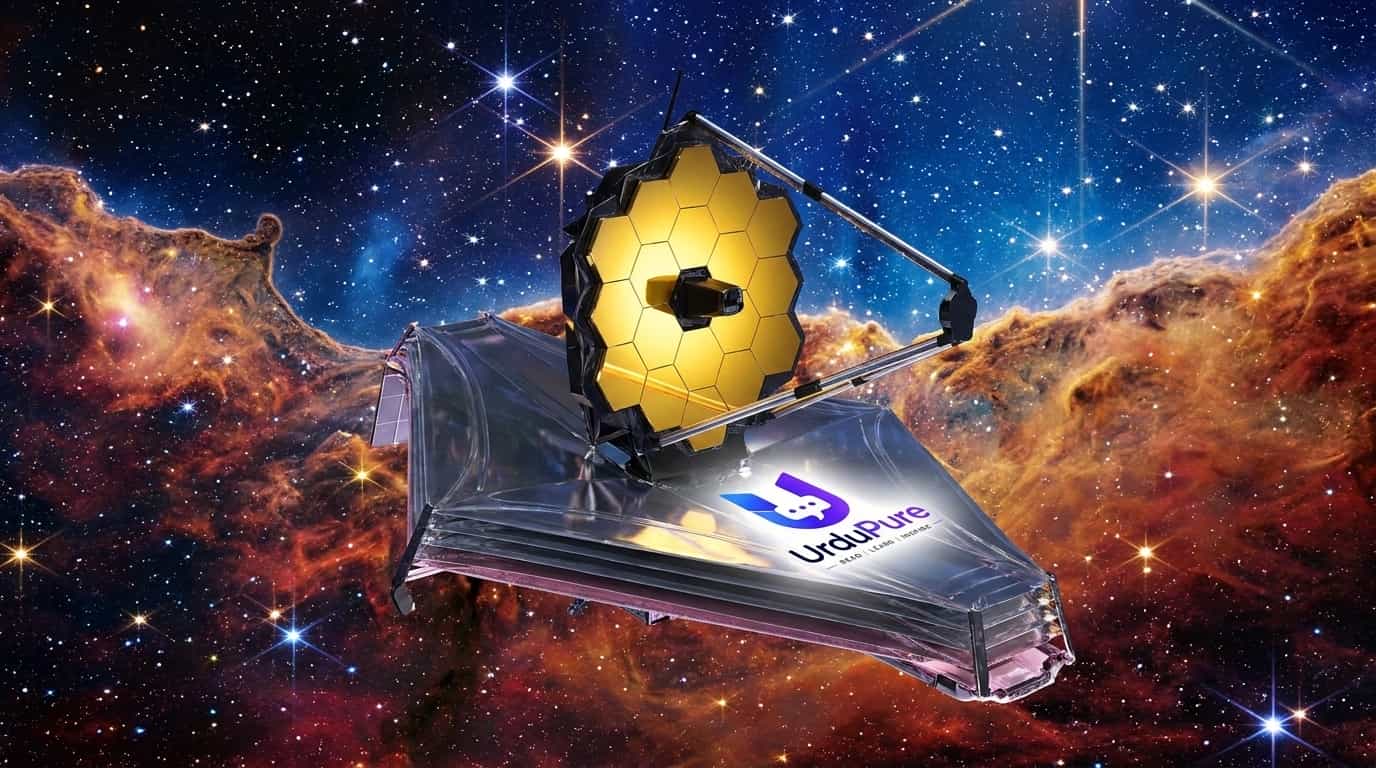
The Telescope That Keeps Rewriting the Universe
Since the James Webb Space Telescope began scientific operations in July 2022, it has produced discovery after discovery that has forced astronomers to revise their models of how the universe formed, how galaxies evolve, and — most extraordinarily — whether life might exist elsewhere in the cosmos. Four years of operations into the mission, the pace of paradigm-shifting results has not slowed. If anything, 2025-2026 has produced some of JWST's most consequential findings.
This article summarises the most significant JWST discoveries of the 2025-2026 period — what was found, why it matters, and what it means for our understanding of the universe and our place in it.
The Impossible Galaxies Problem
The most persistent and structurally significant challenge JWST has posed to cosmology is what astronomers have taken to calling the "impossible galaxies" problem. Within the first year of operations, JWST identified galaxies formed within 300 to 500 million years of the Big Bang that were far larger, more structured, and more massive than the prevailing cosmological model — the Lambda Cold Dark Matter (Lambda CDM) model — predicted should exist at those epochs.
Galaxy formation in the standard model is a hierarchical process: small structures form first, then gradually merge and grow into larger galaxies over billions of years. JWST found galaxies the size of the Milky Way existing when the universe was only a few hundred million years old — structures that should have taken billions of years to assemble. In one frequently cited example, a galaxy observed at a redshift of approximately z=14 (corresponding to around 300 million years after the Big Bang) contains stellar mass comparable to galaxies in the nearby universe.
The response from the cosmological community has been significant. Proposed explanations range from revised star formation rate models (perhaps stars formed faster in the early universe than current models allow), to modifications of the Lambda CDM model itself, to more exotic proposals involving modified gravity theories. No consensus has emerged, but the fact that JWST has produced data that genuinely challenges the standard cosmological model — rather than confirming it as expected — is itself one of the most scientifically important outcomes of the mission.
K2-18b: A Potential Biosignature 120 Light Years Away
The discovery most likely to be remembered as historically significant — if subsequent observations confirm it — is the detection of dimethyl sulfide (DMS) in the atmosphere of exoplanet K2-18b, located approximately 120 light years from Earth.
Dimethyl sulfide is a molecule that, on Earth, is produced almost exclusively by biological processes — specifically by marine phytoplankton. It has no known abiotic (non-biological) production mechanism in significant quantities. Its detection in K2-18b's atmosphere therefore constitutes what researchers carefully describe as a "potential biosignature" — a chemical signal that would be consistent with biological activity.
The scientific response has been appropriately cautious. K2-18b is a "Hycean" world — a planet significantly larger than Earth (approximately 8.6 Earth masses) with conditions potentially consistent with a liquid water ocean beneath a hydrogen-rich atmosphere. These conditions are very different from Earth's, which means any biology would be profoundly alien. The DMS detection is at the 3-sigma confidence level — significant, but below the 5-sigma threshold that physicists and astronomers conventionally require for a formal claim of discovery. Follow-up observations are ongoing, and confirmation of the DMS signal would be one of the most consequential scientific announcements in human history.
NASA's careful framing of the K2-18b results reflects both the extraordinary implications and the genuine uncertainty: "We are not claiming we have detected life on K2-18b." What they are saying is that they have detected a chemical signal that warrants urgent further investigation.
Stellar Formation: Seeing How Stars Are Born
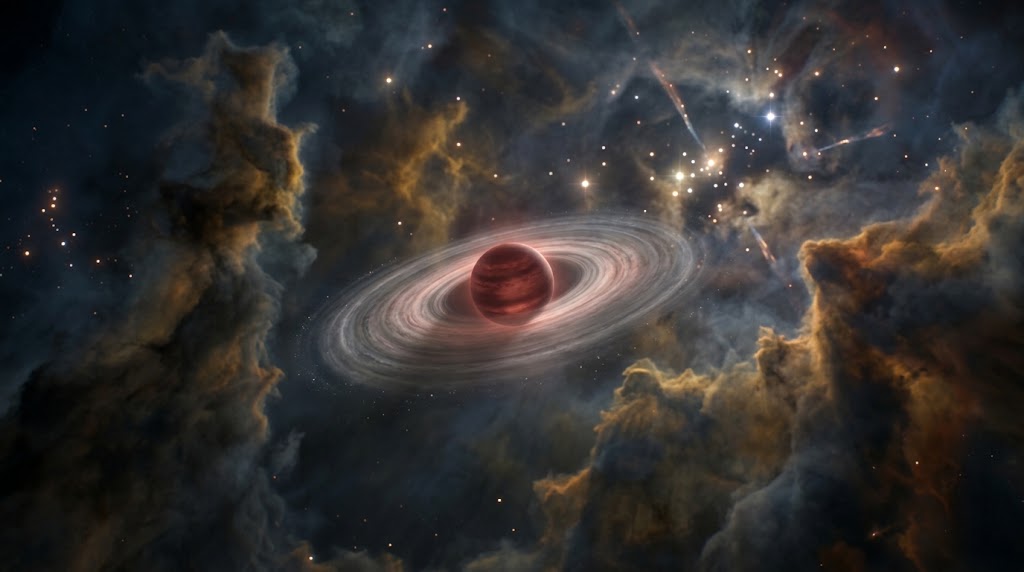
One of JWST's most scientifically productive — and visually spectacular — areas of discovery has been stellar formation. The telescope's infrared capabilities penetrate the dense dust clouds that optical telescopes cannot see through, revealing the internal structure of stellar nurseries in extraordinary detail.
The Carina Nebula images released by NASA in 2022 were the first dramatic demonstration of this capability. Since then, JWST has imaged stellar formation regions across the Milky Way and nearby galaxies, revealing the detailed mechanics of how protostars form from collapsing gas clouds, how protoplanetary disks develop around young stars, and how stellar winds from young, hot stars interact with and eventually disperse the gas clouds that formed them.
These observations have refined models of stellar evolution and planet formation in ways that have implications for understanding how Earth-like planets form — and therefore how common the conditions for life might be across the galaxy.
Dark Matter: The Highest-Resolution Maps Ever Made
JWST's gravitational lensing observations — using massive galaxy clusters as natural telescopes, exploiting the way gravity bends light from objects behind the cluster — have produced the most detailed dark matter distribution maps ever created. Dark matter, which neither emits nor absorbs light but whose gravitational effects are detectable, constitutes approximately 27 percent of the universe's total energy content. Understanding its distribution is fundamental to understanding how the large-scale structure of the universe — the web of filaments, voids, and galaxy clusters — formed.
The 2025-2026 JWST lensing maps have revealed substructure in dark matter distributions that tests multiple competing theories of what dark matter actually is. The results have been used to constrain the mass of candidate dark matter particles and to test whether dark matter is truly "cold" (slow-moving) as the Lambda CDM model assumes, or whether "warm" dark matter (faster-moving, producing somewhat different structure formation) better fits the observations.
JWST's greatest 2025-2026 discoveries: "impossible galaxies" larger than Lambda CDM predicts in the early universe; dimethyl sulfide detected in K2-18b's atmosphere — a potential biosignature (confirmed at 3-sigma, not yet 5-sigma); stellar formation in unprecedented infrared detail; the highest-resolution dark matter distribution maps ever made; and exoplanet atmospheric characterisation across dozens of worlds. The Habitable Worlds Observatory is in early NASA planning for the 2030s-2040s.
Exoplanet Atmospheres: A New Era of Characterisation
Beyond K2-18b, JWST has characterised the atmospheres of dozens of exoplanets — a capability that was essentially impossible with previous telescopes. The observations have detected carbon dioxide, water vapour, methane, and sulfur dioxide in various exoplanet atmospheres, providing the first detailed chemical inventory of worlds beyond our solar system.
The TRAPPIST-1 system — seven Earth-sized planets orbiting a red dwarf star 39 light years away, at least three of which orbit in the "habitable zone" — has been a particular focus of atmospheric characterisation efforts. JWST observations of TRAPPIST-1c (the second planet, closer to the star than the habitable zone but useful for constraining atmospheric models) were consistent with little or no atmosphere, which was informative but not the hoped-for result. Observations of the habitable-zone planets are ongoing and remain among the most scientifically significant targets of the entire JWST mission.
What Comes Next: The Habitable Worlds Observatory
JWST has demonstrated the scientific value of space-based infrared astronomy so decisively that NASA's planning for the next generation of space telescopes has accelerated. The Habitable Worlds Observatory (HWO) — recommended by the 2020 Astronomy Decadal Survey as the top large mission priority — is now in active early-phase planning at NASA. HWO would be specifically designed to directly image Earth-like planets in the habitable zones of sun-like stars and analyse their atmospheres for biosignatures — an enormously more ambitious version of what JWST is doing for larger planets like K2-18b.
The timescale for HWO development is long: current estimates suggest launch in the late 2030s to early 2040s. But the scientific case — made dramatically stronger by JWST's discoveries — is now essentially uncontested within the astronomy community.
Frequently Asked Questions
Has the James Webb Space Telescope found signs of life?
No confirmed detection of extraterrestrial life has been made. JWST detected dimethyl sulfide in the atmosphere of K2-18b — a molecule produced by biological processes on Earth — but the detection is at 3-sigma confidence (below the 5-sigma standard for a formal discovery claim) and no abiotic production mechanism for DMS has been ruled out in Hycean world conditions. Follow-up observations are ongoing.
What is the "impossible galaxies" problem?
JWST has observed galaxies in the early universe (within 300-500 million years of the Big Bang) that are far larger and more massive than the standard cosmological model (Lambda CDM) predicted should exist at those epochs. This suggests either that stars formed faster in the early universe than current models allow, or that some aspect of the standard cosmological model requires revision.
How long will JWST operate?
JWST was launched with enough fuel for a 10-year mission (the original design requirement), but the precision of the Ariane 5 launch trajectory used significantly less fuel than anticipated. Current estimates from NASA suggest JWST has enough fuel for at least 20 years of science operations — potentially to the late 2030s or beyond.
James Webb telescope discoveries 2026, JWST 2026, K2-18b biosignature, impossible galaxies JWST, James Webb exoplanet atmosphere, dark matter mapping JWST, Habitable Worlds Observatory, JWST stellar formation, Lambda CDM cosmology


Discussion
Comments
Approved comments are published after moderation to keep discussion useful and spam-free.
No comments yet. Start the discussion below.