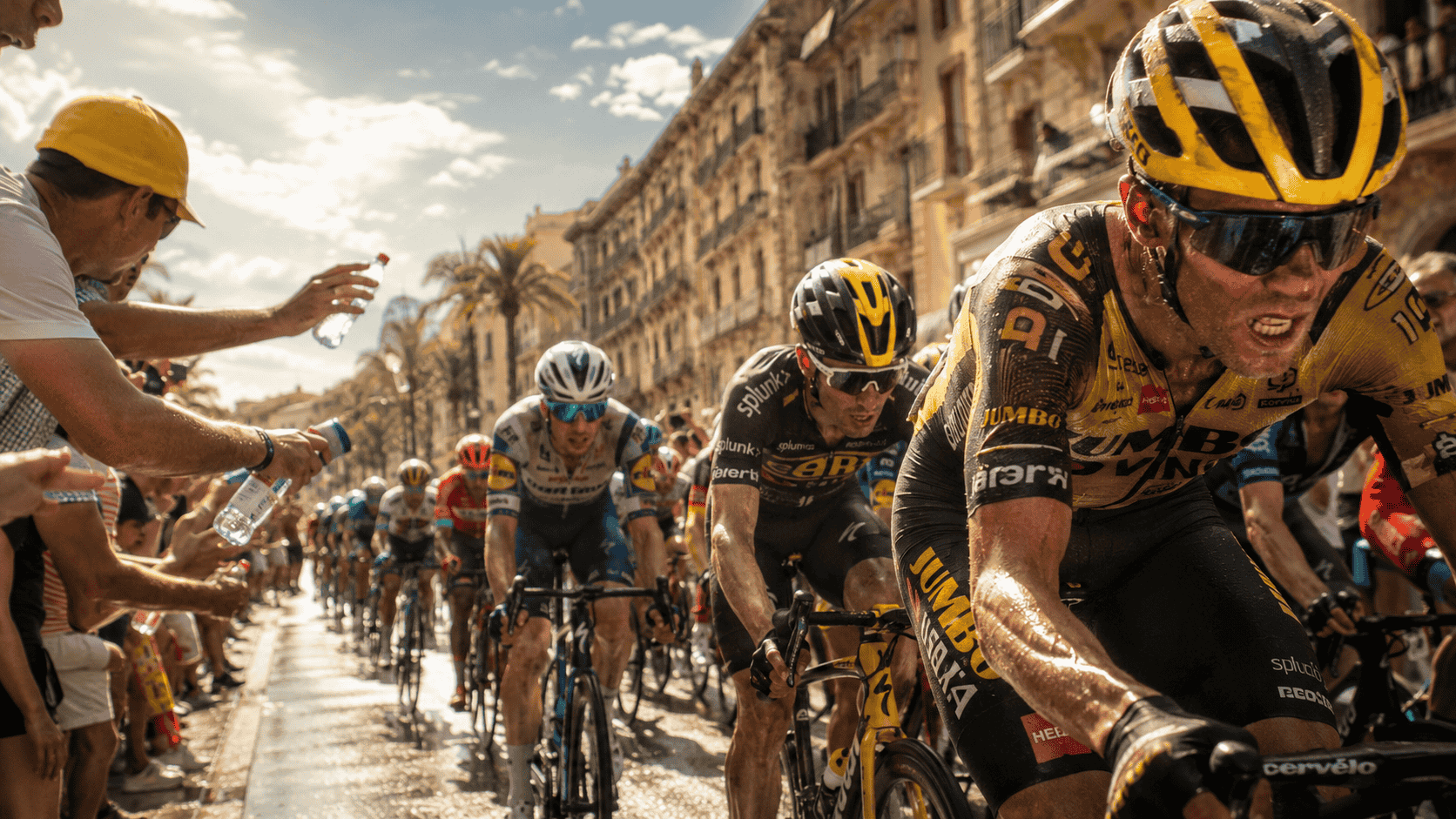
The Tour starts in Barcelona, but the heat may set the tone
The Tour de France is supposed to begin with noise, flags, packed streets and the nervous energy of the world’s most famous cycling race.
In 2026, it begins with something heavier in the air: heat.
The 113th Tour de France starts on Saturday, July 4, 2026, in Barcelona, with the Grand Départ taking the race through one of Europe’s most visited cities before the route moves toward France. The official Tour route lists 21 stages, including flat stages, hilly stages, mountain stages, one team time trial, one individual time trial and two rest days.
That would already be a major travel and sports story.
But this year, the race begins as parts of Europe face extreme summer heat, raising questions about rider safety, fan safety, route disruption and whether one of cycling’s great traditions can keep operating normally in a hotter climate.
The Tour has always been a test of suffering.
This year, the weather may decide how much suffering is too much.
Why the heatwave is such a serious risk
Extreme heat is not just uncomfortable for professional cyclists. It can become dangerous quickly.
The Guardian reported that the 2026 Tour de France is facing concern over possible stage disruption because of a severe European heatwave, with temperatures forecast to reach up to 44C in parts of France and Spain. Race officials, team doctors and organizers are now discussing heat-management measures, including expanded feed zones and cold drink deliveries.
That matters because Tour riders are not simply exercising in hot weather. They are racing for hours, often at high intensity, while climbing, descending, eating, drinking, responding to attacks and managing tactical pressure.
Even elite athletes can be pushed beyond safe limits.
Cycling already has a painful reminder. Italian rider Elisa Longo Borghini suffered heatstroke during the Tour de Suisse, a warning that even world-class riders can be overwhelmed when heat, effort and race pressure collide.
For fans, the danger is different but still real. Spectators may stand for hours in direct sun, often near barriers, on exposed roads, or in crowded city areas. Add alcohol, limited shade, long walks, transport delays and dehydration, and a joyful sports trip can become a health risk.
Barcelona is preparing for a huge event
Barcelona is not just a backdrop for the 2026 Grand Départ. It is part of the event.
The city’s official Tour de France Barcelona page says the Grand Départ runs from July 4 to July 6, 2026, with three stages linked to the city and surrounding region.
The opening weekend includes a team time trial and city routes that turn Barcelona into a cycling stage. The official Tour page says the first two stages on July 4 and July 5 include finishes on Montjuïc hill, with the opening team time trial covering 19.7 km.
That is spectacular for television.
It is also complicated for travelers.
El País reported that Barcelona is preparing major traffic and mobility changes around the Tour, including road restrictions, pedestrian crossings, temporary bridges, reinforced metro service and changes to buses and bike-sharing stations.
For visitors, this means the first rule is simple: do not treat Barcelona like a normal summer city break during the Tour weekend.
Hotels may be busier. Roads may close. Public transport may be crowded. Walking routes may be redirected. Taxis and ride-hailing services may take longer. Restaurants near key areas may be packed.
The Tour is beautiful, but it is not small.
What fans should check before traveling
Anyone planning to watch the Tour in Barcelona, France or along the route should check three things before leaving: heat, transport and flexibility.
First, check the forecast for the exact stage location, not only the nearest big city. Heat can feel very different on an exposed road, in a crowded fan zone, near a mountain climb or inside a city with little breeze.
Second, check local transport updates. Major stages can bring road closures hours before riders arrive. In cities, streets may close earlier than casual visitors expect.
Third, build flexibility into the trip. A heatwave can change the mood of a race day. You may need to move slower, take shade breaks, use public transport instead of walking, or leave a viewing area earlier than planned.
If you are traveling with children, elderly relatives or anyone with a health condition, plan the day around shade and water rather than around the perfect photo spot.
A good Tour viewing plan should include:
Water before arrival
Electrolytes or salty snacks
Sun hat and sunglasses
SPF 50 sunscreen
Light clothing
A portable phone charger
Local emergency numbers
A backup transport route
A shaded rest location
Travel insurance details
The goal is not to panic.
The goal is to avoid becoming part of the emergency response problem.
Travel insurance becomes more relevant in a heatwave
Tour de France travel is not only about sport. It is also a high-value travel moment involving flights, hotels, rail tickets, rental cars, cycling tours and event-based tourism.
That is why travel insurance matters.
A normal sports trip can already go wrong through flight delays, lost baggage, missed connections, hotel problems or illness. A heatwave adds another layer: medical risk, transport disruption, schedule changes and possible event disruption.
Travelers should read their policy carefully before relying on it.
Key questions include:
Does the policy cover trip delay?
Does it cover missed connections?
Does it cover medical treatment abroad?
Does it cover heat-related illness?
Does it cover cancellation if an event schedule changes?
Does it cover prepaid tours or cycling packages?
Does it include emergency assistance?
Does it exclude known events once warnings are already active?
The most important point is timing. Insurance usually works best when purchased before a problem becomes known. If a heatwave warning is already active, some new policies may not cover related disruption.
Do not assume “travel insurance” means every Tour-related problem is covered.
Read the details.
Riders face a different kind of Tour
For the riders, heat affects performance as much as safety.
High temperatures can change race tactics. Teams may use more ice socks, cold drinks, cooling vests and carefully timed feeding strategies. Domestiques may spend more energy collecting bottles. Climbers may suffer on exposed roads. General classification contenders may avoid unnecessary attacks if conditions are dangerous.
A rider who handles heat well can gain time.
A rider who gets hydration wrong can lose the Tour in one afternoon.
The official 2026 route is already demanding, with mountain stages, summit finishes and major climbs later in the race. CyclingNews described the route as 21 stages over 23 days, including flat, hilly and mountain stages, five summit finishes and two Alpe d’Huez stages near the final weekend.
Heat makes that structure even more punishing.
The Tour is not decided only by strength. It is decided by recovery. If riders spend the opening week fighting heat stress, dehydration and poor sleep, the damage can appear later in the mountains.
That is what makes the 2026 heat story so important.
It may not only affect one stage.
It may shape the whole race.
Could stages be changed or cancelled?
Historically, the Tour de France has survived war, strikes, pandemics, crashes, storms and protests. But extreme heat is becoming a new kind of operational threat.
The Guardian reported that the race has never faced stage cancellation because of extreme heat, but the 2026 conditions have raised the possibility of unprecedented disruption.
Changing a Tour stage is not easy. The race is a moving city. It involves riders, teams, broadcasters, police, medical services, road closures, sponsors, hospitality areas, volunteers, fans, local authorities and logistics crews.
Starting a stage earlier may sound simple, but global television schedules, road permits, security and local planning make it difficult. That is why race organizers often prefer smaller adjustments, such as extra feed zones, more water availability and cooling support.
Still, fans should understand that extreme heat can force decisions quickly.
A stage may start as planned and later be shortened. A dangerous section could be neutralized. A finish area could be adjusted. Public access could be restricted in some zones. Local authorities may issue health warnings or limit certain outdoor activities.
The safest approach is to follow official race updates, local authority notices and transport alerts on the day.
What spectators should wear and carry
Tour de France fashion is usually about jerseys, caps and team colors. In a heatwave, it should be about survival first.
Wear light, breathable clothing. Avoid heavy dark fabrics if you will be standing in the sun. Use a wide-brim hat or cycling cap, sunglasses and high-protection sunscreen. Reapply sunscreen during the day, especially if sweating.
Carry more water than you think you need. Do not rely only on shops near the route because crowds can empty small stores quickly. Pack snacks that tolerate heat, such as nuts, crackers, dried fruit or protein bars.
Comfortable shoes matter. Road closures can turn a short walk into a long detour.
A small towel, handheld fan, cooling cloth or umbrella can help if local rules allow. A portable charger matters because heat drains phone batteries faster, and you may need maps, transport apps and emergency updates.
For families, agree on a meeting point in case the group gets separated. Crowds, road barriers and heat can make communication harder than expected.
The climate question behind the race
The Tour de France has always been tied to landscape. It sells a vision of France and Europe through villages, vineyards, mountains, coastlines and city streets.
But climate change is making summer sport harder to stage safely.
Research covered by Carbon Brief warned that rising temperatures across France since the mid-1970s are putting Tour de France competitors at increasing heat risk.
This does not mean the Tour is ending.
It means the race may have to keep changing.
Future editions may need more aggressive heat protocols, earlier starts, flexible routes, better cooling zones, more medical monitoring and stronger public safety planning. Some people in cycling already discuss whether major summer races will eventually need calendar changes.
That is a difficult conversation.
The Tour is built around July. Its identity is tied to summer. But the conditions of summer are changing.
Why this matters beyond cycling
The Tour de France is not the only event facing this problem.
Football, tennis, marathons, festivals, concerts and outdoor tourism all face the same question: how do you protect people when major events collide with extreme heat?
For travelers, this means heat planning is becoming part of normal trip planning.
Just as people check visa rules, luggage limits and hotel locations, they now need to check heat alerts, shade access, medical coverage and cancellation terms.
For publishers, the story is also bigger than sports. It connects travel, insurance, climate, health, tourism and family safety.
That is why the Tour de France 2026 heatwave risk is not only a cycling headline.
It is a summer travel warning.
The bottom line
The Tour de France 2026 will still begin with beauty, drama and national celebration. Barcelona will give the race a spectacular opening. The route will test the world’s best cyclists. Fans will line the roads.
But the heat cannot be treated as background weather.
It is now part of the race.
For riders, it may affect tactics, recovery and safety.
For fans, it may affect where to stand, when to travel and how long to stay outside.
For travelers, it may affect insurance, transport and trip planning.
The Tour has always rewarded preparation.
In 2026, that rule applies to everyone watching, not just everyone racing.
Quick FAQ
When does the Tour de France 2026 start?
The Tour de France 2026 starts on July 4, 2026, in Barcelona, Spain. The race includes 21 stages and finishes in Paris.
Why is heat a concern for the Tour de France 2026?
The race begins during a European heatwave, with reports warning of temperatures reaching up to 44C in parts of France and Spain. Extreme heat can affect rider safety, fan safety and race logistics.
Can Tour de France stages be cancelled because of heat?
It is possible, although historically the Tour has not cancelled a stage specifically because of extreme heat. Organizers may also use smaller measures, such as added feed zones, cooling support or route adjustments.
What should fans carry during a hot Tour stage?
Fans should carry water, sunscreen, sunglasses, a hat, light clothing, snacks, a phone charger and a backup transport plan.
Is travel insurance useful for Tour de France trips?
Yes, especially for flights, hotels, rail connections, medical issues and prepaid travel. But travelers must check policy wording because not every heat-related delay or event change is automatically covered.






Discussion
Comments
Approved comments are published after moderation to keep discussion useful and spam-free.
No comments yet. Start the discussion below.