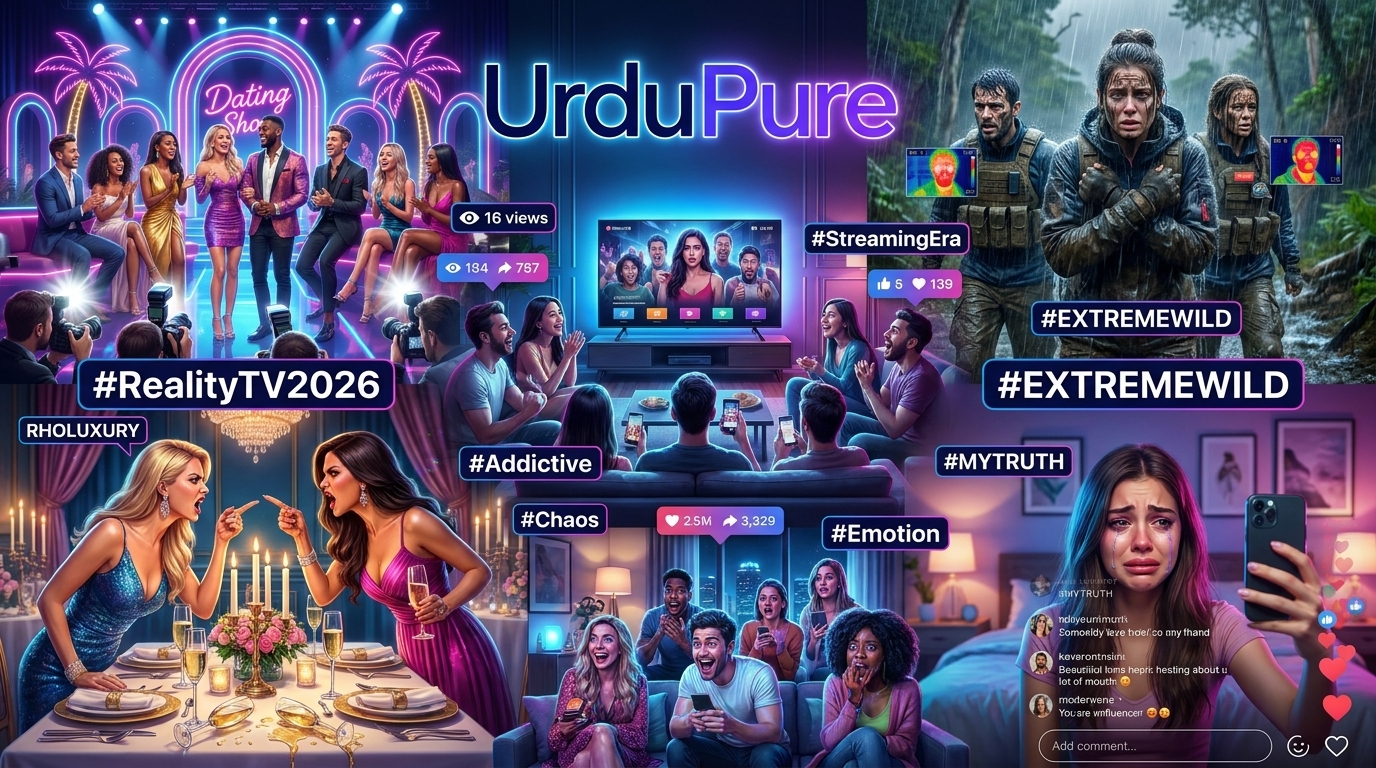
Why Reality TV Is Dominating 2026 and We Can't Stop Watching
Reality TV has never been bigger — or more divisive. Here's the psychology behind why we're all hooked, the shows defining the genre in 2026, and what the future of unscripted television actually looks like.
The Reality TV Contradiction
Reality television is simultaneously the most watched and most looked down upon category in television. In the same cultural moment, educated adults describe themselves as "not really watching TV" while consuming multiple reality shows weekly. Critics who write seriously about prestige drama admit to parasocial relationships with Real Housewives franchises. And the streaming platforms that spend billions on prestige drama — which generates critical recognition and awards — spend comparable amounts on reality programming, which generates the actual audience numbers that sustain their business models.
The contradiction is not hypocrisy. It reflects something genuine about what reality television does that prestige drama does not — and understanding it explains why the genre not only persists but grows, even as the audiences for it feel ambivalent about admitting their enjoyment.
The Psychology: Why Reality TV Is So Compelling
Social Comparison Without Social Risk
Evolutionary psychology suggests that humans are wired to compare themselves to others — to assess relative status, competence, attractiveness, and social standing as a guide to their own position in the social hierarchy. This comparison is also one of the primary sources of social anxiety in real life: comparing yourself to colleagues, friends, and acquaintances carries real stakes because these are people who know and judge you.
Reality television provides social comparison with none of the real-world risk. Watching Real Housewives relationships deteriorate, observing Love Island contestants misjudge romantic situations, or seeing bakers collapse under competition pressure allows the same social comparison mechanisms to operate — with genuine emotional engagement — without any personal vulnerability. We feel the comparison; we don't bear the consequences.
Parasocial Relationships
Parasocial relationships — the one-sided emotional attachments people form with media figures who don't know they exist — are as old as television itself. Reality television intensifies them for a specific reason: the format simulates the ongoing, unstructured social interaction that produces real friendships. Watching someone for weeks across multiple episodes of a cooking competition, seeing their reactions to failure and success, their jokes, their vulnerabilities, their interactions with others — this produces the neurological signatures of developing friendship, including the dopamine hits of new interaction and the oxytocin release of social bonding, without any of the actual relationship's demands or reciprocity.
This isn't pathological — parasocial relationships have measurably positive effects on loneliness and social wellbeing for many viewers. It does explain the intensity of viewer engagement with reality television contestants in ways that scripted drama characters rarely produce.
Drama Without Stakes
Reality television provides genuine drama — conflict, uncertainty, resolution — without the stakes that make real-world drama stressful. An argument between Bake Off contestants is genuinely tense in the moment of watching; it resolves within the episode; and it has no consequences for the viewer's actual life. This combination — real emotional engagement with zero personal cost — is a uniquely efficient form of emotional entertainment that scripted drama can only partially replicate (because the unreality of scripted drama attenuates some of the emotional engagement).
The Biggest Reality Shows of 2026
The Traitors (BBC One UK / Peacock US) — Season 4
The Traitors has completed its journey from cult hit to genuine mainstream phenomenon. The UK's fourth season — featuring a cast of 20 civilians alongside celebrity contestants — has produced the most-discussed individual episodes in the show's history, with the "Who is a Traitor?" revelation moments consistently driving social media conversation that extends days beyond each broadcast.
The format — contestants must identify which of their group are secretly "Traitors" while completing missions to build a prize fund — works because it combines genuine psychological strategy with the social performance elements that produce drama. The best Traitors contestants are simultaneously skilled at deception, skilled at reading others, and skilled at the social performance of appearing trustworthy. This combination of requirements means the most compelling moments are genuinely earned rather than manufactured.
The US version on Peacock has found its own distinctive character — casting choices that mix celebrity and civilian contestants differently from the UK, with Alan Cumming's hosting style producing something simultaneously more theatrical and less comfortable than the BBC version's Claudia Winkleman.
Love Is Blind Season 8 (Netflix)
Netflix's relationship experiment — in which contestants date without seeing each other and then decide whether to get engaged before meeting — continues to produce genuine emotional drama from what might appear to be a gimmicky premise. Season 8's format evolution (slightly longer "pods" period, better pastoral support for contestants) has addressed some of the legitimate criticism of earlier seasons without removing the format's essential tension. The show's consistent finding — that attraction formed through conversation is genuinely predictive of long-term relationship satisfaction in ways that physical attraction is not — has become a touchstone for discussions about dating in 2026's app-saturated landscape.
The Apprentice (BBC One UK) — Season 19
Lord Sugar's business competition has maintained remarkable longevity by finding the specific format balance between genuine business challenge and manufactured chaos that maximises entertainment without entirely abandoning credibility. Season 19's boardroom confrontations have generated the show's highest social media engagement in five years, driven partly by a particularly combustible cast and partly by task design that has created more genuinely interesting business problems than recent seasons.
Survivor 50 (CBS / Paramount+)
The milestone 50th season of the American format that invented the modern reality competition has been conceived as a celebration — featuring returning fan-favourite players competing for a record $2 million prize. The casting and challenge design reflect 25 years of format evolution, and the early episodes suggest a season capable of achieving the cultural moment that the significant anniversary demands.
Great British Bake Off Season 16 (Channel 4 UK / Netflix International)
The most beloved reality show in British television history has maintained its position as the warmest and most reliably enjoyable unscripted programme on television. Season 16's cast has produced the most compelling group dynamic in several years — a mix of personality types that generates genuine friendship and genuine competition simultaneously. Prue Leith and Paul Hollywood's judging dynamic has found a comfortable rhythm that makes even technical criticism feel generous.
Reality TV's Critics — and Why They're Partially Right
The criticism of reality television is not entirely wrong. The format has genuine problems that deserve honest acknowledgment:
Participant Wellbeing
The relationship between reality television participation and participant mental health has generated increasing concern. Several Love Island alumni (UK) have died by suicide following their appearances; multiple contestants across various shows have spoken publicly about the psychological effects of public exposure, social media trolling, and the specific disorientation of parasocial fame — being recognised by strangers who feel they know you intimately while you have no relationship with them whatsoever.
UK broadcasters have introduced mandatory aftercare provisions for contestants; production companies have improved psychological support during filming. Whether these measures are adequate remains debated, and the speed of participant exposure in a social media era — where episode-to-episode commentary reaches contestants instantly — creates challenges that pre-social media reality TV did not face.
Manufactured vs. Authentic
The degree to which reality television is actually "real" has always been contested. Producers select participants for dramatic potential, structure situations to maximise conflict, edit to construct narratives that may not reflect the experience of participants, and — in some formats — prompt or suggest behaviour in ways that blur the line between documentary and scripted drama. The most sophisticated viewers understand this; less sophisticated viewers may form beliefs about human behaviour, relationship dynamics, and social norms from content that has been significantly constructed.
Social Comparison's Dark Side
The same social comparison mechanisms that make reality television entertaining can, in specific contexts and for specific viewers, produce negative effects. Research on social comparison and body image — particularly for young women watching appearance-focused reality formats — suggests real risks that the "harmless entertainment" framing doesn't fully capture.
The Future of Reality TV: Where the Format Is Going
AI-Enhanced Competition
Several pilot productions in 2025–26 have experimented with AI participation in competition formats — AI contestants competing alongside human contestants, AI judging integrated into competition formats, and AI audience interaction tools that personalise voting and engagement. The most interesting question is whether audiences find AI participation compelling or alienating — early evidence is mixed.
Interactive and Participatory Formats
The expansion of real-time interactive elements — live voting that affects outcomes in real time, social media integration that allows audience influence on challenges, and companion app experiences that deepen engagement — is producing formats where the boundary between viewer and participant is more permeable than traditional broadcast television allowed.
Social Observation Formats
The success of formats like Gogglebox (viewers watching television, being filmed watching television) and its international variants suggests sustained appetite for social observation — watching people react to things — that may be as fundamental to the genre's appeal as competition or romance. This format category is least susceptible to AI disruption and most dependent on genuine human social texture.
Why We'll Keep Watching
The cultural ambivalence about reality television — the simultaneous consumption and mild embarrassment — is unlikely to resolve. Reality television serves psychological needs that prestige drama cannot fully satisfy: the social comparison function, the parasocial relationship intensity, the drama without stakes, and the ongoing narrative of real human lives that resolves in real time rather than on a creator's schedule.
As long as humans are social animals who find other humans endlessly interesting — which is to say, always — some version of "unscripted people doing things while cameras watch" will generate enormous audiences. The specific formats will evolve. The fundamental appeal will not.
best reality TV shows 2026, why reality TV is popular, reality TV psychology, The Traitors 2026, Love Is Blind Season 8, Great British Bake Off 2026, Survivor 50, reality TV trends 2026, unscripted TV viewing, reality show contestants wellbeing


Discussion
Comments
Approved comments are published after moderation to keep discussion useful and spam-free.
No comments yet. Start the discussion below.