Best Electric Boats of 2026: What to Buy and Why
Electric Boating in 2026: A Market Coming of Age
The global electric boat market is on track to exceed $12 billion in 2026, growing at over 12 percent annually — driven by expanding EU environmental regulations banning combustion engines from sensitive waterways, dramatically falling battery costs, and genuine demand from boaters for the quieter, more pleasant experience that electric propulsion delivers.
What has changed most notably in 2026 is range and charging infrastructure. New battery chemistries and hull efficiency innovations have pushed practical range well beyond the 20-mile horizon that once defined the category. Marina charging infrastructure is expanding rapidly across Europe and North America.
What Makes 2026 Electric Boats Different
Three technological advances are reshaping the category. Hydrofoil technology, pioneered commercially by Candela, lifts the hull out of the water at speed — reducing drag by 80 percent and extending range dramatically. Solid-state battery development is delivering higher energy density in smaller, lighter packages. And advanced motor controllers with regenerative capability are recovering energy during deceleration.
Best Electric Boats by Category in 2026
Best Day Cruiser: Candela C-8
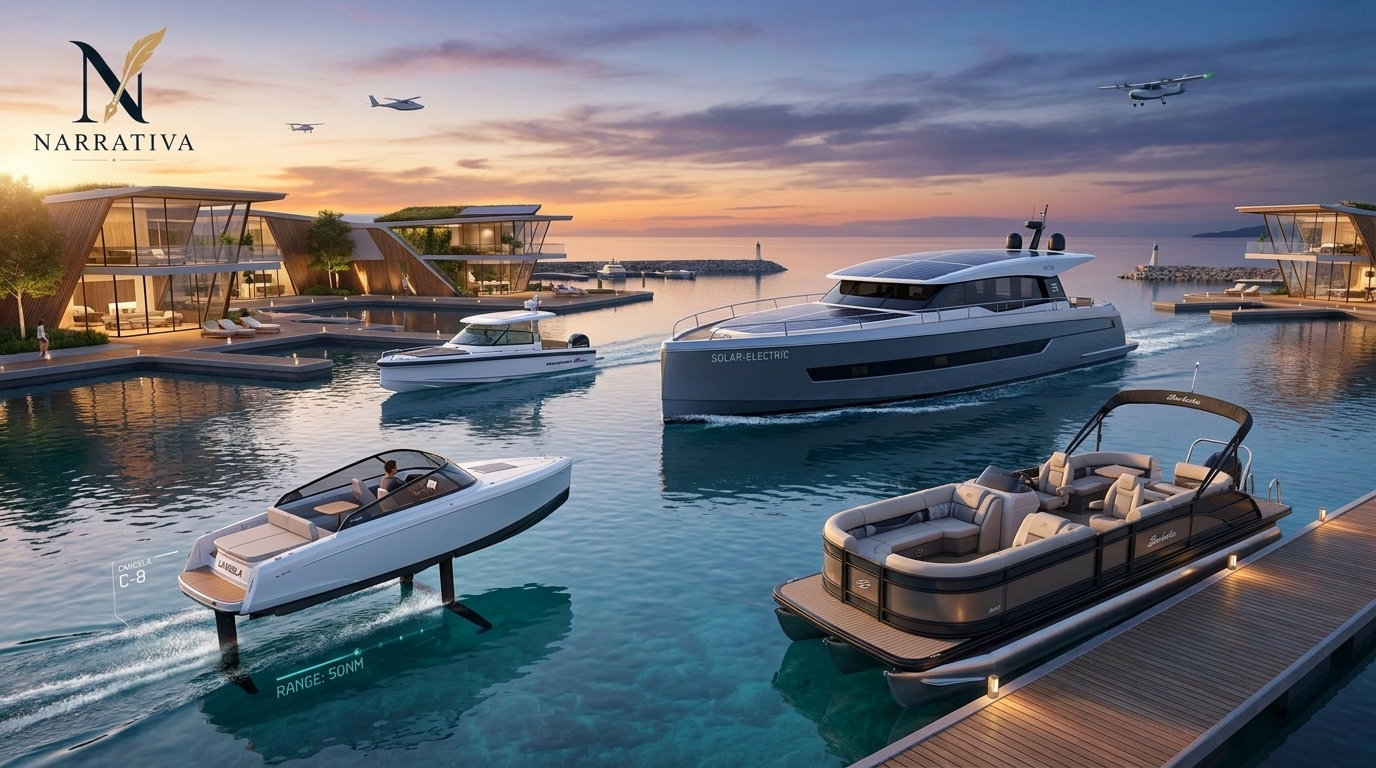
Candela's C-8 delivers 50 nautical miles at 22 knots — extraordinary for an electric vessel — and charges in under an hour at DC fast chargers. The hydrofoil system lifts the hull entirely out of the water at cruising speed, reducing drag by 80 percent versus conventional hulls. Price from approximately $300,000, positioning it in the premium segment.
Best Pontoon: Barletta E-Class
For lake and calm-water leisure, electric pontoon boats offer the ideal combination of social space and clean propulsion. Barletta's E-Class provides 4-6 hours of cruising range at typical leisure speeds, near-silent operation ideal for wildlife observation and fishing, and a premium fit-and-finish that rivals petrol competitors. Available through US dealers from approximately $80,000.
Best Compact Electric: Axopar 25 Electric
The Finnish brand Axopar launched its first fully electric model in 2026. The Axopar 25 Electric uses a 100 kWh battery, delivers 4-6 hours of leisure cruising, and comes with Axopar's characteristic build quality and versatile deck design. Aimed at coastal and sheltered-water use, it is the strongest entry-level premium option currently available.
Best Solar-Electric Yacht: Silent Yachts Silent 55
Silent Yachts' solar-electric catamaran range represents the most compelling option for extended passage-making. The Silent 55's roof-integrated solar array continuously charges the battery under way in sunlight, enabling theoretically unlimited range at eco speeds. Multiple circumnavigations have now been completed by Silent Yachts owners. Pricing from approximately $1.2 million.
Electric Outboard Motors: Retrofit Options
Not ready for a new boat? Electric outboard motors are now a compelling retrofit option. Torqeedo, the pioneer of the sector, offers motors from 3 kW to 100 kW with proven track records. ePropulsion's Spirit and Navy ranges offer excellent value. Mercury and Yamaha both launched electric outboard programmes in 2024-2025.
Frequently Asked Questions
What is the range of a typical electric day boat in 2026?
A conventional electric day boat without hydrofoil technology offers 20-40 nautical miles at cruising speed (8-12 knots). Candela foiling boats achieve 50+ nautical miles at higher speeds. Solar-electric yachts offer effectively unlimited range at low speeds in sunny conditions.
How long does it take to charge an electric boat?
Standard marina shorepower (32A three-phase, ~22 kW) charges most day boat batteries in 3-5 hours. DC fast charging at 50-100 kW reduces this to under an hour for smaller vessels. Overnight charging from standard marina power is sufficient for most day-use patterns.
Are electric boats good for fishing?
Electric motors are excellent for fishing — silent operation does not disturb fish, and trolling at very low, precise speeds is easily controlled. Electric trolling motors have been standard in freshwater fishing for decades. Full-electric day boats for fishing are increasingly common in Scandinavian and North American markets.