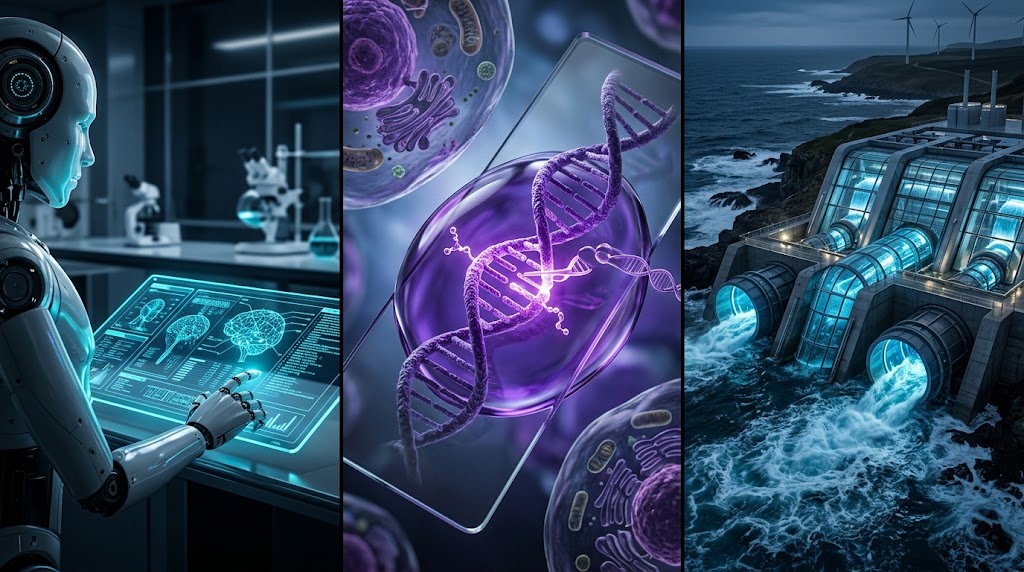
We are living through an era of unprecedented convergence. As artificial intelligence leaves the screen to inhabit physical robots, and breakthrough biology begins solving the organ shortage, every facet of global society is transforming simultaneously.
By Global Trends & Strategy Desk | Saturday, August 15, 2026
To understand reader interest on a global scale in 2026, one must look at the massive intersection of technology, climate, and human psychology. We are moving past the theoretical phases of the post-pandemic digital boom and entering an era of physical deployment and societal restructuring.
From the shifting realities of the global workforce to the emotional narratives readers are consuming to cope with these changes, here is a comprehensive, deep-dive analysis of the definitive global themes of 2026.
1. The Technological Frontier: Beyond Automation
The technology landscape of 2026 is no longer simply about generating text or writing code snippets. It has violently shifted toward autonomous reasoning, massive infrastructure scaling, and physical integration into the real world.
- Agentic and Physical AI: The most significant trend defining 2026 is the rise of agentic AI—autonomous systems capable of executing complex, multi-step tasks without human intervention. Reflecting this massive shift, the agentic AI market is projected to expand to $200 billion by 2034. Furthermore, AI is connecting to the physical world through humanoid robots equipped with Vision-Language-Action (VLA) models. Humanoid robotics are moving out of the lab; for instance, Boston Dynamics' Atlas robot has already advanced to active field testing within Hyundai manufacturing facilities.
- The Path to AGI: The industry is aggressively pursuing Artificial General Intelligence (AGI). The goal is no longer building narrow, specialized tools, but rather creating highly adaptable cognitive engines capable of performing a wide range of human-level tasks, solving novel problems, and adapting to entirely new situations with minimal human oversight.
- Next-Generation Infrastructure: To support these massive computational demands, global network architecture is being overhauled. Early 6G network frameworks are emerging to deliver the faster, more stable, and highly secure connectivity required by edge computing and autonomous swarms. Concurrently, advancements in quantum computing are introducing entirely new architectures for processing complex data sets, particularly for cryptography and molecular simulations.
- The Governance Mandate: As AI embeds deeply into everyday software and physical infrastructure, organizations face severe risks without proper oversight. Comprehensive AI governance frameworks are no longer optional. Updated acceptable use policies, mandated human-in-the-loop verification for critical decisions, and stringent data security guardrails have become the absolute standard for enterprise compliance.
2. The Restructured Global Economy and Workforce
Economic models and workplace expectations are fundamentally adapting to this continuous technological disruption, shifting how we hire, work, and manage global finance.
- The Shift to Skills-Based Hiring: The corporate world is aggressively dismantling the "paper ceiling," increasingly prioritizing verified skills over traditional four-year university degrees. Because AI handles rote technical coding and data processing, employers are heavily valuing intrinsic "human skills"—such as high-level strategic empathy, complex cross-cultural communication, and adaptive leadership.
- E-commerce and Remote Expansion: E-commerce continues its rapid, uninterrupted growth trajectory, allowing niche businesses to instantly tap into global markets. The shopping experience is moving into spatial computing, deploying immersive, augmented-reality overlays. Alongside this, hybrid and remote work models remain vital, enabling nimble companies to attract top-tier global talent and operate 24/7 without the massive overhead of localized physical footprints.
- Unwinding Public Debt: A major, looming macroeconomic challenge facing the 2026 global economy is quantitative tightening and the management of public debt. Central banks that purchased massive amounts of debt to stabilize markets during the COVID-19 pandemic and subsequent financial crises are now in the complex process of selling off that debt. This careful unwinding is necessary to reset balance sheets, but it threatens to temporarily increase borrowing costs and compress global market liquidity.
3. Biological Breakthroughs: Rewriting Human Health
Scientific advancements have crossed a threshold this year, pushing the boundaries of medicine away from mere symptom management and toward active regeneration and longevity.
- Organ Transplantation Milestones: The gene-editing technology CRISPR-Cas9 is opening the door to a new era in regenerative medicine. A massive benchmark in xenotransplantation was recently set when an eGenesis 69 gene-edited pig kidney successfully functioned in a human patient for a record-breaking 271 days. Pushing this frontier further, clinical trials like the EXPAND study at NYU Langone Health are utilizing a 10-gene-edited pig kidney, known as the UKidney, to evaluate its safety and efficacy. These milestones bring the medical community dangerously close to solving the global organ shortage crisis.
- Expanding GLP-1 Applications: Initially popularized as highly effective weight-loss and diabetes treatments, GLP-1 therapies (like Semaglutide) are experiencing a clinical renaissance. Medical researchers are expanding their applications to offer new hope for brain-related issues, showing immense promise in mitigating systemic inflammation and potentially slowing the progression of neurodegenerative conditions like Alzheimer’s and Parkinson’s.
4. Climate Action, Energy, and Geopolitical Tension
The push for global sustainability is yielding radical, futuristic energy innovations, while simultaneously sparking severe sociopolitical friction.
- The Rise of Osmotic Power: In the search for endless, clean renewable energy, "Blue Energy" or Osmotic Power is gaining serious traction. This technology harnesses the chemical potential difference between freshwater and saltwater streams to generate electricity. Driven by significant advances in highly efficient semi-permeable membrane technology, the osmotic power market is projected to reach $1.5 billion by 2030.
- The Demand for Equitable Policy: Policymakers are confronting tougher trade-offs. The public backlash against sweeping, aggressive environmental regulations—particularly those that disproportionately tax working-class commuters or agricultural sectors—has highlighted the urgent need to design climate policies that are economically equitable and science-based, rather than purely punitive.
- The Ocean as a Geopolitical Theater: The global ocean is increasingly recognized in 2026 as both a critical climate solution and an intense geopolitical battleground. From fierce disputes over deep-sea mining rights to the protection of vital subsea data cables and contested maritime borders, naval theaters have moved to the absolute center of international relations and supply chain security.
5. Media and Culture: The Shift in Reader Narratives
As the world navigates these high-stakes, highly stressful technological and economic shifts, global media consumption reflects a deep psychological desire for a blend of trauma processing and radical escapism.
- The Dominance of "Romantasy": Driven heavily by massive digital communities like BookTok, "Romantasy" (Fantasy Romance) has become a dominating publishing genre. By successfully blending expansive world-building, magical escapism, and intense emotional satisfaction, it provides readers with a perfect antidote to the anxieties of the 2026 news cycle.
- High-Stakes, Emotion-Based Stories: Readers are decisively moving away from clean, predictable fairy-tale plots. Instead, there is a surge in demand for high-stakes storylines that mirror real social struggles. Themes centered on systemic resilience, surviving trauma, and organized rebellion are heavily favored across both literature and streaming media.
- Psychological Complexity: The psychological thriller genre continues to surge in popularity. Modern audiences increasingly crave deeper emotional complexity, morally gray character-driven motives, and highly unpredictable narrative twists that challenge their own perceptions of reality.
FAQ
Q: What is Agentic AI in 2026?
A: Agentic AI refers to autonomous artificial intelligence systems capable of executing complex, multi-step workflows without constant human prompting. Unlike traditional AI assistants that wait for instructions, agentic AI makes independent decisions, adapts to errors, and completes goals autonomously.
Q: How is CRISPR being used for organ transplants?
A: Gene-editing technology like CRISPR-Cas9 is being used in clinical xenotransplantation trials to alter the DNA of pig organs (such as kidneys and hearts) so they are not rejected by the human immune system. Recent milestones include gene-edited kidneys functioning in human patients for extended, record-breaking durations.
Q: What is Osmotic Power?
A: Osmotic power, also known as "Blue Energy," is a renewable energy source that generates electricity by utilizing the chemical pressure difference created when freshwater and saltwater interact through specialized semi-permeable membranes. It is primarily being developed in coastal regions where rivers meet the ocean.