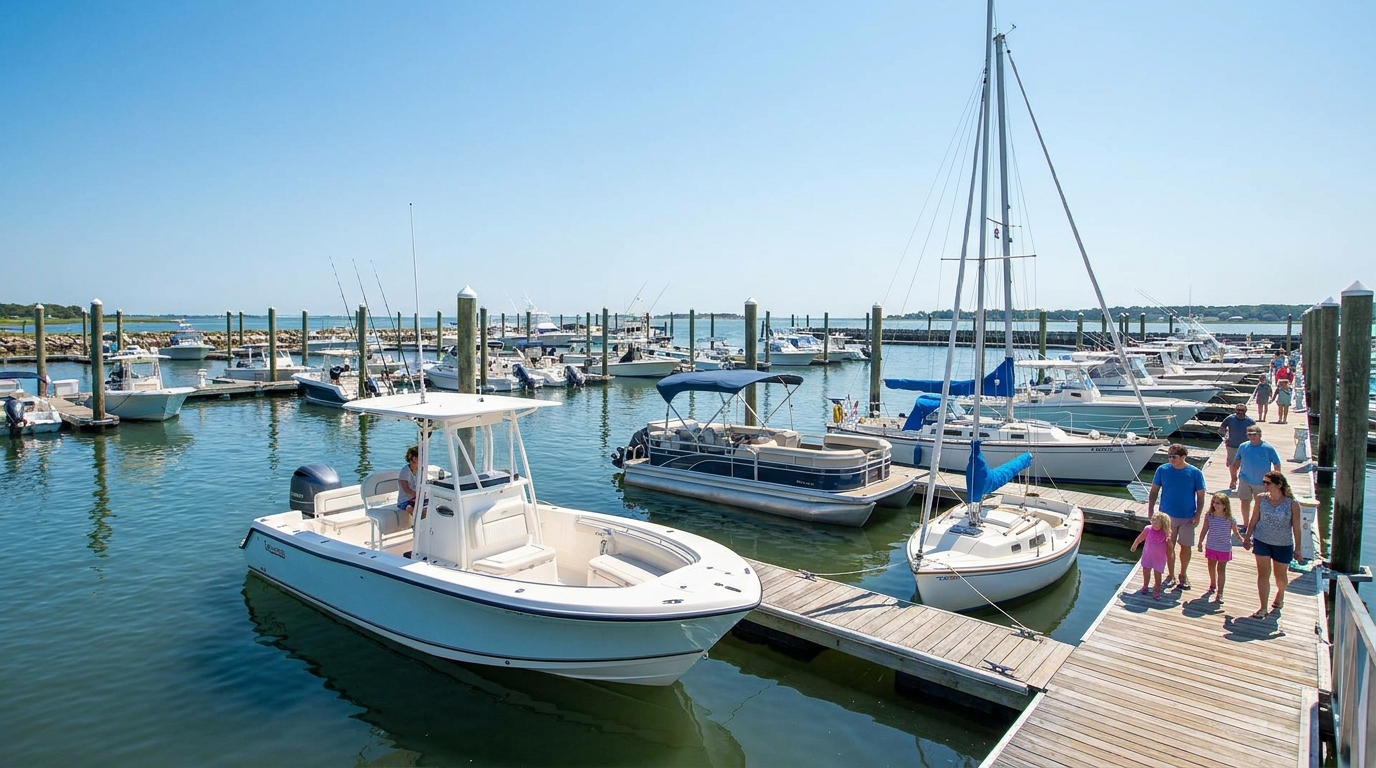
Best Beginner Boats to Buy in 2026: Complete Buyer's Guide
Buying your first boat is exciting — and overwhelming. This guide cuts through the noise to find the perfect starter vessel for every budget, use case, and body of water — with the honest costs most sellers won't tell you about.
The First-Time Boat Buyer's Biggest Mistake
Most first-time boat buyers focus almost entirely on the purchase price and almost entirely ignore total cost of ownership. This is how people end up with boats they can't afford to operate, maintain, store, or insure — and which end up sitting unused in a marina, hemorrhaging money, until they're sold at a loss.
The marine industry joke — "the two happiest days of a boat owner's life are the day they buy the boat and the day they sell it" — exists because too many buyers skip the cost-of-ownership analysis before committing. This guide does that analysis for you, for every type of beginner boat, so your happiest days are every day on the water.
What Type of Boat Do You Actually Need?
Before price, before brand, before any specific model — the most important question is what you're going to do with the boat. The single largest mistake first-time buyers make is purchasing a boat optimised for the aspirational version of their boating life rather than the actual version.
Day cruising on lakes and rivers: Pontoon boat or bowrider — prioritise comfort, stability, and ease of handling over speed
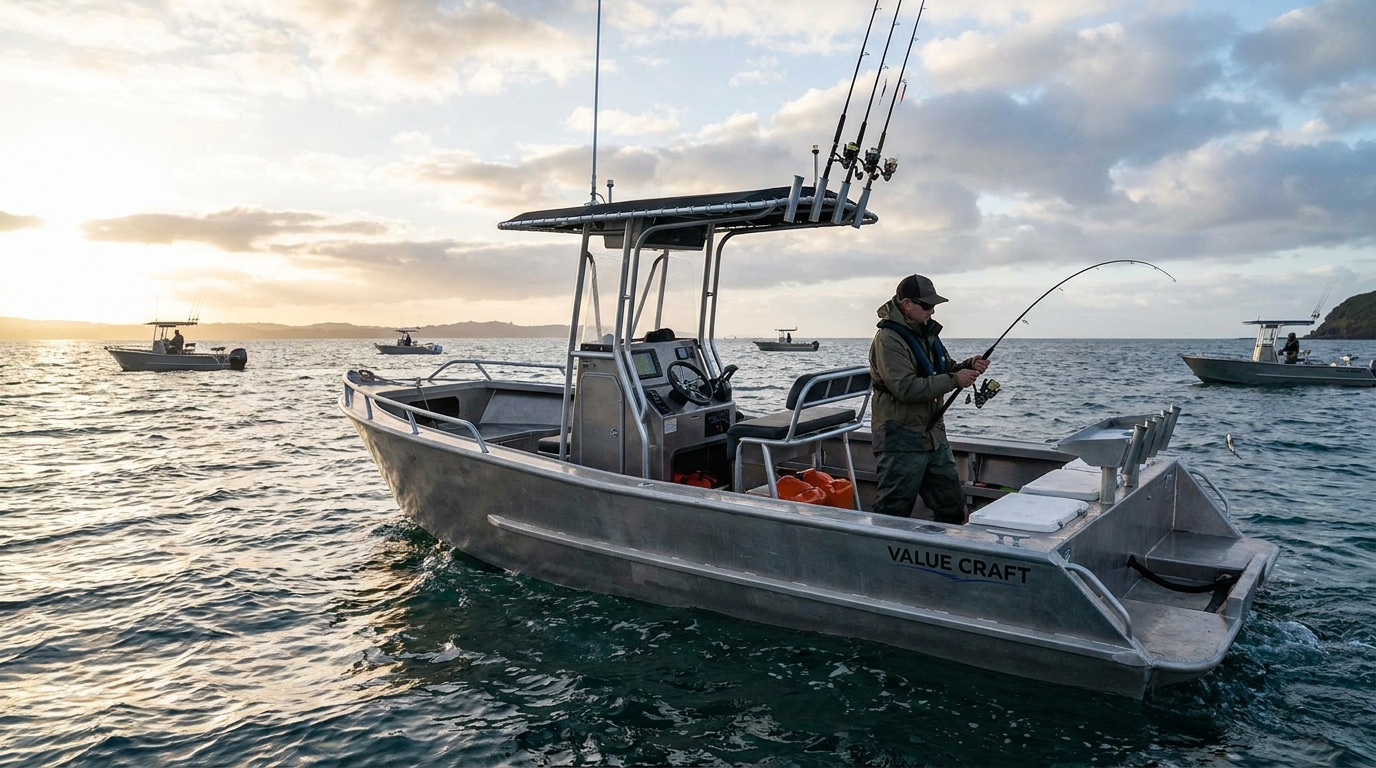
Fishing on lakes and rivers: Dedicated fishing boat (jon boat, bass boat, or aluminum fishing boat) — prioritise shallow draft, fishing-specific features, and stability when stationary
Watersports (skiing, wakeboarding, tubing): Ski/wakeboard boat or a bowrider with adequate power — tower, ballast, and wake shaping matter
Coastal saltwater fishing: Center console or offshore fishing boat — prioritise seaworthiness, freeboard, and corrosion resistance
Sailing: Sailboat — a completely different category with completely different skills, costs, and considerations
Multi-purpose family use: Pontoon boat or deck boat — the Swiss Army knives of boating, doing most things adequately without excelling at any one
The Best Beginner Boats by Type
Best Overall Beginner Boat: Pontoon Boat (18–22 feet)
Pontoon boats are the most beginner-friendly boats available, and this recommendation is nearly universal among boating educators, marina staff, and experienced boat owners asked to advise a first-time buyer. The reasons are structural:
Exceptional stability: The twin-pontoon (or tritoon) hull design makes capsizing essentially impossible in calm to moderate conditions. Beginners can move around, fish, swim, or host passengers without the stability anxiety of a traditional hull boat.
Forgiving handling: Pontoon boats respond slowly and predictably to steering inputs, giving beginners time to correct errors before they become problems. Docking, which intimidates most first-time boat handlers, is significantly more manageable in a pontoon than a traditional hull.
Versatility: The flat deck accommodates fishing, sunbathing, watersports (with adequate power), and general cruising equally well.
Passenger capacity: Most 20-foot pontoons are certified for 10–12 passengers — more than almost any equivalent-price conventional hull.
Recommended models:
Sun Tracker Party Barge 20 DLX — From $19,995: The benchmark entry-level pontoon. Bass Pro Shops' Sun Tracker brand offers the most competitive pricing in the category with adequate quality for new boaters. Package pricing (boat, motor, trailer) provides genuine value clarity.
Bennington 20 SL — From $28,000: The step up in quality that makes a meaningful difference to the on-water experience. Better furniture, better welding, better resale value. The Bennington brand commands strong used prices.
Used 2019–2022 Lowe Pontoon — $12,000–$18,000 used: For buyers who want to reduce first-boat financial exposure, a well-maintained 3–7 year old pontoon from a reputable brand provides the same experience at significantly lower cost.
Best Beginner Fishing Boat: Aluminum Jon Boat or V-Hull
For freshwater fishing on lakes, rivers, and reservoirs, the aluminum fishing boat — either a flat-bottomed jon boat or a shallow-V hull — is the most practical and most affordable entry point. Simple, durable, repairable, and ideally suited to the fishing use case.
Recommended models:
Lund WC-14 — From $8,995 with motor: A 14-foot welded aluminum fishing boat with a 15hp motor — the complete package for lakes and calm rivers. Unsinkable foam flotation, exceptional durability.
Tracker Pro Team 175 TXW — From $15,995: Bass Pro's tournament fishing entry-level package. Livewells, rod storage, trolling motor, depth finder — fully equipped for serious fishing at an accessible price.
Used Alumacraft 165 CS — $7,000–$12,000 used: Alumacraft builds some of the most durable aluminum fishing boats available. Used examples in good condition are outstanding value.
Best Beginner Bowrider: 17–21 Foot Fiberglass
For buyers who want versatility across watersports, cruising, and casual fishing without the pontoon's limitations (modest top speed, wind sensitivity), a bowrider is the most popular conventional hull choice for families and recreational boaters.
Recommended models:
Bayliner VR5 Bowrider — From $25,000: The most affordable entry point in fiberglass bowriders from a reputable manufacturer. 17 feet, adequate power for watersports, reliable reputation, strong resale.
Chaparral 21 SSi — From $38,000: The step-up that serious buyers consistently find worthwhile. Better build quality, superior interior, significantly better resale value, and an ownership experience that encourages rather than discourages continued boating.
The Real Cost of Boat Ownership: Year One Budget
This is the section most boat buyers wish they'd read before purchasing. For a 20-foot pontoon boat purchased new at $25,000:
Purchase price: $25,000
Sales tax (varies by state — average ~7%): $1,750
Registration and licensing: $150–$400
Trailer (if not included): $2,500–$4,000
Marine insurance (annual): $800–$1,500 depending on value and coverage
Marina slip or storage (annual): $2,400–$8,400 (wet slip) or $1,200–$3,600 (dry storage)
Fuel (100 hours at $5/gallon, 6 gallons/hour): $3,000
Maintenance (winterization, service, oil, filters): $500–$1,200
Accessories (life jackets, lines, fenders, flares, anchor, safety kit): $500–$1,000
Total year one cost of a $25,000 boat: $36,600–$45,350
This is not a reason not to buy a boat. It is a reason to understand what you're committing to before you commit to it — and to ensure the purchase fits within your overall financial picture with room for the ongoing costs.
New vs Used: The Honest Assessment
For first-time buyers, used boats in the 3–8 year old range typically represent better value than new for several reasons. The initial depreciation has already occurred (boats depreciate approximately 15–20% in their first year). The quality of used boat available has improved significantly as the pandemic-era boating surge produced a large cohort of well-maintained recent boats entering the used market. And the lower financial exposure of a used boat purchase allows first-time owners to learn their preferences before committing to a more significant purchase.
The key caveat: a used boat inspection by a qualified marine surveyor ($300–$600) is non-negotiable before any significant used boat purchase. Issues invisible to a casual inspection — hull osmosis, engine compression problems, electrical faults — can cost thousands to repair and are reliably found by professional surveyors.
Where to Buy: The Best Sources in 2026
Dealers: Best for new boats and certified pre-owned programmes. Manufacturer warranty protection. Higher prices.
Boat shows: The best time to buy new boats — end-of-show deals, package pricing, and the ability to compare multiple brands in one location. Major shows (Miami, Chicago, Seattle) occur January–March.
YachtWorld and BoatTrader: The most comprehensive used boat marketplaces in the US. Equivalent to Autotrader for the boat market — all brands, all sizes, all price points.
Facebook Marketplace and local classifieds: Best for smaller, lower-value boats (jon boats, older fishing boats). Higher risk but lowest prices.
best beginner boats 2026, buying first boat guide, pontoon boat beginners, best starter boat, boat buying guide 2026, how much does a boat cost, jon boat vs pontoon, bowrider beginner boat, used boat buying tips, boat ownership costs

Discussion
Comments
Approved comments are published after moderation to keep discussion useful and spam-free.
No comments yet. Start the discussion below.