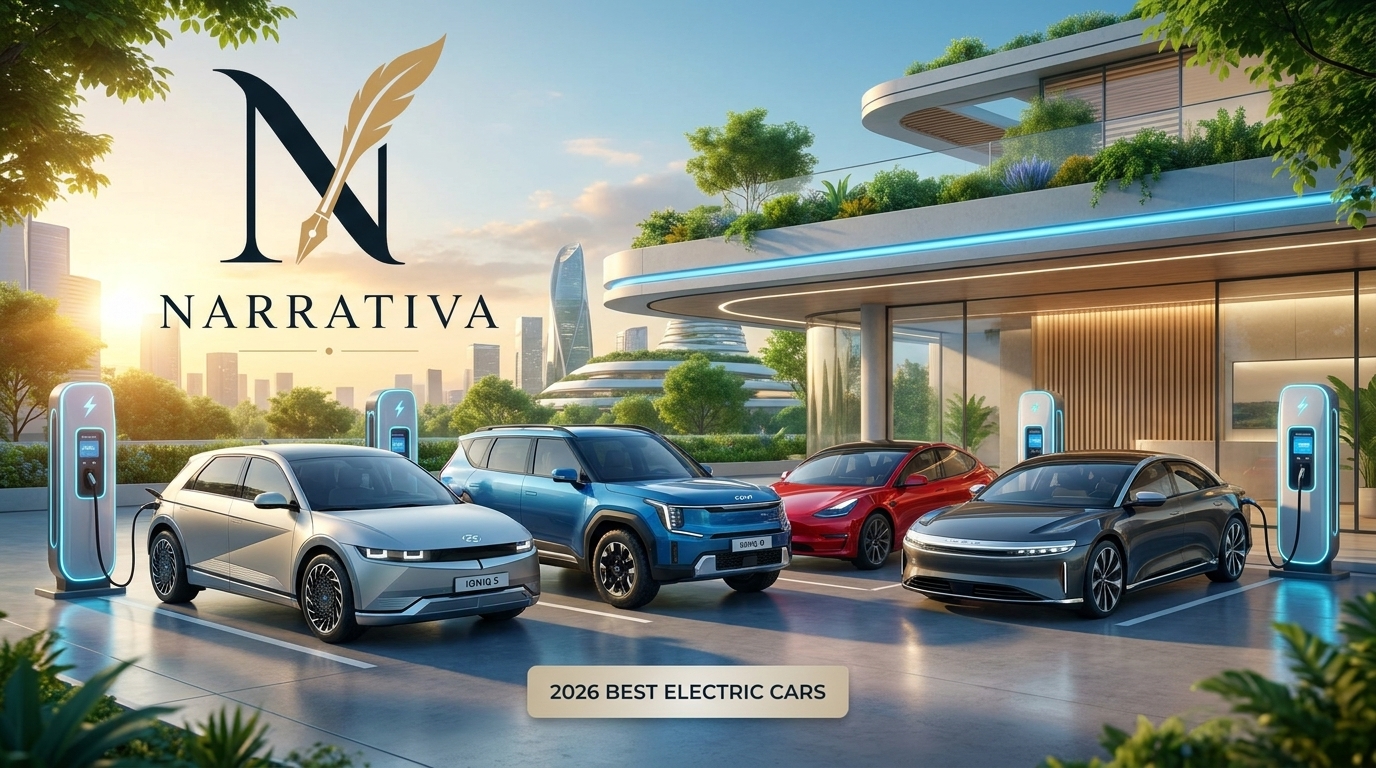
Best Electric Cars to Buy in 2026: Full Buyer's Guide
The 2026 EV Market: Better Cars, No Federal Tax Credit
The $7,500 federal EV tax credit expired on September 30, 2025, and no replacement has been enacted. Yet paradoxically, 2026 is shaping up as one of the best years in history to buy an electric car. With 130 days of EV inventory sitting on dealer lots, automakers and dealers are offering discounts of $7,500 to $10,000 on many models — effectively recreating the tax credit's value through market pressure rather than government policy.
Battery technology has continued to advance. Most new EVs in 2026 offer 300+ miles of real-world range. 800-volt architecture — which enables charging from 10 to 80 percent in under 25 minutes — has spread from Hyundai-Kia to multiple mainstream brands. The NACS (Tesla) charging standard is now universal across new US EVs, eliminating the adapter complexity that plagued earlier buyers.
Best EVs by Category for 2026
Best Overall Value: Hyundai Ioniq 5 (2026)
The 2026 Ioniq 5 is the consensus recommendation from Kelley Blue Book, Autoblog, and US News, having won KBB's Best EV award three consecutive years. A massive price cut for 2026 — up to $9,800 off — brings the starting price down to $35,000. It delivers up to 318 miles of EPA-estimated range, 800-volt architecture for 10-80 percent charging in roughly 20 minutes, a spacious and thoughtfully designed interior, and standard NACS charging.
Best Electric SUV: Hyundai Ioniq 9 (2026)
The Ioniq 9 is the all-new Hyundai three-row electric SUV that immediately topped Kelley Blue Book's electric SUV rankings with a 4.8 out of 5 expert rating. Spacious, quiet, over 300 miles of range in every configuration, and the same 800-volt fast-charging infrastructure as the Ioniq 5. For families needing genuine seven-seat capability without range compromise, it is currently unrivalled.
Best Performance EV: Tesla Model 3 (2026)
The 2026 Tesla Model 3 continues to set the benchmark for driving dynamics and software integration. The Performance variant (0-60 in 2.9 seconds) remains the most engaging affordable performance EV available. The Supercharger network — now open to all NACS-compatible vehicles — remains the most reliable fast-charging infrastructure in North America and most of Europe.
Best Luxury EV: Lucid Air (2026)
Five years after its debut, the Lucid Air remains the king of luxury EV sedans with best-in-class range, space, speed, and luxury. The Grand Touring variant offers over 500 miles of range, making range anxiety a genuine non-issue. Starting at approximately $70,000.
Best Budget EV: Chevrolet Equinox EV
The Equinox EV ($35,000 starting, 319 miles range) fills the affordable bracket admirably. Remaining 2025 Bolt inventory at around $28,000 with current dealer incentives also represents one of the best value plays in the entire car market.
Best Upcoming EV: Rivian R2
The Rivian R2 — a smaller, more affordable sibling to the R1T pickup — is one of the most anticipated EVs of 2026. Starting at approximately $45,000, it delivers the Rivian outdoor adventure DNA in a more accessible package. If you can wait, it is worth considering.
The Used EV Market: An Underrated Option in 2026
Used EV sales surged 12 percent in Q1 2026 as lease returns from 2023-2025 flooded dealer lots. A 2022-2023 Tesla Model 3 or Hyundai Ioniq 5 with 30,000-40,000 miles can be purchased for $20,000-$28,000. Battery degradation in these models is typically well under 10 percent at these mileages.
Frequently Asked Questions
Is there still a federal EV tax credit in 2026?
No. The $7,500 new vehicle credit and $4,000 used vehicle credit from the Inflation Reduction Act expired September 30, 2025. However, manufacturer and dealer discounts of equivalent or greater value are widely available in the current market due to high inventory levels.
What is 800-volt architecture and why does it matter?
800-volt electrical systems enable far faster charging than 400-volt systems. A vehicle with 800-volt architecture (Hyundai Ioniq 5/6/9, Kia EV6/9, Porsche Taycan) can charge from 10 to 80 percent in 18-25 minutes at compatible 350 kW chargers. 400-volt vehicles doing the same charge typically take 35-55 minutes.
How much does it cost to charge an EV at home?
With a 7.2 kW Level 2 home charger, most EVs take 6-10 hours for a full charge overnight. At the US average electricity rate of approximately $0.16/kWh, a full charge (say 75 kWh battery) costs around $12 — equivalent to roughly 300 miles of driving at 4 miles per kWh.