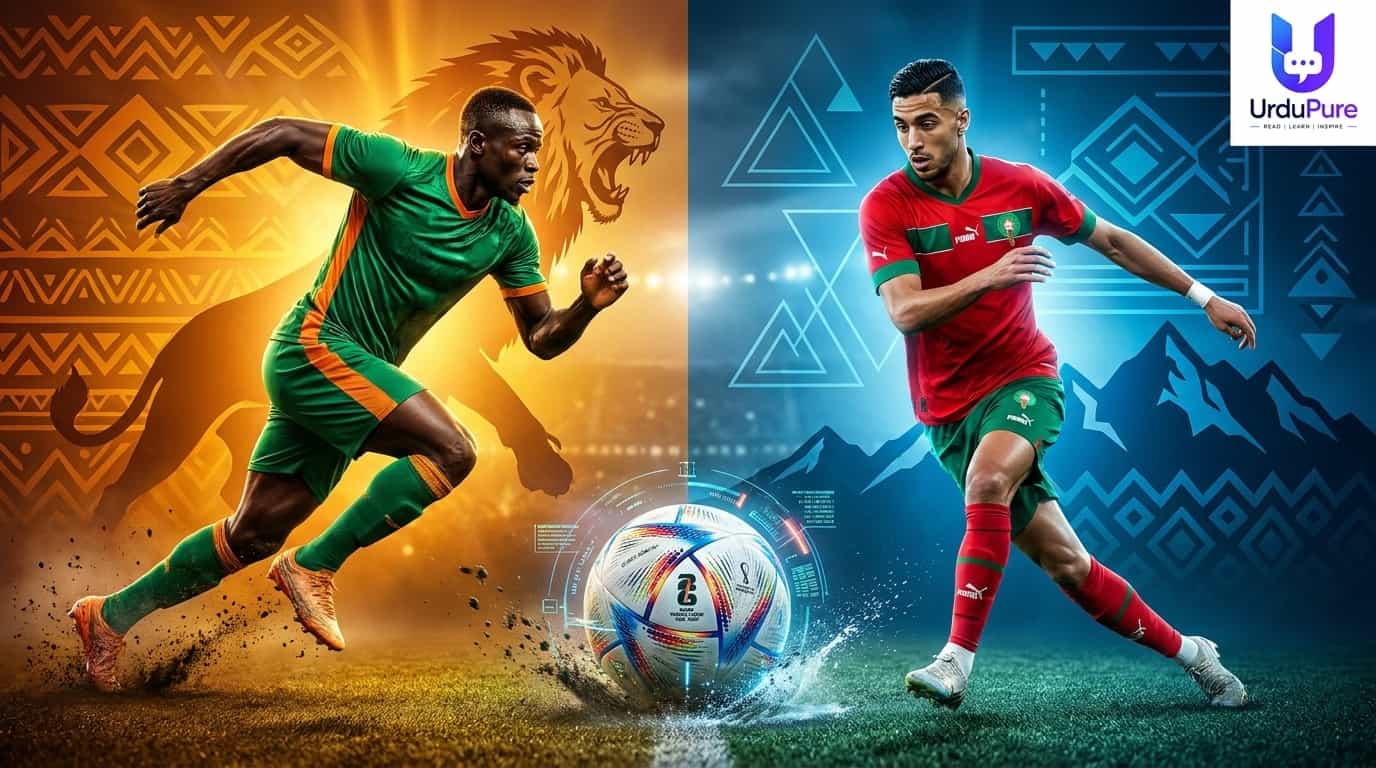
Can Sub-Saharan Africa Outdo North Africa at the World Cup 2026?
When Achraf Hakimi delicately chipped his Panenka penalty down the middle of the goal against Spain in Qatar, he did more than just secure a quarterfinal spot; he fundamentally shattered the psychological barrier that had long constrained African nations on the global stage. The Morocco World Cup 2022 semifinal run rewrote the script, proving that an African team could orchestrate a deep, tactically flawless tournament campaign.
As the expanded 48-team format approaches for the tournament in North America, the landscape of global football has shifted. Africa will now send at least nine representatives, providing unprecedented opportunities for both established powerhouses and emerging forces. Yet, Morocco’s historic triumph has sparked an intense, continent-wide debate.
The benchmark has been elevated from mere group-stage survival to genuine title contention. Now, the pressing question echoing from the streets of Dakar to the bustling markets of Lagos is whether sub-Saharan Africa football hopes can materialize into a campaign that eclipses the tactical masterclass delivered by their North African rivals. As we look at the prospective World Cup 2026 Africa teams, the battle lines between the north and the south of the continent are drawn with sharper focus than ever before.
Morocco’s Semifinal Legacy
The Morocco World Cup 2022 semifinal appearance was not a product of luck or a favorable draw; it was the result of a meticulously crafted defensive block, unbreakable team spirit, and a world-class infrastructure that has been brewing in Rabat for a decade. Manager Walid Regragui forged a squad that seamlessly blended the technical finesse of European diaspora players with the gritty, unyielding resolve of domestic talents.
This historic achievement has radically transformed expectations. For decades, the narrative surrounding World Cup 2026 Africa teams would have centered on the hope of simply reaching the knockout stages. Morocco discarded that inferiority complex, showcasing defensive resilience that silenced the likes of Belgium, Spain, and Portugal.
Consequently, the pressure on the rest of the continent is immense. The Atlas Lions proved that African teams no longer need to rely solely on unstructured attacking flair; they can out-think and out-organize the European elite. For the rest of the continent, Morocco’s legacy is both a beacon of inspiration and a daunting standard to match.
Senegal’s Golden Generation
If there is one nation equipped to answer the challenge laid down by Morocco, it is Senegal. As the reigning champions of the 2021 AFCON, the Lions of Teranga boast a spine of elite, battle-hardened veterans. Fans and analysts alike are intensely debating the ultimate potential of the Senegal World Cup 2026 squad, heavily scrutinizing whether their aging core has one last roar left.
The leadership of Idrissa Gueye in the midfield remains pivotal. His ability to break up play and dictate tempo provides the foundational stability that allows their attackers to flourish. Meanwhile, the talismanic Sadio Mané, though entering the twilight of his career, remains the emotional and tactical focal point of the team. Mané’s ability to conjure moments of magic out of nothing will be crucial in tight, high-stakes matches.
But the true strength of the Senegal World Cup 2026 squad lies in its evolving depth. The integration of younger, dynamic talents from top European leagues ensures that they are not entirely reliant on the old guard. For pundits asking, can Senegal reach World Cup semifinal 2026, the answer hinges on their ability to blend Mané's veteran savvy with the relentless energy of their rising stars.
Nigeria’s Rollercoaster Journey
No discussion of sub-Saharan Africa football hopes is complete without addressing the beautiful, chaotic enigma that is Nigeria. The Super Eagles consistently produce some of the most fearsome attacking talent on the planet. With players like Victor Osimhen and Ademola Lookman terrorizing European defenses, Nigeria’s frontline is a match for any elite nation.
However, evaluating Nigeria World Cup chances requires looking beyond the pitch. Their historical journey is a rollercoaster of administrative blunders, last-minute coaching changes, and agonizing inconsistency. Despite their attacking flair, the lack of a cohesive youth-to-senior pipeline often leaves the team unbalanced. If the Nigerian federation can provide a stable, drama-free environment, their sheer firepower could turn them into dark horses, elevating the Nigeria vs Morocco football rivalry from continental clashes to the grandest global stage.
Ghana and Cameroon: Sleeping Giants
For a true appreciation of African football World Cup history, one must look to the continent's sleeping giants. Ghana and Cameroon possess a rich pedigree of World Cup heartbreak and heroism. The world still vividly remembers Roger Milla’s iconic corner-flag dance in 1990 and the agonizing moment Asamoah Gyan’s penalty struck the crossbar against Uruguay in 2010.
These nations embody the historic highs of sub-Saharan Africa football hopes. However, both have struggled recently with transitional periods, attempting to replace legendary figures with cohesive new units. The expanded 2026 format offers a lifeline. If Ghana can harness the technical ability of their midfield and Cameroon can rediscover their indomitable spirit, these sleeping giants possess the genetic tournament memory necessary for a deep, unexpected resurgence.
The North vs Sub-Saharan Rivalry
To understand the dynamics of North Africa vs Sub-Saharan Africa football, one must examine the stark contrasts in infrastructure, coaching, and tactical philosophy. North African nations—spearheaded by Morocco, Egypt, and Algeria—have invested heavily in domestic academies and coaching education. Their style of play is often characterized by tactical rigidity, possession-based control, and European-style defensive blocks.
Conversely, sub-Saharan football has historically relied on the raw athleticism, individual brilliance, and improvisational flair of players who are often exported to European academies at a very young age. This reliance on external development sometimes results in national teams that look like collections of brilliant individuals rather than cohesive units.
[As of early 2024, Morocco sits at #13 in the FIFA World Rankings, comfortably ahead of Senegal at #17 and Nigeria at #28, reflecting North Africa's recent competitive edge in structural consistency.]
The debate over Nigeria World Cup chances versus the Senegal World Cup 2026 squad ultimately ties back to this rivalry. Can the unstructured brilliance of the sub-Saharan giants overcome the meticulously engineered systems of the North? The recent AFCON tournaments have shown a closing of the gap, but the World Cup is the ultimate litmus test. The Morocco World Cup 2022 semifinal raised the tactical bar; the south must now match that intellectual rigor.
Spain’s Youth Revolution
While African nations refine their strategies, they must also look outward at global trends, notably Spain's youth revolution. The meteoric rise of players like Lamine Yamal highlights a European trend of trusting teenage prodigies in high-stakes environments. Spain has created an ecosystem where youth integration is seamless, governed by a unified tactical philosophy from the U-15s to the senior team.
For World Cup 2026 Africa teams, there is a vital lesson here. Sub-Saharan teams often rely heavily on established veterans, sometimes hesitating to hand the reins to domestic youth. Integrating their own teenage sensations with the same confidence Spain shows Yamal could be the missing ingredient needed to inject unpredictability and fresh energy into their campaigns.
Iran’s Visa Drama & Off-Field Factors
World Cup campaigns are rarely decided solely on the grass; off-field logistics and geopolitics play massive, unseen roles. The recent news regarding the Iranian national team receiving US visas at the eleventh hour—following severe diplomatic tensions and a base camp shift to Mexico—illustrates how geopolitical friction can disrupt tournament preparation. For African teams traveling to North America, securing seamless visas, optimizing travel across multiple time zones, and managing base camp logistics will be just as critical as their tactical game plans.
Jordan’s Debut Dream
In stark contrast to the heavy expectations placed on Africa’s giants, the romantic narrative of the World Cup is kept alive by debutants. Jordan’s historic qualification brings a sense of unburdened joy and passionate defiance to the tournament. Watching Jordan’s debut dream unfold serves as a poignant reminder to established African nations: the World Cup is a privilege. Reigniting that raw, debutant-like hunger might be exactly what is needed to break through the plateau of underachievement.
World Cup 2026 Innovations
The tactical landscape in 2026 will also be heavily influenced by unprecedented technological advancements. FIFA is set to deploy the most advanced sensor-equipped ball in history, capable of tracking micro-touches and spatial data in real-time. Furthermore, the rumored implementation of highly advanced security and officiating tech—colloquially dubbed the robot dogs World Cup 2026 initiative for perimeter and crowd management—marks a new era of ultra-modern tournament operations.
For World Cup 2026 Africa teams, adapting to this hyper-scrutinized environment is paramount. Semiautomated offside technology and sensor balls mean that defensive high lines must be mathematically perfect. Sub-Saharan teams, sometimes historically prone to momentary lapses in defensive concentration, must adapt to a refereeing environment where a millimeter of indiscipline is immediately punished.
Cristiano Ronaldo’s Sixth World Cup
As a narrative foil to the youthful emergence across the globe, Cristiano Ronaldo looks poised to attempt a staggering sixth World Cup appearance. His obsessive longevity and meticulous physical maintenance represent the absolute pinnacle of individual dedication. For the aging stars of the African continent—players desperate for one last shot at glory—Ronaldo’s enduring presence is proof that sheer willpower can defy the ticking clock of an athlete's prime.
Africa’s Time to Shine
The roadmap to glory in North America is fraught with logistical, tactical, and psychological hurdles. The Morocco World Cup 2022 semifinal fundamentally altered the DNA of global expectations, proving that African nations are no longer just colorful participants, but apex predators. Whether looking at the robust Senegal World Cup 2026 squad or analyzing volatile Nigeria World Cup chances, the talent required to win the ultimate prize undeniably exists south of the Sahara.
Ultimately, the fulfillment of sub-Saharan Africa football hopes will not be born from raw athleticism alone, but from marrying that inherent brilliance with the tactical discipline modeled by their North African rivals. If they can conquer their own administrative demons and embrace the tactical demands of the modern, tech-driven game, the glass ceiling will not just be cracked; it will be shattered. The world is watching, and it is time for the beating heart of African football to finally claim the crown.
What do you think? Can a sub-Saharan team make the final four in 2026, or will North Africa continue to dominate the continent's global representation? Drop your predictions in the comments below and share this article with your fellow football fanatics!
FAQs
Q: Can Senegal reach World Cup semifinal 2026? A: Yes, Senegal possesses the talent and experience to reach the semifinals. Their success will depend on the continued leadership of veterans like Sadio Mané and Idrissa Gueye, combined with the successful integration of younger European-based talents to match the tactical discipline seen in recent tournaments.
Q: Which African teams have the best chance at the 2026 World Cup? A: Morocco remains a strong favorite due to their 2022 semifinal pedigree and elite infrastructure. However, sub-Saharan teams like Senegal, Nigeria, and Ivory Coast have the attacking firepower and squad depth to mount serious challenges if they maintain administrative and tactical stability.
Q: How has Morocco's 2022 World Cup performance impacted African football? A: Morocco's run to the semifinals shattered psychological barriers and raised the benchmark for all African nations. It proved that African teams can successfully deploy elite, organized defensive structures to defeat top-tier European and South American opponents, shifting expectations from just making the knockouts to actively contending for the trophy.
World Cup 2026 Africa teams, African football 2026 World Cup, CAF World Cup 2026 qualifiers, Sub-Saharan Africa football, North Africa football, North Africa vs Sub-Saharan Africa football, Ivory Coast World Cup chances, Senegal World Cup 2026 squad, Morocco World Cup 2022 legacy, African football World Cup history, Can an African team win the 2026 World Cup, Tactical evolution of African football teams, How World Cup 2026 innovations impact African teams, Who qualified for the 2026 World Cup from Africa, Senegal golden generation 2026 World Cup


Discussion
Comments
Approved comments are published after moderation to keep discussion useful and spam-free.
No comments yet. Start the discussion below.