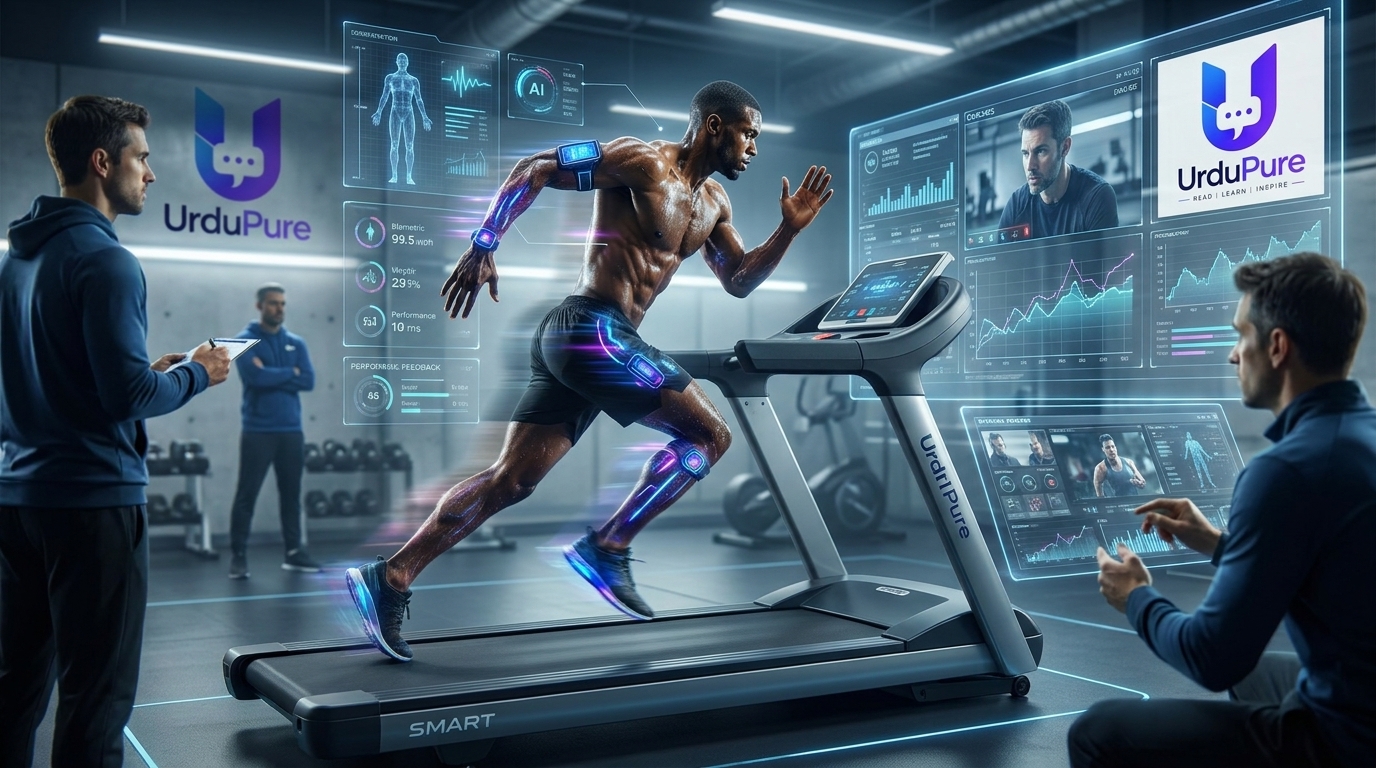
How Elite Athletes Are Using AI to Train Smarter in 2026
AI is no longer just analysing stats — it's designing personalised training plans, predicting injury risk before symptoms appear, and changing how champions are made. Here's what's actually happening inside elite sport right now.
The Quiet Revolution in Elite Sport
The most significant performance advantages in elite sport in 2026 are not pharmaceutical, genetic, or equipment-based. They are computational. Artificial intelligence, applied to the vast quantities of biometric, performance, and contextual data that modern athletes generate, is producing training optimisations and injury prevention capabilities that are measurably changing outcomes — in some cases by margins that are, by elite sport standards, enormous.
This revolution is quiet for a specific reason: teams and athletes with genuine AI-driven competitive advantages have no incentive to publicise them. The most impactful applications are proprietary, protected, and specifically designed to be invisible to opponents. What we know about AI in elite sport comes primarily from the information organisations choose to share, from academic research partnerships, and from the downstream evidence of performance improvements that defy conventional explanation.
This guide compiles what is verifiably known, across multiple sports, about how AI is reshaping elite athletic development in 2026.
Injury Prediction: The Most Commercially Impactful Application
The single most valuable AI application in professional sport — measured by direct financial impact — is injury prediction. Professional sports teams lose hundreds of millions of dollars annually to player injuries: in salary paid to injured players not competing, in reduced performance of replacement players, in competitive outcomes foregone. An AI system that accurately predicts soft tissue injury risk before injury occurs — allowing training load reduction or preventive intervention — has a measurable return on investment that teams can calculate precisely.
The current state of the art: systems that combine GPS tracking data (distance, acceleration, deceleration, change-of-direction events), heart rate variability, sleep quality, muscle oxygenation measurements, and subjective wellness scores into injury risk models that flag elevated risk days before any subjective symptom. Kitman Labs, a sports science platform used by several Premier League clubs and NFL franchises, has published peer-reviewed research showing that their model reduced soft tissue injuries by 22% in a controlled study at a Premier League club over a single season.
The NBA has gone furthest in public commitment to injury prevention AI — the league's own data platform shares (with team consent) aggregated data that allows the refinement of injury prediction models across the full league dataset, producing models with more statistical power than any individual team could generate from their own data alone.
Training Load Optimisation: The Art of Strategic Fatigue
Elite athletic training is an exercise in optimal dosing: enough training stimulus to drive adaptation, not so much that accumulated fatigue exceeds recovery capacity and produces injury or performance decline. Getting this balance right requires understanding, for each individual athlete, the relationship between training load and adaptation — a relationship that varies significantly between athletes and changes across a career.
Traditional training load management relied on coaches' experience and on simple metrics like total distance covered or session rating of perceived exertion. Modern AI systems integrate dozens of variables — GPS tracking, heart rate, velocity and acceleration profiles, blood biomarkers, sleep data from wearables, travel schedules, competition exposure, psychological stress indicators — into dynamic training load recommendations that adjust daily based on each athlete's individual state.
Manchester City's sports science department — consistently cited as the most technologically sophisticated in English football — uses a proprietary training load optimisation system that has been credited by the club's sports science director with maintaining playing squad availability above 90% in recent seasons, compared to a Premier League average closer to 75–80%.
Tactical Analysis: Seeing Patterns Humans Miss
Computer vision applied to video footage has transformed tactical analysis in ball sports. Systems can now track every player's position on a pitch or court 25 times per second, classify their actions (running, walking, pressing, covering), and produce spatial probability models of where players are likely to move next — processing in real time the kind of positional analysis that required hours of manual video review a decade ago.
Football (Soccer)
The expected goals (xG) metric — which measures the probability of a shot resulting in a goal based on position, shot type, and defensive pressure — has moved from academic curiosity to mainstream metric in under a decade. More sophisticated successors are now in use at the top clubs: expected threat (xT) models that calculate the probability of any possession leading to a goal across an entire phase of play, not just in the shot moment itself, allowing the tactical value of every pass, dribble, and movement to be quantified.
Pressing effectiveness — the cornerstone of high-intensity modern football tactics — is now analysed through AI systems that calculate counter-pressing success rates, PPDA (passes allowed per defensive action), and the specific body orientations and trigger cues that initiate each team's pressing triggers. This analysis, conducted in real time during matches at the top clubs, informs tactical adjustments at half-time with specificity that was impossible five years ago.
Tennis
IBM's SlamTracker system, used at Grand Slam tournaments, now provides AI-generated performance predictions that update in real time during matches — calculating win probability, identifying the statistical patterns most associated with victory for each player in the match, and flagging momentum shifts before they are perceptible to human observers. Top players' coaching teams use comparable proprietary systems to prepare match-specific game plans — identifying opponents' statistical vulnerabilities (second serve percentages in specific court positions, preference patterns under pressure, movement tendencies) with a granularity that creates measurable competitive advantages.
American Football
The NFL's Next Gen Stats platform — which tracks every player's position, speed, and acceleration using RFID chips embedded in shoulder pads — has produced the richest dataset in professional sport. The analytical applications range from play success probability calculations to receiver route running efficiency metrics to quarterback decision-making speed measurements. Advanced teams now use AI-generated opponent tendency models that update throughout a game, flagging in real time when opponents are deviating from their statistical tendency profiles in ways that suggest specific plays are being set up.
Recovery Optimisation: The New Competitive Frontier
Elite sport competition schedules — particularly in football, basketball, and rugby — have become so congested that recovery between matches is as important a performance driver as training within them. AI systems applied to recovery optimisation monitor the biomarkers and performance indicators that reflect recovery status, allowing training staff to make evidence-based decisions about whether individual players are ready to perform at full intensity.
Heart rate variability (HRV) — the variation in time between heartbeats — is the most widely used non-invasive recovery biomarker. HRV measured upon waking reflects autonomic nervous system recovery and correlates with readiness to perform high-intensity exercise. Multiple professional teams use automated HRV monitoring (via wearables including the Whoop strap and Polar devices) to generate daily readiness scores that inform training load decisions.
Emerging research is exploring more invasive but more specific biomarkers — specific cytokines measured from dried blood spots, muscle damage proteins in urine, and metabolomic profiles from breath analysis — that provide more precise recovery status information than HRV alone. The teams pioneering these approaches are seeking edges that will take years to identify with certainty but could produce significant competitive advantages.
How Amateur Athletes Can Access AI Training Tools
The AI training tools available to elite athletes are increasingly accessible to amateur and recreational athletes through consumer wearables and apps:
Whoop 5.0: Continuous HRV, sleep, and strain monitoring with AI-generated daily recovery and readiness scores. The app's recommendations for training load and recovery are based on the same principles as elite sports science systems. £30 / $30 per month subscription.
Garmin Connect IQ with Body Battery: Garmin's Body Battery metric integrates HRV, sleep, and activity data into a readiness score. Less sophisticated than Whoop but included with most Garmin wearables without additional subscription.
TrainingPeaks: The platform used by many professional endurance athletes for training load planning, featuring ATL/CTL/TSB models (acute training load, chronic training load, training stress balance) that optimise training periodisation. Free basic tier; paid tiers for advanced analytics.
Strava with AI coaching features: Strava's 2025 update introduced AI-generated training recommendations based on historical performance data. Free tier provides basic recommendations; paid tier provides more sophisticated analysis.
The Ethical Dimension: Does AI Training Level the Playing Field?
The most interesting ethical question raised by AI in elite sport is whether it democratises competitive advantage or concentrates it further. The optimistic case: AI tools that were initially available only to the wealthiest clubs and federations have followed the typical technology cost curve — declining over time and becoming accessible to progressively smaller and less well-funded organisations. A League Two football club in 2026 has access to analytical tools that no Premier League club had in 2015.
The pessimistic case: the most sophisticated AI applications — proprietary systems developed by elite organisations with dedicated data science teams, exclusive access to their own data at scale, and the financial resources to iterate rapidly — are pulling away from what commercial off-the-shelf products can offer. The advantage of having a 10-person sports science and data team versus a 1-person team doesn't shrink as the technology improves; it may grow, as the ability to interpret and act on more sophisticated outputs requires more human expertise to deploy effectively.
The question of whether AI training ultimately narrows or widens the gap between elite and sub-elite sport is genuinely unresolved — and its answer will shape the competitive landscape of professional sport for the rest of the decade.
AI in sports training 2026, athlete technology AI, sports analytics AI, injury prediction AI, training load optimisation, NFL AI analytics, Premier League sports science, Whoop wearable review, tactical analysis AI football, elite athlete training technology



Discussion
Comments
Approved comments are published after moderation to keep discussion useful and spam-free.
No comments yet. Start the discussion below.