B-52 and TU-22M3 Crashes: What the Same-Day Bomber Losses Really Mean for US and Russian Air Power (June 2026)
On June 15th, 2026, the United States and Russia both lost a strategic bomber. Same day. Separate accidents. Two of the most powerful military machines on earth — gone.
The Russian crew ejected safely.
The Americans were not so lucky. Eight people were killed. And one of those aircraft was no ordinary bomber.
But the deaths — as devastating as they are — are not the part of this story that keeps strategists awake at night.
This is.
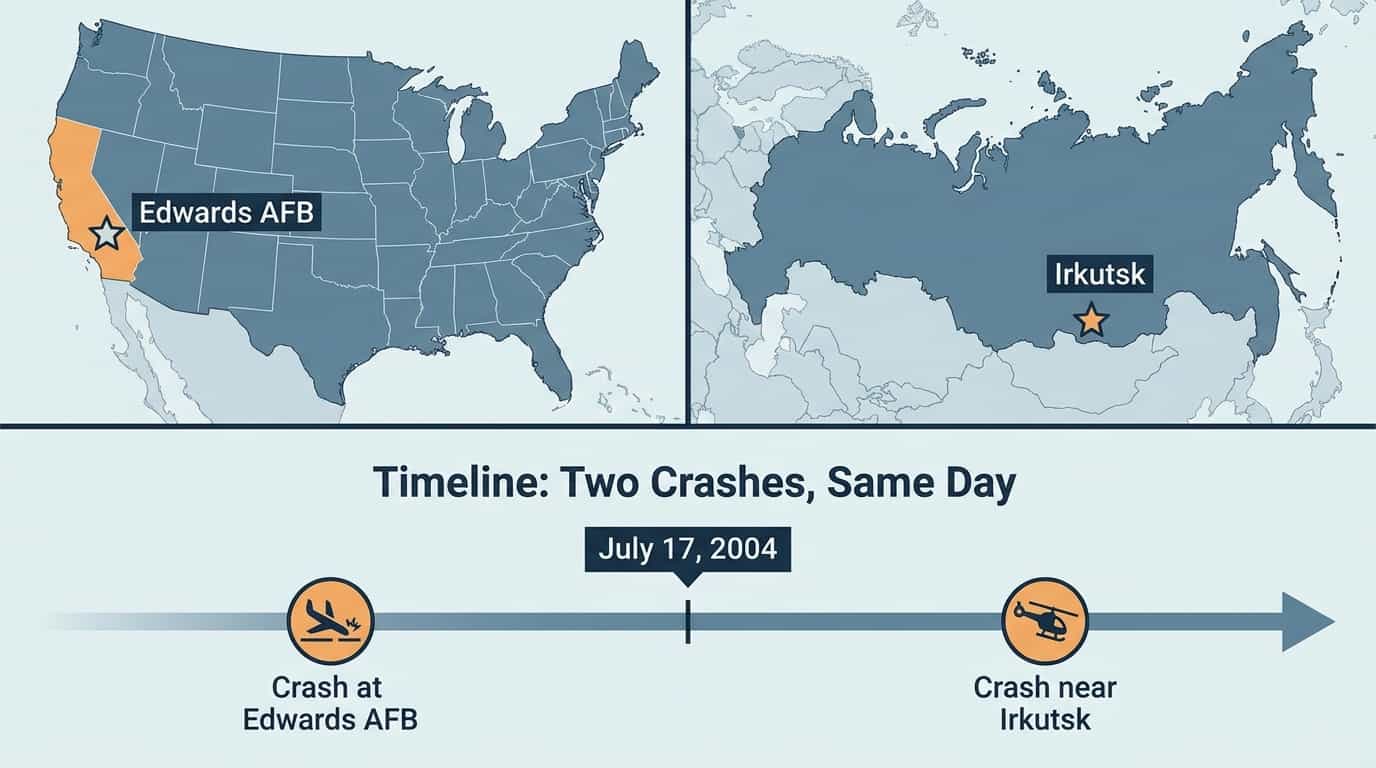
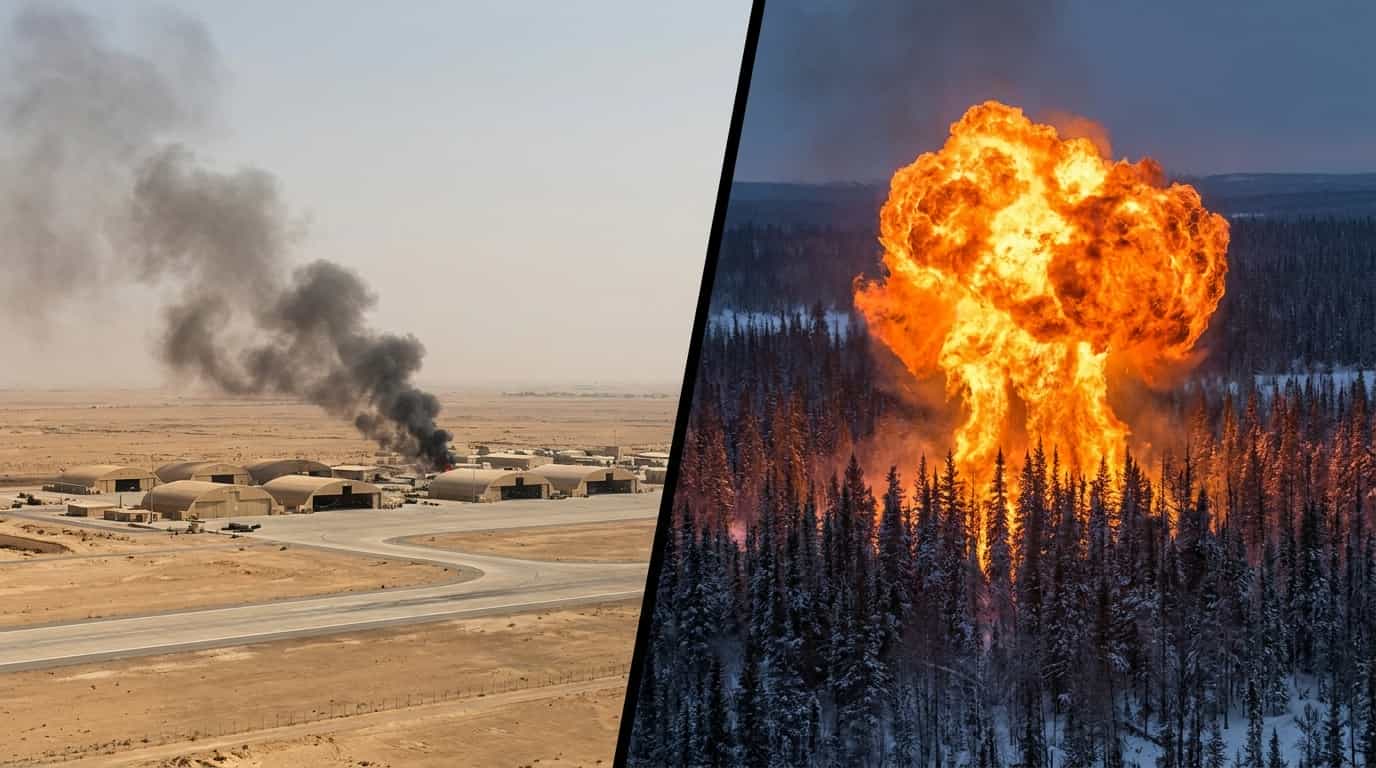
June 15th, 2026 is a day that will be studied in war colleges and aerospace engineering programmes for a generation. Within hours of each other, on opposite sides of the planet, two nuclear-capable strategic bombers from the world's two most powerful air forces were destroyed. Not in combat. In accidents.
The American aircraft was a B-52H Stratofortress, operating out of Edwards Air Force Base in California's Mojave Desert. It crashed immediately after takeoff and burst into flames. Eight crew members — a mix of military personnel, government civilians, and defence contractors — were killed. There were no survivors.
The Russian aircraft was a TU-22M3 Backfire, a long-range Soviet-era bomber that came down in Siberia's Irkutsk region during what Moscow called a routine training flight. The four-person crew ejected. All four survived, though all were hospitalised.
On the surface, these look like two tragic but unrelated incidents. A coincidence of terrible timing. But look beneath the surface — at what these specific aircraft were, what they were doing, and what their loss actually means — and a very different picture emerges. One that neither government is rushing to explain.
Here is the number that reframes everything.
Russia began the Ukraine war in 2022 with over 50 TU-22M3 Backfires on paper. Ukrainian intelligence assessed that roughly 34 were actually combat-ready.
Today, after structural crashes and targeted drone strikes, Western analysts estimate Russia has somewhere between 8 and 10 fully airworthy Backfires left.
That is a 70 percent loss of an entire strategic bomber fleet. In less than four years. Without a single declared war against a peer adversary.
One accident. One drone campaign. One aging airframe eating itself alive.
And now the Americans are dealing with a version of the same problem. Just slower. And quieter.
70% Russian Backfire fleet lost since 2022, 8-10 Estimated airworthy TU-22M3s remaining, 76 B-52s in US inventory before crash, 8 Americans killed on June 15, 2026A — WHAT HAPPENED TO THE B-52
In a press conference held on the day of the accident, Colonel James Hayes of the 412th Test Wing confirmed the details. The B-52 crashed immediately after takeoff. It burst into flames. After reviewing the footage, Hayes used two words that together constitute the most bleak possible verdict in aviation: completely unrecoverable. Entirely unsurvivable.
Eight people died. And because of the bomber's extremely low altitude at the moment of failure, none of them ever had a chance.
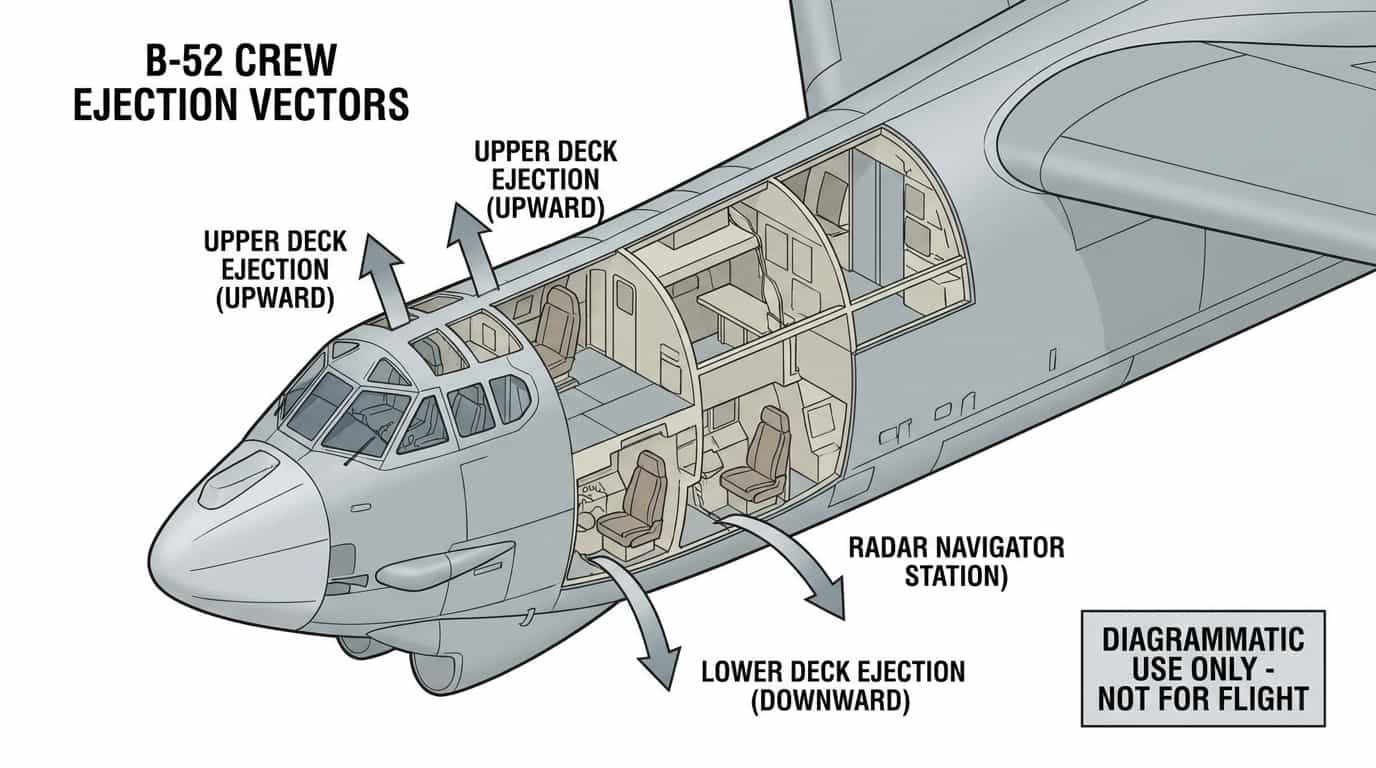
This is where the B-52's design becomes important — and darkly relevant. On the Buff, only the upper-deck crew ejects upward. The navigators, positioned on the lower deck, have downward-firing ejection seats. That downward trajectory requires a minimum altitude of approximately 250 feet for the parachutes to deploy safely. At the moment of the crash — right after takeoff — the aircraft simply had not climbed high enough. They ran out of sky before they had any sky to work with.
B — WHY THIS WAS NO ORDINARY B-52
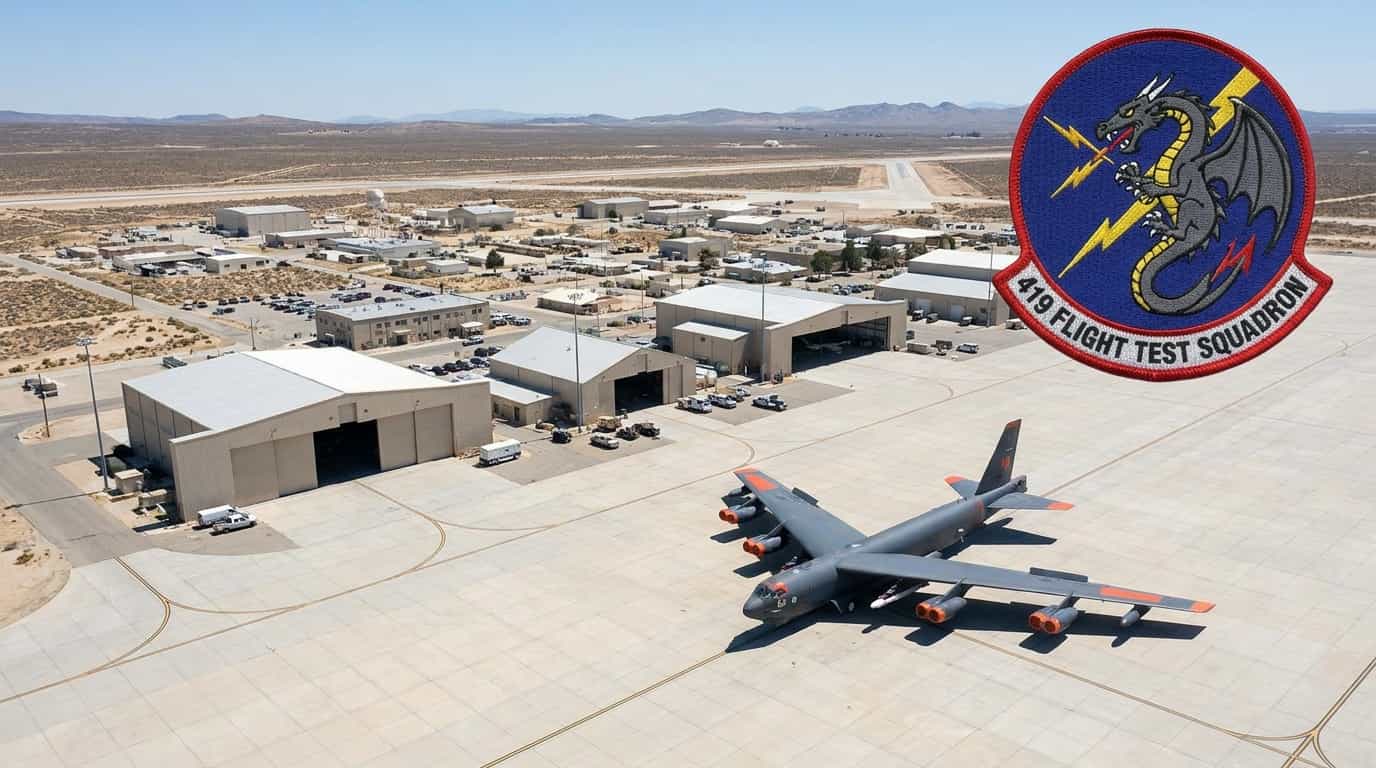
The B-52H that crashed at Edwards was not an operational bomber assigned to a combat wing. It was a highly modified test bed aircraft — a flying laboratory — that had arrived at Edwards Air Force Base on December 8th, 2025, specifically to lead the B-52 radar modernisation programme.
It was operated by the 419th Flight Test Squadron, a unit of roughly 100 people — a tight-knit 50/50 mix of military personnel and civilians. Their mission is specific and irreplaceable: if a new capability, weapon system, or software update is ever going to be integrated into an American heavy bomber, the 419th has to prove it works first. They are the gatekeepers for the B-1 Lancer, the B-2 Spirit, the legacy B-52 fleet, and emerging systems for the B-21 Raider.
This single crash likely wiped out approximately 10 percent of the entire squadron in an instant. And the people killed were not interchangeable. In developmental flight testing, the expertise an individual accumulates takes decades to build. These were not junior officers or recent recruits. They were among the most specialised aviation minds in the United States — including two Boeing engineers whose knowledge of the B-52's radar integration architecture existed, in large part, inside their heads and nowhere else.
That knowledge is now gone. It cannot be recovered from a backup server.
C — WHY THE B-52 IS STILL FLYING AT ALL
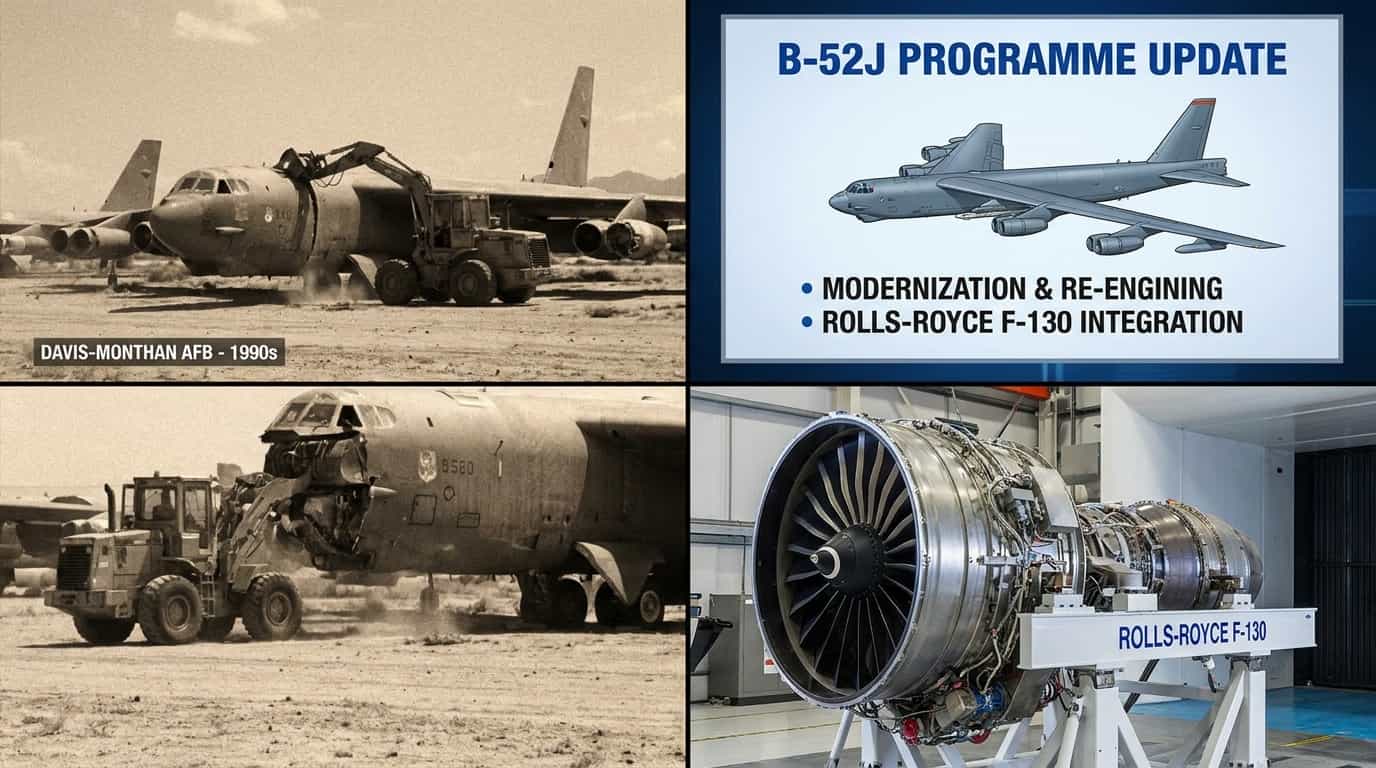
The B-52 Stratofortress entered service in 1955. The airframes active today are between 60 and 70 years old. The grandchildren of the engineers who designed it are approaching retirement age.
At its peak the US had hundreds of B-52s. But compliance with the START One treaty in the 1990s forced a dramatic reduction. Dozens of aircraft were literally chopped apart with industrial cutters — a treaty requirement, verifiable by satellite. Prior to this crash, the Air Force had 76 B-52s in total inventory. Roughly 50 were active. Eight are currently deployed for Operation Epic Fury against Iran.
Despite its age, the Buff remains a critical leg of the nuclear triad. Its longevity is not sentiment — it is calculation. The aircraft is enormous, versatile, and capable of carrying a weapons payload no other US platform can match. But keeping it flying into the 2050s requires serious investment.
The radar modernisation programme alone carries a price tag of over 3.3 billion dollars, replacing an obsolete analogue system with a modern Raytheon active electronically scanned array radar. On top of a separate 15 billion dollar programme to re-engine the entire fleet with Rolls-Royce F-130 engines.
The radar programme had already been forced to scale back under budget pressure — opting to reuse the legacy nose cone rather than develop a new one, a compromise that may limit the new radar's maximum performance. The June 15th crash makes a strained programme worse. The test bed that crashed was central to proving radar integration. Rebuilding that capability from scratch will take months. Modernised B-52s are going to arrive later than planned. And the airframes that need them most will keep flying in their current state while they wait.
D — WHAT HAPPENED TO THE TU-22M3
On the same day, thousands of miles away in Siberia's Irkutsk region, a Russian TU-22M3 Backfire long-range bomber came down near the Angara River. The Russian military described it as a routine training flight. Preliminary reports describe a dual engine failure: one engine died mid-flight, and then — on final approach, seconds from safety — the second engine failed. The aircraft entered an unrecoverable dive.
All four crew members ejected. All four survived, though all were hospitalised. Reports suggest the navigators ended up in the river. By the standards of what can happen when a 100,000-kilogram supersonic bomber loses both engines at low altitude, this was a best-case outcome.
But survival of the crew does not cancel out what the crash represents.
E — WHY THE BACKFIRE FLEET IS DYING
This was not an isolated incident. It was the third TU-22M3 to crash in this exact region of Siberia in less than two years. An August 2024 crash in the Cheremkhovo district killed a pilot. An April 2025 crash in the Usolsk district produced further casualties. In every instance, the primary cause was the same: mechanical failure driven by structural fatigue.
Production of the Backfire ended in 1993. The newest TU-22M3 in service is at least 33 years old. The oldest are approaching 50. Russia does have a modernisation programme on paper — the TU-22M3M — but over the last decade, it has successfully upgraded exactly two aircraft. Two. The engines powering the Backfire have not been manufactured since 1996. Spare parts are so scarce that aircraft with minor maintenance issues are permanently grounded and stripped to keep the remaining airframes flying.
The structural failures are only half the problem. Ukraine has accelerated the mathematics.
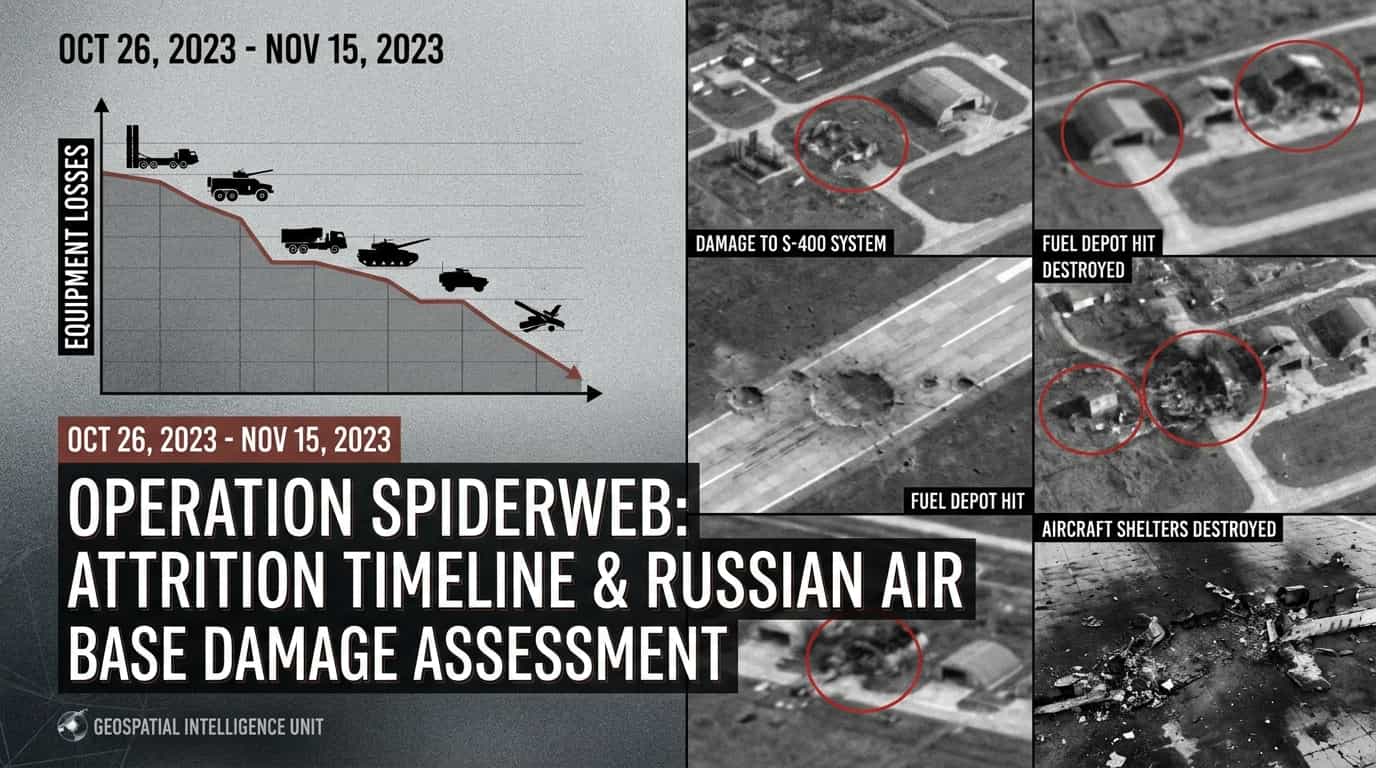
In June 2025, Ukraine executed a covert long-range drone campaign known as Operation Spiderweb. In a single coordinated strike across the Olenya, Belaya, and Diaghilevo air bases, as many as 12 TU-22M3 bombers were reported destroyed or heavily damaged. Combined with the April 2024 shootdown over Stavropol — a Backfire brought down by a Ukrainian S-200 missile repurposed for the surface-to-air role — the attrition rate has become mathematically catastrophic.
Russia began 2022 with roughly 50 Backfires. Ukrainian intelligence put the combat-ready figure at around 34. Western analysts today estimate 8 to 10 fully airworthy airframes remain. Over 70 percent of an entire strategic bomber fleet — gone. Not lost to a peer adversary. Lost to aging Soviet engineering, inadequate maintenance, and an opponent with commercially available drones.
F — THE CRITICAL DIFFERENCE
Neither the United States nor Russia can build brand-new strategic bombers quickly to replace these aging airframes. The B-21 Raider exists, but it is years from full operational capability. Russia's PAK-DA stealth bomber programme is so far behind schedule that most analysts don't expect meaningful numbers before the 2030s at the earliest.
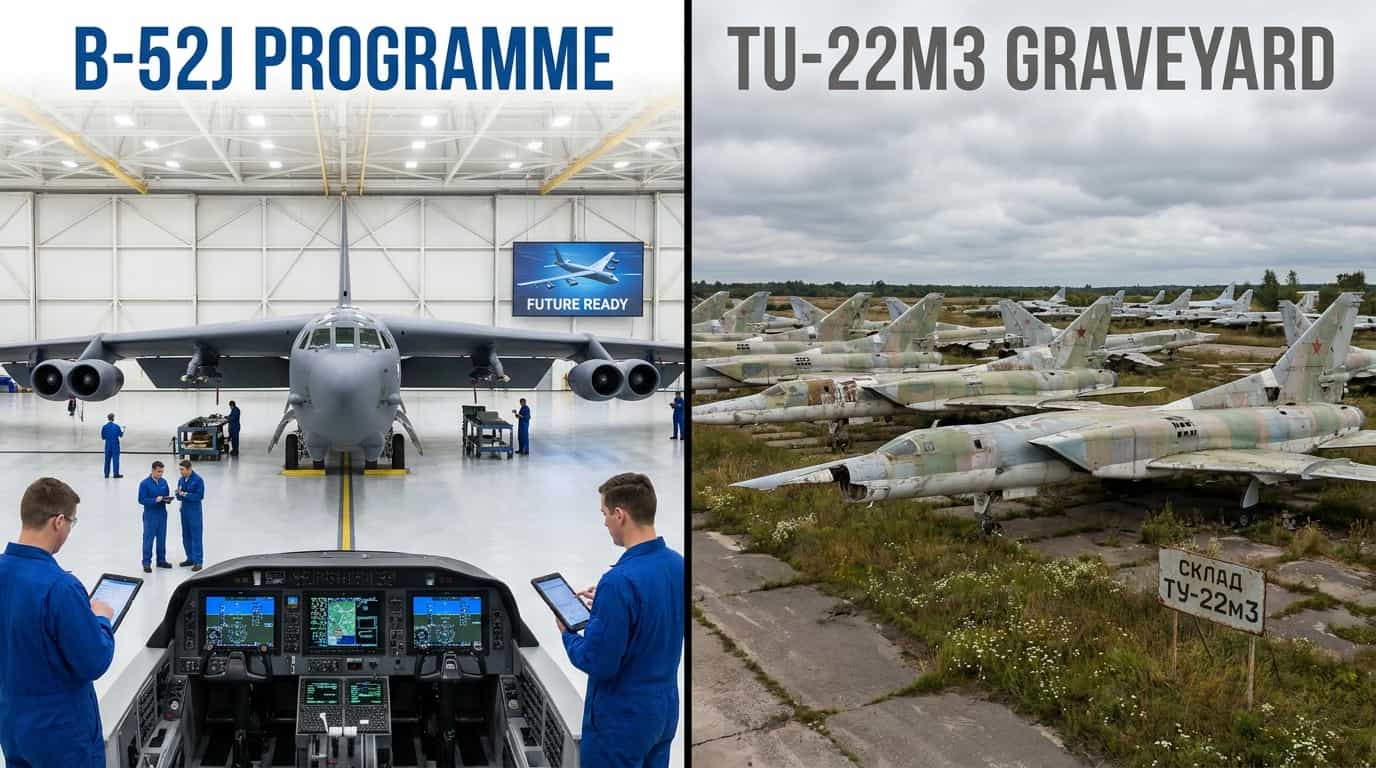
But here is where the comparison sharply diverges. The United States is investing 18 billion dollars to keep the B-52 flying with modern engines and modern radar through the 2050s. The programme has faced setbacks. The June 15th crash will cost it months of progress. But the programme is funded, and the industrial base to execute it is intact.
Russia is spending its defence budget on a land war. Its aerospace industrial base has been degraded by sanctions, brain drain, and resource diversion. The TU-22M3M modernisation programme has upgraded two aircraft in a decade. The engines are out of production. The spare parts are cannibalised from grounded airframes. And the aircraft that remain are being flown harder, with less maintenance, accelerating the very fatigue that is killing them.
The American problem is a delay. The Russian problem is an extinction event.
We started with two crashes on the same day. But these are not equivalent events. One is a tragedy inside a programme that will continue. The other is a symptom of a fleet that is dying with no mechanism to save it. The Americans lost eight people and months of progress. Russia lost another piece of a strategic capability it cannot replace, cannot repair, and — at the current rate — will not have at all within a few years.
And the question worth sitting with is this: what does a nuclear power look like when one of the three legs of its nuclear triad is quietly going extinct?
The B-52 has been flying since 1955. The Air Force plans to keep it flying until 2060. That would make it, by a wide margin, the longest-serving combat aircraft in the history of military aviation.
The TU-22M3 entered service in 1977. Production ended in 1993. The last engine was built in 1996. Russia's modernisation programme has upgraded two of them in ten years.
On June 15th, 2026, both countries lost one. Only one of them can absorb that.
Q: What caused the B-52 crash at Edwards Air Force Base in June 2026?
A: The B-52H crashed immediately after takeoff and burst into flames. Due to the aircraft's low altitude at the moment of failure, the lower-deck crew's downward-firing ejection seats could not deploy safely — requiring a minimum altitude of 250 feet. All eight crew members were killed.
Q: How many TU-22M3 Backfire bombers does Russia have left?
A: Western analysts estimate Russia has between 8 and 10 fully airworthy TU-22M3 Backfires remaining — down from roughly 34 combat-ready aircraft at the start of the Ukraine war in 2022, representing a loss of over 70 percent of its operational fleet.
Q: What is Operation Spiderweb?
A: Operation Spiderweb was a Ukrainian covert long-range drone campaign executed in June 2025 that destroyed or heavily damaged as many as 12 TU-22M3 bombers across three Russian air bases in a single coordinated strike.
B-52 crash 2026, B-52 Edwards Air Force Base crash, TU-22M3 crash 2026, Russian bomber crash Siberia, Backfire bomber crash, B-52H Stratofortress crash, 412th Test Wing, 419th Flight Test Squadron, US Russia bomber accident June 2026, TU-22M3 Backfire fleet, Russian strategic bomber losses, Operation Spiderweb drone strike, B-52 radar modernisation programme, B-52J upgrade, Rolls-Royce F130 engine B-52, nuclear triad bomber losses, strategic bomber crash comparison, Edwards Air Force Base accident, Russian air force bomber attrition, TU-22M3 extinction





Discussion
Comments
Approved comments are published after moderation to keep discussion useful and spam-free.
No comments yet. Start the discussion below.