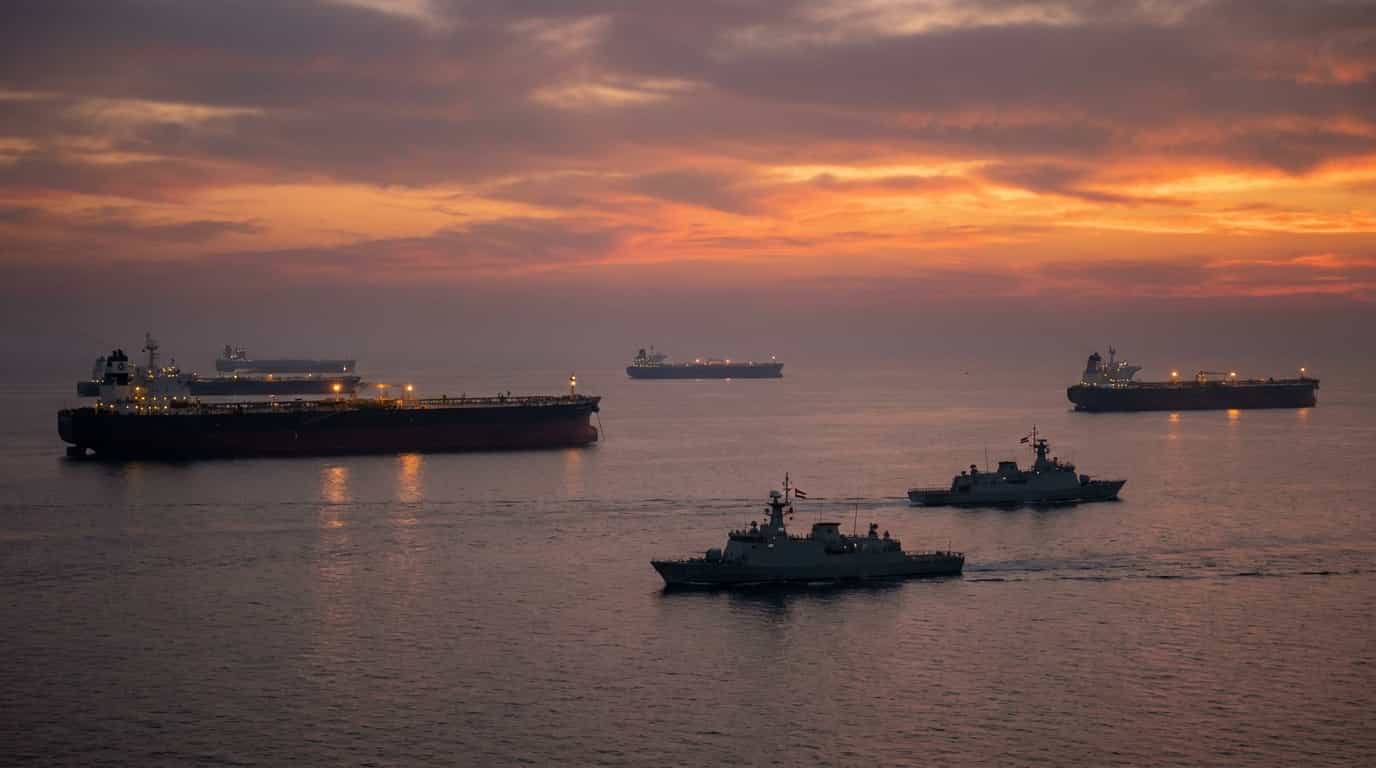
Strait of Hormuz Closed? What Happens to Oil Prices, Shipping and Global Markets
The question “Is the Strait of Hormuz closed?” is trending because the answer is no longer simple. Iran-linked reporting says the waterway will not fully reopen unless conditions are met, including a ceasefire in Lebanon and waivers allowing Iranian oil sales. The U.S. says it will keep commercial traffic moving and disputes Tehran’s claim that it can control the route. Meanwhile, U.S.–Iran talks in Switzerland continue under pressure from regional fighting, threats, sanctions issues and energy-market anxiety. This is why the story matters. Hormuz is not an ordinary maritime route. It is the exit door for huge volumes of oil and gas from the Persian Gulf. Saudi Arabia, Iraq, Kuwait, the UAE, Qatar, Iran and other Gulf energy exporters depend heavily on the route for international shipments. When the route looks safe, markets calm down. When the route looks threatened, oil prices can rise, shipping firms can delay movement and governments can begin emergency planning. The world does not need Hormuz to be fully closed to feel the danger. It only needs to believe the risk is real.
Here is the most important point:
A Strait of Hormuz crisis can raise oil prices even without a full closure. Why? Because oil markets price risk. If tanker owners slow down, insurers raise premiums, traders fear supply delays or governments warn of escalation, crude prices can move immediately. That means the phrase “Strait of Hormuz closed” is powerful even before the route is physically blocked. In energy markets, fear itself has a price.
Before the latest crisis:
The Strait of Hormuz was already considered one of the world’s most critical energy chokepoints. The EIA says about 20 million barrels per day of oil flowed through the strait in 2024.
June 19, 2026:
Reuters reported that oil shipments through Hormuz had picked up after a U.S.–Iran ceasefire deal, although questions remained over Iran’s proposed transit terms.
June 20, 2026:
Reuters reported that the U.S. disputed Iranian claims about closing the Strait of Hormuz while negotiators headed to Switzerland.
June 21, 2026:
Reuters reported that Iran’s Tasnim news agency said Hormuz would not reopen unless a Lebanon ceasefire holds and oil waivers are issued.
What comes next:
Markets will watch tanker movement, U.S.–Iran talks, Lebanon ceasefire conditions, oil prices and any military statements from the Gulf.
What Is the Strait of Hormuz?
The Strait of Hormuz is a narrow waterway connecting the Persian Gulf to the Gulf of Oman and the Arabian Sea. It sits between Iran to the north and Oman to the south. That geography gives it enormous strategic importance. For Gulf producers, Hormuz is the main route to international markets. For energy importers, it is one of the most sensitive supply lines in the world. For oil traders, it is a chokepoint that can turn a regional conflict into a global price shock.
The EIA says very few alternative options exist if oil cannot move through the strait. In 2024, oil flow through Hormuz averaged about 20 million barrels per day, equal to around 20% of global petroleum liquids consumption. That is why Hormuz is not just a local waterway. It is a global economic pressure valve.
Why Hormuz Matters for Oil Prices
Hormuz matters because oil prices are highly sensitive to supply risk. If a huge share of seaborne oil must pass through one narrow route, any threat to that route becomes market-moving. According to the EIA, oil flow through Hormuz averaged about 20 million barrels per day in 2024. The same report says these flows accounted for roughly 20% of global petroleum liquids consumption.
That means a serious disruption could affect:
Brent crude prices
WTI crude prices
Asian crude imports
Gulf export schedules
Refinery supply
Shipping insurance
Fuel prices
Inflation expectations
Oil markets do not only react to actual lost barrels. They also react to the possibility that barrels may be delayed, rerouted or made more expensive to move.
That is why Hormuz headlines can push oil prices higher even before a full closure happens.
How a Hormuz Closure Could Affect Shipping
A closure or partial disruption would immediately create problems for shipping companies.
Tankers may face:
Longer waiting times
Higher insurance costs
Military escort requirements
Rerouting uncertainty
Port delays
Higher freight rates
Crew safety concerns
Contract disputes
Even if ships are not physically blocked, the risk environment can change. Insurance companies may demand higher war-risk premiums. Shipowners may hesitate to send vessels into a contested area. Charterers may demand compensation for delays. Refineries may seek alternative supplies. That is how a geopolitical crisis becomes a shipping-cost crisis. And once shipping costs rise, the extra cost can move through the supply chain.
Why LNG Markets Are Also at Risk
Oil gets the biggest headlines, but LNG is also important. Qatar exports large volumes of liquefied natural gas through the Strait of Hormuz. If LNG tankers face delays, buyers in Asia and Europe can become nervous, especially during periods of high seasonal demand. The EIA has noted that Hormuz is important not only for crude and petroleum products, but also for LNG trade.
This matters because LNG is used for:
Power generation
Industrial production
Heating
Chemical manufacturing
Backup energy supply
If LNG shipments are delayed, gas prices can rise in exposed markets.
That can affect electricity prices, factory costs and household energy bills.
So the Hormuz crisis is not only an oil story.
It is an energy-security story.
Why Asian Markets Are Most Exposed
Asian economies are especially vulnerable to a Hormuz disruption. The EIA’s Hormuz analysis shows that a large share of energy moving through the strait goes to Asian markets.
That includes major importers such as:
China
India
Japan
South Korea
Pakistan
Other South and Southeast Asian economies
For China and India, Hormuz affects industrial fuel, refining and transport costs. For Japan and South Korea, it affects energy security and LNG planning.
For Pakistan, higher oil prices can increase import bills, pressure the rupee and raise petrol, diesel and electricity costs. This is why a waterway thousands of kilometers away can eventually affect household budgets in Karachi, Lahore, Delhi, Dhaka, Tokyo or Seoul.
Why Iran Uses Hormuz as Leverage
Iran’s geography gives it strategic power. Because Iran borders the northern side of the strait, Tehran can use threats around Hormuz to pressure the U.S., Gulf states and global energy markets. For Iran, Hormuz is not just a shipping route. It is bargaining power. When sanctions are tight, when military pressure rises or when negotiations stall, Hormuz becomes part of Tehran’s diplomatic and military language. Reuters reported that Iran’s Tasnim news agency linked reopening Hormuz to two conditions: a Lebanon ceasefire and oil waivers.
That shows how Iran is connecting several issues:
Regional fighting
Oil sanctions
Diplomatic talks
Maritime security
Economic pressure
In simple words, Iran is saying:
If its interests are ignored, the world’s energy route may not remain normal.
Why the U.S. Wants Hormuz Open
The U.S. position is based on freedom of navigation and global energy security. Washington has long treated the Persian Gulf as a critical maritime region. If Hormuz becomes unsafe, U.S. allies in Asia and Europe may question whether Washington can still protect major trade routes. Reuters reported that U.S. forces were monitoring the strait and that Washington disputed Iranian closure claims. For the U.S., the issue is larger than oil.
It is about:
Credibility
Military influence
Global trade
Alliance reassurance
Energy security
Deterrence against Iran
That is why even statements about Hormuz can trigger immediate responses from Washington.
What Happens to Oil Prices If Hormuz Closes?
If Hormuz fully closes for a sustained period, oil prices could rise sharply.
The exact increase would depend on:
Duration of closure
Volume of delayed oil
Military escalation risk
Availability of alternative routes
Emergency oil stock releases
OPEC+ response
Demand conditions
Market psychology
A short disruption may create a temporary spike. A longer disruption could create a serious global oil shock. But even without full closure, prices can rise because of uncertainty. This is why investors, governments and consumers watch Hormuz closely. Oil does not need a complete blockade to move.
It only needs credible fear.
Can Oil Bypass the Strait of Hormuz?
Some oil can bypass Hormuz, but not enough to fully replace the route. Saudi Arabia and the UAE have pipeline infrastructure that can move some crude outside the strait. However, many Gulf producers still rely heavily on Hormuz for exports. The EIA has emphasized that very few alternative options exist if Hormuz is closed. That means a sustained disruption would not be easy to solve. You cannot simply reroute all Gulf oil overnight. Pipelines have limits.
Ports have limits. Tankers have contracts. Refineries require specific grades of crude. That is why Hormuz remains so important despite decades of energy-security planning.
Impact on Global Markets
A Hormuz crisis can affect far more than crude oil.
Global markets may react through:
Energy stocks
Airline stocks
Shipping companies
Insurance firms
Currencies
Inflation-linked bonds
Commodity markets
Emerging-market assets
Central bank expectations
Higher oil prices can increase inflation pressure. Higher inflation can delay interest-rate cuts. Higher fuel costs can weaken consumer spending. For import-dependent countries, higher oil bills can also pressure currencies and government budgets. That is why Hormuz is not only a geopolitical story. It is also a financial-market story.
Impact on Gas Prices and Consumers
For ordinary consumers, the biggest question is gas prices.
A Hormuz disruption may eventually affect:
Petrol prices
Diesel prices
Jet fuel
Bus fares
Trucking costs
Food delivery costs
Airline tickets
Electricity prices in fuel-dependent economies
Pump prices do not always move immediately. They depend on crude prices, refinery margins, taxes, exchange rates, inventories and government policies.
But if crude oil stays high for several weeks, consumers usually feel the pressure. That is why “Strait of Hormuz closed” is not just a foreign-policy headline.
It can become a cost-of-living headline.
Myth vs Fact
Myth: The Strait of Hormuz only matters to oil traders.
Fact: Hormuz affects fuel prices, shipping costs, LNG supply, inflation and consumer budgets.
Myth: If ships are still moving, there is no crisis.
Fact: Even partial disruption, fear or insurance-cost increases can affect markets.
Myth: Iran can close Hormuz without consequences.
Fact: A sustained closure could trigger serious diplomatic, military and economic backlash.
Myth: Oil prices only rise when supply is physically stopped.
Fact: Oil prices often rise when traders fear future supply disruption.
Myth: Hormuz is only important for crude oil.
Fact: Hormuz also matters for LNG shipments, especially from Qatar.
What Happens Next?
The next phase depends on four major signals.
First: tanker movement
If ships continue to pass safely, markets may calm. If tankers slow, disappear from tracking, delay entry or require escorts, prices may rise.
Second: U.S.–Iran talks
AP reported that U.S. and Iranian negotiators were in Switzerland for talks connected to a wider interim agreement, with Hormuz remaining a key flashpoint.
Third: Lebanon ceasefire conditions
Iran-linked reporting has tied Hormuz reopening to the Lebanon ceasefire holding, making regional fighting a direct energy-market risk.
Fourth: oil waivers and sanctions
Iran’s demand for oil waivers shows that sanctions relief may become part of the Hormuz equation. That means energy markets will also watch diplomacy around Iranian oil exports. For now, the world is watching the same narrow waterway. And every hour of uncertainty matters. The Strait of Hormuz is more than a shipping lane. It is where geopolitics becomes inflation. It is where diplomacy becomes a fuel-price risk. It is where one regional conflict can become a global market shock. The question is not only whether Hormuz is closed. The deeper question is whether the world can keep depending on one narrow route for so much of its energy. Because every time the strait becomes a crisis point, the same uncomfortable truth returns. The global economy is more fragile than it looks.
The Strait of Hormuz does not need to stop every ship to shake the world. It only needs to make the world doubt the next one will pass.
Frequently Asked Questions
Is the Strait of Hormuz closed right now?
The situation is contested. Iranian media reported that Hormuz would remain closed unless conditions are met, while the U.S. has disputed Iranian claims and says commercial traffic must continue.
Why is the Strait of Hormuz important?
The Strait of Hormuz is important because it carries huge volumes of oil and LNG from the Persian Gulf to global markets. The EIA says oil flow through Hormuz averaged about 20 million barrels per day in 2024.
What happens if the Strait of Hormuz closes?
A full closure could raise oil prices, delay tankers, increase shipping insurance costs, disrupt LNG flows and create inflation pressure in energy-importing countries.
Can Iran close the Strait of Hormuz?
Iran can threaten and attempt to restrict traffic because of its geography and military presence near the strait, but the U.S. and other powers oppose any closure and say freedom of navigation must continue.
How much oil passes through the Strait of Hormuz?
The EIA says oil flows through Hormuz averaged about 20 million barrels per day in 2024, equal to roughly 20% of global petroleum liquids consumption.
Will gas prices rise if Hormuz closes?
Gas prices may rise if crude oil prices remain elevated. Pump prices depend on crude costs, taxes, refinery margins, inventories, exchange rates and local fuel policies.
Does Hormuz affect LNG?
Yes. LNG shipments, especially from Qatar, also pass through the Strait of Hormuz. A disruption could affect gas markets and electricity costs in exposed economies.
Which countries are most affected?
Asian energy importers are highly exposed, including China, India, Japan, South Korea and Pakistan. Gulf exporters are also directly affected because they rely on the route for exports.
Why does this matter for Pakistan?
Pakistan imports fuel and is vulnerable to global oil-price shocks. Higher crude prices can pressure the rupee, increase import bills and raise petrol, diesel and electricity costs.
Is this article financial advice?
No. This article is for informational and news-analysis purposes only. It is not investment, trading or financial advice.
External Sources
Reuters Hormuz updates
Associated Press U.S.–Iran talks coverage
U.S. Energy Information Administration
International Energy Agency
UNCTAD trade analysis
U.S. Central Command statements
Official Iranian government or state media statements, clearly attributed
Maritime risk advisories





Discussion
Comments
Approved comments are published after moderation to keep discussion useful and spam-free.
No comments yet. Start the discussion below.