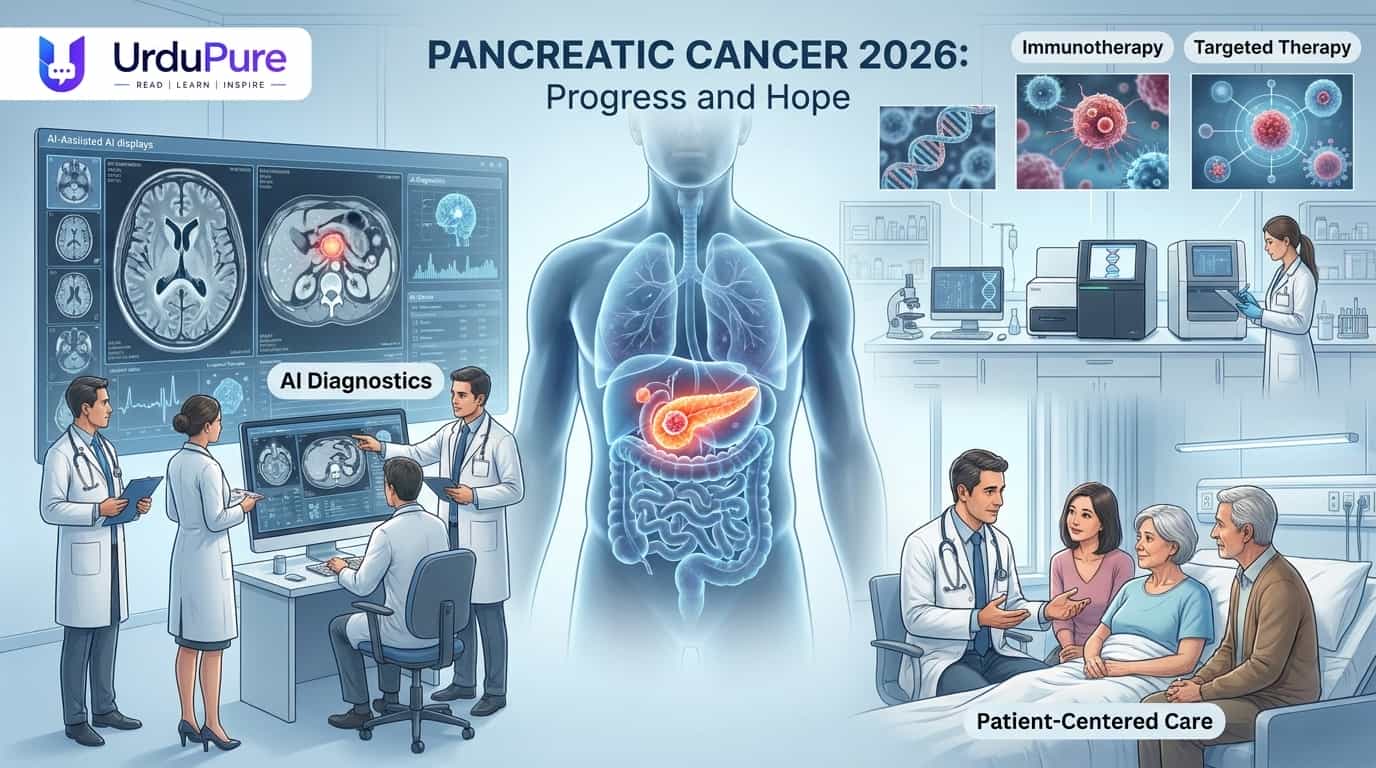
Pancreatic Cancer: Symptoms, Causes, Stages, Treatment & 2026 Breakthroughs
Pancreatic Cancer in 2026: Symptoms, Causes, Treatment, and the Latest Research
Pancreatic cancer is one of the most serious and challenging forms of cancer that medical science faces today. It is the third leading cause of cancer-related death in the United States, responsible for more than 50,000 deaths annually — and yet it receives significantly less public attention and research funding than many other cancers.
The reasons for this disparity are closely tied to what makes pancreatic cancer so difficult: it is typically diagnosed at an advanced stage, when treatment options are most limited. The five-year survival rate, long one of the lowest of any major cancer type, has been gradually improving — but the work of closing the gap between pancreatic cancer outcomes and those of more treatable cancers remains urgent and incomplete.
This comprehensive guide covers everything you need to know about pancreatic cancer — from its earliest warning signs to the most promising new treatments — with a focus on the knowledge that can genuinely save lives.
What Is the Pancreas and Why Does Cancer There Matter?
The Pancreas: A Vital and Hidden Organ
The pancreas is a glandular organ located deep in the abdomen, tucked behind the stomach and in front of the spine. It is approximately 6 inches long and shaped somewhat like a flattened pear. Despite its relatively modest size, the pancreas performs two absolutely essential functions:
Exocrine Function: The pancreas produces powerful digestive enzymes — including amylase, lipase, and protease — that are released into the small intestine to help break down food. Without these enzymes, the body cannot properly digest proteins, fats, and carbohydrates.
Endocrine Function: The pancreas contains specialized clusters of cells called the Islets of Langerhans, which produce critical hormones — most notably insulin and glucagon — that regulate blood sugar levels throughout the body. When these cells are destroyed, the result is diabetes.
Why Pancreatic Cancer Is Particularly Dangerous
The pancreas's deep location in the abdomen is one key reason pancreatic cancer is so difficult to detect early. Unlike some cancers that produce visible or easily palpable tumors, the pancreas is surrounded by other organs and cannot be easily examined. Early-stage tumors produce no symptoms that are specific enough to trigger immediate investigation — by the time symptoms become noticeable and severe enough to prompt medical attention, the cancer has frequently spread beyond the pancreas.
Types of Pancreatic Cancer
Pancreatic Ductal Adenocarcinoma (PDAC)
The overwhelming majority — approximately 90–95% — of all pancreatic cancers are pancreatic ductal adenocarcinomas (PDAC). These tumors arise from the cells that line the pancreatic ducts, the channels through which digestive enzymes flow. PDAC is the aggressive, fast-growing form of the disease that is responsible for the cancer's fearsome reputation.
Pancreatic Neuroendocrine Tumors (PNETs)
Pancreatic neuroendocrine tumors (PNETs) — sometimes called islet cell tumors — arise from the hormone-producing cells of the pancreas. They account for a much smaller percentage of pancreatic cancers but are generally less aggressive and carry a significantly better prognosis than PDAC. The late Apple co-founder Steve Jobs had a pancreatic neuroendocrine tumor, which he famously delayed treating for nine months.
Cystic Pancreatic Tumors
A variety of cystic lesions can form in the pancreas, some of which have malignant potential. Intraductal papillary mucinous neoplasms (IPMNs) are among the most common and can be precancerous, making surveillance important for patients in whom they are identified.
Early Warning Signs and Symptoms of Pancreatic Cancer
One of the most critical facts about pancreatic cancer is that its early stages are typically asymptomatic — producing no noticeable symptoms whatsoever. This is the fundamental reason most cases are diagnosed late. When symptoms do appear, they often develop gradually and can be mistaken for less serious conditions.
The most common symptoms include:
Jaundice
Jaundice — a yellowing of the skin and whites of the eyes — occurs when a growing tumor in the head of the pancreas presses on and blocks the bile duct, preventing bile from flowing normally into the small intestine. The resulting buildup of bilirubin in the bloodstream causes the characteristic yellowing, as well as very dark urine, pale or greasy stools, and intense itching of the skin.
Jaundice that appears without apparent cause (such as liver disease or infection) should always be evaluated promptly by a physician.
Abdominal and Back Pain
Pain in the upper abdomen that may radiate through to the back is a common symptom, caused by the tumor pressing on nerves and surrounding organs. This pain is often worse after eating and when lying flat, and may be partially relieved by leaning forward.
Unexplained Weight Loss and Loss of Appetite
Significant unexplained weight loss is a hallmark of many cancers, and pancreatic cancer is no exception. The combination of reduced appetite, impaired digestion (due to disrupted enzyme production), and the metabolic demands of a growing tumor can produce rapid and alarming weight loss.
New-Onset Diabetes
One of the more surprising and under-recognized early signs of pancreatic cancer is the sudden development of diabetes — particularly in older adults with no previous history of blood sugar problems. When a tumor destroys the insulin-producing cells of the pancreas, blood sugar regulation is disrupted, producing diabetic symptoms. Research has increasingly focused on new-onset diabetes as a potential early marker of pancreatic cancer.
Digestive Problems
Nausea, vomiting, changes in bowel habits, and floating, oily, foul-smelling stools (a condition called steatorrhea, caused by impaired fat digestion) are all potential symptoms of pancreatic cancer affecting the exocrine function of the gland.
Fatigue
Profound, persistent fatigue that is not explained by activity level or sleep patterns is a common experience among pancreatic cancer patients.
Risk Factors for Pancreatic Cancer
While pancreatic cancer can affect anyone, certain factors significantly increase an individual's risk:
Smoking
Cigarette smoking is the most significant modifiable risk factor for pancreatic cancer, approximately doubling the risk compared to non-smokers. Smoking cessation reduces this elevated risk over time.
Age
The vast majority of pancreatic cancers are diagnosed in people over the age of 65. The disease is rare in people under 45. Age is the single strongest non-modifiable risk factor.
Obesity and Diet
Obesity is associated with an increased risk of pancreatic cancer, particularly fat accumulated around the waist (visceral obesity). Diets high in processed meats and red meat and low in fruits and vegetables may also elevate risk.
Diabetes
People with long-standing type 2 diabetes have a modestly elevated risk of pancreatic cancer. Conversely, as noted above, new-onset diabetes in older adults may sometimes be an early symptom of undiagnosed pancreatic cancer.
Chronic Pancreatitis
Chronic pancreatitis — long-term inflammation of the pancreas, often related to heavy alcohol use or genetic factors — significantly increases the risk of developing pancreatic cancer over time.
Family History and Genetics
Approximately 10% of pancreatic cancers have a hereditary component. People with a first-degree relative (parent, sibling, or child) who has had pancreatic cancer are at significantly elevated risk. Several specific genetic mutations — including BRCA1, BRCA2, ATM, PALB2, and the Lynch syndrome genes — are associated with increased pancreatic cancer risk.
People with relevant family histories should discuss genetic testing and enhanced surveillance with their physicians.
Diagnosing Pancreatic Cancer: Tests and Procedures
Diagnosing pancreatic cancer typically involves a combination of:
Imaging Studies: CT scans, MRI, and endoscopic ultrasound (EUS) are the primary tools for visualizing the pancreas and identifying tumors. EUS — which involves threading a flexible endoscope into the stomach and small intestine — provides particularly detailed images and can be used to obtain biopsy samples.
Blood Tests: The tumor marker CA 19-9 is elevated in many pancreatic cancer patients, though it is not specific enough to be used as a screening test in the general population (it can be elevated by other conditions as well). It is useful for monitoring response to treatment in patients with a known diagnosis.
Biopsy: A tissue sample obtained by EUS-guided fine needle aspiration or other means is required for definitive diagnosis and to characterize the tumor's molecular features, which inform treatment decisions.
ERCP (Endoscopic Retrograde Cholangiopancreatography): This procedure uses an endoscope to examine the bile and pancreatic ducts and can relieve bile duct obstruction (a cause of jaundice) through the placement of a stent.
Stages of Pancreatic Cancer
Pancreatic cancer is staged to reflect the extent of the disease and guide treatment decisions:
Stage I: The tumor is confined to the pancreas and is small (Stage IA: ≤2cm; Stage IB: >2cm but ≤4cm). This is the stage at which outcomes are best, but it is rarely detected.
Stage II: The tumor is larger (>4cm) but still confined to the pancreas, or it has spread to nearby lymph nodes.
Stage III: The cancer has spread to major blood vessels near the pancreas or to more regional lymph nodes. Surgery may or may not be possible depending on vascular involvement.
Stage IV: The cancer has spread to distant organs — most commonly the liver, lungs, or peritoneum. This is, unfortunately, the stage at which the majority of pancreatic cancers are diagnosed. Stage IV disease is generally not curable with current treatments.
Treatment Options for Pancreatic Cancer
Surgery: The Whipple Procedure and Beyond
Surgery is the only potentially curative treatment for pancreatic cancer, and it is an option only when the tumor has not spread to major blood vessels or distant sites — approximately 15–20% of patients at diagnosis.
The most common surgical procedure for tumors in the head of the pancreas is the Whipple procedure (pancreaticoduodenectomy) — a complex operation that removes the head of the pancreas, the duodenum, part of the stomach, the gallbladder, and surrounding tissue. It is one of the most technically demanding procedures in surgery.
When successful, surgery provides the best chance of long-term survival and potential cure — particularly when combined with chemotherapy.
Chemotherapy
Chemotherapy is the backbone of treatment for most pancreatic cancer patients. The most commonly used regimens include:
FOLFIRINOX (a combination of four chemotherapy agents) is used for patients who are physically fit enough to tolerate intensive treatment and has been shown to significantly improve survival compared to older regimens.
Gemcitabine plus nab-paclitaxel is another standard regimen, particularly for patients who cannot tolerate FOLFIRINOX.
Radiation Therapy
Radiation therapy may be used in combination with chemotherapy (chemoradiation) in certain situations — particularly for locally advanced tumors that cannot be surgically removed but have not spread to distant sites. The goal may be to shrink the tumor to the point where surgery becomes possible, or to control local disease progression.
Targeted Therapy and Precision Medicine
One of the most significant advances in pancreatic cancer treatment in recent years has been the identification of actionable genetic mutations in a subset of tumors. For patients whose tumors harbor BRCA1 or BRCA2 mutations, PARP inhibitors (such as olaparib) have demonstrated meaningful benefit. Patients with tumors carrying NTRK fusions, KRAS G12C mutations, or other specific alterations may benefit from targeted agents.
This is why molecular profiling — testing a tumor's DNA for mutations — has become standard practice in pancreatic cancer care.
Immunotherapy
Immunotherapy has so far had limited success in pancreatic cancer compared to some other tumor types — largely because pancreatic tumors create an immunosuppressive environment that prevents the immune system from effectively attacking them. However, research into combinations of immunotherapy with other agents is ongoing, and certain subgroups of patients (such as those with microsatellite instability-high (MSI-H) tumors) do respond to immune checkpoint inhibitors.
2026 Breakthroughs: New Hope in Pancreatic Cancer Research
Despite the challenges, 2026 has seen remarkable progress in the fight against pancreatic cancer:
mRNA Vaccine Technology: Building on the same platform that produced COVID-19 vaccines, researchers at BioNTech and Memorial Sloan Kettering have been developing personalized mRNA cancer vaccines that train the immune system to recognize and attack pancreatic cancer cells. Early clinical trial results have been encouraging, showing immune responses in a significant proportion of patients.
Liquid Biopsy for Early Detection: The development of blood-based tests capable of detecting pancreatic cancer at an early stage — through the identification of circulating tumor DNA (ctDNA) or other biomarkers — is one of the most promising areas of research. Companies and academic institutions are racing to develop a sensitive, specific, and affordable early detection test that could shift diagnoses from Stage IV to Stage I, dramatically improving outcomes.
KRAS Targeting: The KRAS gene is mutated in approximately 90% of pancreatic cancers and has long been considered "undruggable." Recent advances in drug design have produced the first generation of KRAS inhibitors that show genuine activity, and more potent second-generation agents are in development. Targeting KRAS represents one of the most exciting frontiers in pancreatic cancer therapy.
How to Reduce Your Risk of Pancreatic Cancer
While no strategy guarantees prevention, the following steps can meaningfully reduce your risk:
Quit smoking — the single most impactful lifestyle change
Maintain a healthy weight through balanced diet and regular physical activity
Limit alcohol consumption to reduce the risk of chronic pancreatitis
Eat a plant-rich diet high in fruits, vegetables, and whole grains
Know your family history and discuss genetic testing with your doctor if relevant
Manage diabetes carefully and report new diabetes onset promptly to your physician
Frequently Asked Questions About Pancreatic Cancer
Q: What are the first signs of pancreatic cancer?
A: Early pancreatic cancer is usually symptom-free. When symptoms appear, they may include jaundice, abdominal or back pain, unexplained weight loss, new-onset diabetes, and digestive changes.
Q: Is pancreatic cancer curable?
A: Pancreatic cancer diagnosed at an early stage (Stage I or II) can be surgically removed and potentially cured. Unfortunately, most cases are diagnosed at Stage III or IV, when cure is generally not possible with current treatments.
Q: What is the survival rate for pancreatic cancer?
A: The overall five-year survival rate for pancreatic cancer in the US is approximately 12–13%. For Stage I disease, it is significantly higher (around 40%+). For Stage IV, it remains very low.
Q: What is the most common type of pancreatic cancer?
A: Pancreatic ductal adenocarcinoma (PDAC) accounts for approximately 90–95% of all pancreatic cancers.
Q: Who is most at risk for pancreatic cancer?
A: Key risk factors include age over 65, smoking, obesity, chronic pancreatitis, new-onset diabetes, and a family history of pancreatic cancer or BRCA mutations.
If you or a loved one are concerned about symptoms of pancreatic cancer, please consult a qualified physician promptly. Early evaluation and diagnosis offer the best possible outcomes. For support and resources, visit the Pancreatic Cancer Action Network (PanCAN) at pancan.org. pancreatic cancer, pancreatic cancer symptoms, pancreatic cancer causes, pancreatic cancer treatment, pancreatic cancer survival rate, signs of pancreatic cancer, pancreatic cancer stages, pancreatic cancer early detection, pancreatic cancer 2026, pancreatic cancer breakthrough





Discussion
Comments
Approved comments are published after moderation to keep discussion useful and spam-free.
No comments yet. Start the discussion below.