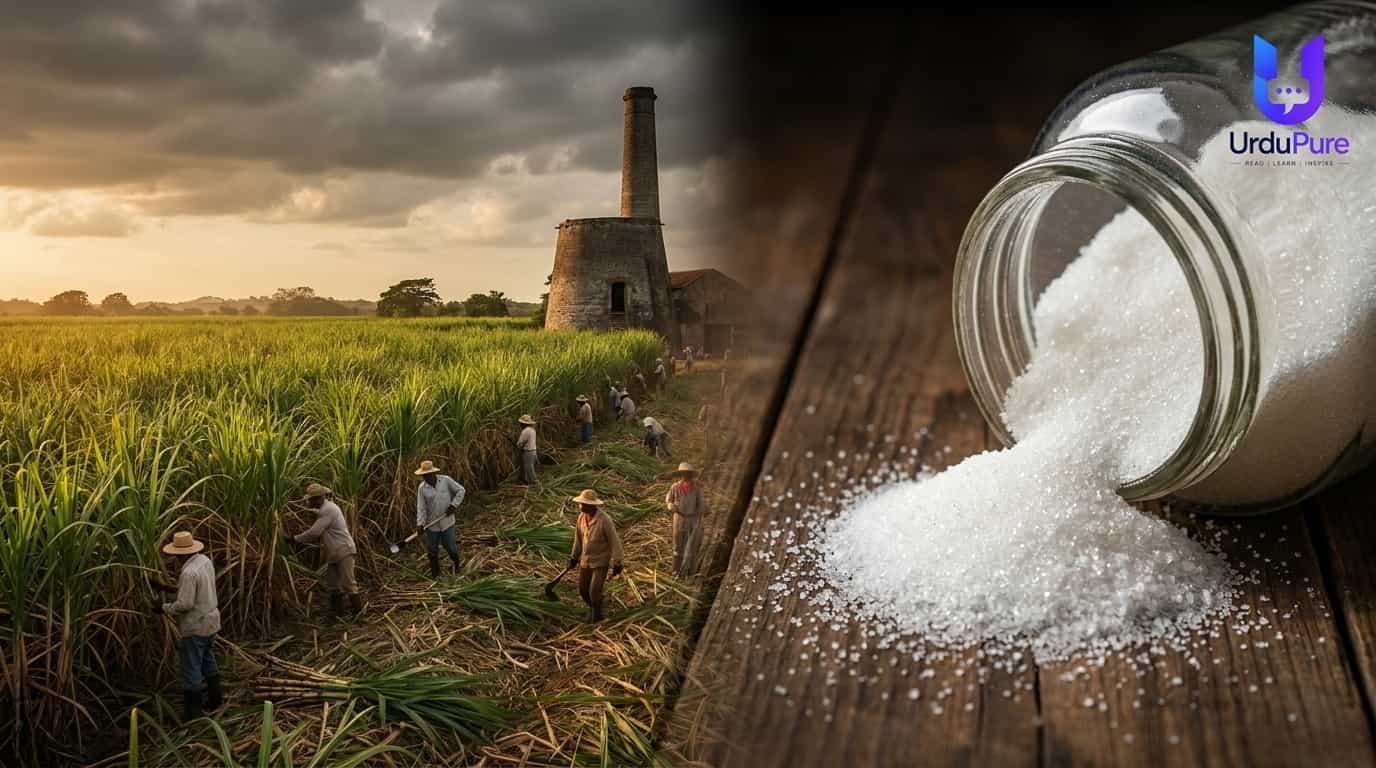
The Dark History of Sugar: How the Dominican Republic's Colonial Past Shaped the Modern World Economy
Every grain of refined sugar carries a history. In the Dominican Republic, that history is long, violent, and deeply entangled with the forces that created the modern globalised economy — forces that first gathered momentum on the Caribbean island of Hispaniola, where European colonisers perfected a system of coerced labour and commodity extraction that became the template for industrial capitalism itself.
The Sweetness of Empire
Before sugar became ordinary — before it was the anonymous white powder filling shakers at every diner counter, the invisible additive in every can of soda — it was a luxury so rare and so coveted that European monarchs accepted it as a diplomatic gift, physicians prescribed it as medicine, and merchants who controlled its supply ranked among the wealthiest people on Earth.
The story of how sugar transformed from a medieval luxury into a global commodity is, at its core, a story about Hispaniola. The island that today holds the Dominican Republic and Haiti was the site of the first large-scale sugar production in the Americas. The plantation complex established there by Spanish colonisers in the early sixteenth century served as the original prototype — the proof of concept — for an economic model that would spread across the Caribbean, into Brazil, and eventually to every tropical and subtropical zone that European powers could seize, transforming the economies, demographics, and environments of entire continents.
Understanding that origin is not merely an exercise in historical grievance. It is an essential act of economic literacy. The structures built on that first Hispaniolan plantation — the logic of the commodity chain, the discipline of the coerced workforce, the relationship between metropolitan capital and colonial extraction — are still recognisable in the global economy today.
Hispaniola Before Sugar
When Columbus made landfall on Hispaniola in December 1492, he encountered an island of perhaps half a million people living in a sophisticated agricultural society. The Taíno cultivated cassava, maize, sweet potatoes, and cotton; managed complex agroforestry systems; and organised themselves into a network of chiefdoms whose political complexity was sufficient to negotiate, at least briefly, with the Spanish intruders.
The Spanish Crown's initial interest in Hispaniola was gold. Taíno communities were forced into brutal allotments — encomiendas — under which indigenous men were required to deliver fixed quantities of gold dust to their Spanish overlords on pain of amputation or death. The gold was real but limited; the island's rivers and alluvial deposits could not sustain the extraction rates the colonists demanded. Within two decades, both the Taíno population and the island's accessible gold supply had been catastrophically depleted.
Columbus himself had understood the alternative. On his second voyage in 1493, he brought sugarcane cuttings from the Canary Islands — part of a deliberate strategy to establish Hispaniola as an agricultural production colony when its mineral wealth proved insufficient. The cane grew. The economy pivoted. And in making that pivot, Hispaniola gave the world a new kind of capitalism: one built not on the extraction of natural resources that already existed but on the industrial transformation of a cultivated crop into a globally traded commodity.
The Architecture of the Plantation
The first sugar mill — an engenio — on Hispaniola was established in 1516, funded by the Spanish Crown and operated initially with indigenous and then, with catastrophic speed, with enslaved African labour. Within twenty years, the island had several dozen functioning mills, each requiring hundreds of workers to plant, cut, haul, crush, boil, clarify, and barrel the cane.
The organisation of this labour was not accidental. It was, by the standards of the early sixteenth century, a radical innovation in industrial management. The sugar mill operated on a logic of continuous production during the harvest season: the cane had to be crushed within hours of cutting to prevent fermentation losses, the boiling houses had to run through the night, the labour force had to be synchronised with the demands of the machinery. This was, in a meaningful sense, the first factory system in the Western Hemisphere — a production environment in which human beings were organised around the rhythms of mechanical equipment, not the other way around.
Historians of capitalism have noted the deep irony here: the factory, commonly understood as a product of the eighteenth-century British Industrial Revolution, had a prototype in the sixteenth-century Caribbean plantation. And that prototype was powered not by waged labour but by enslaved African men, women, and children, whose freedom was taken precisely because they could not negotiate the terms of their employment.
The economic logic was brutally efficient. Enslaved workers represented a capital investment — a purchase price — but required no wages, no benefits, and could be replaced when worked to death. The plantation system therefore achieved labour cost structures that free-wage economies could not match. Sugar from Hispaniola and, later, from its Caribbean neighbours entered European markets at prices that drove out local honey-based alternatives, made confectionery affordable to the growing European middle class, and generated profit margins large enough to finance the construction of cities, universities, and the financial instruments — early forms of credit, insurance, and commodity futures — that would eventually become the infrastructure of modern capitalism.
The Triangle That Built the Modern World
The plantation system of Hispaniola was part of a larger commercial architecture known as the Atlantic triangular trade. European manufactured goods — textiles, firearms, iron hardware — were shipped to West Africa and traded for enslaved people. Enslaved Africans were transported to the Caribbean and the Americas in the Middle Passage, one of the largest forced migrations in human history. The agricultural commodities produced by enslaved labour — sugar, tobacco, cotton, coffee — were shipped to Europe, where they were processed and consumed. The profits from that consumption were reinvested in more manufactured goods, more slave-trading expeditions, more plantation land.
Each leg of this triangle was indispensable. Each leg was profitable. And the whole system was anchored by the plantation colonies of the Caribbean, of which Hispaniola was the first and, for much of the sixteenth and seventeenth centuries, the most productive.
The wealth generated by this system did not merely enrich individual planters and merchants. It capitalised the European economies in ways that made subsequent industrialisation possible. Eric Williams, the Trinidadian historian and later Prime Minister who first made this argument systematically in his 1944 work Capitalism and Slavery, calculated that the profits from Caribbean slavery were significant contributors to the capital available for British industrial investment in the eighteenth century. His thesis has been debated and refined by subsequent historians, but the essential connection — between colonial commodity production and the accumulation of capital that funded the Industrial Revolution — has only grown stronger with time.
The Dominican Republic sits at the origin of this chain. The sugar that sweetened European coffee cups, the money that built the banks that financed the mills of Manchester and Birmingham, the labour discipline perfected in the Hispaniolan boiling house that would later be applied to the factory floor — all of it has a line of descent traceable to that first engenio established on the banks of a Caribbean river in 1516.
The French Colony and the Stakes of Slavery
The story grows darker still when the western third of Hispaniola — ceded by Spain to France in 1697 and renamed Saint-Domingue — became, by the late eighteenth century, the single most profitable colony in the world. Saint-Domingue produced roughly forty percent of all Europe's sugar and more than half its coffee. Its plantations operated with a ferocity of exploitation that shocked even contemporaries accustomed to the brutalities of slavery. Mortality rates among enslaved workers were so high that the entire enslaved population had to be replenished through the slave trade every generation.
The violence required to maintain this system ultimately destroyed it. In 1791, the enslaved people of Saint-Domingue rose in what became the Haitian Revolution — the only successful slave revolt in history to result in the founding of an independent nation. The revolution liberated Saint-Domingue's enslaved population and established the nation of Haiti in 1804. It also sent shockwaves through every slaveholding society in the Atlantic world, from the American South to the Brazilian fazendas, demonstrating with unmistakeable clarity that the system rested on violence and that those subjected to that violence would, given the opportunity, dismantle it.
The eastern portion of the island — what would become the Dominican Republic — followed a distinct path, declaring independence from Spain in 1821 and then from Haitian rule in 1844. But its relationship with sugar never fully ended. The nineteenth and twentieth centuries brought a new wave of sugar industrialisation, this time financed by American capital after the United States occupied the Dominican Republic between 1916 and 1924. The occupation restructured Dominican land tenure to benefit large American sugar companies, dispossessing small farmers and reorienting the economy once again around commodity export to metropolitan markets.
The Bracero System and Its Living Legacies
The twentieth-century Dominican sugar economy introduced yet another layer of coerced labour with ramifications that persist today. Beginning in the early twentieth century and continuing under the Trujillo dictatorship (1930–1961) and subsequent governments, the Dominican sugar industry recruited — and in many cases coerced — Haitian workers as seasonal cane cutters, a system locally known as the bracero arrangement.
Haitian workers, denied citizenship and legal status despite sometimes spending decades in the Dominican Republic, were housed in isolated company-owned settlements called bateyes. They received minimal wages paid partly in company scrip, had no legal recourse, and were subject to summary deportation when their labour was no longer needed. Human rights organisations documented persistent abuses throughout the second half of the twentieth century, and the system drew international condemnation from the International Labour Organisation and others.
The legacy of the batey system is visible in contemporary Dominican society. Tens of thousands of people of Haitian descent, including many born in the Dominican Republic to parents who worked the cane fields, continue to face legal limbo over citizenship — a consequence of a 2013 Dominican Constitutional Court ruling that stripped citizenship from people born in the country to undocumented parents, a decision that disproportionately affected Haitian-descended communities and was widely condemned by international human rights bodies as stateless-making discrimination.
The batey communities themselves — many now abandoned as mechanisation has reduced the demand for hand-cut cane — are among the most economically marginalised communities in the Caribbean. Their existence is a direct inheritance of the plantation economy that began five centuries ago.
Sugar's Global Footprint Today
The Dominican Republic today produces approximately 6.5 million tonnes of sugarcane per year, making it a significant but not dominant player in a global market now dominated by Brazil, India, and Thailand. The domestic sugar industry employs tens of thousands of people and remains a significant contributor to export earnings.
But the global sugar economy that Hispaniola helped create has expanded into a system of almost incomprehensible scale and consequence. World sugar consumption exceeds 200 million tonnes annually. The health consequences of that consumption — obesity, type 2 diabetes, cardiovascular disease — constitute a global public health crisis that costs health systems hundreds of billions of dollars per year. The environmental consequences of sugarcane monoculture — aquifer depletion, topsoil erosion, agrochemical runoff, the conversion of biodiverse land into single-crop deserts — are recorded on every continent where cane is grown.
The plantation logic — maximise output, externalise costs, capture the profit margin at the point of processing and distribution rather than at the point of production — runs through this system like a thread. The sugarcane farmer in Sinaloa or São Paulo or KwaZulu-Natal may not be enslaved, but the price they receive for their crop is set by global commodity markets they cannot influence, traded on exchanges in Chicago and London by financial actors whose connection to the cane field is purely numerical.
The world that Hispaniola's first sugar plantation helped build is the world we still inhabit.
Reckoning with the Sweet Root
There is a growing movement — in academia, in journalism, in policy — to draw these connections explicitly: to trace the line from the Hispaniolan engenio of 1516 to the global sugar complex of today, and to ask what moral and economic reckoning that line demands. Reparations debates in the United Kingdom, United States, and several Caribbean nations have brought renewed attention to the question of what is owed to the descendants of enslaved people whose labour built the wealth of modern economies. The Dominican Republic's own complex relationship with its colonial heritage and its Haitian-descended population reflects the unresolved tensions of that history in an immediate, contemporary, human form.
Sugar was never simply food. It was, from its first industrial production in the Caribbean, a technology of empire — a means of concentrating wealth at the metropolitan centre by extracting labour and land from the colonial periphery. That technology created the modern world. Understanding how it worked, where it began, and what it cost the people who built it is not a luxury of historical curiosity. It is a prerequisite for understanding the inequalities that still structure the global economy today.
The Dominican Republic was where that story started. It is still, in important respects, where it continues.
To trace the supply chain of a packet of refined sugar purchased in a London supermarket or a Chicago convenience store is to follow a thread that runs backward through freight logistics, commodity trading floors, industrial refining facilities, and plantation fields — and, if you follow it far enough, all the way to a sixteenth-century Caribbean island where enslaved people cut cane in the tropical heat so that European consumers could sweeten their diets and European merchants could build the financial architecture of the modern world. The thread does not disappear. It only becomes harder to see the further back it runs. History's task — and the particular, urgent task of Caribbean history — is to make it visible again.
Suggested further reading: Sidney Mintz's Sweetness and Power (1985) remains the foundational text on sugar's cultural and economic history. For the Dominican Republic's specific experience, Frank Moya Pons' The Dominican Republic: A National History provides essential context. Contemporary reporting on batey communities can be found through the work of journalists at El Caribe and the Dominican Today news platforms.






Discussion
Comments
Approved comments are published after moderation to keep discussion useful and spam-free.
No comments yet. Start the discussion below.