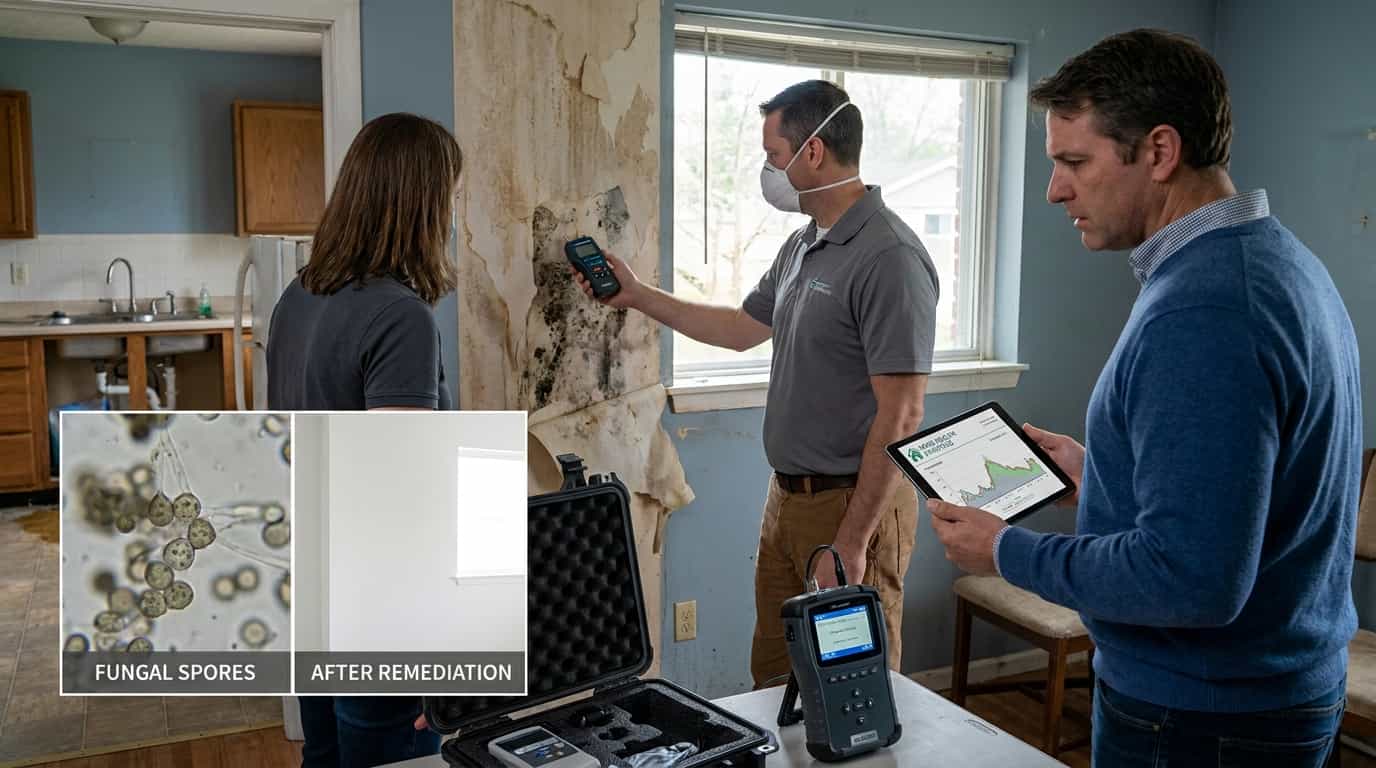
The Household Mold Crisis: How to Find It, Test It and Remove It Before It Destroys Your Health and Property Value
Mold affects 1 in 5 homes in the UK and US — and the majority of those homeowners and renters have no idea it's there. Here's the authoritative, room-by-room guide to detection, testing, safe removal, your legal rights, and permanent prevention.
The Mold Problem Nobody Wants to Talk About
The UK's Social Housing Regulation Act 2023, passed in the wake of the Awaab Ishak tragedy — a two-year-old boy who died in Rochdale from a respiratory condition caused by mold in his family's social housing — brought the mold crisis into mainstream political consciousness in Britain. In the US, a 2024 EPA survey found that approximately 21% of homes contained detectable mold growth — representing over 28 million households where occupants may be unknowingly exposed to harmful fungal spores daily.
The crisis has three distinct dimensions. First, a health crisis: mold exposure is linked to respiratory disease, allergic sensitisation, immune system disruption, and — in the case of certain toxic mold species — neurological symptoms. Second, a property crisis: undisclosed mold is one of the most frequent sources of property litigation in both the UK and US, with remediation costs ranging from hundreds to tens of thousands of pounds or dollars depending on extent. Third, an awareness crisis: most people cannot identify the difference between harmless surface condensation and genuinely dangerous mold colonisation, between a mold type that is a minor nuisance and one that requires immediate professional intervention.
This guide closes all three gaps.
The Types of Household Mold and Their Different Health Risks
Mold is a broad category of fungi that reproduce through airborne spores. In domestic environments, the relevant concern is not all mold — it is specific genera that produce mycotoxins (toxic chemical compounds) or allergens in concentrations sufficient to affect human health. Understanding the difference between mold types is essential for making proportionate, accurate decisions about risk and response.
Cladosporium — The Most Common Household Mold
Appearance: Olive-green to brown or black, powdery texture, often appearing on window sills, bathroom tiles, and damp walls
Health risk: Low to Moderate
Cladosporium is the most prevalent indoor mold species globally and the one most people have encountered without knowing its name. It is a significant allergen — responsible for allergic rhinitis, eye irritation, and skin reactions in sensitised individuals — but is not a producer of the most dangerous mycotoxins. For most healthy adults, low-level Cladosporium exposure produces manageable allergy symptoms. For children, the elderly, and immunocompromised individuals, the threshold for concern is lower.
Penicillium — The Blue-Green Problem
Appearance: Blue, green, or yellow-green, velvety or powdery surface texture; characteristic musty, earthy odour
Health risk: Moderate
Penicillium species (distinct from Penicillium chrysogenum, the mold from which penicillin was derived) are common in water-damaged materials — carpets, wallpaper, upholstered furniture, and wood. They spread rapidly through a building via HVAC systems and produce allergens that can trigger asthma attacks, hypersensitivity pneumonitis, and chronic sinusitis. The characteristic musty smell of a damp house is frequently Penicillium.
Aspergillus — The Respiratory Risk
Appearance: Variable — white, grey, brown, yellow, green, or black depending on species; often found in corners and on insulation
Health risk: Moderate to High depending on species
The Aspergillus genus contains over 180 species, of which several are relevant to indoor health. Aspergillus fumigatus is an opportunistic pathogen capable of causing serious invasive infections (invasive aspergillosis) in immunocompromised individuals. For healthy people, Aspergillus exposure primarily causes allergic reactions and respiratory symptoms. For those undergoing chemotherapy, organ transplant recipients, or people with HIV/AIDS, Aspergillus in the home environment represents a genuine clinical risk requiring immediate professional remediation.
Stachybotrys chartarum — The "Black Mold" of Headlines
Appearance: Dark greenish-black, slimy surface texture when wet, powdery when dry; grows exclusively on cellulose-rich materials (paper, drywall, wood) that have been wet for extended periods
Health risk: High — professional remediation required immediately
Stachybotrys chartarum is the mold species colloquially called "black mold" or "toxic black mold" — the one that generates the most alarming media coverage. Its reputation is largely earned. Stachybotrys produces trichothecene mycotoxins that in sustained exposure have been linked to respiratory damage, neurological symptoms (memory issues, difficulty concentrating, mood changes), immune suppression, and in extreme cases, pulmonary haemorrhage in infants.
Important context: Stachybotrys grows more slowly than other mold species and requires very wet conditions over an extended period. Finding Stachybotrys in a home indicates a long-term moisture problem — a roof leak, pipe failure, or flooding event that was not adequately addressed. Not every black-coloured mold is Stachybotrys — visual identification is unreliable and testing is required for confirmation.
"The mold colour is not a reliable indicator of toxicity. What matters is the genus, the concentration of spores, and the health status of the occupants — all of which require proper testing to determine." — Dr. Harriet Burge, Harvard T.H. Chan School of Public Health
Alternaria — The Allergy Driver
Appearance: Dark green or brown with velvety texture; commonly found in showers, baths, under sinks
Health risk: Moderate — significant allergen
Alternaria is one of the most significant allergenic molds globally and a known trigger for asthma exacerbations. It thrives in damp areas with organic debris and is frequently found in bathrooms, under kitchen sinks, and around window frames where condensation accumulates. Children with Alternaria sensitisation have significantly higher rates of severe asthma attacks.
DIY Mold Testing vs Professional Testing: Cost, Accuracy and When to Use Each
DIY Mold Testing: What You Can and Can't Learn
Consumer mold test kits — available from hardware stores and online for £10–£40 / $12–$50 — typically take one of two forms: petri dish culture tests (where you expose a dish to room air for a set period and then mail it to a laboratory) or surface swab tests (where you collect a sample from a suspect surface and either mail it or use an included reagent).
What DIY tests can tell you:
Whether mold is present in the sampled area
In laboratory-analysed versions: the genus of mold present
Whether surface growth is living mold or dead mold residue
What DIY tests cannot tell you:
The concentration of mold spores in the air (which requires professional air sampling equipment)
The extent of hidden mold growth behind walls, under flooring, or in HVAC systems
Whether the level of mold present exceeds health guidelines (which require comparison to outdoor baseline levels)
The moisture source driving mold growth (which requires separate moisture investigation)
When DIY testing is appropriate: Confirming whether a visible surface growth is mold (versus mineral deposits, dirt, or efflorescence), and identifying the genus for basic risk assessment. If the result confirms Stachybotrys or shows very high spore counts, it should trigger professional assessment — not attempted self-remediation.
Professional Mold Testing: What It Costs and What You Get
Professional mold inspection and testing — conducted by a certified industrial hygienist (CIH) in the US or an accredited environmental consultant in the UK — provides a fundamentally different quality of information.
Professional testing methods include:
Air sampling with a calibrated pump: Captures a known volume of air through a cassette that is analysed in an accredited laboratory for spore type and concentration. Simultaneous indoor and outdoor samples allow comparison to establish whether indoor levels exceed the outdoor baseline — the relevant clinical question.
Moisture mapping: Using thermal imaging cameras and calibrated moisture meters, professionals can map moisture levels through walls and floors without destructive investigation, identifying the extent of water intrusion driving mold growth.
ERMI (Environmental Relative Moldiness Index): A US-developed dust sampling method that provides a comprehensive inventory of mold species in settled house dust — capturing historical mold presence across the entire home rather than a single point-in-time air sample.
Cost: Professional mold inspection in the US ranges from $300–$700 for a basic residential inspection with air sampling. In the UK, equivalent services cost £200–£500. A full ERMI analysis costs approximately $150–$300 for the laboratory component, with collection guidance from your inspector.
When professional testing is required: Any suspected Stachybotrys exposure; visible mold covering more than 10 square feet / 1 square metre (the EPA/UK threshold above which professional remediation is generally recommended); unexplained respiratory symptoms among household members; post-flood or post-leak situations; pre-purchase inspections for older properties.
Room-by-Room Guide: Where Mold Hides That You'd Never Expect
Bathroom: The Obvious and the Hidden
Grout lines, silicone sealant, and shower curtains are the expected locations — and addressing these is straightforward. The hidden locations are more consequential:
Extractor fan ducting: Bathroom extractor fans that duct into the roof void (rather than directly outside) frequently accumulate moisture and mold within the ductwork. The fan appears functional; the ductwork is a mold factory venting spores back into the bathroom.
Below the bath panel: The void beneath freestanding and panelled baths, particularly where bath seals have failed or plumbing drips, creates perfect mold conditions with zero airflow. Remove the panel and inspect annually.
Behind toilet cisterns: The cold surface of a toilet cistern creates condensation that runs behind it and into the floor junction — an area that is rarely dried and rarely inspected.
Kitchen: Unexpected Hotspots
Refrigerator drip tray: The drip tray beneath most refrigerators collects condensate and is rarely cleaned. It is frequently a dense mold colony. Pull the refrigerator out and check.
Inside the washing machine door seal: The rubber gasket around front-loading washing machine doors is one of the most consistent mold habitats in domestic environments. Wipe dry after every cycle; leave the door open between uses.
Behind the kickboards: The narrow void beneath kitchen units, accessible by removing the lower front panels, is frequently damp from floor spills and plumbing drips — and almost never inspected.
Inside the extractor hood filter: Grease-coated extractor hood filters trap moisture from cooking steam and create a nutrient-rich mold substrate. Filters should be cleaned monthly and replaced every 3–6 months.
Bedroom: The Sleep Quality Saboteur
Behind and beneath wardrobes against external walls: Fitted wardrobes placed against cold external walls create a dead air zone where wall temperature drops below dew point, producing chronic condensation. The mold colony develops between the wardrobe back and the wall — invisible and directly adjacent to where you sleep.
Inside mattresses: Memory foam and hybrid mattresses trap moisture from body perspiration. Mattresses without waterproof protectors, placed on slatted bases with insufficient slat spacing, develop mold on the underside. Inspect the underside of mattresses every 6 months.
Window reveals and reveals jambs: The interior reveals of double-glazed windows — particularly in older buildings where thermal bridging through the frame creates cold surfaces — are chronic condensation and mold sites.
Loft, Basement, and Crawl Spaces
Loft spaces and attics frequently develop mold on roof sheathing and rafters — caused by warm, moisture-laden air rising from living spaces through insufficient insulation and meeting cold roof materials. This is particularly common in homes insulated at ceiling level rather than at rafter level.
Basements and crawl spaces in the US are among the most significant mold reservoirs in residential buildings — unventilated, earth-floored crawl spaces particularly so. Sealing the earth floor with heavy-gauge polythene and ensuring adequate cross-ventilation are the primary preventive measures.
Legal Rights of UK and US Renters When Mold Is Present
United Kingdom: Post-Awaab Law Protections
The UK's legal landscape for renters dealing with mold has changed significantly following the Awaab Ishak case and the subsequent Social Housing Regulation Act 2023. The key rights for UK renters in 2026:
Social housing tenants: The "Awaab's Law" provisions require social landlords to investigate reported hazards (including mold) within 14 days and begin remediation within 7 days of diagnosis. Landlords who fail to comply face enhanced regulatory enforcement from the Regulator of Social Housing.
Private renters: The Homes (Fitness for Human Habitation) Act 2018 requires privately rented properties to be fit for human habitation throughout the tenancy. Mold that poses a health risk — particularly Stachybotrys or mold at concentrations above safe levels — makes a property unfit and gives renters the right to pursue landlords in court without going through the local council.
The HHSRS (Housing Health and Safety Rating System): Damp and mold are Category 1 hazards under HHSRS, meaning local authorities have a duty to take action when inspecting and finding significant mold hazards. Renters can request local authority inspections by contacting their council's environmental health department.
Documentation is essential: Photograph all mold, date the photographs, and report in writing (email, so there is a date-stamped record). This documentation is essential for any subsequent legal action or insurance claim.
United States: State-by-State Variation
US mold law is governed primarily at state level, with significant variation between jurisdictions:
States with specific mold regulations: California, Florida, New York, and Texas have enacted mold-specific regulations for residential properties. California's SB 655 (2015) added visible mold as a housing substandard condition, enabling code enforcement action. Florida requires mold remediation contractors to be licensed.
Implied warranty of habitability: All US states have an implied warranty of habitability in residential leases — the requirement that rental properties be safe and liveable. Most states' courts have found that significant mold growth violates this warranty, giving tenants grounds for repair-and-deduct remedies (paying for remediation and deducting from rent), rent withholding, or lease termination without penalty.
Disclosure requirements: Several states (including California and Florida) require sellers of residential property to disclose known mold problems. Failure to disclose known mold is a significant source of real estate litigation.
Federal standards gap: The EPA does not set regulatory limits for indoor mold concentrations — a frequently criticised gap that leaves standard-setting to industry guidance and state-level regulation.
Preventing Recurrence: Ventilation, Dehumidifiers and Building Materials
The Root Cause Principle
Mold remediation without addressing the moisture source that enabled mold growth is temporary. The spores that remain in the building — in dust, in HVAC systems, embedded in porous materials — will regrow on any newly wet surface within days. Every effective mold prevention strategy begins with identifying and eliminating the moisture source.
Moisture sources fall into three categories: construction defects (roof leaks, failed damp-proof courses, inadequate drainage), plumbing failures (pipe leaks, condensate leaks, failed shower trays), and condensation (warm moist air meeting cold surfaces). The appropriate preventive intervention differs by category.
Ventilation: The Most Impactful Intervention
The single most effective mold prevention measure in UK homes (where condensation is the dominant moisture source) is mechanical ventilation. MVHR (Mechanical Ventilation with Heat Recovery) — which extracts humid air from kitchens and bathrooms while recovering its heat energy and supplying fresh air to bedrooms and living areas — virtually eliminates condensation-driven mold when correctly specified and installed.
For existing homes where MVHR retrofitting is impractical, continuous-running extract fans in bathrooms and kitchens — operating at a low background rate continuously, not just when triggered by occupancy — maintain adequate ventilation to prevent condensation accumulation. The key specification: the fan must exhaust directly outside, not into a roof void.
Simple daily habits reduce condensation significantly: opening trickle vents in window frames, using lids on cooking pots, drying laundry outside or in a well-ventilated room (not on radiators), and opening windows for 10–15 minutes after bathing and cooking.
Dehumidifiers: The Supplement, Not the Solution
Dehumidifiers reduce ambient relative humidity — keeping it below 60%, the threshold above which mold growth accelerates significantly — by extracting moisture from room air. They are effective supplements to ventilation but not replacements for it: a dehumidifier cannot address moisture entering from outside through defective building fabric, and cannot substitute for the fresh air supply that proper ventilation provides.
Sizing guidance: For a UK or US standard-sized living area (20–30 square metres / 200–320 sq ft), a dehumidifier rated at 10–12 litres per day extraction is appropriate for moderate humidity management. For basements and significantly damp spaces, 20–30 litre/day capacity is more appropriate.
Recommended units 2026: The Meaco Dehumidifier 20L Low Energy (UK, £220) and the Frigidaire 50-Pint Dehumidifier (US, $260) are the most consistently recommended for domestic use based on energy efficiency and extraction reliability.
Mold-Resistant Building Materials
When undertaking bathroom or kitchen renovation — or remediating after mold removal — specifying mold-resistant materials reduces the risk of recurrence significantly:
Mold-resistant drywall (US) / moisture-resistant plasterboard (UK): Products including USG Sheetrock Mold Tough (US) and British Gypsum Gyproc Moisture Resistant (UK) use treated paper facing and hydrophobic additives that resist mold colonisation in damp environments. Specify in bathrooms, kitchens, and any below-grade applications.
Mold-resistant paint: Paints with integrated fungicidal additives — including Zinsser Perma-White Mold & Mildew-Proof Interior Paint and Ronseal Anti-Mould Paint (UK) — are appropriate for bathroom and kitchen walls but are not a substitute for addressing moisture sources. They resist surface mold growth on painted surfaces; they cannot prevent mold growth behind paint on wet substrates.
Waterproof tile backer boards: In shower enclosures and wet room applications, cement-based or foam-based waterproof backer boards (Wedi, Schluter KERDI, HardieBacker) provide a completely moisture-impermeable substrate that eliminates the mold risk of water ingress through grout lines into underlying plasterboard.
Silicone sealant maintenance: Bathroom silicone sealant should be replaced every 5–7 years regardless of apparent condition. Failed or discoloured silicone is one of the most common entry points for water into wall cavities. Use antifungal silicone sealant and wipe dry after every shower.
household mold removal 2026, black mold health risks, how to test for mold, mold in house UK US, Stachybotrys chartarum, toxic black mold symptoms, mold legal rights renters UK, mold legal rights tenants US, mold prevention home, dehumidifier mold prevention, mold resistant building materials






Discussion
Comments
Approved comments are published after moderation to keep discussion useful and spam-free.
No comments yet. Start the discussion below.