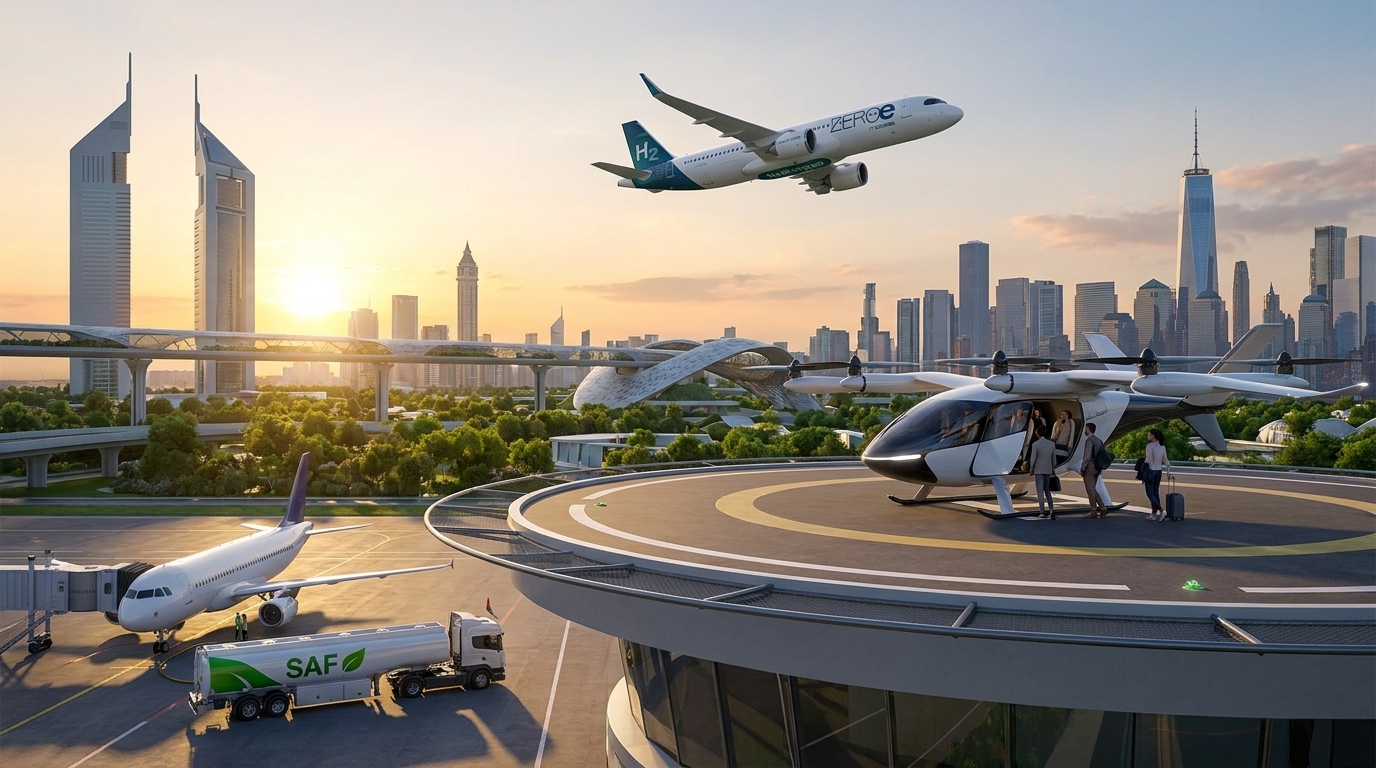
Zero-Emission Flying in 2026: Electric, Hydrogen and SAF
Aviation's Decarbonisation Race: The 2026 Status Report
Aviation contributes approximately 2.5 percent of global CO2 emissions — rising to around 4 percent when non-CO2 effects including contrail warming are accounted for. As passenger numbers track toward 7.8 billion trips annually by 2040, the pressure on the industry to decarbonise has moved from voluntary commitment to regulatory mandate in 2026.
Three technologies are competing to transform flight: battery-electric propulsion (viable now for short-range missions), hydrogen propulsion (the long-haul decarbonisation pathway, targeting commercial service by 2035), and sustainable aviation fuel (SAF — the bridge technology available today). Each has made significant progress since 2025.
eVTOL: The Electric Air Taxi Era Begins
The most concrete commercial progress in 2026 is in the eVTOL (electric vertical take-off and landing) sector. Joby Aviation has progressed through FAA certification and is targeting limited commercial air taxi operations in 2026 in select US markets. Archer Aviation's Midnight aircraft completed over 400 test flights. Wisk's autonomous air taxi (no pilot on board) continues FAA certification discussions.
Dubai remains the most aggressive early adopter, with its Roads and Transport Authority committed to launching commercial eVTOL services in 2026. Singapore, Los Angeles, and Paris are among the early deployment cities. The commercial ticket price for a 30-kilometre urban eVTOL journey is expected to launch at $50-100.
Hydrogen Aviation: Progress and Timelines
Airbus' ZEROe programme remains the most ambitious hydrogen aviation project. The target of a commercial hydrogen aircraft by 2035 has been maintained, though insiders acknowledge significant engineering challenges remain — particularly in liquid hydrogen storage systems, cryogenic tank certification, and airport infrastructure.
CFM International (GE-Safran joint venture) and Rolls-Royce both demonstrated hydrogen combustion in jet engines in 2023-2024 test programmes. In 2026, ground testing has been followed by initial flight tests on modified test aircraft. The pathway to a hydrogen-powered regional airliner by 2030-2032 is credible but depends on parallel infrastructure investment.
Sustainable Aviation Fuel: The Bridge That Works Today
SAF is the only technology that can decarbonise existing aircraft right now. Produced from feedstocks including cooking oil, agricultural residue, municipal waste, and direct air capture CO2, SAF can reduce lifecycle carbon emissions by 60-95 percent versus conventional jet fuel. The EU's RefuelEU Aviation regulation mandates SAF blending at 2 percent from 2025, rising to 6 percent by 2030 and 70 percent by 2050.
The challenge remains cost and scale. SAF costs 2-4 times conventional jet fuel and currently meets less than 1 percent of global aviation fuel demand. US IRA tax credits and European mandate incentives have significantly boosted investment in SAF production facilities.
Your Flights: How to Fly Greener in 2026
Practical steps available to passengers right now: choose direct flights (take-off and landing produce the most emissions); fly economy (business class has 3-4 times the per-passenger footprint); offset through established, verified programmes (Gold Standard or Verra-certified); choose airlines with strong SAF commitments (Lufthansa, KLM, and Air France have active SAF blend programmes).
Frequently Asked Questions
When can I take an electric air taxi?
Commercial eVTOL services are launching in select cities in 2026, with Dubai leading. Broader commercial availability in major urban markets is expected between 2027 and 2030 as certification processes complete and infrastructure develops.
Will my flights be greener in 2030?
Modestly. SAF mandates will increase blend percentages. Some short regional routes will begin transitioning to electric aircraft. Hydrogen aircraft will be in test service but not yet commercial at scale. Meaningful decarbonisation of long-haul aviation is primarily a post-2035 story.
Is hydrogen aviation actually safe?
Liquid hydrogen has been used safely in space programmes for decades. Aviation applications require aircraft redesign for cryogenic storage and new airport infrastructure. Safety standards are being developed in parallel with the aircraft by regulators including EASA.