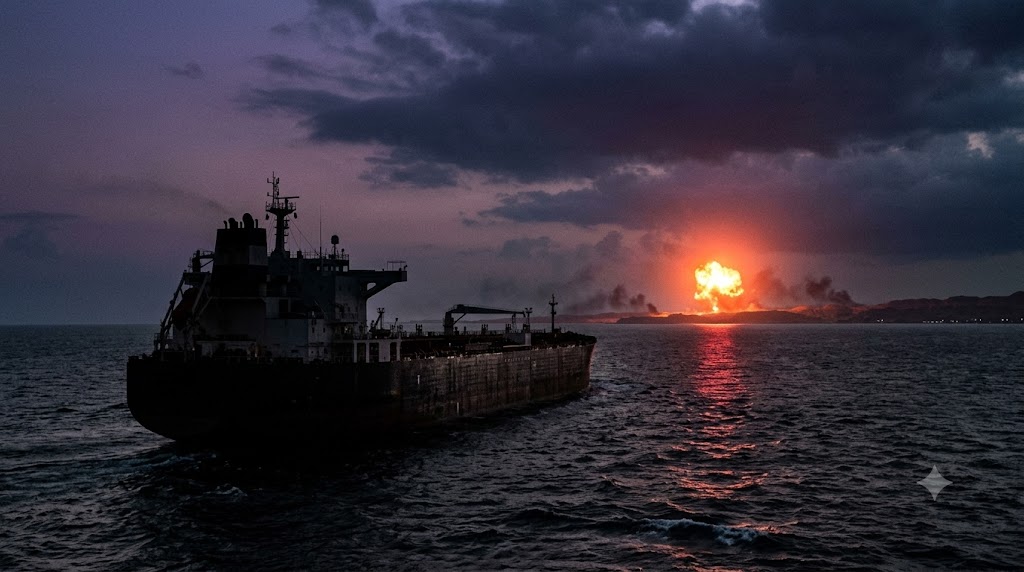
Global energy markets are surging following Houthi strikes on Saudi tankers, while direct military clashes between Washington and Tehran spread across Jordan, Kuwait, and Bahrain.
By World News Desk | July 23, 2026
The Middle East is teetering on the edge of a massive, multi-front regional war. Following a drastic escalation in direct military engagements between the United States and Iran, the conflict has now spilled violently back into the Red Sea, sending immediate shockwaves through the global energy sector.
With the Israeli military continuing its operations in southern Lebanon and diplomatic channels rapidly deteriorating, the geopolitical landscape has shifted dramatically in the last 24 hours. Here is a comprehensive breakdown of the latest strikes, the diplomatic fallout, and the ensuing economic impact.
1. The Red Sea Front and Surging Oil Markets
The most economically disruptive development occurred when Yemen's Iran-backed Houthi rebels struck two Saudi oil tankers in the Red Sea. This aggressive maneuver threatens to completely sever one of the world's most critical maritime chokepoints.
The global markets reacted instantly. The price of the main international oil contract, Brent North Sea crude, soared by five percent, reaching $98.80 a barrel. Simultaneously, the main US contract, West Texas Intermediate (WTI), rallied 3.8 percent to hit $90.11 a barrel.
The international community has moved quickly to condemn the strikes. EU foreign policy chief Kaja Kallas stated, "The attack on an oil tanker in the Red Sea is unacceptable, illegal and further inflames an already volatile situation in the region."
Meanwhile, U.S. Secretary of State Marco Rubio criticized the Houthi involvement, suggesting Tehran had manipulated the group into opening a new front. "The Houthis largely were smart and stayed out of all this throughout the conflict, but they now apparently have gotten themselves suckered into this, going after Saudi Arabia and their ships," Rubio noted while attending a summit in Manila.
2. Direct US-Iran Clashes Spread Across the Gulf
Beyond the maritime threats, the direct exchange of fire between the United States and Iran has expanded geographically.
Iran's Revolutionary Guards (IRGC) and the Iranian army claimed responsibility for a series of devastating strikes against US military assets in the region. According to state media, these attacks destroyed a THAAD missile defense radar, a Patriot system, a C-RAM radar, and a helicopter hangar in Jordan. Furthermore, Tehran confirmed it targeted multiple American installations in Kuwait, including the Ali Al Salem base, Camp Udairi, Camp Doha, and Camp Arifjan.
The regional fallout is triggering defense protocols across neighboring nations:
Jordan & Kuwait: The militaries of both nations reported actively intercepting fresh salvos of Iranian missiles and "hostile drone threats" overnight.
Bahrain: Air raid sirens echoed across the capital city of Manama, with the interior ministry urging citizens to remain calm and head to the nearest safe location after Iran confirmed targeting US assets within the country.
Despite the widespread destruction, the Iranian military has signaled no intention of de-escalating. Army spokesperson Mohammad Akraminia announced on state television that retaliatory attacks will persist "as long as the US attacks on the country's infrastructure and coastal areas continue."
3. Diplomatic Exodus and Mediation Efforts
As the airspace becomes increasingly dangerous, the diplomatic window is rapidly closing.
Citing the severely deteriorating security environment, the United Kingdom officially withdrew all its remaining diplomatic staff from Iran. While the Foreign Office maintains that the embassy will continue to operate remotely, the physical evacuation highlights the imminent threat of further escalation.
On the Iranian side, the rhetoric remains unyielding. Iranian Foreign Minister Abbas Araghchi appeared on state television to place the blame entirely on Washington. "The problem is the type of approach of America, and that is their irrational, excessive and domineering approach, which has been met with strong reactions from us," Araghchi stated.
The only remaining diplomatic lifeline appears to be coming from Muscat. Oman, a historic mediator in the region, expressed "great concern" over the recent strikes. The Omani foreign ministry confirmed it is actively working with Saudi Arabia, the UN special envoy, and Yemeni factions in a desperate bid to resume the political roadmap and stabilize the region before the conflict expands further.
The Bottom Line
The targeted attacks on Saudi oil tankers signify a dangerous evolution in the current conflict, merging the US-Iran military standoff with a direct threat to global energy supplies. As oil inches closer to the $100 mark and nations like Britain pull their diplomats from the region, the possibility of a contained conflict is rapidly evaporating.