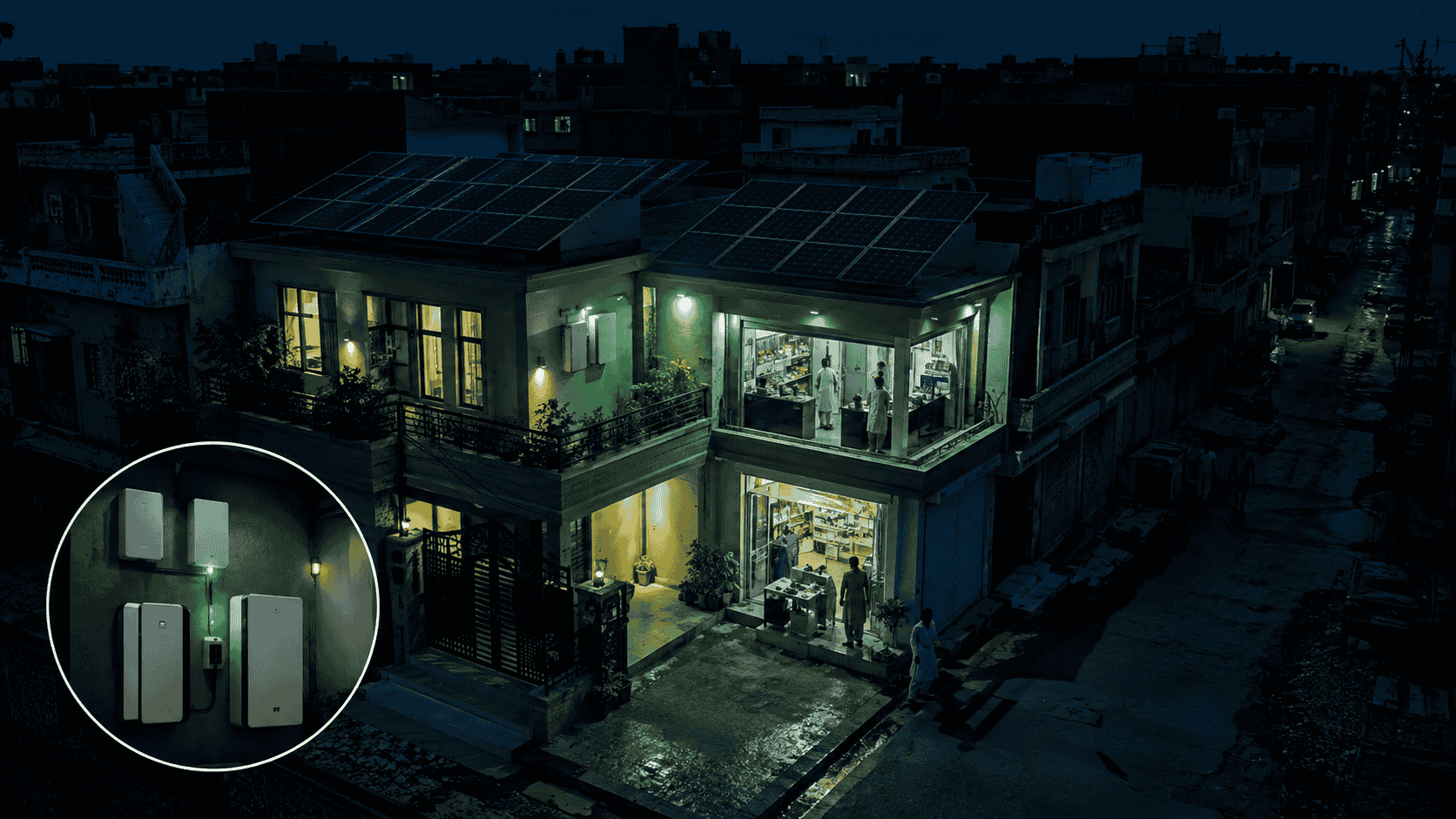
Pakistan’s Battery Imports Surge 220% as Solar Users Seek Freedom From the Grid
Author: Javaid Ahmed Solangi
Publication date: August 7, 2026
Pakistan’s solar revolution is entering its next phase
Pakistanis first turned to rooftop solar to escape rising electricity bills. Now, an increasing number are adding batteries to reduce their dependence on the national grid after sunset.
A new analysis by Islamabad-based energy think tank Renewables First estimates that Pakistan imported 4.6 gigawatt-hours of lithium-ion battery energy storage systems during 2025. That represented a remarkable 220% increase compared with 2024, when imports stood at about 1.4 GWh. (Renewables First)
The rapid increase suggests that solar panels alone are no longer enough for many households and businesses.
Consumers want to store the electricity produced during daylight hours and use it at night, during peak-tariff periods or whenever grid electricity becomes unavailable.
The key numbers behind Pakistan’s battery boom
According to the Renewables First report:
Pakistan imported an estimated 7.6 GWh of battery storage between 2018 and 2025.
Around 60% of that total arrived in 2025 alone.
Approximately 3.1 GWh of cumulative imports were intended for residential use.
An estimated 282,000 solar-powered households now have battery storage.
Roughly one in every 26 solarised households has installed a battery system.
These figures are estimates calculated using Chinese customs information, import records and sectoral assumptions rather than a complete official registry of every battery installed in Pakistan. They nevertheless demonstrate how quickly the market is expanding. (Renewables First)
Why Pakistanis are buying batteries
Three pressures are driving the shift: expensive grid electricity, unreliable supply and changing solar economics.
Renewables First estimates that average electricity tariffs increased by 155% between FY2020 and FY2024, reaching approximately Rs44 per kilowatt-hour. The report also says grid electricity sales fell for three consecutive years as consumers adopted rooftop generation and reduced their dependence on distribution companies.
A solar system can reduce daytime electricity purchases, but it cannot normally supply a home at night without storage or a functioning grid connection.
That limitation is pushing consumers toward lithium-ion batteries.
A properly designed battery system can store surplus solar electricity during the day and release it later when:
Solar panels are no longer generating electricity
Grid tariffs are higher
Load-shedding occurs
Voltage becomes unstable
A business needs uninterrupted electricity
The battery therefore transforms solar from a daytime bill-reduction system into a more complete household or commercial power solution.
Batteries are becoming an alternative to net billing
Pakistan’s changing solar compensation framework is also influencing consumer behaviour.
When electricity exported to the grid delivers less financial value than electricity purchased later, storing surplus power for personal use can become more attractive than exporting it.
A household may generate excess electricity around midday but require most of its power in the evening. Without a battery, that household exports electricity when demand is low and purchases it back when demand and tariffs may be higher.
Battery storage allows consumers to retain more of the economic value generated by their rooftop systems.
The Renewables First report describes storage as increasingly necessary for solar owners seeking protection from higher tariffs and less favourable compensation for electricity sent to the grid. (Renewables First)
Pakistan’s solar market is much larger than official figures suggest
Official net-metering data captures only systems registered with electricity distribution companies.
It does not fully count off-grid systems or installations operating behind the meter without formally exporting electricity.
Renewables First estimates that Pakistan had approximately 38 GW of distributed solar capacity by June 2025, while cumulative solar-module imports reached nearly 55 GW by March 2026. (Renewables First)
That difference matters.
It suggests that Pakistan’s electricity transformation is being led largely by households, farmers, shops and factories—not only by large government or utility-scale power projects.
As more consumers install solar outside the formal grid system, demand for private energy storage is likely to continue increasing.
Households are leading the transition
Battery storage is often associated with factories, telecom towers and large power projects. In Pakistan, however, residential consumers appear to be among the strongest drivers of growth.
The report estimates that consumer-oriented battery imports rose from approximately 1.25 GWh in 2024 to 4.34 GWh in 2025. Residential batteries accounted for an estimated 2.45 GWh of the 2025 consumer total. (Renewables First)
This indicates a bottom-up energy transition similar to Pakistan’s earlier rooftop-solar boom.
Rather than waiting for large-scale improvements in the national grid, consumers with sufficient resources are building smaller private power systems at their homes and businesses.
What does 4.6 GWh actually mean?
A gigawatt-hour measures how much electricity a battery can store, not how much power it can deliver at a single moment.
For perspective, 4.6 GWh equals 4.6 million kilowatt-hours of storage capacity.
The number does not mean all imported batteries were installed immediately or remain fully operational. Some may be held in inventory, used in telecom or industrial systems, or imported as components for different applications.
However, the volume is large enough to show that battery storage has moved beyond a small premium market.
It is becoming an important part of Pakistan’s wider electricity economy.
Will batteries make the national grid weaker?
The battery boom creates both opportunities and risks for Pakistan’s power sector.
Consumers who generate and store their own electricity purchase fewer units from distribution companies. The grid may therefore sell less electricity while still carrying fixed costs relating to power plants, transmission lines, distribution infrastructure and capacity payments.
If those costs are recovered from a shrinking volume of electricity sales, remaining grid consumers could face additional financial pressure.
At the same time, batteries can help the electricity system when properly integrated. They can absorb surplus solar power, reduce peak demand, provide backup capacity and potentially support grid stability.
The challenge is designing rules that allow private batteries to benefit both their owners and the wider electricity network.
Energy-sector analysts have previously warned that rapid battery adoption could create stranded generation assets and financial losses unless grid planning adapts to changing consumer behaviour. (IEEFA)
Not every solar system is ready for a battery
Adding battery storage is not as simple as attaching another device to an existing solar installation.
A technical assessment should examine:
The existing inverter and whether it supports batteries
Daily and nighttime electricity consumption
Required backup duration
Battery chemistry and usable capacity
Charging and discharging limits
Wiring, circuit protection and ventilation
Fire-safety requirements
Warranty conditions
Future replacement costs
Some systems can use an AC-coupled battery connected through a separate power-conversion unit. Others may require a hybrid inverter or significant changes to the original solar setup.
Industry specialists stress that inverter compatibility, electrical infrastructure, energy-management systems and international safety standards should be checked before retrofitting storage. (ProPakistani)
Buyers should not select batteries by price alone
Pakistan’s fast-growing battery market may attract low-quality or incorrectly labelled products.
Consumers should compare usable capacity rather than relying only on the battery’s advertised capacity. They should also examine:
Expected cycle life
Depth of discharge
Battery-management system
Cell manufacturer
Temperature tolerance
Installation quality
Local warranty support
Replacement and repair arrangements
A cheap battery that degrades quickly or lacks proper protection can become more expensive over its lifetime than a higher-quality system.
Poor installation can also create overheating, electrical and fire risks.
Pakistan is moving toward consumer-controlled electricity
The rise in battery imports represents more than a new technology trend.
It signals a shift in who controls electricity generation and consumption.
Under the conventional system, consumers depended almost entirely on central power plants and distribution companies. Under the emerging model, households and businesses can produce electricity, store it and decide when to use it.
Pakistan’s first solar wave was about reducing electricity bills.
The second wave is about gaining control over when electricity is available.
With 4.6 GWh of battery systems reportedly entering the country in a single year, the message from consumers is becoming difficult to ignore: they do not merely want cheaper electricity—they want reliable electricity under their own control.
Pakistan Solar Energy, Lithium Batteries, Battery Storage, Electricity Prices, Load-Shedding, Renewable Energy, Solar Panels, Net Billing, Energy Crisis