
The 15 Unhealthiest Breakfast Foods — And What to Eat Instead
Nobody sets out to eat badly in the morning.
You're half asleep. You've got 20 minutes. The granola bar wrapper says "whole grain" and the orange juice says "no added sugar" and honestly, you're just trying to get out the door.
I get it. But a lot of the foods that have been sold to us as healthy breakfasts — the cereals, the juices, the flavored yogurts — are nutritionally closer to dessert. They give you a blood sugar spike, an energy crash by 10 AM, and a hunger level that has you raiding the office snack drawer before lunch.
Here's what's actually in the foods you're eating, and what to swap them for.
What Actually Makes a Breakfast Bad?
Three things, and they often show up together.
First: a fast blood sugar spike followed by a crash that leaves you tired and hungry way too soon. Second: almost no protein or fiber, so your body has nothing to actually work with for the next few hours. Third: enough hidden sugar or refined carbs to trigger low-level inflammation over time if you eat them every day.
Run almost any popular breakfast food through that filter. The results are not pretty.
1. Flavored Instant Oatmeal
The word "oatmeal" is doing a lot of heavy lifting here.
Flavored instant oatmeal packets — the kind with names like "Maple Brown Sugar" or "Peaches and Cream" — routinely contain 12 or more grams of added sugar per serving. The oats themselves are so finely processed that they digest almost as fast as white bread.
Swap it for: Plain rolled oats (takes five minutes) with a sliced banana, a shake of cinnamon, and a spoonful of almond butter. Filling, naturally sweet, and it'll actually keep you going.
2. Store-Bought Granola
Granola has one of the most undeserved health reputations in the breakfast aisle.
Check the label on most commercial granolas and you'll find 15 to 25 grams of sugar per serving — more than some candy bars. And the serving size on the box? Nobody eats that much. People eat three times that amount.
Swap it for: Make your own. Rolled oats, nuts, seeds, a bit of coconut oil, a drizzle of honey, 25 minutes in the oven. You control what goes in and it tastes better anyway.
3. Orange Juice (and Pretty Much All Fruit Juice)
A full glass of orange juice contains around 26 grams of sugar. A can of Coca-Cola has 39. The gap is smaller than you'd think — and the juice has almost none of the fiber that slows sugar absorption when you eat a whole orange.
You're essentially drinking sugar water with a vitamin C chaser and calling it healthy.
Swap it for: Eat the fruit. Whole. Or just have water with a slice of lemon if you want something bright in the morning. Your insulin will have a much better day.
4. Commercial Breakfast Cereals
The colorful boxes targeting children are obviously bad. But the "adult" cereals — the ones with words like "heart healthy" and "whole grain" on the front — are often not much better. Many contain 10 to 20 grams of sugar per serving and digest so quickly that you're hungry again before your first meeting is over.
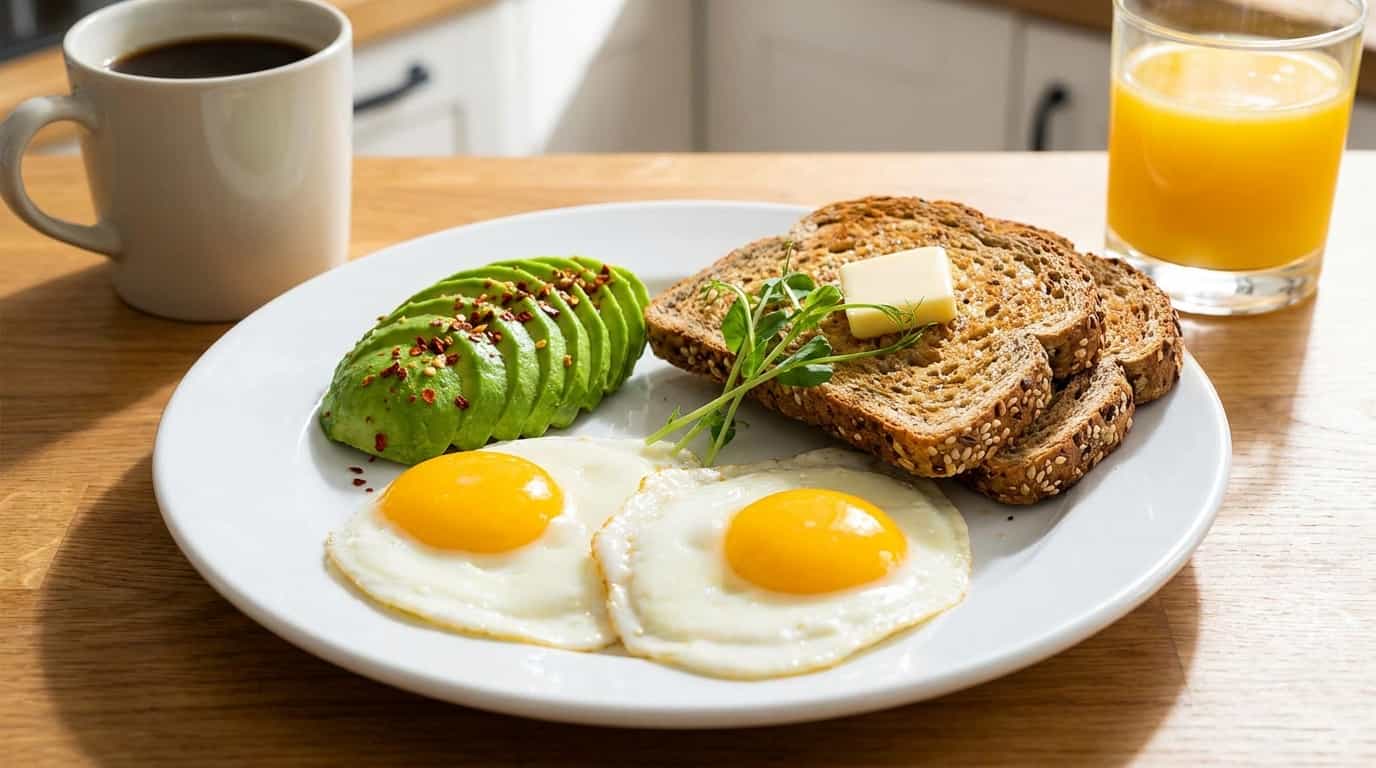
Swap it for: If you need something quick and cereal-adjacent, plain shredded wheat or bran flakes (no sugar coating) with milk are about as good as boxed cereal gets. Better yet: eggs.
5. Flavored Yogurt
Plain Greek yogurt is legitimately one of the best things you can eat in the morning. High protein, probiotic-rich, filling.
Flavored yogurt is a different product. Some of the popular fruit-on-the-bottom varieties contain as much sugar per serving as a scoop of ice cream. The "light" versions often substitute that sugar with artificial sweeteners, which have their own problems.
Swap it for: Plain Greek yogurt. Add your own fruit. Add honey if you need sweetness. You'll get all the benefits without the sugar bomb.
6. Bagels
A standard plain bagel has roughly the equivalent carbohydrates of four to five slices of white bread. That's before you add cream cheese, which is fine on its own but not exactly balancing the equation.
Almost no fiber. Minimal protein. An impressive blood sugar spike, followed by an equally impressive crash.
Swap it for: One slice of sourdough (easier to digest, lower glycemic impact) with eggs and avocado. You'll actually feel it for a few hours.
7. Muffins
Coffee shop muffins — blueberry, bran, lemon poppy seed — can run 400 to 600 calories and 40+ grams of sugar each. They are cake. Genuinely delicious cake, often. But cake.
The word "bran" does not rescue them. Bran muffins from most bakery chains are still sugar delivery vehicles wrapped in a healthy-sounding word.
Swap it for: Egg muffins — eggs beaten with vegetables and baked in a muffin tin. Same portable format, completely different nutritional story.
8. Pancakes and Waffles With Syrup
White flour, a little sugar in the batter, then maple syrup on top. Nutritionally, a stack of pancakes is built to spike your blood sugar as fast as possible.
You feel incredible for about 45 minutes. Then the crash hits and the rest of your morning is spent being slightly foggy and craving more carbs.
Swap it for: Banana oat pancakes — mash a banana, mix in two eggs, cook them like pancakes. Two ingredients. No refined flour. Genuinely filling.
9. Flavored Coffee Drinks
The 500-calorie caramel latte from your favourite chain isn't a coffee. It's dessert in a cup.
Liquid calories don't register hunger the same way solid food does, so a 500-calorie drink doesn't stop you from eating a full breakfast on top of it. You've added half a day's sugar before 9 AM and you don't even feel it.
Swap it for: Coffee with milk, no syrups. If you genuinely can't drink it without sweetening, add a small amount of regular sugar — at least you know exactly how much is going in.
10. Breakfast Bars and Granola Bars
Marketed as "convenient nutrition." In reality: most of them are candy bars that hired a better PR team.
Some bars are genuinely decent — high protein, low sugar, real ingredients. Most are not. The ones near the checkout at the coffee shop almost certainly aren't.
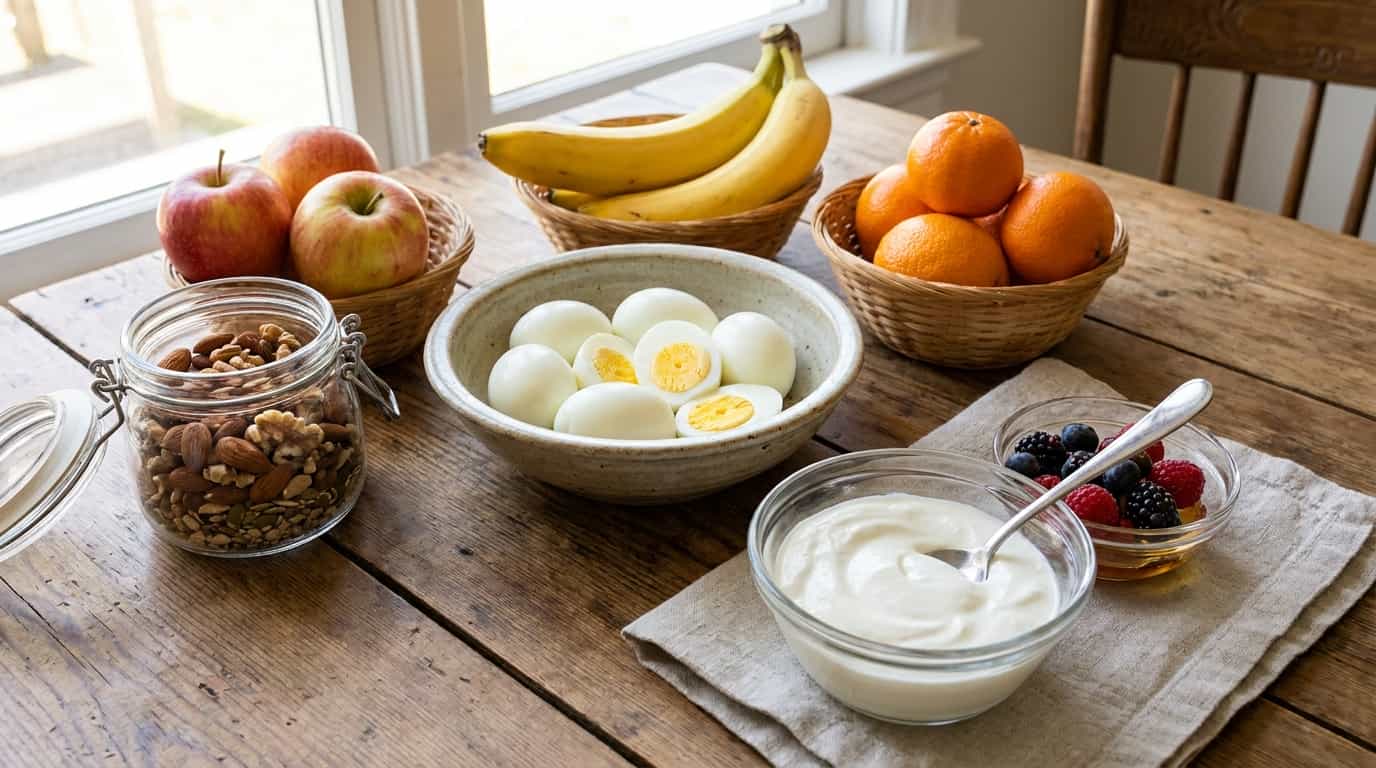
Swap it for: A small handful of almonds and a piece of fruit. Takes five seconds to grab. No label required.
11. White Toast With Jam
White bread is essentially sugar that hasn't been fully processed yet. Add jam — which is mostly sugar and fruit — and you've created a meal your body turns into glucose within minutes.
You'll feel fine. For a bit.
Swap it for: Sourdough or whole grain toast with almond butter or mashed avocado and a soft-boiled egg. It tastes better too, if you give it a chance.
12. Processed Breakfast Meats
Sausage links, streaky bacon, pre-packaged breakfast deli slices — all extremely high in sodium, saturated fat, and nitrate preservatives. The World Health Organization classifies processed meat as a Group 1 carcinogen. That's the same category as cigarettes, for context — though the risk level is different.
Occasional bacon isn't going to ruin your life. Every single morning is a different story.
Swap it for: Eggs, smoked salmon, or turkey slices without added nitrates. Still protein-rich. Without the preservation chemicals.
13. Restaurant Hash Browns
Hash browns at home can be fine. Restaurant hash browns are deep-fried in high-heat industrial seed oils that oxidize under heat and create inflammatory byproducts. Then they're salted heavily.
They're genuinely delicious. They're also not doing anything good for you.
Swap it for: Roast sweet potato at home — do a batch on Sundays. Or skip the starch entirely and lean harder into eggs and vegetables.
14. Commercial Protein Shakes
There are good ones. But the ones filling the shelves at most gyms and supermarkets often contain 20+ grams of added sugar, artificial sweeteners, cheap protein sources, and enough ingredients you can't pronounce to fill a chemistry textbook.
The protein is real. Everything around it is questionable.
Swap it for: A home shake — a scoop of plain protein powder, frozen berries, a handful of spinach (you won't taste it), and almond milk. Blended in two minutes. Costs a fraction of the packaged versions.
15. Skipping Breakfast and Then Compensating Later
This one surprises people.
Intermittent fasting is legitimate and works well for a lot of people. But "skipping breakfast" as a vague lifestyle choice — especially when it leads to a muffin and a large flavored latte at 10:30 AM — is nutritionally worse than most of the items on this list.
If you're going to skip breakfast, be intentional about it. Know when you're breaking your fast and with what. Don't let "not hungry" become an excuse to make a terrible food decision two hours later.
One Rule That Changes Your Mornings Completely
You don't need to overhaul everything at once.
Just ask one question before you eat: does this have protein, fiber, or healthy fat in it?
If the answer is yes — you're in decent shape. If the answer is no, and it's mostly sugar or refined carbs with a health-sounding word on the package — find the swap.
Your energy by midmorning will change noticeably within a week. Your hunger patterns will settle. And you'll stop reaching for the office snacks like your life depends on it.
That's a trade worth making.
👉 Also read: High-Protein Meal Prep for the Week: 7-Day Plan Under $50 / £40
For informational purposes only. Consult a registered dietitian or physician for personalized nutrition advice.





Discussion
Comments
Approved comments are published after moderation to keep discussion useful and spam-free.
No comments yet. Start the discussion below.