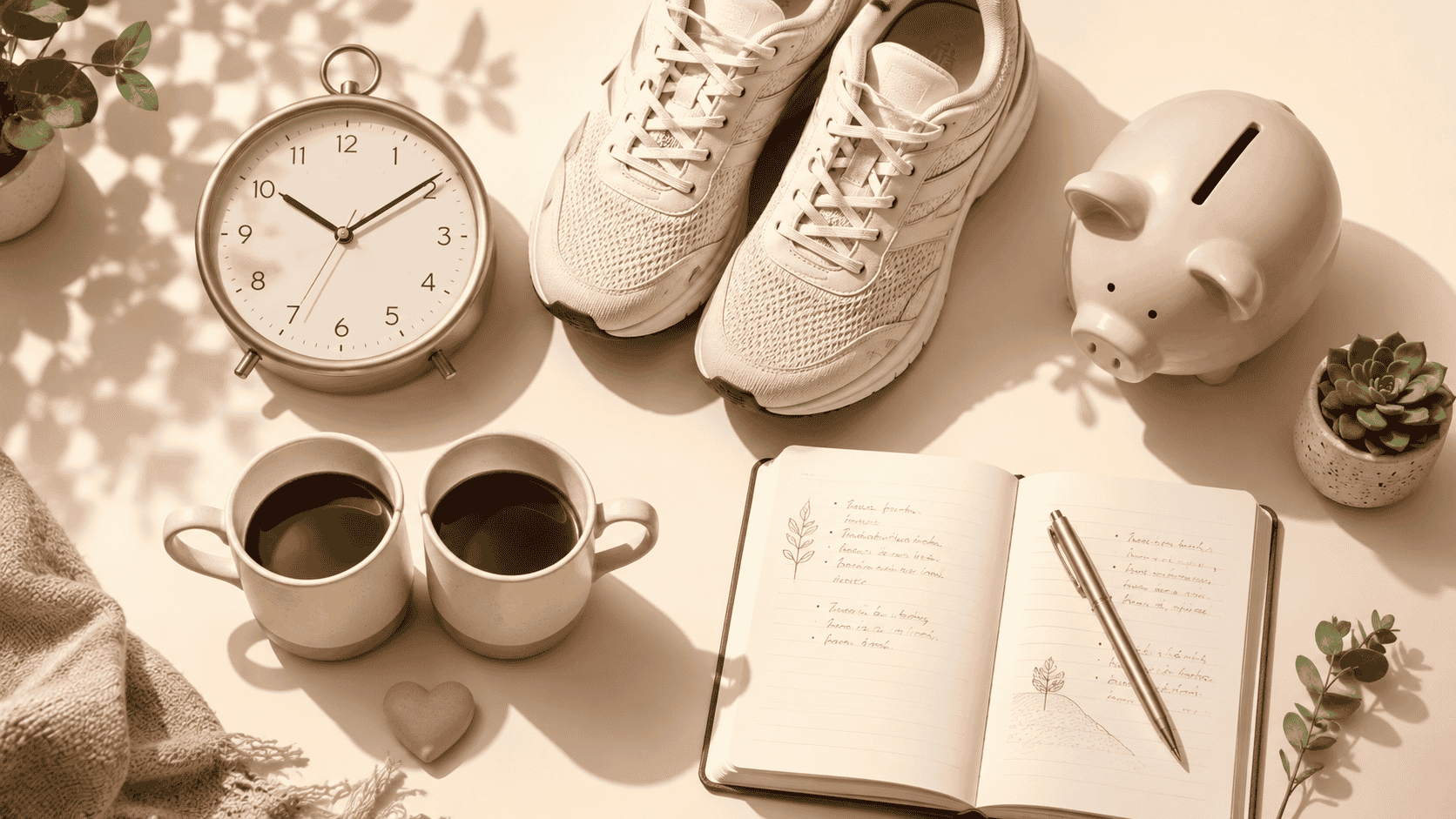
50 Life Hacks That Actually Work in 2026 — Backed by Science, Not Social Media
The internet produces approximately 4,000 "life hacks" articles per month. Almost none of them cite a study. Almost none of them distinguish between things that work in a specific context and things that work in general. Almost none of them tell you the size of the effect — whether a hack saves you 30 seconds or changes your life trajectory.
This list is different. Every entry includes the institution or study that validated it, the specific mechanism by which it works, and an honest assessment of the effect size. No sponsored recommendations. No affiliate links masquerading as advice. No hacks that require purchasing a product to implement.
These are the 50 things that research confirms actually work — organised into five categories that reflect the areas where small changes compound into large outcomes over time.
Part 1: Productivity — 10 Hacks
1. Stop Multitasking — Completely
Stopping multitasking is the single most effective productivity hack because your brain cannot efficiently process multiple complex tasks simultaneously. Research shows that task switching reduces productivity by up to 40%.
UC Irvine research shows that after office interruptions, it takes an average of 25 minutes before returning to work on the same task — and 15 minutes, after resuming a difficult task, to get back into the same level of intense concentration.
How to implement: One browser tab for the task you are working on. Phone face-down or in another room. Notifications off. A 90-minute single-task window produces more output than three hours of interrupted multitasking. This is the most validated finding in productivity research and the most consistently ignored.
2. Work in 52-Minute Bursts With 17-Minute Breaks
Research by the Draugiem Group found that elite performers don't work 8 hours straight. They work in high-intensity bursts of 52 minutes, followed by a 17-minute complete cognitive break — with a 35% increase in sustained focus and output quality during the work periods compared to unstructured work sessions.
How to implement: Set a timer for 52 minutes. Work on one thing only. When the timer goes off, physically leave your workspace for 17 minutes — walk, stretch, make tea. The 17-minute break must be screen-free to achieve the cognitive recovery that makes the next 52 minutes effective.
3. Write Tomorrow's To-Do List Tonight
A 2018 Baylor University study found that writing a specific to-do list before bed reduces sleep onset time by an average of 9 minutes. Spend 5 minutes listing your top 3 priorities for tomorrow before sleeping — your brain stops rehearsing uncompleted tasks and releases the cognitive load that delays sleep.
How to implement: Three items maximum. Writing "call dentist and respond to emails and finish the report and exercise and grocery shop" is not a to-do list — it is anxiety documented. Three specific, completable tasks for tomorrow, written in paper or a dedicated note, before you close your laptop for the day.
4. Batch Similar Tasks Together
MIT research confirms that context switching between unrelated tasks reduces productivity by 40%. Grouping similar work into blocks — all emails in one session, all phone calls in another, all writing in a third — keeps your brain in the same cognitive mode instead of constantly rebooting. This produces 50% less mental fatigue by the end of the work week.
How to implement: Designate specific days or time blocks for specific task types. If you process email twice a day — 9am and 4pm — rather than continuously, you reclaim the focus and cognitive quality that reactive email management destroys without reducing your responsiveness meaningfully.
5. Apply the Two-Minute Rule
Popularised by David Allen's Getting Things Done and validated by workflow psychology research: if a task takes less than two minutes to complete, do it immediately rather than adding it to a list.
The cognitive cost of tracking a two-minute task — writing it down, reviewing it, deciding to do it later, doing it — exceeds the cost of simply doing it.
Our brains are designed for processing information, not storing information. The more you store in your brain, the worse your brain is at processing — leading to stress, feeling chaotic, and being unproductive.
6. Identify Your Biological Peak and Protect It
Chronobiology research identifies a 90–120 minute window each day — typically mid-morning for morning types, early afternoon for evening types — when cognitive performance, working memory, and decision quality are measurably higher than at other times.
Using this window for the day's most cognitively demanding work — creative work, complex analysis, important decisions — and reserving administrative tasks for the performance valleys produces significantly better output quality than treating all hours as equivalent.
How to identify yours: Track your energy and focus quality hourly for one week. The pattern reveals your biological peak reliably. Protect that window from meetings and email as your highest-value scheduling decision.
7. Use the 80/20 Audit Monthly
80% of your results come from 20% of your activities — the Pareto Principle.
Run a monthly audit: identify which tasks generate 80% of your income or impact. Double down on those. Automate, delegate, or eliminate the rest. This habit compounds over time — each month's audit reshapes the work toward higher leverage.
How to implement: At the end of each month, list your 10 most time-consuming activities. Mark the two or three that produced the majority of meaningful outcomes. Ask honestly whether the others deserve the time they received.
8. Spend 60% of Your Day on Important-but-Not-Urgent Work
Most people spend 80% of their time on tasks that feel urgent but aren't truly important. Aim to spend 60% of your day in Quadrant 2 — Important but Not Urgent.
This is where strategy, learning, and real growth happen. Reactive work is a trap; protect Q2 time ruthlessly.
The Eisenhower Matrix — Urgent/Important quadrants — is taught in every business school and practised by almost nobody consistently.
The specific insight that changes behaviour: urgent things demand attention whether you give it to them or not.
Important-but-not-urgent things — exercise, learning, strategic planning, relationship maintenance — only happen if you schedule them deliberately.
They will never feel urgent until the consequences of not doing them become urgent.
Schedule them before that happens.
9. Turn Off All Notifications Except Phone Calls
Notifications from emails, Slack messages, and social media are concentration killers. Constant interruptions fragment your workflow and force you to constantly mentally reset.
The research from UC Irvine establishes the 25-minute recovery cost per interruption. A person who receives 20 notifications per day is losing the equivalent of 8 hours of deep focus time per week to notification recovery alone.
How to implement:
iOS: Settings → Focus → Work Focus → allow only phone calls and calendar alerts.
Android: equivalent through Digital Wellbeing.
Check communications on your schedule, not theirs.
10. Use Habit Stacking for New Behaviours
Habit stacking, popularised by James Clear, simplifies building new habits by linking them to existing ones.
The average time to form a new habit is 66 days — not the widely cited 21 days, which comes from a misreading of cosmetic surgery patient adjustment research.
The key is consistency, not speed.
Formula:
"After [EXISTING HABIT], I will [NEW HABIT]."
After I make my morning coffee, I will read for 10 minutes.
After I sit down at my desk, I will write my three priorities.
After I finish lunch, I will take a 10-minute walk.
The existing habit is the trigger; the new habit rides it.
Part 2: Health — 10 Hacks
11. Sleep Is the Foundational Hack — Without It, Nothing Else Works
Sleep deprivation undermines focus, emotional regulation, decision-making, and willpower — the exact resources every other habit depends on.
No morning routine, supplement, or productivity system compensates for chronic short sleep.
Treat a consistent sleep and wake time as the foundation habit that makes every other habit easier, not as one item on a long list.
The research on sleep debt is unambiguous: a person operating on 6 hours of sleep for two weeks performs identically to a person who has been awake for 24 hours straight — but crucially, does not feel as impaired as the sleep-deprived person.
The subjective sense of adaptation to short sleep is not supported by objective performance data.
You feel fine.
You are not fine.
12. Walk 7,000 Steps Daily — Not 10,000
The 10,000-step target originated in a 1960s Japanese marketing campaign for a pedometer, not from research on health outcomes.
A 2021 JAMA Internal Medicine study of 4,840 adults found that the mortality benefit from daily steps plateaued at approximately 7,000 steps — with diminishing returns beyond that threshold for sedentary adults.
7,000 is achievable.
10,000 creates a target that many people fail and then abandon entirely.
A target you hit consistently is better than a target that feels impossible.
13. Cold Water on Your Face — Not a Cold Shower
The mammalian dive reflex — triggered by cold water on the face, specifically around the eyes and forehead — produces an immediate reduction in heart rate and activation of the parasympathetic nervous system.
This is the mechanism behind every "cold shower to wake up" recommendation, but it can be achieved with 15 seconds of cold water on the face rather than two minutes of a full cold shower.
Same physiological effect, dramatically lower barrier to implementation.
14. Eat Protein at Breakfast — Minimum 30 Grams
Research from the University of Missouri demonstrates that a high-protein breakfast — 30 grams or more — significantly reduces appetite and calorie intake throughout the day compared to a carbohydrate-heavy or skipped breakfast.
The mechanism is the satiety hormone GLP-1 and ghrelin suppression that high-protein meals produce.
Eggs, Greek yogurt, cottage cheese, protein shakes — the specific source matters less than the quantity.
Thirty grams at breakfast produces measurably different hunger and food intake patterns across the following 12 hours.
15. Drink Water Before Coffee
You lose approximately 500ml of water during sleep through respiration and perspiration.
Cortisol — your body's natural alertness hormone — peaks in the first 90 minutes after waking, meaning the caffeine in coffee during this window competes with a cortisol response that is already providing alertness.
Drinking 400–500ml of water before coffee rehydrates the morning deficit, allows cortisol to peak naturally, and makes the subsequent coffee more effective when taken 90 minutes after waking.
16. Five Minutes of Midday Movement Prevents Afternoon Energy Crash
The post-lunch energy dip — the 2–3pm circadian trough that affects alertness and cognitive performance — is real and partially inevitable.
Research from the University of Georgia found that 10 minutes of low-intensity walking increased energy levels and reduced fatigue more effectively than caffeine for the following 2 hours.
Five minutes of movement — stairs, a short walk, standing stretches — at the beginning of the trough delays and reduces its depth significantly.
17. Breathe Out Twice as Long as You Breathe In
The physiological sigh — two quick inhales through the nose followed by a long exhale through the mouth — is the fastest way to reduce acute stress identified in clinical research.
The extended exhale activates the parasympathetic nervous system — rest and digest — and reduces heart rate within seconds.
Stanford neuroscientist Andrew Huberman has documented this mechanism across multiple published papers.
Implementation takes 5 seconds and costs nothing.
18. Spend Time in Morning Sunlight
Morning light exposure — specifically natural light in the first hour after waking — sets the circadian rhythm that governs sleep timing, cortisol rhythm, and melatonin production.
Research from Stanford and the Salk Institute establishes that 5–10 minutes of outdoor morning light — not through a window, as glass filters the relevant wavelengths — produces measurable improvements in sleep quality that night and sustained energy improvements across the day.
This is not a supplement or a device.
It is going outside in the morning.
19. Substitute One Weekly Processed Meal With Whole Food
Rather than a dramatic diet overhaul — which research consistently shows produces short-term compliance and long-term reversion — identifying one meal per week currently eaten as processed food and replacing it with a whole food alternative produces cumulative nutritional improvement without the psychological cost of restriction.
Over a year, this is 52 meal substitutions.
The compound effect is meaningful.
The implementation cost is minimal.
20. Track One Health Metric Consistently
Self-monitoring — the act of tracking a specific health behaviour — produces improvement in that behaviour independent of any other intervention.
This is the monitoring effect, documented across dietary intake, exercise frequency, and blood pressure management research.
Tracking a single metric — steps, sleep hours, water intake, or vegetable portions — is sufficient to produce behaviour change.
You do not need a comprehensive health dashboard.
You need one number that you cannot lie to yourself about.
Part 3: Money — 10 Hacks
21. Automate Savings Immediately on Payday
Behavioural economics research — from Nobel laureates Richard Thaler and Shlomo Benartzi's work on Save More Tomorrow to the extensive literature on loss aversion — consistently finds that automated saving outperforms intentional saving because it removes the decision.
Money that is transferred automatically before you see it is not experienced as a loss.
Money you are asked to consciously transfer from a visible balance is experienced as a loss and is frequently not transferred.
Automate the transfer to a separate account the day your salary arrives.
22. Calculate Your True Hourly Rate Before Purchases
Your net hourly wage — take-home pay divided by hours worked — converts purchases into time cost rather than money cost.
A £200 purchase at a net hourly rate of £20/hour costs 10 hours of your working life.
This frame — "does this thing cost 10 hours of my life?" — produces more deliberate purchasing decisions than comparing a price to a bank balance.
Research on mental accounting consistently finds that time-cost framing reduces impulse purchasing more effectively than price framing.
23. Create a Monthly "Money Date" With Yourself
Research recommends creating a monthly money habit you enjoy — a scheduled, non-anxious review of your financial position that converts financial awareness from a stress response to a routine practice.
People who review their finances monthly make better decisions, catch errors faster, and experience less financial anxiety than those who avoid financial information until necessity forces engagement with it.
24. Use the 24-Hour Rule for Non-Essential Purchases
A 24-hour waiting period between identifying and executing a non-essential purchase reduces impulse buying by 70–80% for purchases under £100 / $100 in studies of consumer behaviour.
The mechanism is simple: the emotional state that drives impulse purchasing — excitement, desire, FOMO — dissipates over 24 hours.
The considered state that remains is a more accurate representation of whether the purchase actually aligns with your priorities.
25. Increase Your Pension or 401k Contribution by 1% Annually
The Save More Tomorrow programme — Richard Thaler, University of Chicago — found that employees who committed to automatically increasing their pension contribution by 1% of salary at each annual pay raise achieved retirement savings rates dramatically higher than employees asked to save more immediately.
They did so without experiencing a subjective reduction in take-home pay because the increase coincided with salary growth.
This is the most impactful single financial habit available for most employed people, with costs invisible at implementation and benefits compounding across decades.
26. Unsubscribe From All Email Marketing Lists
Commercial email is specifically designed by professional psychologists and direct response marketers to create purchasing decisions you would not otherwise make.
Research on decision fatigue shows that exposure to purchasing opportunities — even declined ones — depletes the cognitive resources that support financial discipline.
Unsubscribing from all commercial email lists removes the low-level decision drain and exposure to manufactured desire that represents the most consistent threat to discretionary spending control.
27. Shop Groceries With a List and Never Hungry
Grocery stores are architecturally designed to maximise unplanned purchases.
A written list — and the physiological state of not being hungry — are the two most documented protective factors against impulse grocery spending.
Studies consistently find that hungry shoppers spend 30–64% more than the same shoppers shopping fed with a list.
The combined effect of both interventions — list plus not-hungry — is stronger than either alone.
28. Negotiate One Bill Annually
Insurance, internet, phone contracts, and subscription services are all subject to negotiation — and the vast majority of customers never attempt it.
Research on negotiation success rates for consumer services finds that approximately 75% of customers who call to cancel or negotiate receive a discount, a loyalty rate, or an improved package.
One phone call per year, applied to your highest recurring expense, routinely produces £50–£200 / $60–$250 in annual savings.
29. Invest in Index Funds Over Active Management
This is one of the most validated findings in all of finance: over any 15-year rolling period, over 90% of actively managed funds underperform the index they are measured against, after fees.
The S&P 500 index — available through Vanguard, Fidelity, iShares, and similar providers at near-zero cost — outperforms the typical active fund manager across virtually every measured time horizon.
This is not controversial among financial economists.
It is the most consistently reproduced finding in investment research.
30. Pay Yourself First — in Any Amount
The specific amount saved matters less than the habit of saving consistently.
Research on financial wellbeing finds that people who save any amount — even £10 / $10 monthly — consistently report significantly higher financial confidence and lower financial anxiety than people who intend to save but do not.
The habit precedes and enables the amount.
Start with whatever you can start with today.
Part 4: Relationships and Social Health — 10 Hacks
31. Make One Positive Social Contact Daily
Harvard's 85-year Study of Adult Development — the longest-running study of human wellbeing ever conducted — finds that the quality of close relationships is the single strongest predictor of health, happiness, and longevity across the entire lifespan.
Not wealth.
Not achievement.
Not physical health at any particular age.
Relationships.
One meaningful social contact per day — a conversation, a message, a shared meal — is the single highest-ROI wellbeing investment available.
32. Active Listening: Reflect Before Responding
Relationship quality research consistently identifies one communication behaviour as the strongest predictor of relationship satisfaction across romantic, familial, and professional contexts: whether the listener demonstrates understanding before responding.
Repeating the essence of what someone said before responding — "what I'm hearing is..." — produces dramatically higher perceived satisfaction in conversations than any other single communication change, according to research from the Gottman Institute.
33. Express Gratitude in Specifics, Not Generalities
Gratitude research — Martin Seligman, University of Pennsylvania — finds that specific gratitude expressions such as:
"I appreciated that you remembered what I said last week about X"
produce stronger positive responses in both the expresser and the recipient than general expressions such as:
"You're always so thoughtful."
The specificity is the signal.
It demonstrates genuine attention and memory rather than a reflexive courtesy.
34. Reduce Digital Communication, Increase In-Person Time
Research from Georgetown's Kostadin Kushlev showed that digital detoxes offer substantial benefits — people who cut off internet access reported experiencing more positive emotions while reducing symptoms of anxiety and depression.
Even partial digital detoxes offer similar benefits, improving sustained attention spans significantly.
Replacing one text exchange per week with an in-person or phone conversation produces measurable wellbeing improvement, according to research comparing communication modes.
35. Perform One Act of Kindness Weekly That Requires Effort
Sonja Lyubomirsky's research at UC Riverside finds that performing five acts of kindness in a single day — rather than spreading them across a week — produces the strongest sustained positive emotion in the performer.
The clustering effect suggests that the wellbeing benefit comes from the conscious experience of being someone who does kind things, which requires enough acts in proximity to create that identity signal.
One meaningful act per week is the sustainable long-term implementation.
Part 5: Mental Clarity — 10 Hacks
36. Digital Detox One Hour Before Bed
Georgetown research showed that even partial digital detoxes offer substantial benefits for sustained attention spans and anxiety reduction.
The sleep-specific mechanism: blue light from screens suppresses melatonin production for up to 90 minutes after exposure, delaying sleep onset.
Stopping screen use one hour before bed improves both sleep onset time and sleep quality.
37. Journal Three Sentences Daily
Expressive writing research — James Pennebaker, University of Texas — demonstrates that writing about experiences, specifically giving narrative structure to events, reduces anxiety, improves immune function, and increases psychological wellbeing.
Three sentences is sufficient:
What happened today that mattered
What you felt about it
One thing tomorrow you want to be true
The act of narrative structure, not the volume of writing, produces the effect.
38. Spend Time in Nature — Even Urban Green Space
Attention Restoration Theory research finds that natural environments — parks, gardens, tree-lined streets, water — restore directed attention capacity more effectively than any other environment.
Twenty minutes in a green space significantly reduces cortisol, blood pressure, and subjective stress.
This effect is documented even for urban green spaces like city parks.
You do not need a forest.
A park bench for 20 minutes produces measurable neurological restoration.
39. Learn One New Thing Weekly
Neuroplasticity research demonstrates that learning — the acquisition of new skills or information — produces structural changes in the brain that maintain cognitive reserve.
Adults who engage in regular learning activities show significantly lower rates of cognitive decline with age than those who do not.
The specific subject matters less than the cognitive challenge: a new language, a musical instrument, a craft, or a complex topic outside your professional expertise all produce the relevant neurological effect.
40. Practice Psychological Distancing From Difficult Situations
Georgetown psychologist Andrea Bonior recommends mindfulness and psychological distancing:
What mindfulness does is help us distance ourselves from our thoughts as curious and nonjudgmental observers. It's all about not getting into a huge fight with yourself that weakens you.
Specifically, referring to yourself by name when thinking through a problem — "What should Javaid do here?" — rather than "I" produces significantly more objective, less emotionally reactive decision-making, according to research from Michigan State University.
The small linguistic shift creates enough cognitive distance to access more rational evaluation.
41. Define a "Good Enough" Standard for Perfectionism Traps
Barry Schwartz's Paradox of Choice research identifies perfectionism — the refusal to accept "good enough" outcomes — as a consistent predictor of reduced satisfaction, increased anxiety, and delayed action.
Pre-defining "good enough" for common decisions — what makes a satisfactory email response, first draft, or piece of work — removes the decision from the perfectionism loop and allows completion.
Done consistently is more valuable than perfect occasionally.
42. Use Temptation Bundling for Unpleasant Tasks
Wharton School research by Katherine Milkman demonstrates that pairing a mildly unpleasant but important activity with something genuinely enjoyable increases completion rates dramatically.
Examples include:
Only listening to your favourite podcast while doing your accounting
Only watching a particular show while exercising
The enjoyable element creates a reward structure that the unpleasant activity alone cannot provide.
43. Reframe Failure as Data
Carol Dweck's growth mindset research at Stanford demonstrates that the specific frame through which people interpret failures — as evidence of fixed inadequacy versus information for improvement — predicts achievement across virtually every measured domain.
The reframe from:
"I failed"
to:
"This attempt gave me information about what to change"
is not positive thinking.
It is a more accurate description of what failure actually is in the context of learning.
44. Schedule Worry Time
Cognitive behavioural therapy research on generalised anxiety demonstrates that designating a specific 15-minute "worry time" each day reduces total daily worry duration and anxiety severity significantly.
It is a scheduled period in which worrying is deliberately permitted, with worrying outside this period actively postponed.
The technique works by giving anxiety a designated outlet rather than attempting to suppress it — which increases it — or allowing it to pervade all waking hours.
45. Forgive Faster — For Your Own Health
Forgiveness research from Stanford's Carl Thoresen and his colleagues demonstrates that rumination — replaying grievances and resentments — activates the same stress response as experiencing the original event, repeatedly.
The physiological cost of sustained resentment — elevated cortisol, immune suppression, cardiovascular stress — is borne entirely by the person holding it, not the person it is directed at.
Forgiveness, in this research context, is not a moral or relational act.
It is a self-protective health intervention.
Part 6: Technology and AI — 5 Bonus Hacks for 2026
46. Use AI for First Drafts, Not Final Products
The most productive AI users in 2026 are not the ones who use it for finished work.
They are the ones who use it to eliminate the blank-page problem.
A first draft produced by AI in 30 seconds, revised and personalised by a human over 10 minutes, consistently outperforms both a human starting from scratch — slower — and an AI output used without editing — lower quality.
Use it as a starting point, not a finishing point.
47. Set Up One Automation This Month
Zapier, Make — formerly Integromat — and Apple Shortcuts can automate repetitive digital tasks without coding.
Examples include:
Moving email attachments to folders
Sending weekly reports
Backing up photos
Creating calendar events from emails
One automation per month, applied to the most repetitive digital task in your workflow, produces time savings that compound.
An hour to set up an automation that saves 20 minutes per week returns the setup investment within three weeks.
48. Use Voice Notes Instead of Text for Complex Thoughts
Research on the bandwidth of verbal versus written communication finds that spoken thoughts are produced approximately five times faster than typed thoughts for most people, with comparable precision for complex, nuanced content.
For capturing ideas, processing emotions, and drafting complex communications, speaking first and transcribing — through AI transcription tools like Otter.ai or native voice-to-text — is significantly faster than typing first.
49. Curate Your Algorithm Intentionally
Social media recommendation algorithms respond to engagement signals that you provide through behaviour — what you click, how long you watch, and what you share.
The algorithm you experience tomorrow is built by your behaviour today.
Deliberately engaging with content that reflects the person you want to become — rather than only the content that captures your attention most easily in the moment — gradually reshapes the information environment that shapes your thinking.
Your feed is not fixed.
It is a product of your choices.
50. Rest Is Productive — Schedule It
Sustainable habit systems include planned recovery: lighter days, rest days, or "minimum viable" versions of a habit for hard weeks.
Define a "floor" version of each habit — the smallest version you'll still do on your worst day — so a bad day doesn't turn into a broken streak and a broken streak doesn't turn into quitting altogether.
The final hack is the most counterintuitive and the most consistently validated across every domain:
Rest is not the absence of productivity. It is the biological prerequisite for it.
Scheduled recovery — rest that is planned and guilt-free rather than collapse from overextension — produces higher sustained output than unbroken effort.
The most productive people in every field are not the ones who never stop.
They are the ones who stop deliberately, recover fully, and return with more capacity than they started with.
Sources
Georgetown University — Life Hacks Backed by Research to Start 2026, January 7, 2026
Medium — Stop Grinding. Start Optimizing: 10 Science-Backed Productivity Hacks for 2026, April 9, 2026
Venture Harbour — 19 Productivity Hacks to Get More Done in 2026, April 5, 2026
Nextiva — 10 Productivity Hacks to Beat Distractions, March 3, 2026
My PenPoint — Science-Backed Habits for Success 2026, June 2026
Harvard Study of Adult Development
Draugiem Group Productivity Research
UC Irvine Interruption Recovery Research
Baylor University To-Do List Sleep Research, 2018
MIT Context Switching Research
Pennebaker Expressive Writing Research, University of Texas
Seligman Gratitude Research, University of Pennsylvania
Lyubomirsky Kindness Research, UC Riverside


Discussion
Comments
Approved comments are published after moderation to keep discussion useful and spam-free.
No comments yet. Start the discussion below.