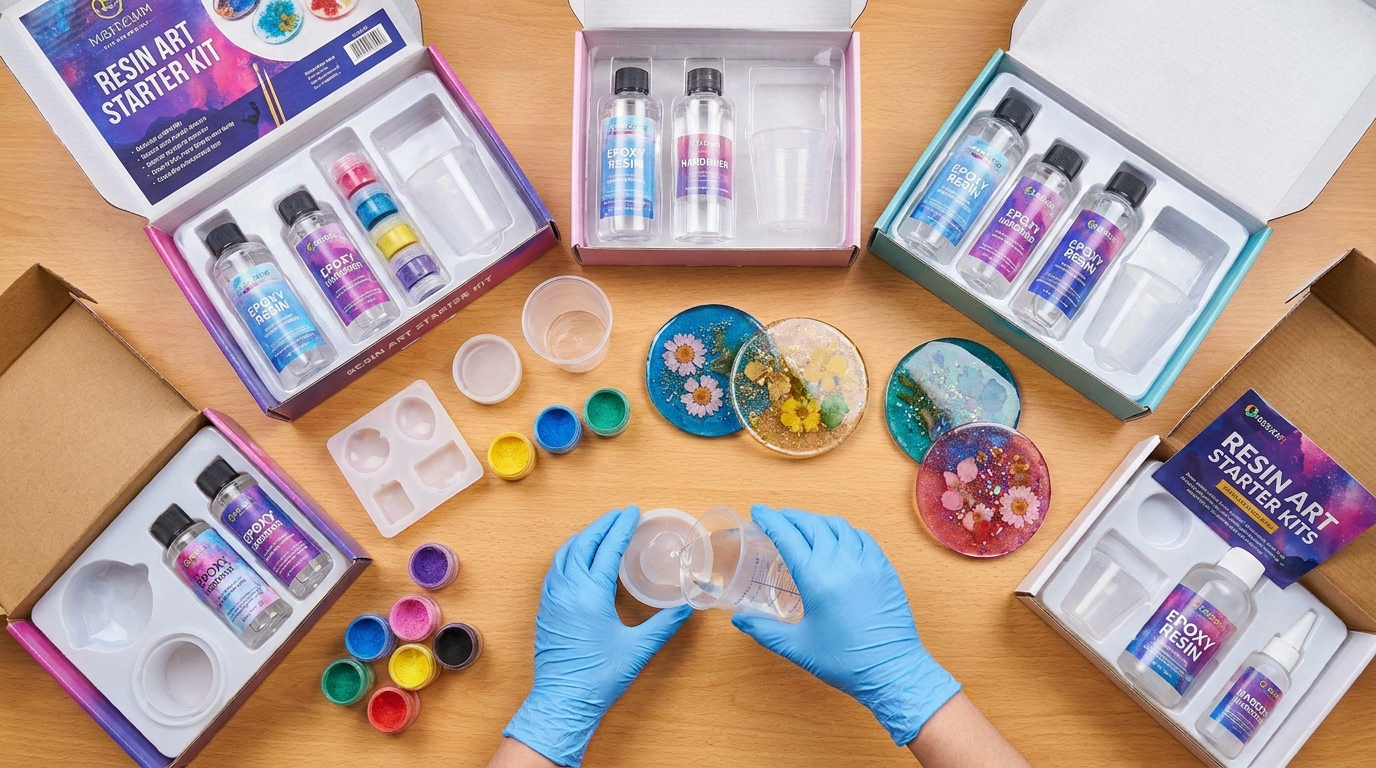
Best Resin Art Starter Kits for Beginners in 2026: Reviewed and Ranked
Resin art is one of the fastest-growing craft niches. We tested the most popular starter kits so you don't have to — here's what to buy, what to avoid, and how to produce stunning results from your first pour.
Why Resin Art Has Exploded in Popularity
Resin art — the process of mixing epoxy resin with pigments, inclusions, and effects to create jewellery, artwork, coasters, and decorative objects — has grown from a niche craft into a mainstream hobby and significant commercial opportunity. The appeal is straightforward: the process produces results that look expensive and professionally crafted, the materials are relatively affordable, the learning curve is gentle for basic projects, and the creative potential is essentially unlimited.
In 2026, resin art has matured from its early wild-west phase (when variable product quality made consistent results difficult) into a more established craft with reliable products, better safety standards, and a large community of practitioners sharing techniques online. The best starter kits available today make the entry point dramatically more accessible than it was even three years ago.
Understanding Resin Types Before You Buy
Epoxy Resin
The most common type for art applications. Epoxy resin is a two-part system (resin + hardener) mixed in specific ratios (typically 1:1 or 2:1 by volume). It has a relatively long working time (30–60 minutes for most formulations), cures clear and hard within 24–72 hours, and produces a durable, high-gloss finish. Epoxy is the appropriate choice for coasters, tabletops, jewellery making, and most beginners' first projects.
UV Resin
A one-part resin that cures in minutes when exposed to UV light (sunlight or a UV lamp). Cures much faster than epoxy, makes smaller batches practical, but typically yellows faster with age and is not appropriate for large pours or applications requiring deep clarity over time. Best for small jewellery pieces and embedding projects where speed matters more than long-term optical quality.
Polyurethane Resin
Cures very quickly (minutes) but requires precise mixing and is less forgiving of measurement errors. More appropriate for intermediate and advanced resin users. Not recommended for beginners.
Safety: Non-Negotiable Before Any Resin Project
Resin safety is the most underemphasised topic in beginner resin content. Uncured epoxy resin is a sensitiser — repeated skin exposure can cause permanent allergic reactions that prevent future resin work. Fumes from some formulations can cause respiratory sensitisation. The safety requirements are not onerous, but they are non-negotiable:
Nitrile gloves (not latex — resin penetrates latex) worn throughout all pours and curing periods when touching uncured resin
Safety goggles when mixing, pouring, or working with pigments
N95 respirator or half-face respirator with organic vapour cartridges when working with any formulation in an enclosed space
Ventilation — work in a well-ventilated space or outdoors whenever possible
Keep away from children and pets during all stages of mixing, pouring, and curing (typically 24–72 hours)
Any starter kit that doesn't include or prominently mention safety equipment is a red flag. Good safety practice from the first pour establishes habits that protect long-term health and career longevity in the craft.
The Rankings: Best Resin Art Starter Kits 2026
1. Let's Resin Epoxy Resin Kit — £35 / $42 (UK/US)
Best for: Complete beginners, jewellery and small art projects
Contents: 32oz epoxy resin and hardener (1:1 ratio), mixing cups, mixing sticks, droppers, gloves, and 30 pigment packets
Cure time: 24–36 hours tack-free, 72 hours full cure
Let's Resin has established the most consistent quality reputation in the accessible epoxy kit segment, and the Let's Resin kit is the most frequently recommended starter option in beginner resin communities for good reason. The 1:1 mixing ratio is the most forgiving for beginners — measurement errors are less consequential than in 2:1 or other ratio formulations. The included pigments cover the essential colours and effects for first projects. The resin is low-odour by epoxy standards, making it more manageable for indoor use with adequate ventilation.
What's included that matters: The 30 pigment packets represent genuine variety — alcohol ink, mica powder, glitter, and pearlescent pigments allowing immediate creative exploration without additional purchases.
What you'll need to add: Nitrile gloves, safety goggles, respirator, heat gun or torch (for removing bubbles — essential for quality results, £15–£25 / $18–$30 for a basic torch), and moulds for your chosen project type.
2. FGCI Deep Pour Epoxy Kit — £55 / $65
Best for: River tables, deep casting, beginners interested in furniture and large art
Contents: 1.5 gallon kit, mixing materials
Cure time: 48–72 hours
Standard epoxy resins generate heat (exothermic reaction) when curing — in pours deeper than 6mm / ¼ inch, this heat can cause cracking, yellowing, and distortion. Deep pour formulations are specifically engineered for pours up to 50mm / 2 inches deep, releasing heat slowly enough to cure without distortion. If river tables, geode art, or deep casting is your primary interest, a deep pour formulation is necessary from the start.
3. Craft Resin UV Resin Kit — £28 / $35
Best for: Small jewellery pieces, beginners who want fast results
Contents: 100g UV resin, UV lamp, 10 pigment colours, moulds, mixing tools
Cure time: 2–5 minutes under UV lamp
For beginners who want to start with small jewellery projects and experience fast results without waiting 72 hours for curing, a UV resin kit provides immediate gratification. The included UV lamp is the critical component — sunlight works but is inconsistent; a dedicated 36W UV lamp produces reliable results. The limitations: UV resin is not appropriate for large pours, can yellow over time, and the one-part formulation limits working time once exposed to UV.
4. Puduo Epoxy Resin Art Kit — £45 / $52
Best for: Mixed media art, ocean art, abstract pouring
Contents: 400ml resin and hardener, 18 pigment colours including fluorescent, metallic effect powders, canvas panels, wooden bases, mixing tools
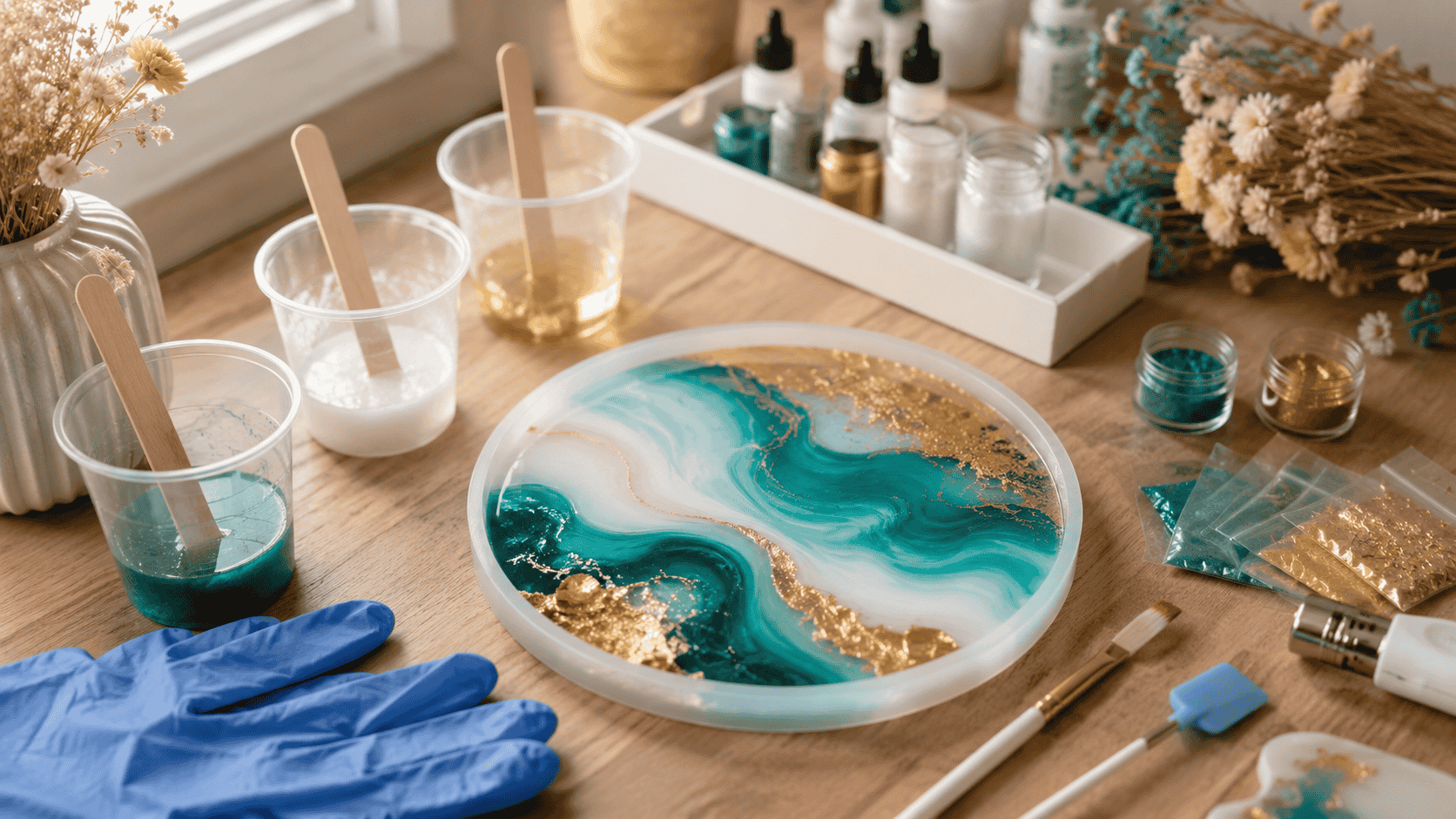
The Puduo kit is the most complete beginner package for artists interested in ocean art (the wave and pour technique producing realistic ocean effects) and abstract resin painting. The canvas panels and wooden bases included mean the first project can begin immediately without additional purchases. The fluorescent and metallic pigments included allow the ocean art colour palette without sourcing additional colourings.
5. ArtResin — From £28 / $35 for 8oz kit
Best for: Artists coating paintings and prints, beginners concerned about safety
Contents: Resin and hardener in multiple size options; no additives included
ArtResin occupies a specific niche: a formula specifically designed to be used by artists in studio environments. It is classified as non-hazardous when used as directed, has received certification from the American Institute for Conservation, and has been formulated to minimise yellowing over time. It is the appropriate choice for coating finished artworks, photographs, and prints where long-term optical clarity is essential. It is not designed for jewellery making, 3D casting, or deep pours.
Essential Accessories That Don't Come in Most Kits
Heat gun or kitchen torch (£15–£25 / $18–$30): Passes briefly over the resin surface to pop bubbles — essential for a professional finish. Without this step, bubbles trapped in cured resin are the most common beginner disappointment.
Silicone moulds (£8–£30 / $10–$35): Resin releases easily from silicone; most other materials require release agent. Start with one or two mould shapes that match your intended projects.
Isopropyl alcohol (99%, £8 / $10): Used for cleaning tools, removing surface contamination before pouring, and certain effect techniques (alcohol ink cells).
Digital scale (£10–£15 / $12–$18): More accurate than measuring cups for the resin-to-hardener ratio — ratio accuracy is the most critical variable in epoxy mixing.
Level surface: Resin is self-levelling — a surface not perfectly level will produce uneven thickness. A simple spirit level and adjustable feet solve this permanently.
First Project Recommendations for Beginners
The best first resin projects are those with forgiving parameters — flat, self-contained, and not requiring precise colour matching or complex inclusions:
Coaster set: Flat silicone coaster moulds, simple two-colour pour with metallic pigments. Results are usable and impressive. Easily gifted or sold.
Pendant jewellery: Small bezels or moulds, UV resin for speed, embedded dried flowers or foil. Low materials cost, forgiving of minor errors.
Abstract art panel: A wooden panel (30x30cm / 12x12"), two or three complementary pigments, and a simple tilt-and-swirl pour produces genuinely attractive results that improve rapidly with practice.
best resin art starter kit 2026, epoxy resin beginners guide, resin art supplies UK US, how to start resin art, Let's Resin kit review, UV resin vs epoxy resin, resin art safety guide, resin art first project, beginner resin techniques, resin jewellery making kit



Discussion
Comments
Approved comments are published after moderation to keep discussion useful and spam-free.
No comments yet. Start the discussion below.