How to Start a Hobby Farm in 2026: The Complete Beginner's Guide
More people are trading city life for a few acres and a flock of chickens. Here's how to do it without going broke — with realistic cost projections, what to start with, and the hard lessons experienced hobby farmers wish they'd learned earlier.
The Hobby Farm Renaissance
Interest in small-scale farming, food self-sufficiency, and rural living has grown consistently since 2020 — driven by a combination of pandemic-era food supply anxiety, rising grocery costs, remote work flexibility enabling geographic relocation, and a broad cultural shift toward intentional living and connection with food production. The USDA's 2022 Agricultural Census reported a 5% increase in farms under 10 acres from the previous census, with the majority of new operations being hobby or small-scale production farms.
A hobby farm — typically defined as a small operation producing food primarily for personal consumption and the joy of farming rather than commercial profit — is accessible to anyone with a few acres, reasonable physical fitness, and realistic expectations about the work involved. This guide provides the realistic planning framework that most romanticised hobby farm content omits.
Defining Your Hobby Farm: The Questions to Answer First
What's Your Primary Goal?
Hobby farms fail most often when owners haven't been honest about their primary motivation. The four most common:
Food production: Growing a meaningful proportion of your household's food. Requires commitment to the production calendar, willingness to eat what's in season, and acceptance that some crops will fail.
Self-sufficiency: Reducing dependence on commercial food supply. Often includes chickens for eggs and meat, a vegetable garden, and possibly a dairy animal.
Lifestyle and connection: The experience of rural life, working with animals, and outdoor physical activity. Commercial viability is not a priority.
Supplemental income: Selling some production — eggs, vegetables, cut flowers, or niche products — to offset costs. This goal requires treating the farm more like a business than a hobby.
What Land Do You Have or Can You Afford?
A meaningful hobby farm can be started on as little as half an acre. One acre comfortably supports a kitchen garden, a flock of backyard chickens, and perhaps a beehive or two. Two to five acres opens the possibility of small livestock (goats, pigs), a market garden, and orchard planting. Ten or more acres allows cattle, horses, or more ambitious production.
Land costs vary enormously by region. In many parts of the rural Midwest and Southeast US, 5–10 acres with a modest farmhouse can be purchased for $200,000–$350,000. In the rural UK, 5 acres with a cottage starts at approximately £400,000–£600,000 in most regions. The land purchase is typically the largest cost of a hobby farm — choosing land well (soil quality, water access, drainage, zoning) is the most important single decision.
Starting Small: The First-Year Hobby Farm Plan
The most common hobby farm mistake is doing too much too soon. Experienced small farmers consistently advise starting with one or two enterprises, mastering those, and expanding deliberately rather than launching with animals, gardens, and infrastructure simultaneously.
Year One: The Kitchen Garden
A well-managed kitchen garden is the highest-value starting point for any hobby farm. The return on investment — in terms of food produced per square metre of growing space and per hour of labour — is dramatically better than any livestock enterprise. A 100m² / 1,100 sq ft kitchen garden, intensively managed with good soil preparation, can produce £1,500–£2,500 / $1,800–$3,000 worth of food annually at retail grocery prices.
Startup costs for a kitchen garden:
Raised beds or soil preparation: £200–£600 / $250–$750
Seeds and seedlings: £50–£150 / $60–$180 annually
Basic tools (spade, fork, hoe, watering system): £150–£300 / $180–$375
Compost and amendments: £100–£200 / $125–$250 initially
What to grow in year one: Prioritise high-value, high-productivity crops over space-hungry low-value ones. Salad leaves, herbs, courgettes/zucchini, tomatoes (in a greenhouse or polytunnel in the UK), French beans, and peas produce exceptional value per square metre. Avoid large space consumers — squash, sweetcorn, brassicas — in year one when bed space is limited.
Year One or Two: Backyard Chickens
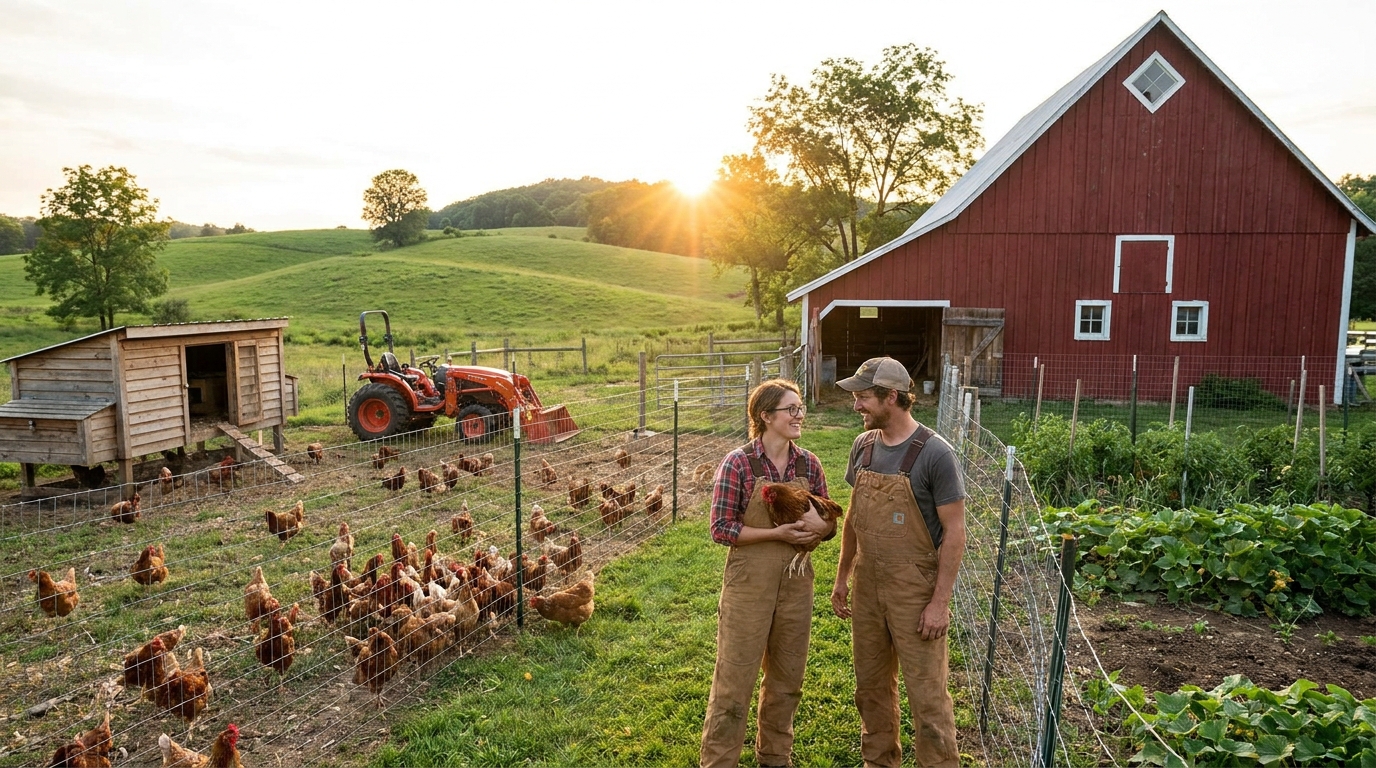
A flock of 4–8 laying hens is the most manageable livestock addition for hobby farm beginners. The daily time commitment — feeding, watering, egg collection — averages 15–20 minutes per day. The production — 3–5 eggs per hen per week during peak laying season — typically supplies a household's full egg needs with surplus for neighbours or sale.
Startup costs for 6 laying hens:
Chicken coop (commercial or DIY): £200–£800 / $250–$1,000
Run fencing (predator-proof): £100–£300 / $125–$375
Feeders, waterers, nesting boxes: £50–£100 / $60–$125
6 point-of-lay pullets: £60–£120 / $75–$150
Annual feed cost (6 hens): £150–£250 / $180–$310
The honest calculation: At approximately £1 / $1.25 per dozen commercial eggs, 6 hens producing 18 eggs per week generates approximately £900 / $1,100 worth of eggs annually at retail value. The actual financial saving, netting startup and ongoing costs, is modest — but the quality of fresh, genuine free-range eggs and the connection to food production are the real value.
Year Two or Three: Small Livestock
After the garden and chickens are established routines, small livestock additions become manageable rather than overwhelming. The most recommended beginners' livestock, in order of management complexity:
Ducks: Hardy, excellent foragers, produce large rich eggs, less demanding than chickens in some respects though messier with water
Meat rabbits: High productivity, small space requirement, quiet, relatively simple management, excellent protein source
Dairy goats: Require daily milking, companionship (never keep a single goat), and secure fencing — but provide dairy products (milk, cheese, yoghurt) that represent genuine food self-sufficiency value
Pigs (seasonal): Two pigs raised from spring to autumn provides a freezer full of pork; pigs are intelligent, grow quickly, and require less year-round infrastructure than dairy animals
Zoning, Permits, and Legal Considerations
Before purchasing land or beginning any hobby farm activity, zoning and permit research is essential. Many properties sold as "rural" or "country" are still subject to zoning restrictions that limit or prohibit livestock keeping, commercial food production, or structures (outbuildings, barns, polytunnels).
In the US: County-level zoning regulations determine what agricultural activities are permitted on any given parcel. Right-to-Farm laws (enacted in most states) protect established agricultural operations from nuisance complaints — but most require the farm to be in operation before the law's protections apply. Check with the county planning department before purchasing land specifically for hobby farming.
In the UK: Agricultural land (classified A1) generally allows agricultural use without planning permission, but adding residential structures, changing use, or operating a commercial enterprise requires planning permission. Permitted development rights for agricultural buildings apply above specific thresholds (typically 0.5 hectares / 1.2 acres). The rules vary by local authority.
Realistic Year-One Financial Projections
The most common disappointment in hobby farming is the gap between expected and actual costs in year one. A realistic projection for a starting operation with kitchen garden, chicken flock, and basic infrastructure on existing land:
Garden establishment: £500–£1,000 / $625–$1,250
Chicken setup: £500–£1,300 / $625–$1,625
General tools and equipment: £300–£600 / $375–$750
Annual ongoing costs (feed, seeds, maintenance): £400–£700 / $500–$875
Year one total: approximately £1,700–£3,600 / $2,125–$4,500 for a starter operation on existing land, excluding any land purchase or structural modification costs.
The value produced in year one — eggs, vegetables, herbs, fruit — typically offsets £800–£1,500 / $1,000–$1,875 of this cost, leaving a net first-year investment of £900–£2,100 / $1,125–$2,625. By year three of an established operation, most hobby farms produce sufficient food to significantly offset their ongoing costs.
The Hard Lessons: What Experienced Hobby Farmers Wish They'd Known
Predator pressure is relentless: Foxes (UK), raccoons, coyotes, hawks, and weasels will find every vulnerability in your chicken housing. Build predator-proofing to a higher standard than you think necessary before getting birds.
Animals need care 365 days per year: Holidays, illness, and family commitments all require a backup plan. Establishing a reliable care network before getting livestock is essential.
Soil improvement takes years: The first year's garden will underperform if soil hasn't been properly prepared. Investing in good compost, cover crops, and organic matter before planting produces dramatically better results than planting into unprepared soil.
Start smaller than you think: Every experienced hobby farmer advises against overextension in year one. Two chickens and a raised bed teach more than ten chickens and a market garden — and the lessons are learned without catastrophic cost.
Community is invaluable: Local smallholder associations, agricultural extension offices (US), and local farming forums provide knowledge specific to your microclimate, soil type, and regional pest and disease pressures that no general guide can replicate.
how to start hobby farm 2026, beginner hobby farming guide, backyard chickens beginners, small farm starting guide, kitchen garden first year, hobby farm costs realistic, small livestock beginners, hobby farm zoning permits, self-sufficient smallholding, hobby farm UK US guide




Discussion
Comments
Approved comments are published after moderation to keep discussion useful and spam-free.
No comments yet. Start the discussion below.