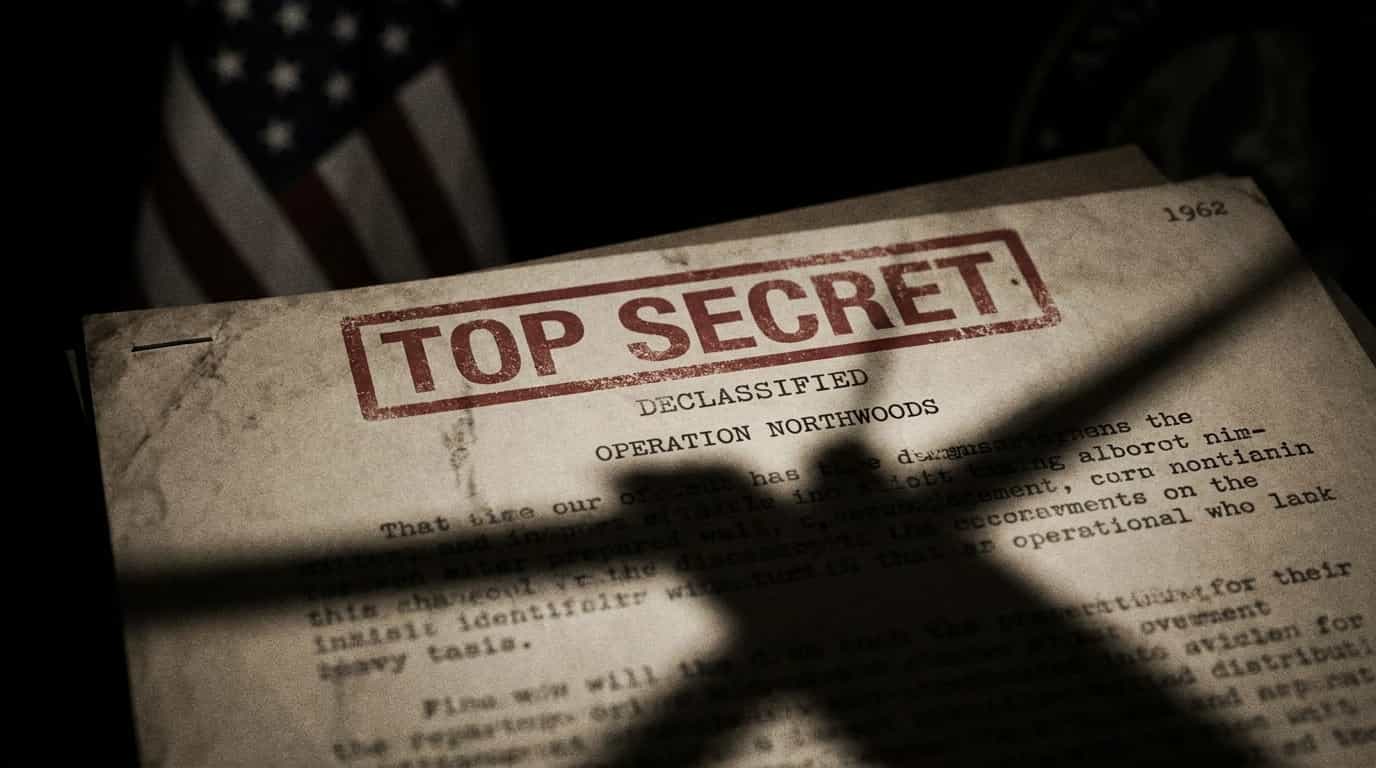
Operation Northwoods: The Day America's Generals Planned to Bomb Their Own Cities
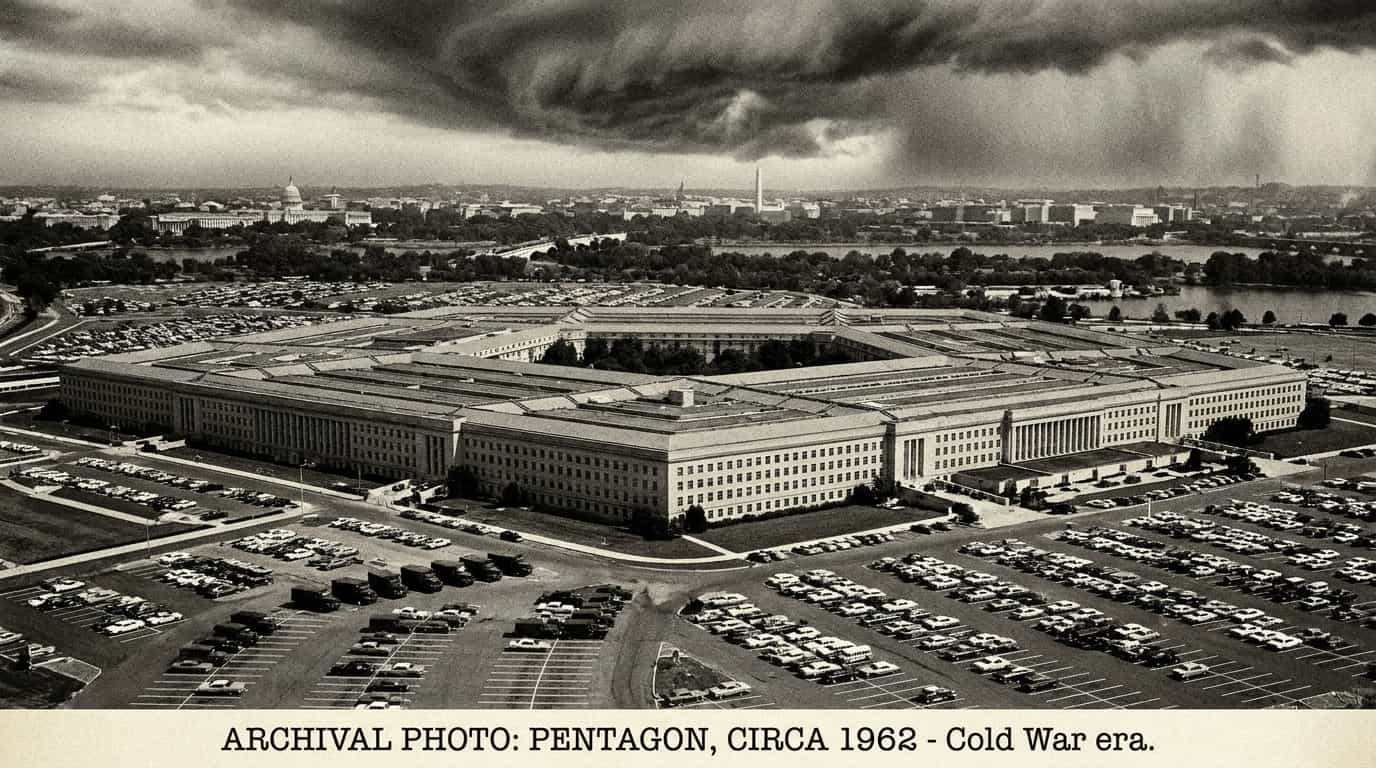
In March 1962, a manila folder made its way from the Pentagon to the desk of Secretary of Defense Robert McNamara.
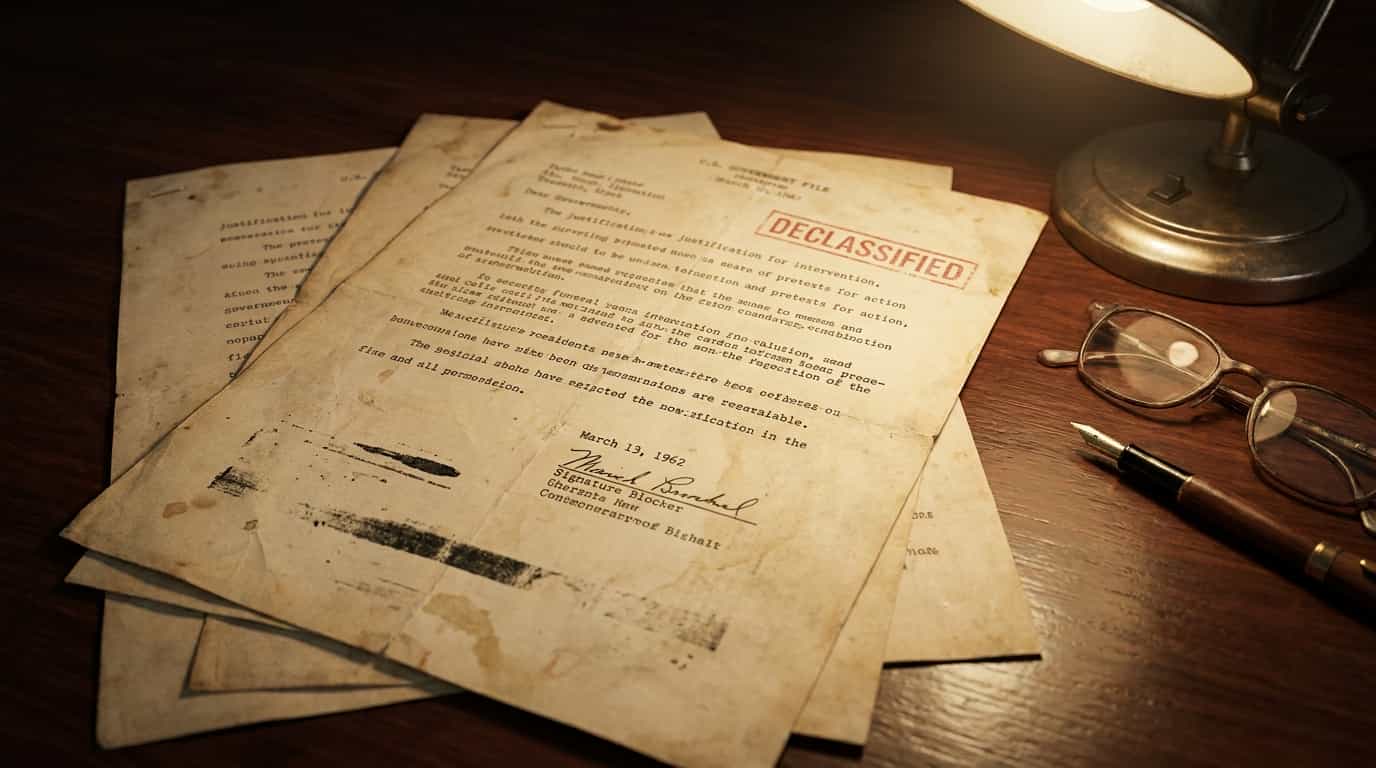
Inside was a 15-page memorandum. Typed. Signed. Officially stamped by the Chairman of the Joint Chiefs of Staff and every one of America's top military commanders.
It proposed blowing up American cities.
Not by an enemy. Not by a foreign adversary. By the United States military itself — and then blaming Cuba.
The plan was called Operation Northwoods. It was real. It was approved by the highest military command in America. And the only thing that stopped it from happening was a 44-year-old president who looked his generals in the eye and said no.
What happened next would define the most dangerous decade of the twentieth century.
The World in 1962: Two Superpowers, One Planet, No Room for Compromise
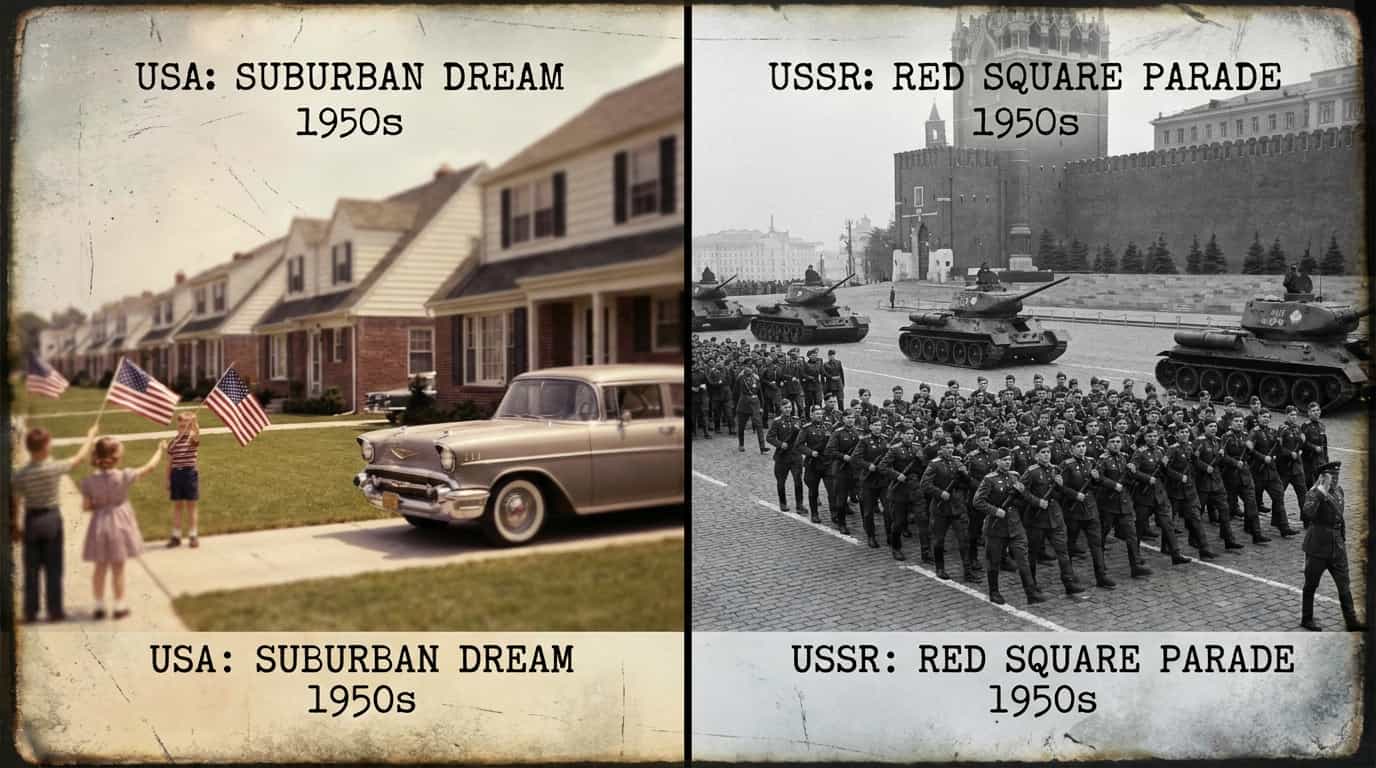
To understand Operation Northwoods, you have to understand what the Cold War actually felt like from inside the American military establishment.
By 1962, the United States and Soviet Union had been locked in a global ideological struggle for seventeen years. It wasn't just political disagreement. It was a total war fought through proxies, propaganda, espionage, and coups — a shadow conflict that consumed billions of dollars and thousands of lives without either superpower ever officially firing at the other.
The rules were simple and brutal: every country that fell to communism was a defeat. Every government that fell to US influence was a victory. The scoreboard mattered because generals and politicians on both sides believed, genuinely, that the final outcome of this contest would determine the future of civilization itself.
By January 1959, the scoreboard had just produced one of the most humiliating entries in American Cold War history. And it hadn't happened in some distant jungle. It had happened 90 miles off the coast of Florida.
Fidel Castro and the 90-Mile Problem
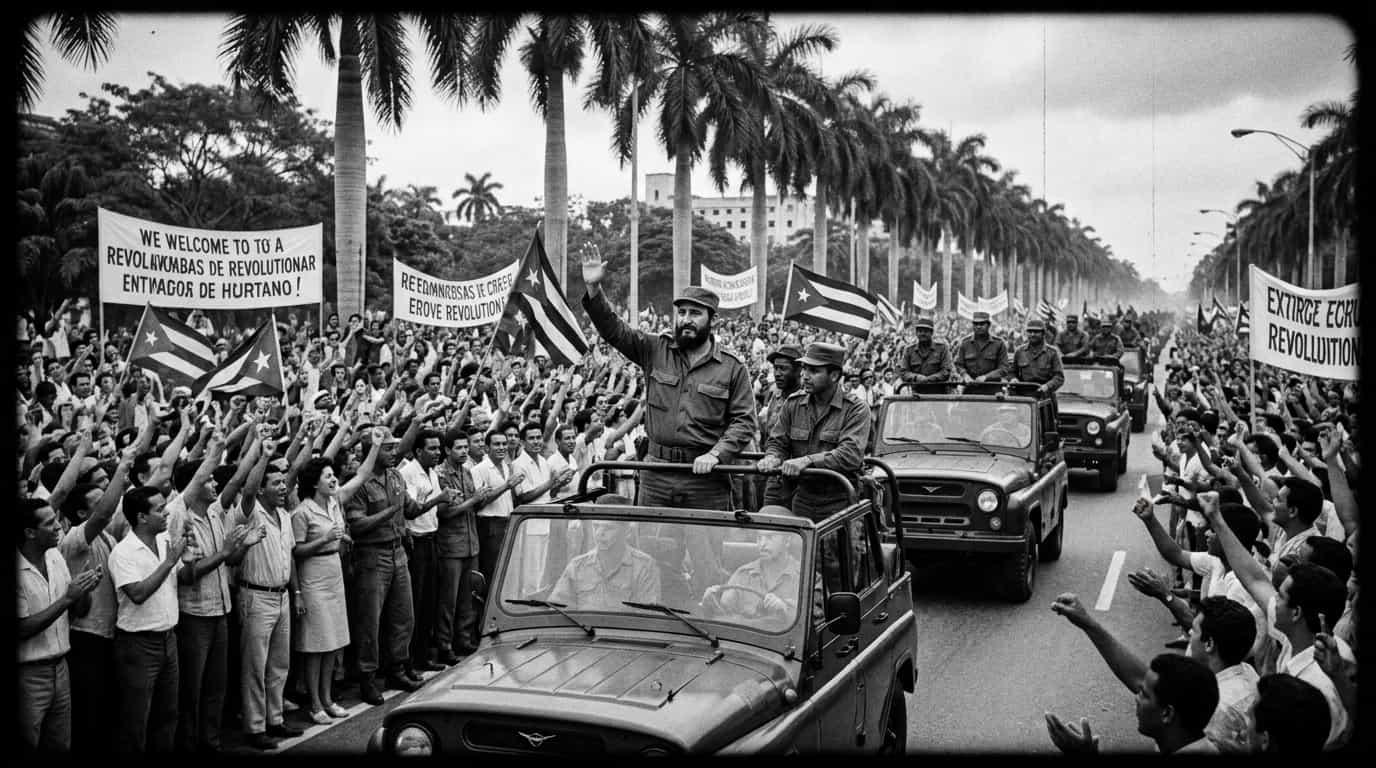
On January 8, 1959, Fidel Castro rode into Havana.
He was 32 years old, bearded, cigar in hand, and at the head of a guerrilla army that had just dismantled one of America's most loyal Caribbean client states. The man they had displaced — Fulgencio Batista — had ruled Cuba since a US-backed coup in 1952, presiding over an island where American corporations controlled 40% of the sugar industry, 90% of telephone and electrical services, and most of the country's oil refineries, while the average Cuban earned less than $6 a week.
Castro's revolution wasn't just a political change. It was an economic earthquake.
Within months, he nationalized $1 billion worth of American-owned property and businesses. United Fruit Company, Texaco, Standard Oil, and dozens of other American corporations were handed eviction notices. The profits that had flowed north for decades stopped overnight.
In Washington, the response was visceral. Eisenhower severed diplomatic relations and placed a comprehensive trade embargo on Cuba — the same embargo, in modified form, that remains in place today. But Castro had anticipated this. He turned to Moscow, signed trade agreements with the Soviet Union, and invited Soviet advisors onto the island.
The enemy was now 90 miles from Miami.
The Bay of Pigs: America's Most Public Humiliation
By early 1961, a plan had been in development at CIA headquarters for over a year.
The idea: train a secret army of Cuban exiles, land them on Cuban soil, trigger a popular uprising, and topple Castro before anyone knew what had happened. It had worked before — in Iran in 1953, in Guatemala in 1954. The CIA had a playbook, and they trusted it.
What they didn't have was a president who trusted them.
John F. Kennedy had inherited the plan from Eisenhower but had serious reservations about it from the beginning. He approved it with conditions: no direct American military involvement, no US air cover, and no action that could be publicly traced back to Washington.
Those conditions, the CIA privately believed, made the operation impossible. They were right.
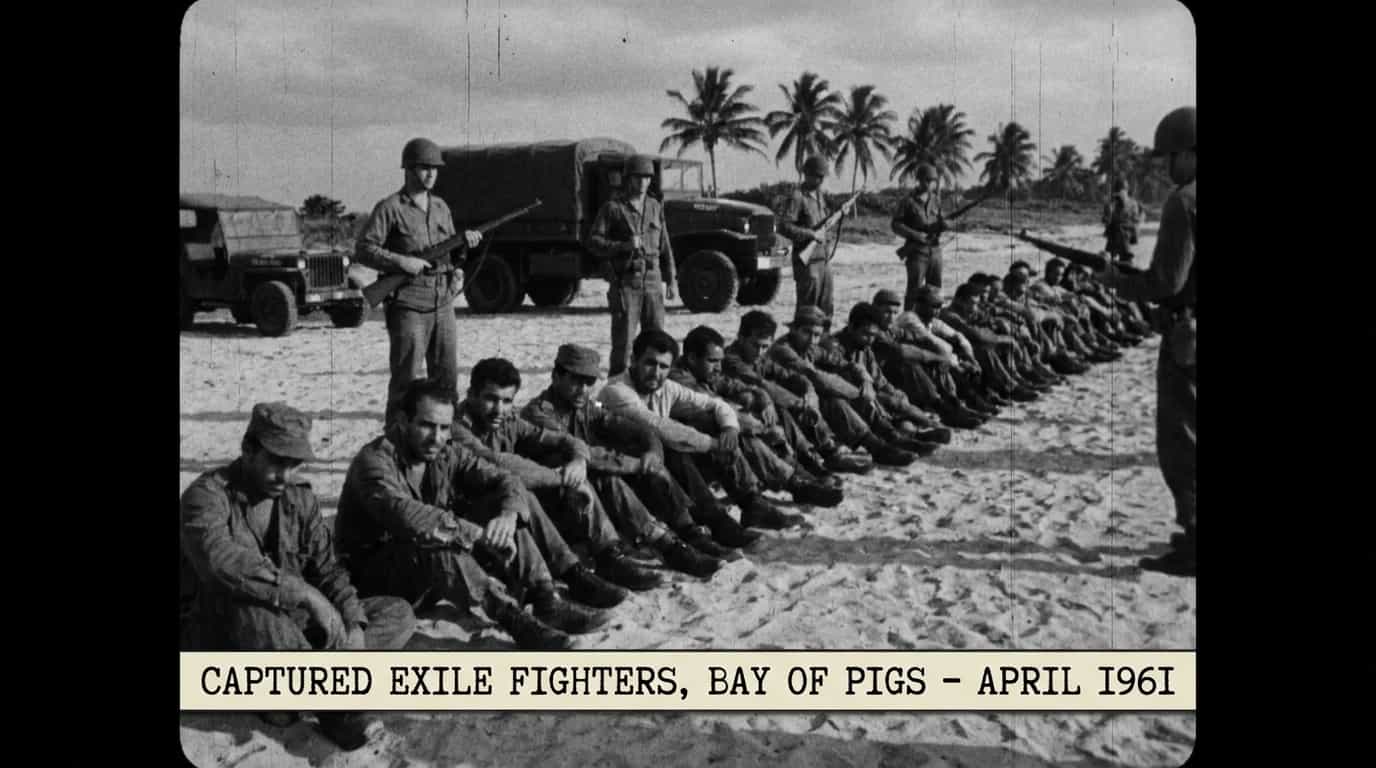
On April 17, 1961, 1,511 CIA-trained Cuban exiles — designated Brigade 2506 — landed at the Bay of Pigs on Cuba's southern coast. Castro had been warned by Soviet intelligence and had his forces waiting. Kennedy refused to authorize the American air support the operation required. Within 72 hours, 114 of the invaders were dead and 1,189 had surrendered. It was a catastrophic, public, internationally visible failure.
Kennedy publicly accepted responsibility. Privately, he was furious.
"I want to splinter the CIA into a thousand pieces and scatter it to the winds," he told advisors — a statement that circulated through Washington's intelligence community and was not forgotten.
He fired CIA Director Allen Dulles and his deputy. He transferred responsibility for Cuba from the CIA to the military, placing it under General Lyman Lemnitzer, Chairman of the Joint Chiefs of Staff.
That decision would produce the most extraordinary document in the history of American military planning.
Inside the Pentagon: The Birth of Operation Northwoods
The room where it happened is called "The Tank."
Located on the second floor of the Pentagon's outer ring, it is a Sensitive Compartmented Information Facility — a room designed to be completely impenetrable to electronic surveillance. No signals in, no signals out. What is said in The Tank stays in The Tank.
In early 1962, General Lemnitzer convened his Joint Chiefs in that room and presented a problem with a deadline. The political window for military action against Cuba was closing. The Soviet presence on the island was growing. The longer they waited, the harder an invasion would become.
They needed justification. They needed a pretext.
What followed was one of the most detailed and disturbing documents ever produced by the American military establishment. Formally titled "Justification for U.S. Military Intervention in Cuba," and submitted to McNamara on March 13, 1962, Operation Northwoods outlined a series of "pretexts" that would manufacture American public support for a war.
The document, later declassified and available today through the National Security Archive at George Washington University, reads as follows in key sections:
The proposal included staging or carrying out the following:
Attacks on Cuban refugees: Sink boats of Cuban asylum-seekers in the Florida Straits. Stage the sinking to make it appear Cuba was attacking its own fleeing citizens. "We could foster attempts on lives of Cuban refugees in the United States," the document states.
Bombing American cities: "We could develop a Communist Cuban terror campaign in the Miami area, in other Florida cities and even in Washington." Plastic explosives would be detonated. American civilians would be injured. The attacks would be attributed to Cuban agents.
A fake attack on Guantanamo Bay: Stage an assault on the US naval base in Cuba, complete with mock funerals for "American soldiers" killed in the fabricated attack, to trigger outrage and congressional support for war.
Shooting down an American passenger plane: The most extraordinary proposal of all. A real US aircraft would be substituted with a remotely piloted drone. The drone would be shot down over Cuba or international waters. The world would be told an American passenger jet had been destroyed by Cuban forces. A fabricated passenger list would be released to the press.
Every proposal was signed. Every signatory was a four-star general or admiral. The Chairman of the Joint Chiefs, all five service chiefs — every one of them put their name to it.
The Meeting That Didn't Go the Way the Generals Expected
On March 13, 1962, Secretary of Defense McNamara took the Northwoods document to the White House.
What happened in that meeting has never been fully recorded. But the outcome was unambiguous.
Kennedy rejected Operation Northwoods completely.
He rejected it not on the grounds that it was too risky or that it might not work. He rejected it on the grounds that it was morally indefensible. The United States military, the institution sworn to protect American citizens, had proposed killing those same citizens to manufacture a war.
Kennedy removed General Lemnitzer from his position as Chairman of the Joint Chiefs shortly after. Lemnitzer was transferred to Europe, where he became Supreme Allied Commander of NATO — a prestigious posting that functioned, in practical terms, as an extremely dignified removal from the center of American power.
The relationship between Kennedy and his military establishment never recovered.
"The military is mad," Kennedy told his closest advisors after the meeting. He was not speaking figuratively.
Eighteen Months Later: Dallas, Texas
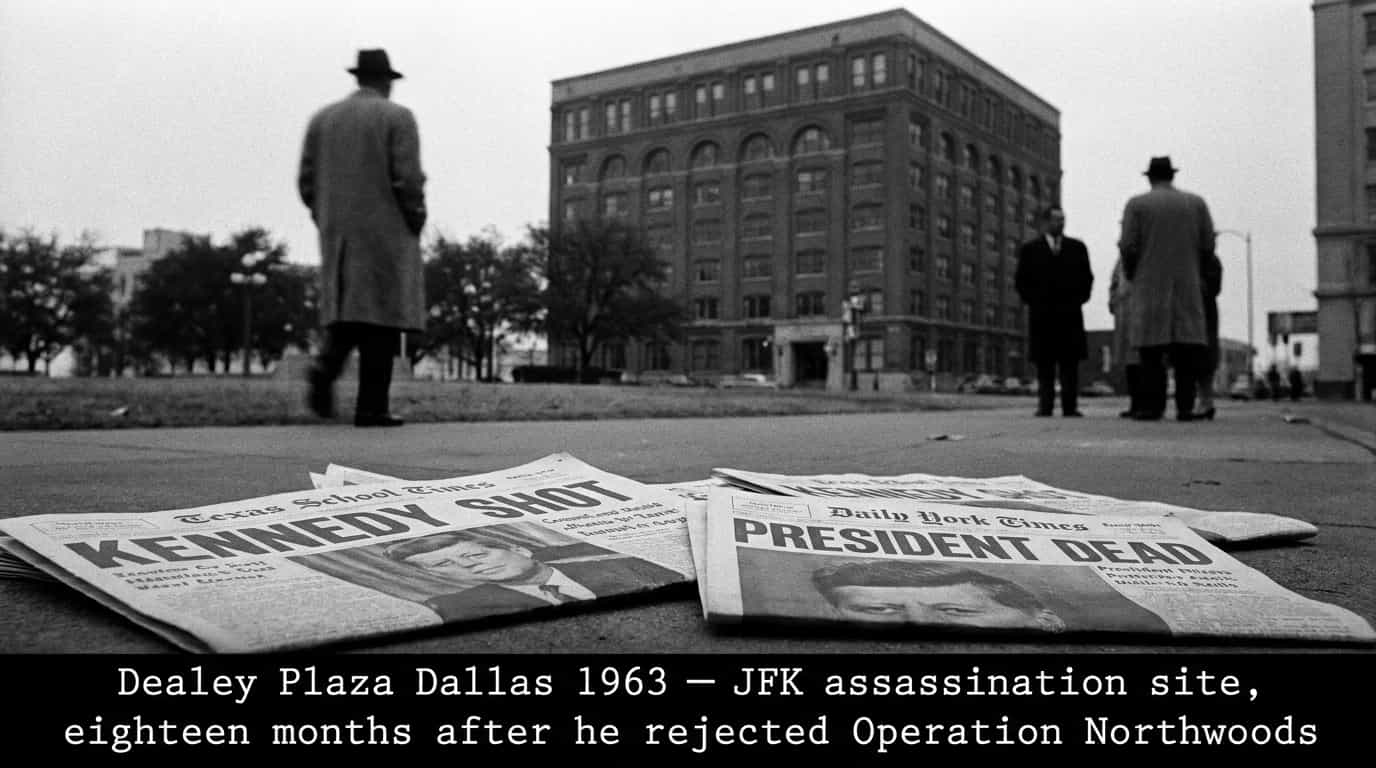
On November 22, 1963, John F. Kennedy was assassinated in Dallas, Texas.
Lee Harvey Oswald was arrested within hours and charged with the killing. Two days later, Oswald was shot dead by nightclub owner Jack Ruby before he could stand trial or give testimony.
The Warren Commission, convened by Kennedy's successor Lyndon Johnson, concluded in 1964 that Oswald acted alone.
The question of whether that conclusion is accurate has never been definitively settled.
A subsequent congressional investigation — the House Select Committee on Assassinations, which concluded in 1979 — found that Kennedy "was probably assassinated as a result of a conspiracy," based on acoustic evidence suggesting more than one shooter. That finding has itself been disputed.
What is not disputed: Kennedy died in a conflict with his own military and intelligence establishment that was, by the time of his death, one of the most bitter in presidential history.
Operation Northwoods is one data point in a larger picture. It is not proof of anything beyond what it is — a documented proposal, signed by America's highest military commanders, to conduct false-flag operations against American citizens. What it demonstrates is the nature of the institutional forces Kennedy had placed himself in opposition to.
The connection between that opposition and his death remains, as historian James Douglass wrote in his 2008 book JFK and the Unspeakable, "the most important question of the twentieth century."
The Cuban Missile Crisis: How Close We Actually Came
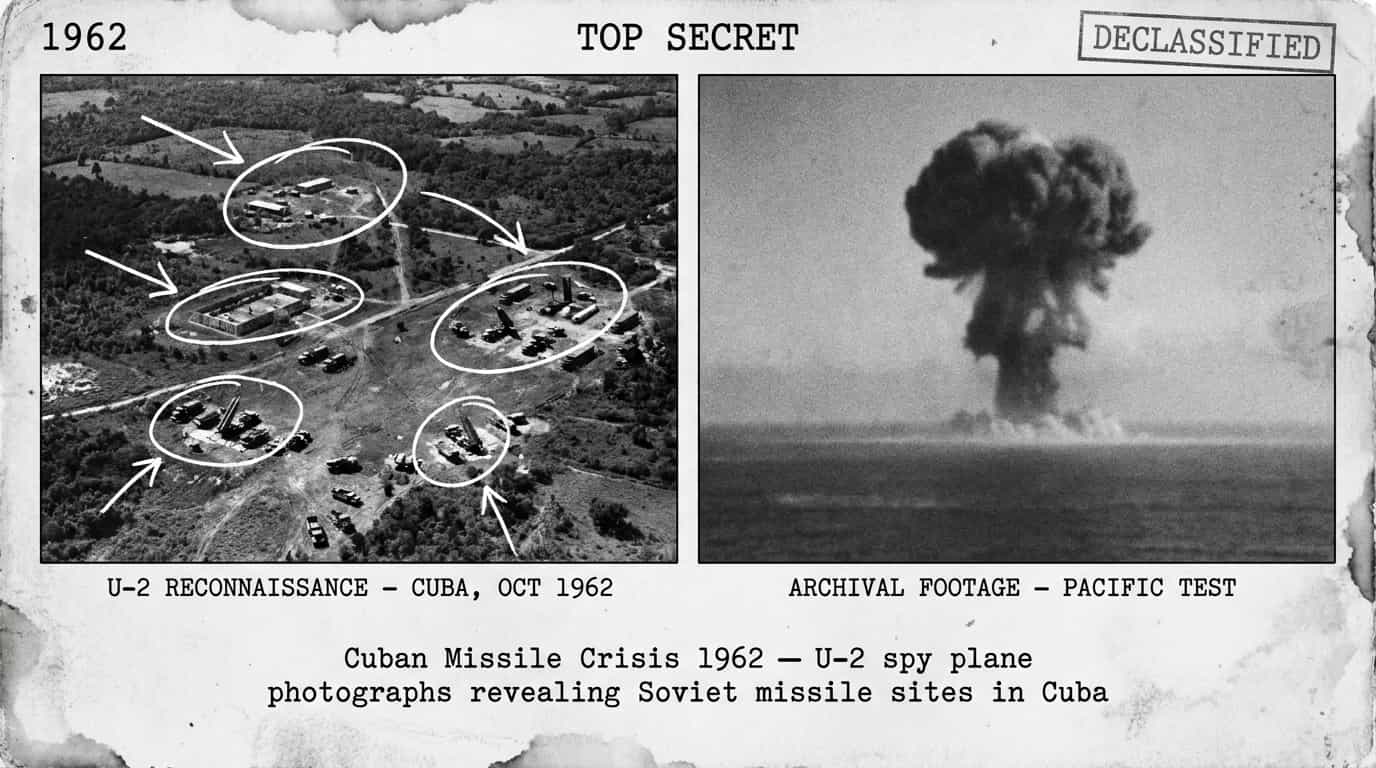
In October 1962 — just months after Kennedy rejected Northwoods — American U-2 spy planes photographed Soviet nuclear missile installations under construction in Cuba.
What followed was thirteen days that came closer to ending civilization than any event before or since.
What most people don't know: on October 27, 1962 — the day now known as "Black Saturday" — a Soviet submarine called B-59 was being depth-charged by US Navy vessels near Cuba. The submarine had lost radio contact with Moscow. Its captain believed war had already started. He ordered the preparation of a nuclear torpedo.
Under Soviet protocol, launching required the consent of three officers: the captain, the political officer, and the executive officer.
The captain voted yes. The political officer voted yes.
The executive officer — a man named Vasili Arkhipov — voted no.
One man's refusal to consent saved the world from nuclear war. This is documented. Arkhipov is now recognized by historians as "the man who saved the world," but his name remains almost entirely unknown outside specialist circles.
The crisis ended on October 28 when the Soviets agreed to remove their missiles from Cuba in exchange for a secret US agreement to remove American Jupiter missiles from Turkey and a public pledge never to invade Cuba.
That pledge is still technically in force.
The Documents Surface: James Bamford and the Public Archive
For 35 years, Operation Northwoods remained buried.
The documents were quietly declassified in 1997 under the John F. Kennedy Assassination Records Collection Act — legislation passed in the wake of Oliver Stone's 1991 film JFK, which reignited public interest in the events surrounding the assassination and prompted Congress to mandate broader declassification of related records.
Even after declassification, Northwoods remained largely unknown until 2001, when investigative journalist James Bamford dedicated a substantial section of his book Body of Secrets: Anatomy of the Ultra-Secret National Security Agency to the documents he had found in the National Security Archive.
The public reaction when the book was published was, in Bamford's own words, surprisingly muted. In the months following September 11, 2001, Americans had other things on their minds.
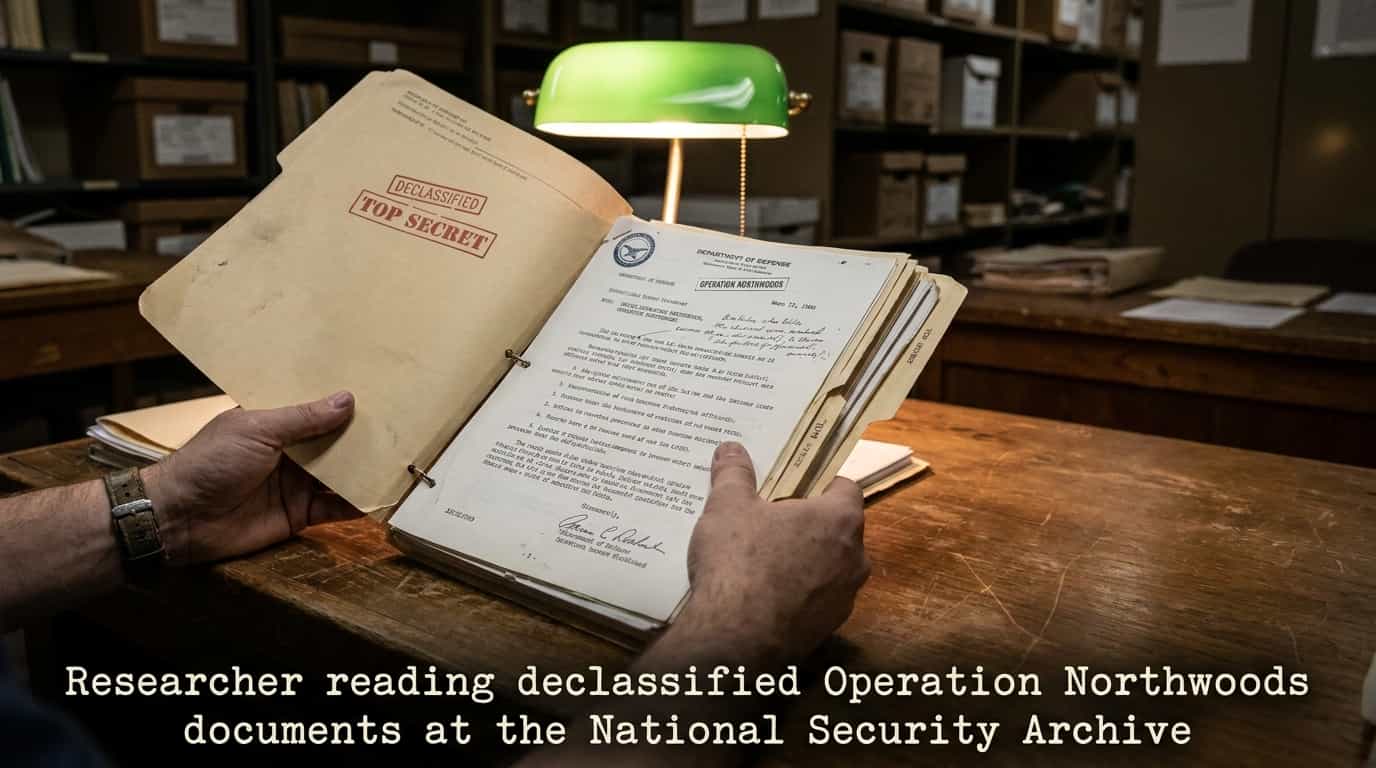
The full Operation Northwoods document is available today through the National Security Archive at George Washington University. It takes approximately twenty minutes to read. It is worth every minute.
What Operation Northwoods Actually Tells Us
There is a version of this story that leads to a simple, satisfying conclusion: the system worked. A president said no. Democracy prevailed.
That version is incomplete.
It raises a question that has never been answered satisfactorily: How many other proposals have been made, in rooms like The Tank, in the decades since? How many had a president who said no? How many didn't?
The declassified record is incomplete by definition. Documents are declassified when the government chooses to declassify them. The ones that remain classified are, by definition, the ones we don't know about.
Operation Northwoods is not a conspiracy theory. It is a conspiracy — documented, signed, and filed. The conspiracy failed because one man rejected it. The lesson of Northwoods is not that American democracy is secure. It's that American democracy, in 1962, was one man's decision away from a very different history.
Fidel Castro: The Man Who Outlasted Them All
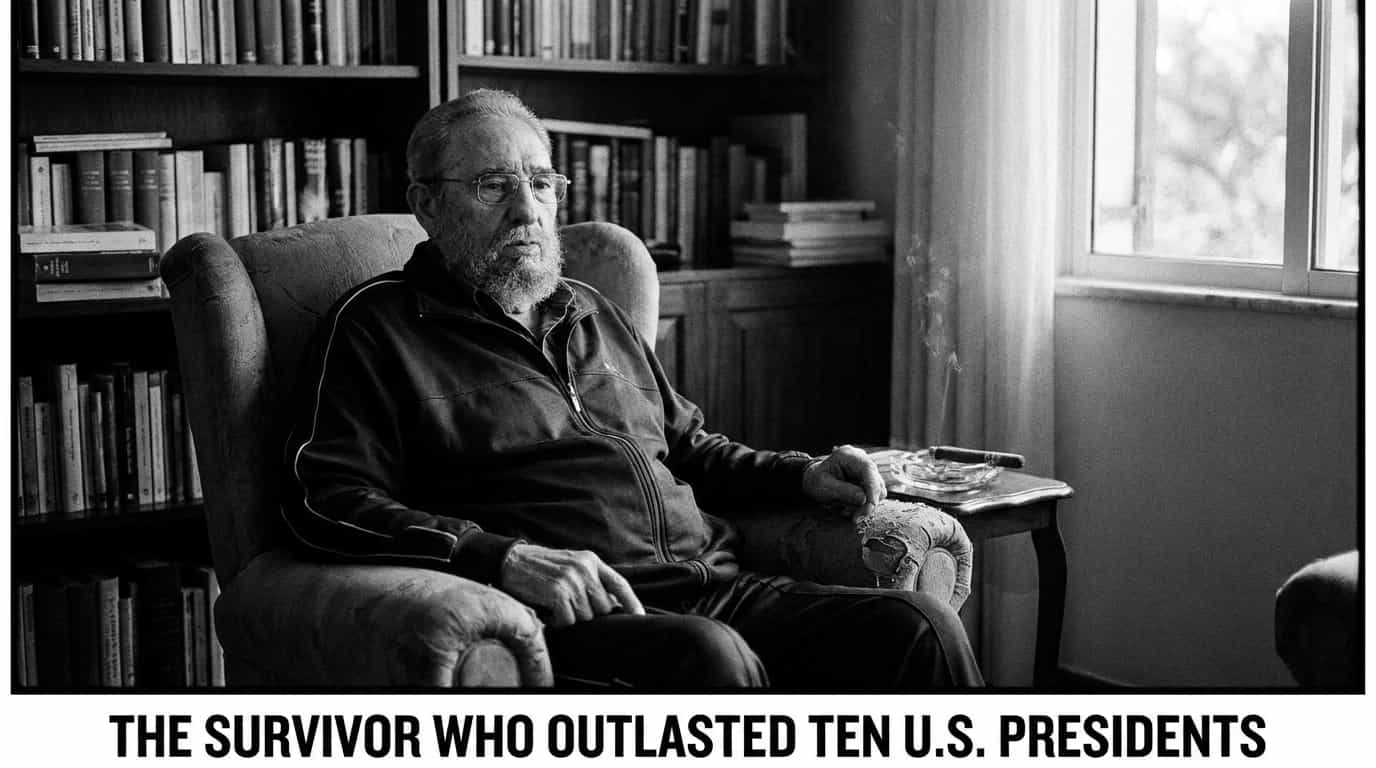
Fidel Castro survived 638 documented assassination attempts — the figure comes from Fabian Escalante, the former head of Cuban intelligence, citing Cuban security files. Poisoned cigars. Exploding seashells. A diving suit treated with tuberculosis bacteria. The American government, working with organized crime, tried methods that would seem implausible in a spy novel.
None of them worked.
Castro stepped down voluntarily in February 2008, handing power to his brother Raúl, citing health reasons. He lived until November 25, 2016 — outlasting the Cold War, the Soviet Union, nine American presidents who sought his removal, and virtually every other political figure of his era.
He died at 90.
The US trade embargo on Cuba remains in place today, 65 years after it was imposed.
The Ghost That Still Walks
Operation Northwoods was rejected in 1962. But the philosophy behind it — that fabricated crises can be used to justify military action — did not die with the proposal.
The Gulf of Tonkin incident in August 1964, used to justify full-scale US military intervention in Vietnam, was subsequently shown to involve significant fabrication. The second "attack" on US vessels that triggered congressional authorization for war almost certainly did not happen as reported — a conclusion supported by the NSA's own declassified signals intelligence, released in 2005.
The intelligence used to justify the 2003 invasion of Iraq — the weapons of mass destruction that were never found — produced a war that killed an estimated 200,000 Iraqi civilians and 4,500 American soldiers.
Operation Northwoods sits at the beginning of this lineage. Not as proof of a unified conspiracy theory, but as documented evidence of institutional capability and willingness — the demonstrated fact that the machinery of state can propose, plan, and prepare to do things that would be unthinkable to the public it purports to serve.
Kennedy knew this. It's part of why he is remembered the way he is.
The question his presidency poses to every generation that follows is the same: Who is in the room when the folder is opened? And will they say no?
Key Facts at a Glance
Detail Fact Document name Justification for U.S. Military Intervention in Cuba Date submitted March 13, 1962 Submitted by Gen. Lyman Lemnitzer, Chairman of the Joint Chiefs of Staff Submitted to Secretary of Defense Robert McNamara Signatures All five Joint Chiefs of Staff President's response Flatly rejected Declassified 1997, under JFK Assassination Records Collection Act Made public 2001, via James Bamford's Body of Secrets Archive location National Security Archive, George Washington University Current status Fully declassified and publicly available
Further Reading and Sources
Body of Secrets — James Bamford (2001) — The book that brought Northwoods to public attention
JFK and the Unspeakable — James Douglass (2008) — Kennedy's conflicts with the national security establishment
National Security Archive, George Washington University — nsarchive.gwu.edu — Full declassified Northwoods document available
House Select Committee on Assassinations Final Report (1979) — Congressional finding of probable conspiracy
NSA Declassified Gulf of Tonkin Documents (2005) — Released by the National Security Agency
This article is based entirely on declassified government documents, congressional records, and published works by investigative journalists and historians. All factual claims are sourced. Operation Northwoods is not a theory — it is a documented historical event.
Operation Northwoods, Operation Northwoods, Cold War, JFK, Cuba, false flag, US military history, Bay of Pigs, Cuban Missile Crisis, classified documents, CIA
👉 Also read: The Night the Sky Over L.A. Exploded: Deconstructing the Great UFO Mystery of 1942
© UrduPure Narrativa — History, Declassified.





Discussion
Comments
Approved comments are published after moderation to keep discussion useful and spam-free.
No comments yet. Start the discussion below.