The Night the Sky Over L.A. Exploded: Deconstructing the Great UFO Mystery of 1942
On the night of February 24, 1942, the "City of Angels" was not a place of glamour or cinema, but one of acute, shivering terror. The United States was roughly 80 days removed from the catastrophe at Pearl Harbor, and the psychological wounds were still raw. The West Coast was effectively a war zone, braced for an invasion that every citizen felt was inevitable.
When the air raid sirens began to wail at 2:21 a.m., they did not signal a drill. They signaled the beginning of the "Battle of Los Angeles"—a three-hour-long, apocalyptic engagement where the U.S. Army’s 37th Coast Artillery Brigade fired over 1,400 anti-aircraft shells into the night sky. The target? An object, or perhaps a formation of objects, that defied identification, trajectory, and explanation. By dawn, the city was littered with shrapnel, civilian hearts were palpitating with trauma, and the military was left with the most embarrassing question in the history of the American home front: What were we shooting at?
Decades later, the event remains one of the most polarizing and fascinating case studies in American history. It is a haunting intersection of wartime hysteria, military incompetence, and the earliest, most enduring documentation of what we now classify as Unidentified Aerial Phenomena (UAP).
The Fog of War: A City on the Brink
To truly deconstruct the mystery, one must first inhabit the psyche of 1942 Los Angeles. The United States was in a state of high-alert paranoia. Only one day prior to the raid, a Japanese submarine, the I-17, had surfaced near Ellwood, California—just north of Santa Barbara—and shelled a refinery. This was not a rumor; it was a tangible, fiery proof that the enemy could reach the American mainland.
The "Battle" did not occur in a vacuum. It occurred in a climate of total susceptibility. As the air raid sirens ripped through the silence of the night, the authorities ordered a total blackout. The city’s lights were extinguished, turning the sprawling metropolis into a void of darkness.
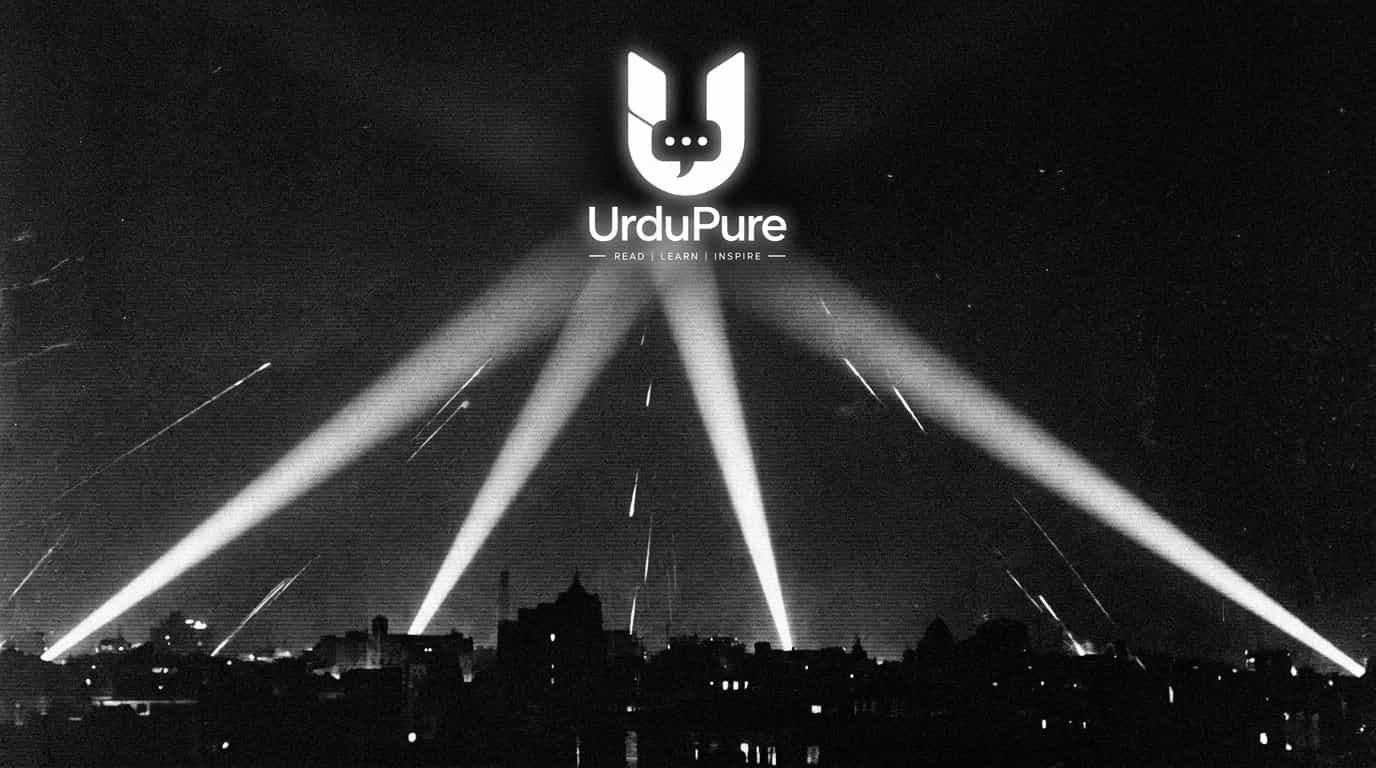
When the anti-aircraft guns opened fire at 3:06 a.m., it was a cacophony of sound that felt like the beginning of the end. Thousands of searchlight beams cut through the gloom, crisscrossing the sky, attempting to illuminate an intruder. When the light hit the target, the ground forces saw it: a massive, slow-moving, glowing object that seemed completely impervious to the barrage of flak.
The Anatomy of the Target: Witness Accounts
One of the most persistent aspects of the Battle of Los Angeles is the consistency of the eyewitness accounts, which stand in stark contrast to the later, dismissive official reports.
The witnesses were not all panicked civilians. They included trained military observers and personnel operating searchlights. Their descriptions often shared key details:
The Velocity: Unlike aircraft of the era, which required speed to stay airborne, the object was described as moving at an agonizingly slow, deliberate pace—sometimes hovering, sometimes drifting.
The Shape: Witnesses reported seeing everything from a large, glowing "blimp-like" craft to a series of smaller objects moving in a tight, V-shaped formation.
The Resilience: Perhaps the most chilling aspect was the reaction to the ordnance. Thousands of shells detonated in the vicinity of the object. According to many observers, the object remained unaffected, seemingly unmoved by the concussive force of high-explosive anti-aircraft fire.
For three hours, this dance continued. The sky was filled with bursting flak, fire, and smoke, creating a spectacle that was visible for miles. Yet, when the firing ceased, the result was a vacuum. No wreckage. No craters. No bodies. No enemy aircraft shot down.
The Official Narrative vs. The Reality
The response from the U.S. government was swift and, in hindsight, transparently desperate to maintain order. Secretary of the Navy Frank Knox held a press conference just hours later, famously dismissing the entire incident as a "false alarm" born of "war nerves."
However, this explanation felt hollow even in 1942. How could "war nerves" account for 1,400 shells, the mobilization of multiple artillery batteries, and the thousands of eyes that watched the performance for three straight hours?
The disconnect between the government's dismissal and the physical reality of the barrage created an immediate, lasting rift in the public consciousness. To many, it was clear that the government either didn't know what it was shooting at, or it knew exactly what it was shooting at and decided that the truth was more dangerous than the lie.
The "Meteorological Balloon" Theory
Decades later, in 1983, the U.S. Air Force issued a formal analysis of the event. It suggested the "battle" was sparked by the sighting of a meteorological balloon, which was then fired upon due to the extreme tension of the time. According to this theory, the searchlight beams, combined with the shell bursts, created an optical illusion of a solid craft.
It is a logical, scientific attempt to impose order on chaos. Yet, it fails to fully satisfy critics. How does a simple weather balloon survive a focused, three-hour artillery barrage? Why did experienced spotters identify a "large craft" rather than a small, drifting meteorological instrument? The debate continues precisely because the official explanation lacks the weight to anchor the gravity of the experience.
Why the Mystery Persists: The "Unresolved Incident"
The Battle of Los Angeles possesses all the ingredients of a classic investigative thriller, which explains its continued dominance in cultural lore. It is not just about a UFO; it is about the response to the unknown.
1. The Cover-Up Narrative
The suppression of information and the conflicting reports from military officials laid the groundwork for modern conspiracy theory. When the government speaks with a forked tongue, it invites the public to fill the silence with theories—ranging from extraterrestrial visitation to secret, advanced human technology that the military was testing and feared the public might witness.
2. The Power of Visual Culture
The most famous image of the event—published in the Los Angeles Times—remains a Rorschach test for the world. It shows massive searchlight beams converging on a singular, oval-shaped object in the sky. To the skeptic, it is a photo-manipulated product of era-appropriate retouching and overexposure. To the believer, it is the smoking gun. Regardless of its technical provenance, it is a haunting piece of visual history that has solidified the event in the public imagination.
3. The Psychological Mirror
The Battle of Los Angeles is a study in how fear creates reality. It highlights the vulnerability of the human mind under extreme pressure. In a time of war, the sky becomes a theater for our deepest anxieties. Whether the object was real or a projection of a panicked populace, the experience of the battle was genuine.
The Modern Context: From War Hysteria to UAP Disclosure
Why does this story feel so relevant today, in 2026?
The ongoing, global conversation regarding modern UAP (Unidentified Aerial Phenomena) disclosure has reignited interest in historical precedents. The U.S. government has recently acknowledged that there are objects in our skies that move in ways that defy our understanding of physics.
When we look back at 1942, we are no longer just looking at a historical curiosity. We are looking at a potential "Day One." The Battle of Los Angeles is frequently cited in popular media and UFO lore as one of the few instances of military-verified "engagement" with unknown objects. It serves as a reminder that the military has been staring up, guns ready, for a long time—and that sometimes, the most sophisticated military on Earth is left powerless against the objects they patrol.
A Mystery That Refuses to Fade
Whether the object over Los Angeles was a lost weather balloon, a Japanese psychological warfare operation, a misidentified training exercise, or something truly anomalous, the event changed the city forever. It was a baptism by fire for a nation that had only just realized its own mortality and vulnerability.
As we continue to peer into the skies today, bolstered by advanced sensors, satellite imagery, and a renewed, bipartisan focus on UAP transparency, the 1942 incident serves as a humbling reminder. Even with 1,400 shells and the full weight of the military-industrial complex, the most enduring legacy of an encounter is not the proof it left behind, but the questions it forced us to ask.
We are left with the same question as the citizens of Los Angeles in the dark hours of February 24: What was it? And more importantly, as our technology advances and our skies become more crowded, are we any closer to knowing?
Battle of Los Angeles 1942, Great Los Angeles Air Raid, UFO mystery 1942, US military UFO history. World War II home front, war hysteria, anti-aircraft artillery, Japanese submarine I-17, Unidentified Aerial Phenomena (UAP) history.



Discussion
Comments
Approved comments are published after moderation to keep discussion useful and spam-free.
No comments yet. Start the discussion below.