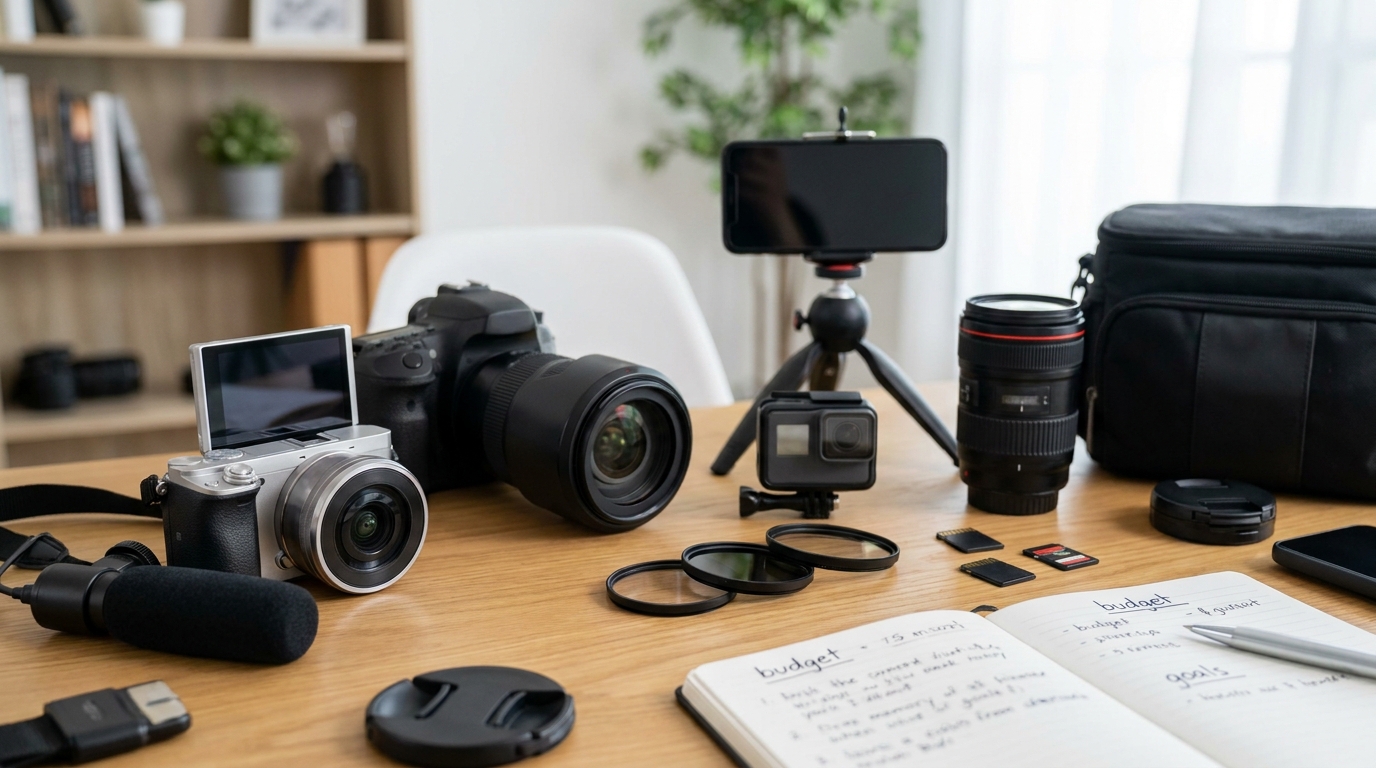
The Best Cameras for Beginners in 2026: Complete Buyer's Guide
Too many options, too much jargon. This guide cuts through it all to find the best first camera for every budget and goal — from the enthusiast who wants to learn properly to the content creator who needs something that works immediately.
The Most Important Thing Nobody Tells Beginners
Before the cameras, the truth that saves beginners thousands of pounds and dollars: the camera matters far less than almost everything else in photography. A skilled photographer with a ten-year-old entry-level camera will consistently produce better images than a beginner with the most expensive mirrorless system available. Technique — understanding light, composition, and how to control exposure — produces better photographs than hardware at every budget level.
This isn't an argument against buying a good camera. It's an argument for buying the right camera for where you actually are in your photographic journey, not the camera that will serve you once you've developed skills you don't yet have. An entry-level mirrorless camera purchased today and used for 10,000 photographs over the next two years will teach you more and produce better results than a professional-grade system purchased before you understand why you need its capabilities.
With that framing established — here are the best cameras for beginners in 2026, organised by budget and use case.
Understanding the Options: Camera Types Explained
Mirrorless Cameras
The current dominant camera technology. Mirrorless cameras use an electronic viewfinder (EVF) rather than the optical viewfinder and mirror mechanism of DSLRs. They are typically smaller and lighter than equivalent DSLRs, offer superior autofocus performance (particularly for subject tracking and eye detection), and produce video quality that often exceeds dedicated video cameras at equivalent price points. All major manufacturers have shifted their development focus to mirrorless — it is the present and future of the category.
DSLRs
Digital Single Lens Reflex cameras use a mirror to direct light through an optical viewfinder. Excellent cameras — the existing DSLR catalogue from Canon and Nikon in particular contains outstanding options — but no longer in active development. The lens ecosystem for both Canon EF and Nikon F mount is mature and comprehensive, and used DSLRs represent some of the best value in photography. For beginners on limited budgets, a used DSLR with a kit lens can be an excellent starting point.
Point-and-Shoot Cameras
Compact cameras with fixed or limited zoom lenses and typically automatic controls. The category has largely been displaced by smartphone cameras for casual photography, but the premium compact segment — Sony RX100 series, Ricoh GR series — offers image quality that still exceeds smartphone capability, particularly in low light, in a genuinely pocketable format.
What About Smartphones?
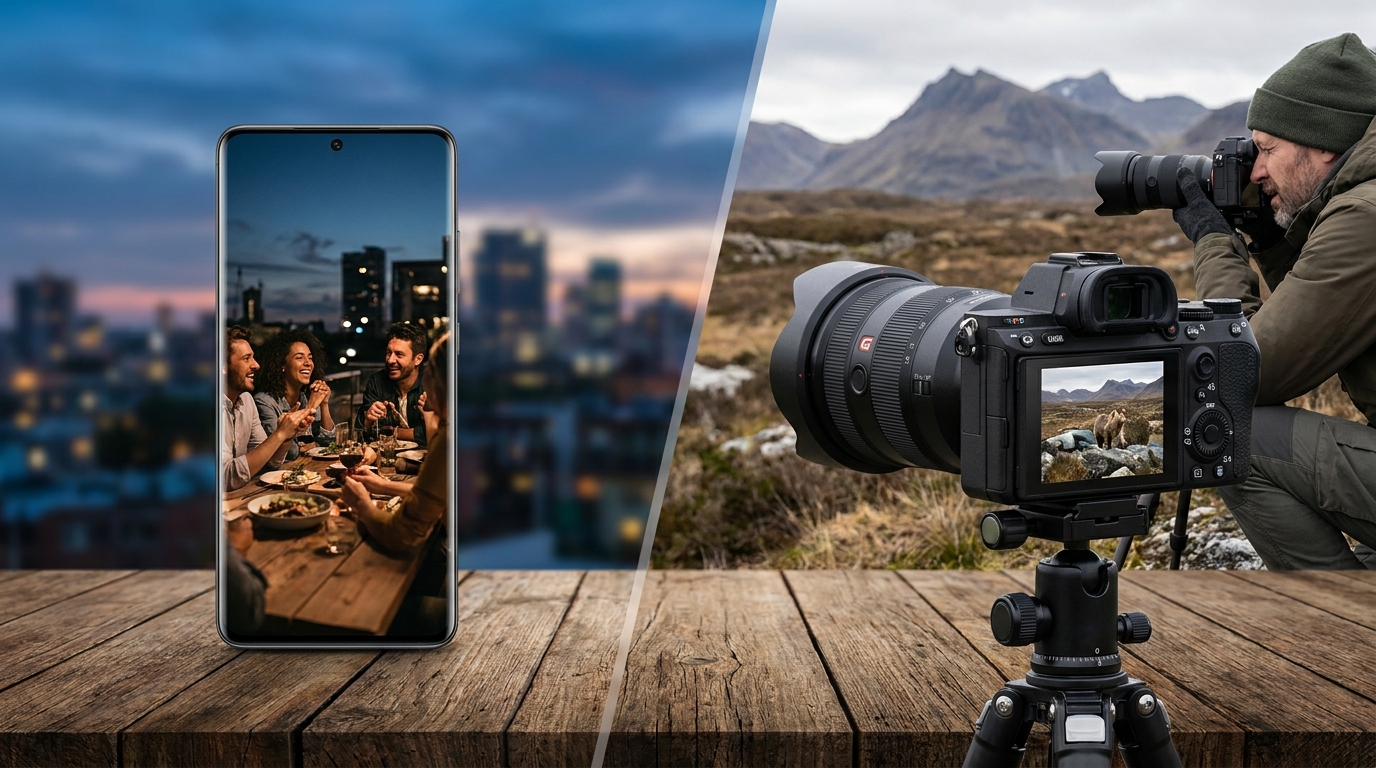
The honest answer: for the majority of casual photography purposes, the camera in a current iPhone or Samsung Galaxy flagship produces images that are technically excellent and practically indistinguishable from dedicated camera output in most shooting conditions. The case for a dedicated camera in 2026 rests on specific advantages: superior performance in low light (large sensors gather more light), greater creative control, better optical zoom, superior image quality when printing large, and the ergonomics and handling of a dedicated photographic tool. If you simply want excellent photographs without learning photography, your smartphone is sufficient. If you want to learn photography as a craft — to understand and control light, depth of field, and exposure — a dedicated camera with manual controls is the appropriate tool.
The Best Beginner Cameras of 2026 by Budget
Under £400 / $450: Best Value Entry Points
Sony ZV-E10 II — From £399 / $499 (body only)
The ZV-E10 II is the best entry-level APS-C mirrorless camera available in 2026. Its predecessor was already one of the most recommended beginner cameras on the market; the second generation adds improved autofocus, better video stabilisation, and a higher-resolution sensor while maintaining the accessible price point. The E-mount lens system is the most comprehensive APS-C ecosystem available, with an enormous range of lenses at every price point.
The camera's content creator orientation — a flip-out screen for self-filming, excellent autofocus for video, a built-in directional microphone — makes it simultaneously the best beginner stills camera and the best beginner video camera at this price point. For anyone whose photography interest includes social media content, YouTube, or any video creation, the ZV-E10 II is the clear recommendation.
Best paired with: Sony 16-50mm kit lens for versatility, or the Sony 35mm f/1.8 for portrait and low light work
Sensor: 26MP APS-C
Video: 4K/30fps, 1080p/120fps
Canon EOS R50 — From £679 / $679 (with kit lens)
Canon's most accessible RF-mount mirrorless camera. The RF mount is Canon's current mirrorless standard with an excellent and growing lens ecosystem. The R50 offers Canon's subject detection autofocus — one of the best in the industry — in an accessible, lightweight body. Slightly above budget but frequently available at or near £400 / $450 body-only on promotion.
Used Canon EOS Rebel T8i / Canon 850D — Approximately £250–£320 / $280–$380
For anyone whose budget is firm at under £400 / $450 and who prioritises learning photography fundamentals over video capability or latest technology, a used Canon Rebel T8i (sold as the 850D in Europe) with the 18-55mm kit lens is one of the best-value learning tools in photography. The Canon interface is beginner-friendly, the image quality is excellent, and the EF lens system — while legacy — is comprehensive and available cheaply secondhand.
£400–£800 / $450–$900: The Sweet Spot for Serious Beginners
Fujifilm X-S20 — From £1,099 / $1,299 (with kit lens) but frequently discounted to range
Fujifilm's X-series cameras occupy a unique position in the beginner market because they are uniquely good at teaching photography. The physical controls — dedicated dials for aperture, shutter speed, and ISO on most bodies — make the relationship between settings and image outcomes tangible in a way that menu-based controls do not. Fujifilm's film simulations (Classic Chrome, Velvia, Provia) produce aesthetically excellent JPEGs straight from the camera without any editing — particularly appealing for beginners who haven't yet learned post-processing.
The X-S20 is Fujifilm's most beginner-accessible current body, with both the physical dial controls of the X series and a hybrid dial mode for those who prefer menu-based operation. The image quality is exceptional. The camera regularly appears at discounted prices that bring it within this budget tier.
Best paired with: Fujifilm 18-55mm f/2.8-4 kit lens or the exceptional value 35mm f/2 for a single prime
Why it's special: Film simulations, tactile controls, exceptional JPEG quality
Sony A6700 — From £1,299 / $1,399
Sony's current flagship APS-C mirrorless camera. Above the stated budget tier at full price, but the A6700 represents such a significant step up in autofocus, video capability, and overall performance from entry-level options that it warrants mention for buyers who can stretch. The AI-powered autofocus is genuinely remarkable — it will reliably track subjects, eyes, faces, and moving animals in conditions that challenge cameras at twice the price.
£800–£1,500 / $900–$1,700: The First Full-Frame Option
Nikon Z5 II — From £1,399 / $1,497 (body only)
The best entry point into full-frame photography in 2026. Full-frame sensors — the same size as a frame of 35mm film — gather more light than APS-C sensors, producing better low-light performance, more natural depth-of-field effects, and a different quality of "look" to images that many photographers prefer. The Z5 II updated the original Z5 with significantly improved autofocus, 10fps burst shooting, and better video capability while maintaining the original's accessible entry price for the full-frame segment.
For beginners who are serious about portrait, wedding, event, or travel photography — where low light performance and the full-frame look are most relevant — the Z5 II is the best starting point in 2026.
Best paired with: Nikon 24-70mm f/4 S kit lens for versatility
Sensor: 24.5MP full-frame
When full-frame matters: Low light photography, portrait and bokeh work, printing large
Sony A7C II — From £2,099 / $2,198
Above budget but the most compact full-frame mirrorless available and worth knowing about. The A7C II packs full-frame performance and Sony's best-in-class autofocus into a body barely larger than an APS-C camera. For travel photographers who want full-frame quality without a large system, this is the most capable option available.
Key Specs to Actually Prioritise (and Ones to Ignore)
Prioritise
Autofocus system: Modern eye-detection and subject-tracking autofocus has transformed beginner photography — a camera that reliably keeps your subject in focus does more for image quality than almost any other specification
Lens ecosystem: The lenses available for a camera system matter more than the body in the long run. Sony E-mount, Fujifilm X-mount, and Nikon Z-mount all have strong ecosystems. Buy into a system you can grow with.
Ergonomics: Hold the camera before buying if possible. A camera that feels natural to hold and operate will be used more. A camera that feels awkward will be left at home.
Largely Ignore
Megapixels above 24MP: For beginners, any camera above 20MP produces images more than adequate for any print size or screen display. The difference between 24MP and 45MP is invisible in normal use.
Maximum burst rate: Relevant for sports and wildlife photography — largely irrelevant for portraits, travel, landscape, and street photography
Weather sealing: Nice to have, rarely decisive for beginners whose photography doesn't involve extreme conditions
The Learning Investment: What Matters More Than the Camera
The most impactful investment a beginner photographer can make alongside (or instead of) a camera upgrade is education. Specifically:
Understanding the exposure triangle (aperture, shutter speed, ISO and their relationships) — this is the foundational skill of photography and can be learned in a weekend
Learning basic composition principles — rule of thirds, leading lines, foreground interest, light quality — principles that produce better images regardless of what camera you're using
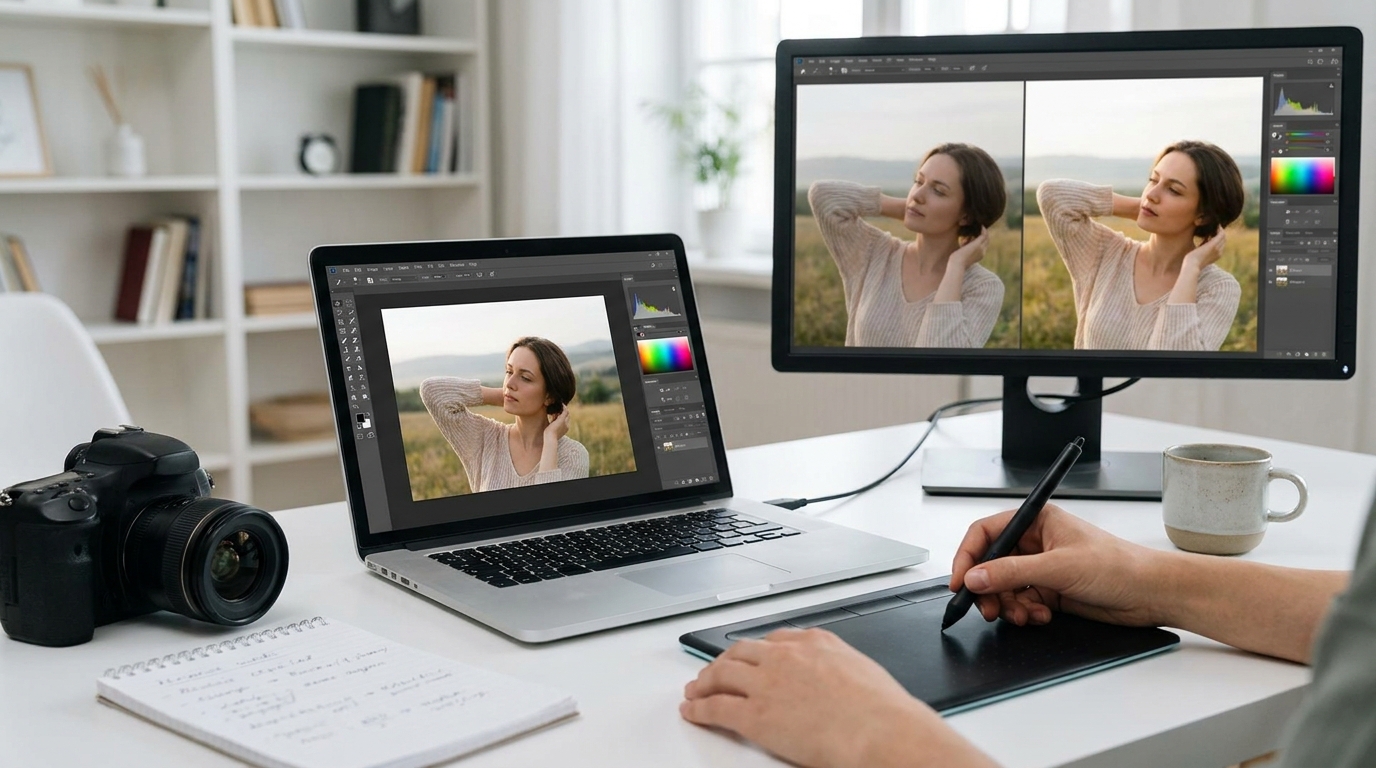
Shooting in RAW format and learning basic editing — Adobe Lightroom Classic (£11.98 / $9.99 per month) or the free Lightroom mobile app provide tools that transform competent exposures into excellent images
The best resources in 2026: YouTube channels by photographers like Thomas Heaton, Sean Tucker, and Peter McKinnon provide excellent, free education. Books by Bryan Peterson (Understanding Exposure) and Scott Kelby remain definitive beginner photography texts. And simply shooting — reviewing results critically, identifying what worked and what didn't — is irreplaceable.
Keywords: best cameras beginners 2026, entry level camera guide, first camera to buy, Sony ZV-E10 II review, Canon EOS R50 review, Fujifilm XS20 review, mirrorless vs DSLR beginners, best cheap camera 2026, beginner photography guide, camera buying guide 2026



Discussion
Comments
Approved comments are published after moderation to keep discussion useful and spam-free.
No comments yet. Start the discussion below.