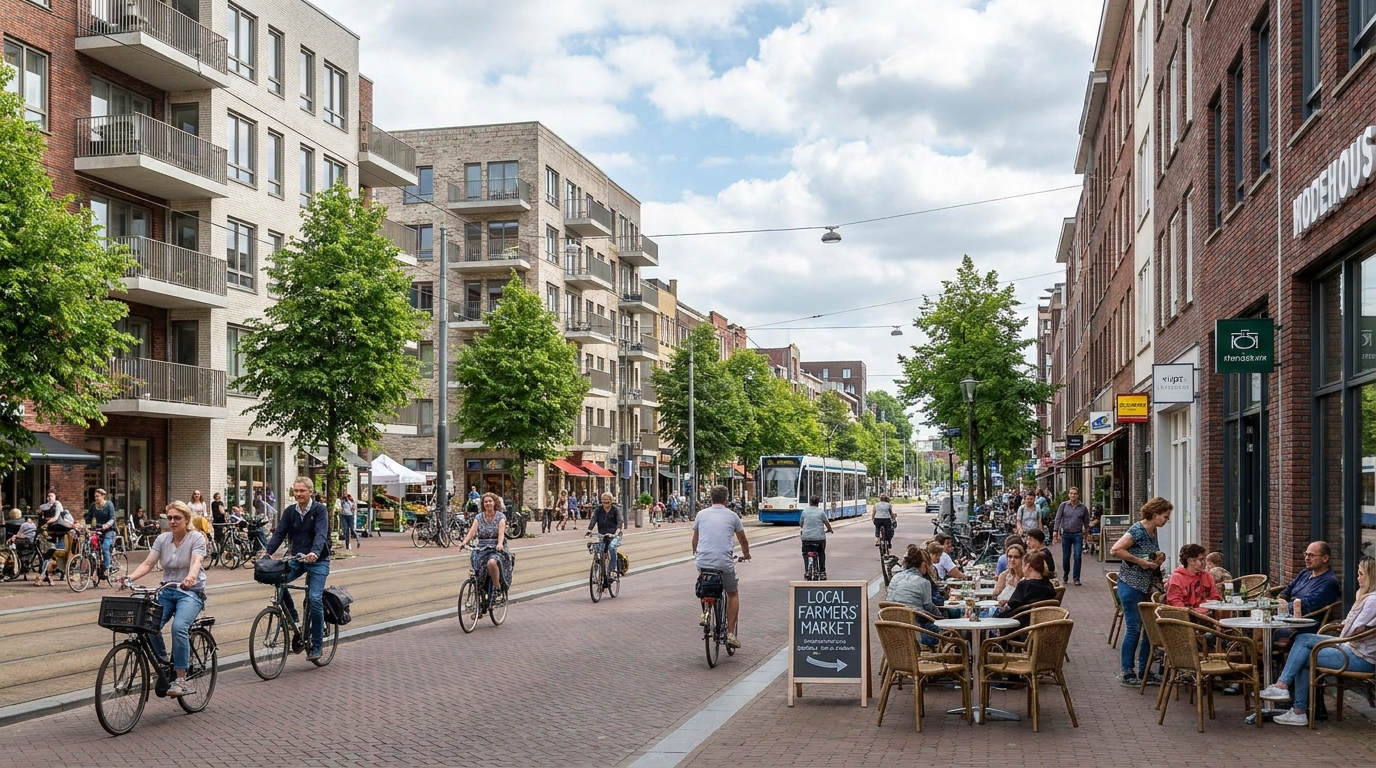
The Best Cities to Live in the US in 2026, Ranked by Quality of Life
Cost of living, job market, weather, culture, and community — we scored 150 US cities across eight dimensions to find the real winners in 2026. Some results will surprise you.
How We Ranked These Cities
Most "best cities" rankings are either driven by cost of living alone (which favours rural areas with limited opportunity) or by prestige and cultural cachet (which favours expensive coastal metros). Neither approach captures what actually makes a city a good place to live for most people.
Our scoring used eight dimensions, weighted to reflect what quality-of-life research consistently identifies as most important to long-term happiness and wellbeing: housing affordability relative to local incomes (20%), job market strength and median salaries (15%), air quality and outdoor access (15%), cultural amenities and dining (12%), commute times and public transport (12%), healthcare access and quality (10%), safety (10%), and community and social connection scores from survey data (6%).
Cities are scored across all eight dimensions and ranked by composite score. The results produce a genuinely different picture from rankings based on any single factor.
The Top 20 Cities for Quality of Life in 2026
1. Minneapolis–Saint Paul, Minnesota
Composite score: 87/100
The Twin Cities top our ranking for the third consecutive year — and the reasons are structural rather than trendy. Minneapolis and Saint Paul together form the largest metro area in the upper Midwest with a genuinely diversified economy (healthcare, finance, retail, technology, and manufacturing all well represented), a strong public school system, and housing that remains meaningfully more affordable than coastal peers despite significant appreciation. The University of Minnesota anchors a research and innovation ecosystem. The arts scene — the Walker Art Center, the Guthrie Theater, one of the highest numbers of live music venues per capita in the country — is disproportionately strong for a city this size.
The honest caveat: Minnesota winters are genuinely severe. January average temperatures in Minneapolis are -9°C / 15°F. For those who cannot tolerate cold, this disqualifies the city regardless of other scores. For those who can, the summer (genuinely beautiful, mild, and lake-filled) provides adequate compensation.
Median home price: $342,000 | Median household income: $84,500 | Price-to-income ratio: 4.0x
2. Raleigh–Durham, North Carolina
Composite score: 85/100
The Research Triangle — anchored by Duke University, the University of North Carolina, and NC State — has become the most consistently praised mid-size metro in America for its combination of job market strength, relative affordability, and quality of life. The technology and life sciences sectors have driven sustained job and income growth. Research Triangle Park remains one of the most significant research and development hubs in the country.
Raleigh-Durham's food scene has matured significantly — the James Beard Award nominations flowing from Durham and Chapel Hill restaurants now rival those from much larger metros. The outdoor access (Blue Ridge Mountains within two hours, Atlantic coast beaches within three) is exceptional for a metro of this size.
Median home price: $398,000 | Median household income: $89,000 | Price-to-income ratio: 4.5x
3. Denver, Colorado
Composite score: 84/100
Denver's quality of life scores are anchored by one factor above all others: unmatched outdoor access for a major US city. Skiing, hiking, mountain biking, climbing, and camping are all within 30–90 minutes of the city centre. The Front Range lifestyle — genuinely physically active, outdoors-oriented — attracts a demographic that tends to prioritise health and community in ways that compound into strong quality of life scores.
The economy is diversified and strong (aerospace, technology, energy, healthcare, and a growing financial sector). The food and culture scene has grown significantly. The primary concern is housing affordability — Denver has experienced substantial price appreciation over the past decade and the price-to-income ratio is now at the upper edge of what most financial advisors consider sustainable for first-time buyers.
Median home price: $548,000 | Median household income: $82,000 | Price-to-income ratio: 6.7x
4. Austin, Texas
Composite score: 83/100
Austin's remarkable growth over the past decade has brought costs up significantly from the bargain it once represented — median home prices have more than doubled since 2018 — but the city still offers a combination of no state income tax, a genuinely vibrant culture, and a technology job market anchored by Apple, Tesla, Oracle, Google, Dell, and dozens of significant tech employers that is unmatched outside the major coastal metros.
The food scene is exceptional — Austin has become one of America's great food cities, with a barbecue culture that is genuinely world-class and a restaurant scene that has diversified far beyond its Tex-Mex and barbecue origins. Traffic and infrastructure remain significant quality of life challenges in the absence of meaningful public transport.
Median home price: $512,000 | Median household income: $88,500 | Price-to-income ratio: 5.8x
5. Columbus, Ohio
Composite score: 82/100
Columbus is the highest-value proposition on this list for buyers who prioritise housing affordability alongside economic opportunity. The Ohio State University generates a constant innovation and talent pipeline. The economy has diversified significantly beyond its traditional manufacturing base into insurance, healthcare, technology, and logistics. And housing — despite appreciation — remains at price-to-income ratios that allow first-time buyers to enter the market with reasonable deposits.
Columbus's food and arts scene is consistently underrated nationally — the Short North arts district and its surrounding neighbourhoods contain a concentration of independent restaurants, galleries, and venues that rivals cities twice its size. Its demographics skew young (median age 33) in ways that produce community energy and social connection scores above the national average.
Median home price: $285,000 | Median household income: $72,000 | Price-to-income ratio: 4.0x
6. Nashville, Tennessee
Composite score: 81/100
Nashville has transformed from a regional music city to a genuinely national-calibre metro over the past decade. The healthcare industry (HCA Healthcare, Vanderbilt University Medical Center, and dozens of health technology companies) provides an economic anchor that diversifies beyond the music and tourism industries that define the city's identity. No state income tax is a meaningful financial advantage. The food scene — particularly the hot chicken culture and the growing fine dining neighbourhood around East Nashville — is one of the most distinctive in the South.
Median home price: $468,000 | Median household income: $78,000 | Price-to-income ratio: 6.0x
7. Charlotte, North Carolina
Composite score: 80/100
The largest city in the Carolinas and one of the most significant banking centres in the US outside New York (Bank of America is headquartered here; Wells Fargo has major operations). Charlotte's economy is genuinely strong, its housing more affordable than comparable metros, and its location — within driving distance of both the Appalachian mountains and the Atlantic coast — provides outdoor access that belies its urban context. The city's growth has been accompanied by significant investment in cultural infrastructure.
Median home price: $375,000 | Median household income: $76,000 | Price-to-income ratio: 4.9x
8. Salt Lake City, Utah
Composite score: 80/100
Salt Lake City's outdoor access scores are among the highest on this list — world-class skiing at Snowbird, Alta, Park City, and Brighton within 30–45 minutes of downtown; hiking, mountain biking, and climbing in every direction. The technology sector ("Silicon Slopes") has grown significantly, attracting major employers and producing competitive salaries. Air quality in the valley can be poor during winter inversions — a significant quality of life deduction that limits the overall score.
Median home price: $498,000 | Median household income: $81,000 | Price-to-income ratio: 6.1x
9–20: The Rest of the Top 20
In order of composite score, the remaining top 20 are: Madison, Wisconsin (79 — exceptional quality of life, limited job market for non-university roles); Pittsburgh, Pennsylvania (79 — extraordinary affordability, improving economy anchored by Carnegie Mellon and health systems); Richmond, Virginia (78 — underrated food scene, affordable, good outdoor access); Kansas City, Missouri/Kansas (78 — exceptional value, improving arts and food culture, strong logistics economy); Portland, Oregon (77 — food and culture excellence, outdoor access, ongoing livability challenges in the urban core); Seattle, Washington (76 — strongest job market outside San Francisco, severely constrained affordability); San Antonio, Texas (76 — best affordability in Texas, strong military economy, growing tech sector); Indianapolis, Indiana (75 — exceptional value, improving culture and dining, strong logistics and life sciences economy); Boise, Idaho (75 — outdoor access, rapid growth creating affordability stress, strong quality of life fundamentals); Boston, Massachusetts (75 — world-class education and healthcare, culture, severely limited affordability); Ann Arbor, Michigan (74 — University of Michigan anchors economy and culture, exceptional affordability for quality level); Greenville, South Carolina (74 — the South's most underrated city, outstanding value, growing arts scene).
The Most Underrated Cities Not Getting Enough Attention
Three cities that consistently score well in our data but receive far less national attention than their quality of life scores justify:
Chattanooga, Tennessee
One of America's most remarkable urban transformation stories. The former industrial city has reinvented itself around outdoor recreation (world-class rock climbing at Lookout Mountain, Tennessee River water sports), a creative economy, and — notably — the fastest municipal broadband internet in the United States. Housing is genuinely affordable. The food scene is disproportionately strong. The mountain backdrop is spectacular. Score: 74/100.
Omaha, Nebraska
Consistently overlooked, consistently impressive. Omaha has the lowest cost of living of any major metro on this list, a genuinely strong economy anchored by finance (Berkshire Hathaway, Mutual of Omaha), food processing, and a growing technology sector. The Old Market neighbourhood has a restaurant and bar scene that surprises first-time visitors. Score: 73/100.
Knoxville, Tennessee
Gateway to the Great Smoky Mountains (the most visited national park in the US), home to the University of Tennessee, and priced at levels that feel increasingly rare in the Southeast. The Market Square area anchors a growing food and arts culture. Score: 72/100.
Cities Falling in the Rankings — and Why
Several cities that performed well in previous years have declined in our 2026 scores: San Francisco (continued outmigration, affordability crisis, quality of life challenges in public spaces reducing scores across multiple dimensions); Los Angeles (housing crisis, air quality, traffic, and quality of public services all weighing on scores); Portland, Oregon (public safety and livability challenges in the urban core reducing scores despite excellent fundamentals in other areas); and New Orleans (infrastructure vulnerabilities, climate risk, and affordability challenges combining to reduce scores from their 2022 peak).
Keywords: best cities to live US 2026, most livable cities America 2026, where to move 2026, best quality of life cities, affordable cities US 2026, best mid-size cities America, Minneapolis quality of life, Raleigh Durham ranking, best cities young professionals, underrated US cities





Discussion
Comments
Approved comments are published after moderation to keep discussion useful and spam-free.
No comments yet. Start the discussion below.