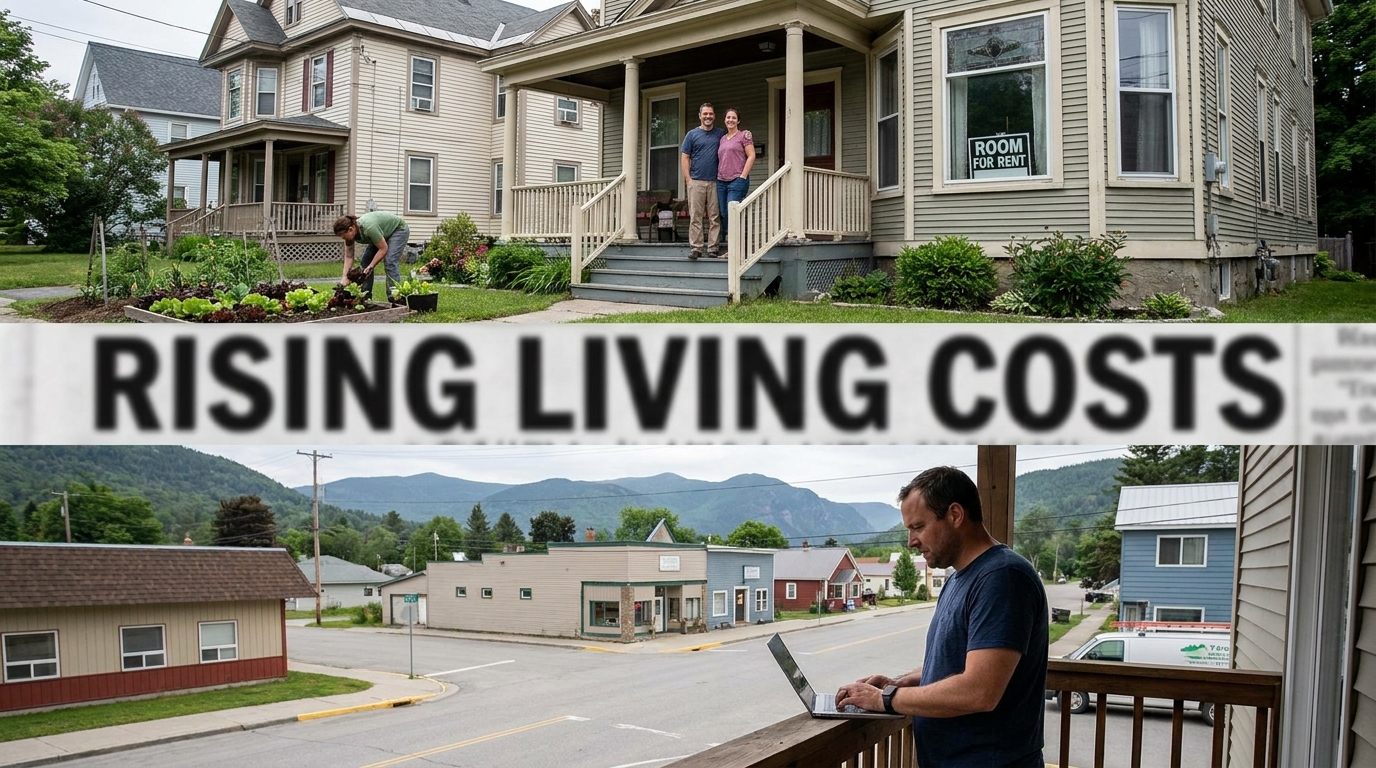
The Cost of Living Crisis in 2026: How Americans Are Adapting and Thriving
From house-hacking to geographic arbitrage — the real strategies Americans are using to live well despite rising costs. With honest data on what's actually gotten more expensive, and what's working.
The Numbers Are Real — But So Are the Solutions
The cost of living crisis is not a media narrative. The data is clear: since 2020, US housing costs are up approximately 42%, grocery prices have risen 25%, car insurance premiums have increased 52%, and childcare costs have outpaced inflation in nearly every major metro. The median American household is spending a meaningfully higher proportion of its income on basic necessities than it was five years ago — and the gap between income growth and cost growth has not closed.
But the data also shows something else: Americans are adapting. Not passively, not without difficulty, but with genuine creativity and resourcefulness. This guide documents the strategies that are actually working — from financial restructuring to geographic relocation to community-based solutions — with honest assessments of who each strategy works for and what it requires.
The Housing Problem: Where the Crisis Bites Hardest
Housing is the single largest expense for most Americans and the domain where the crisis is most acute. The combination of elevated mortgage rates (which have come down from their 2023 peak but remain meaningfully above the ultra-low rates of 2020–2022) and stubbornly high home prices has created the most challenging affordability environment for first-time buyers in modern history.
The price-to-income ratio for first-time buyers nationally is approximately 7x — meaning the median home costs seven times the median first-time buyer household income. Historical norms considered 3–4x sustainable. In major coastal metros (San Francisco, New York, Los Angeles, Seattle), the ratios range from 12x to 20x, effectively excluding median-income earners from homeownership entirely without external financial assistance.
The rental market has partially normalised from its 2021–2023 peak in some markets as new supply has come online, but median rents nationally remain at historically elevated levels relative to incomes.
Strategy 1: House Hacking
House hacking — buying a property and renting out part of it to offset mortgage costs — has become one of the most discussed and most practiced strategies among millennial and Gen Z buyers navigating the affordability crisis.
The most common forms in 2026: buying a duplex or triplex and living in one unit while renting the others; buying a single-family home with an accessory dwelling unit (ADU) or basement apartment; renting spare bedrooms on long-term leases; or using Airbnb for short-term rental of a portion of the property.
The economics: A buyer purchasing a duplex in a mid-tier city like Columbus, Ohio or Kansas City with a $60,000 down payment on a $300,000 property might carry a monthly mortgage payment of approximately $1,700. Renting the second unit for $1,200 per month reduces the net housing cost to $500 — significantly below what comparable rental accommodation would cost. The equity accumulation and the forced savings mechanism of homeownership are maintained alongside dramatically reduced monthly outgo.
What it requires: The willingness to be a landlord (or to hire a property manager, which reduces but doesn't eliminate the role), a property that has rentable space, and financing that accounts for projected rental income. Many buyers use FHA loans (3.5% down payment) for duplexes and triplexes — the owner-occupied requirement is met by living in one unit.
Strategy 2: Geographic Arbitrage
Geographic arbitrage — earning income pegged to a high-cost market while living in a lower-cost one — has become one of the most powerful financial strategies available to remote-capable workers. The normalisation of remote work since 2020 has made it accessible to a far larger proportion of the workforce than ever before.
The mathematics are straightforward: a software engineer earning $130,000 in San Francisco (where the cost of living consumes the vast majority of that income) who relocates to Chattanooga, Tennessee (where a $90,000 salary would cover the same lifestyle) and maintains their salary experiences a dramatic improvement in financial wellbeing despite technically "earning less" in absolute terms. The purchasing power improvement — driven by the gap in housing, food, transport, and general cost of living — is typically 30–60% for moves from major coastal metros to mid-tier interior cities.
The most popular geographic arbitrage destinations in 2026 for remote workers:
Chattanooga, Tennessee — outdoor access, fastest municipal broadband in the US, growing remote worker community
Tulsa, Oklahoma — the Tulsa Remote programme (which offers $10,000 cash grants to qualifying remote workers who relocate) has created a significant and self-reinforcing remote worker community
Bentonville, Arkansas — remarkable mountain biking infrastructure, growing arts scene, extremely affordable
Greenville, South Carolina — the Southeast's most underrated city, Appalachian foothills access, growing food and culture scene
Bozeman, Montana — outdoor access, growing tech community, significantly more affordable than mountain West alternatives like Jackson or Aspen (though prices have risen substantially)
What it requires: A genuinely remote-capable job or business, the willingness to leave existing social and family networks (the most significant real cost, often understated), and the logistical work of relocation. The financial case is often compelling; the personal case requires honest assessment.
Strategy 3: The Multi-Generational Household Revival
The multigenerational household — which declined throughout the 20th century as nuclear family norms and rising prosperity made separate living affordable — has been steadily increasing since 2008 and has accelerated through the cost of living crisis. Approximately 18% of Americans now live in multigenerational households, the highest proportion since the 1950s.
The financial logic is compelling: sharing a home between two or three generations typically reduces individual housing costs by 30–50%, allows childcare to be handled within the household (reducing or eliminating commercial childcare costs, which run $15,000–$40,000 annually in most metros), and provides elder care capacity that would otherwise require expensive professional alternatives.
The ADU (Accessory Dwelling Unit) boom — driven by zoning reform in California, Oregon, Washington, and many cities nationally that has made it easier and cheaper to add a detached cottage or garage apartment to an existing property — has produced a physical infrastructure for multigenerational living that preserves privacy while enabling cost sharing. Building an ADU costs approximately $150,000–$300,000 in most markets but typically adds more than that to property value while enabling either a family member to live at reduced cost or a rental unit that generates income.
Strategy 4: Food Costs — The Practical Playbook
Grocery spending is the highest-flexibility major expense for most households — unlike housing, which is largely fixed, food spending can be significantly reduced through deliberate strategy without significant sacrifice in quality or enjoyment.
The approaches producing the most consistent savings in 2026:
Meal planning and reduced food waste: The average American household wastes approximately $1,500 worth of food annually. Weekly meal planning that purchases specifically for planned meals and uses all purchased ingredients eliminates most of this waste.
Protein substitution: The most expensive food category for most households is meat. Substituting 2–3 meat-based meals per week with lentils, beans, eggs, or tinned fish (all nutritionally comparable or superior at a fraction of the cost) produces meaningful savings without meaningful sacrifice.
Store-brand adoption: Research consistently shows that store-brand products are equivalent in quality to name brands in over 90% of categories, at 20–40% lower cost. Systematic store-brand adoption across non-perishables is one of the highest-return, lowest-effort household budget strategies available.
Discount grocery stores: Aldi and Lidl (both of which have significantly expanded US presence in recent years) consistently price 30–50% below conventional supermarkets for equivalent quality. Trader Joe's offers comparable value for many categories.
Strategy 5: Transportation Cost Reduction
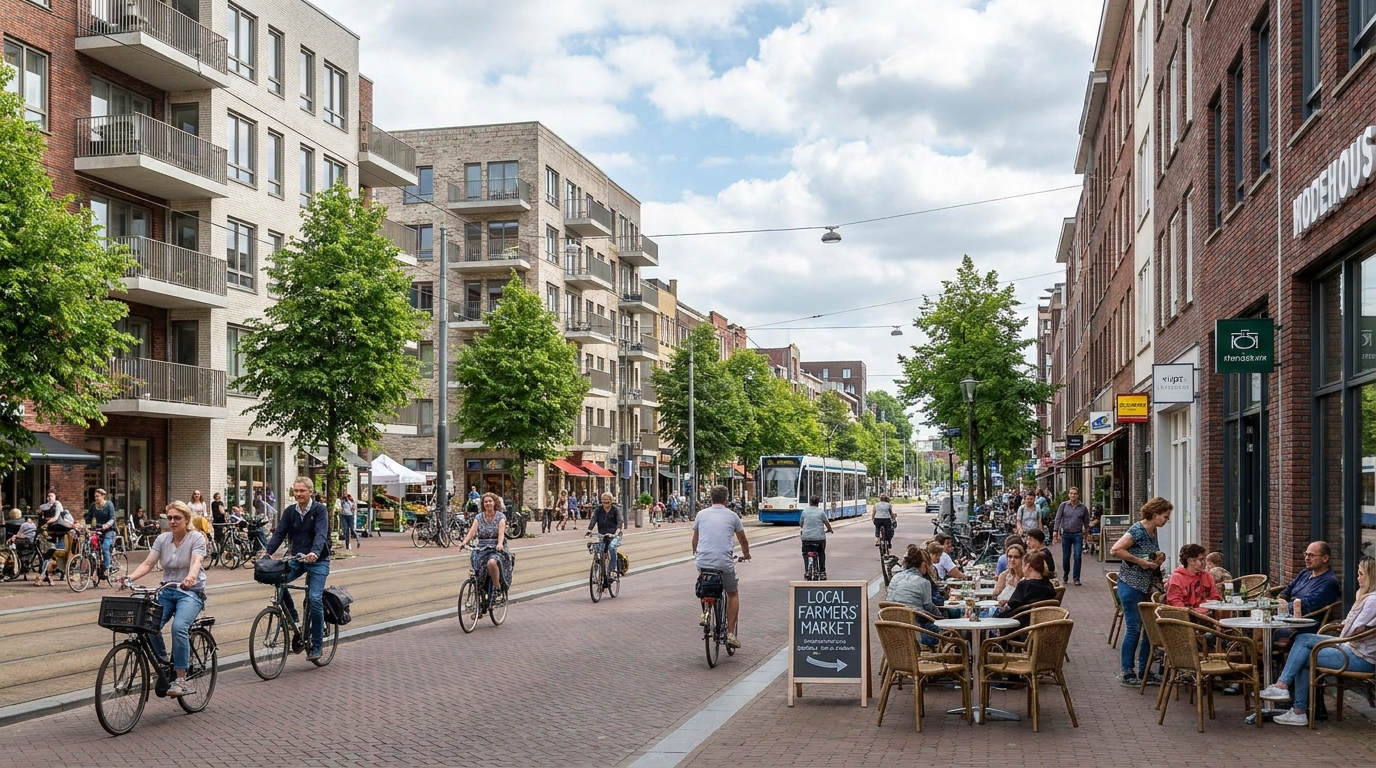
The average American spends approximately $12,000 per year on vehicle ownership and operation — the second-largest household expense after housing. In cities with adequate public transit (a minority of US cities, but including New York, Chicago, Boston, Washington DC, San Francisco, and a growing list of others), eliminating one vehicle from a two-car household produces immediate and significant savings.
For those who cannot eliminate vehicles, the most impactful transportation cost strategies in 2026 are: buying used rather than new (the new vehicle price premium has increased significantly; used vehicles at 2–4 years old retain most functionality at 20–35% lower cost); extending vehicle life through consistent maintenance (the average age of vehicles on US roads has reached a record high as owners maintain rather than replace); and shopping car insurance aggressively (premiums have risen 52% since 2020, but the variance between insurers for identical coverage has also widened — annual shopping produces real savings).
Strategy 6: Community-Based Solutions
The most underutilised cost reduction strategies are collective rather than individual — approaches that leverage community relationships to reduce costs for multiple households simultaneously.
Childcare co-ops: Groups of families who take turns providing childcare for each other's children — typically 3–6 families sharing the responsibility on rotating schedules — can significantly reduce or eliminate paid childcare costs while maintaining quality
Tool libraries and sharing: The tool library concept — a community-owned pool of infrequently used tools available to members — is expanding beyond its original library-based context into neighbourhood-organised groups, reducing the need for individual households to own equipment used a few times annually
Community Supported Agriculture (CSA): Direct subscriptions to local farms producing a weekly vegetable box typically deliver better quality and value than supermarket equivalents, while supporting local food systems
Buy-nothing groups and mutual aid networks: The Buy Nothing Project's hyperlocal neighbourhood groups facilitate the exchange of goods — from furniture to clothing to appliances — between neighbours at no cost, reducing consumption spending significantly for active participants
The Honest Assessment: What These Strategies Can and Can't Do
The strategies above can meaningfully improve financial wellbeing for households with the flexibility, social capital, and resources to implement them. Geographic arbitrage requires a remote-capable job — not universally available. House hacking requires a down payment — not universally accessible. Community co-ops require time and reliable relationships — not universally available for people working multiple jobs or lacking established community connections.
The cost of living crisis is not primarily a problem of individual financial strategy. It is a structural problem of housing supply, wage growth, healthcare costs, and childcare infrastructure that no personal finance playbook fully resolves. The strategies here reduce individual household costs within the existing structural context — they do not change the structural context itself.
With that honest framing: they work. Households who have implemented geographic arbitrage, house hacking, or significant food cost reduction strategies consistently report meaningful improvement in financial wellbeing and reduced financial stress. The gap between structural problem and individual adaptation is real — but the adaptation is worth making.
cost of living crisis 2026 US, how to afford living 2026, house hacking strategy, geographic arbitrage remote work, affordable cities US 2026, reduce cost of living strategies, multigenerational household benefits, food cost reduction tips, Americans adapting to inflation, financial survival strategies 2026





Discussion
Comments
Approved comments are published after moderation to keep discussion useful and spam-free.
No comments yet. Start the discussion below.