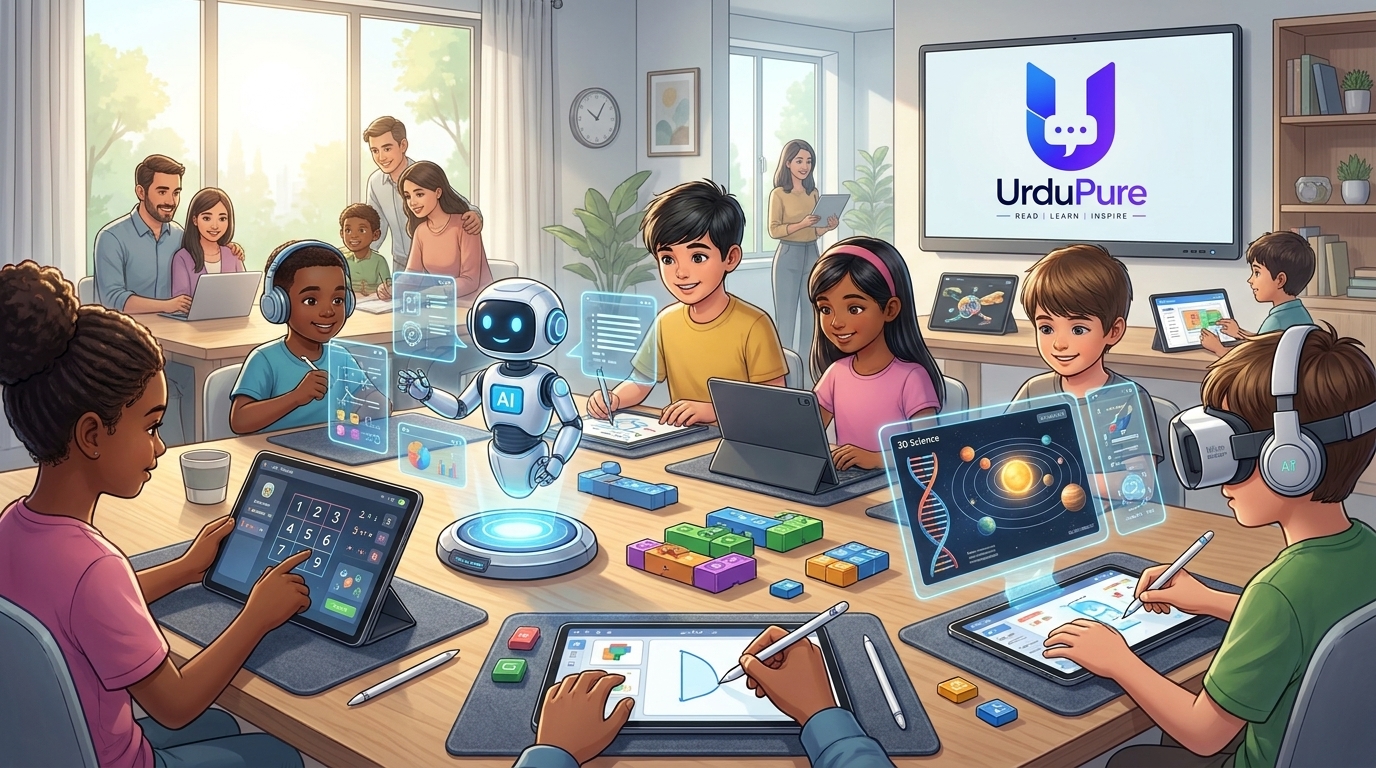
The Best Educational Apps for Kids in 2026 That They'll Actually Use
The app store is flooded with "educational" apps — most are just games with a learning veneer. Here are the ones that genuinely teach, ranked by age group and subject, based on learning outcomes rather than entertainment value alone.
The Educational App Problem
The children's educational app market generates billions of pounds and dollars annually, driven by parental aspiration, marketing that positions screen time as "learning time," and the genuine convenience of a device that keeps a child engaged while parents attend to other demands. The problem is that most apps marketed as educational produce engagement without learning — they keep children occupied through game mechanics that have been carefully designed to maximise time-on-screen, not to maximise knowledge or skill acquisition.
Distinguishing genuinely educational apps from entertainment apps with educational branding requires looking at specific criteria: Is the skill development measurable and verified by independent research? Does the app use evidence-based pedagogy (spaced repetition, active recall, worked examples with feedback) or purely game mechanics? Do children retain and apply what they've apparently "learned" in the app beyond the app itself?
Every app on this list meets these criteria — verified by either independent research studies, credible teacher reviews, or measurable learning outcome data.
Ages 3–6: Foundation Skills
Khan Academy Kids — Free (iOS / Android)
Subjects: Reading, maths, social-emotional learning, science
Best for: Ages 2–8
Evidence base: Multiple independent studies showing learning gains comparable to structured classroom instruction
Khan Academy Kids is the most comprehensively researched educational app for young children available anywhere, and the research findings are genuinely impressive. A 2020 randomised controlled trial by independent researchers found that children using Khan Academy Kids for 30 minutes per day over one month showed statistically significant gains in literacy and numeracy compared to control groups — one of the few educational apps for young children with this quality of evidence.
The app covers early reading (letter sounds, phonics, simple words), early maths (counting, number recognition, basic operations), and social-emotional learning (identifying emotions, cooperation, problem-solving) through a character-driven story world that children find genuinely engaging. The progression adapts to each child's level, avoiding both frustration (content too difficult) and boredom (content too easy).
The entirely free model — no in-app purchases, no subscription, no advertising — is remarkable for its category and reflects Khan Academy's non-profit mission.
Endless Alphabet — £4.99 / $4.99 (iOS / Android)
Subjects: Vocabulary, spelling, word recognition
Best for: Ages 3–6
Endless Alphabet uses monsters assembling letters to build words — with each word accompanied by a silly animated scene that illustrates its meaning. The word choice is more sophisticated than most early literacy apps (words like "enormous," "peculiar," and "ferocious" appear alongside simpler vocabulary), reflecting a research-backed approach to building rich vocabulary through exposure rather than restricting to age-typical words. Teacher reviews are consistently among the most positive in the early literacy app category.
Starfall — Free basic / £3.99 / $4.99 per month premium (Browser / iOS)
Subjects: Reading, phonics
Best for: Ages 3–8
Starfall's phonics instruction is among the most evidence-aligned in the children's app market — using systematic phonics approaches (letter-sound correspondence, blending, segmenting) that align with the Science of Reading consensus on how children most effectively learn to read. Widely used in school settings as well as at home, with strong teacher recommendation rates.
Ages 6–10: Building Core Skills
Prodigy Maths — Free (iOS / Android / Web)
Subjects: Mathematics (curriculum-aligned)
Best for: Ages 6–13
Evidence base: Multiple school district studies showing accelerated maths progression
Prodigy is the most widely used school-endorsed maths app in North America, and its research base is stronger than most competitors. The RPG game structure — children answer maths questions to progress through a fantasy world, battle monsters, and build characters — produces engagement levels that translate into significantly more maths practice time than traditional worksheet approaches.
The curriculum alignment is genuine — questions are mapped to US Common Core standards (and Canadian provincial curricula, Australian curriculum, and UK National Curriculum), adapting to each child's level in real time. The teacher dashboard allows teachers to assign specific curriculum content; the parent dashboard provides progress reports. The free tier covers the full maths curriculum; the premium membership (£8.33 / $9.95 per month) adds cosmetic game features and additional reporting — the core learning is free.
Duolingo — Free / Super Duolingo £6.99 / $6.99 per month (iOS / Android)
Subjects: Languages (40+ available)
Best for: Ages 6+ (Duolingo ABC for ages 3–6)
Evidence base: Multiple published studies showing language learning outcomes
Duolingo's game mechanics are uniquely effective at building consistent language learning habits — the streak system, the competitive leaderboard, and the daily reminder notifications produce daily practice rates significantly higher than other language learning apps. Independent research (including a 2020 study in Language Learning & Technology) has confirmed that consistent Duolingo use produces measurable language gains comparable to university-level language courses for beginners.
For children aged 3–6, Duolingo ABC is a separate, phonics-focused reading app without the gamification intensity of the main app — appropriate for the developmental stage where sustained engagement with game mechanics is less reliable.
Toca Boca World — Free / In-app purchases (iOS / Android)
Subjects: Creative play, social-emotional learning, world-building
Best for: Ages 6–10
Toca Boca World is the most sophisticated creative play digital environment for this age group — an open-ended world-building and storytelling app that children use to create narratives, role-play scenarios, and social situations. It is not "educational" in the traditional sense — there is no curriculum content, no quiz, no score. But as a creative and imaginative play environment, it is genuinely valuable: the play patterns children engage in (narrative construction, social role-play, cause-and-effect exploration) are developmentally significant forms of learning.
ScratchJr — Free (iOS / Android)
Subjects: Programming, computational thinking
Best for: Ages 5–7
Developed by: MIT Media Lab
ScratchJr, developed by MIT Media Lab and Tufts University, introduces computational thinking concepts — sequences, loops, conditionals, events — through a visual programming interface appropriate for pre-readers and early readers. Children create interactive stories and games by connecting programming blocks, developing logical reasoning and problem-solving skills that transfer well to later formal programming education. Free, no advertisements, no in-app purchases.
Ages 10–14: Tweens and Critical Thinking
Brilliant — Free basic / £12.49 / $14.99 per month premium (iOS / Android / Web)
Subjects: Maths, science, computer science, logic
Best for: Ages 10+ (and adults)
Brilliant is the most intellectually rigorous educational app on this list — and the one most likely to produce the "I didn't realise learning could feel like this" response from children who engage with it seriously. The courses in algebra, geometry, calculus, probability, physics, chemistry, and computer science are genuinely challenging, using an interactive problem-solving approach (rather than passive video watching) that reflects the best evidence about how conceptual understanding develops.
It is not an app for passive consumption. Brilliant requires active engagement with difficult material — making it both more effective and less universally popular than apps that prioritise entertainment. For children with genuine intellectual curiosity in STEM, it is extraordinary.
Scratch — Free (scratch.mit.edu / iOS)
Subjects: Programming, computational thinking, creativity
Best for: Ages 8–16
Developed by: MIT Media Lab
Scratch is the most widely used coding education platform in the world — with over 100 million projects created by children and young people globally. The visual block-based programming environment allows children to create games, animations, and interactive stories without the syntax barriers of text-based programming languages. The Scratch community — where children share and remix each other's projects — adds a social dimension that sustains engagement far beyond individual projects.
Newsela — Free basic / School/family subscription required for premium (Web / iOS / Android)
Subjects: Reading comprehension, critical thinking, current events
Best for: Ages 10–16
Newsela provides current news articles adapted to five different reading levels — the same article available at lexile levels appropriate for struggling readers and advanced readers simultaneously. The comprehension questions, annotation tools, and writing prompts build critical reading and thinking skills while engaging tweens with real-world content that textbook reading doesn't provide. Widely used in schools; accessible for family use.
Principles for Choosing Educational Apps Wisely
Look for measurable learning outcomes, not just "educational content": Flashy apps with educational branding are not the same as apps with evidence-based pedagogy. Look for apps with published research, teacher endorsements, or measurable curriculum alignment.
Active learning beats passive watching: Apps that require children to produce answers, make decisions, and generate content are more educationally effective than apps where children watch animated content passively.
Co-use where possible: Using educational apps alongside children — discussing what they're learning, asking questions about their progress, extending the content into conversation — dramatically improves learning outcomes compared to solo use.
Time limits still matter: Even genuinely educational apps should be used within sensible daily limits. The American Academy of Pediatrics' guidance (no more than 1 hour per day of screen time for ages 2–5, consistent limits for older children) applies to educational apps as well as entertainment apps.
best educational apps kids 2026, learning apps children, kids education technology, Khan Academy Kids review, Prodigy maths app, Duolingo for kids, Brilliant app review, best coding apps children, educational apps ages 6-10, top educational apps tweens



Discussion
Comments
Approved comments are published after moderation to keep discussion useful and spam-free.
No comments yet. Start the discussion below.