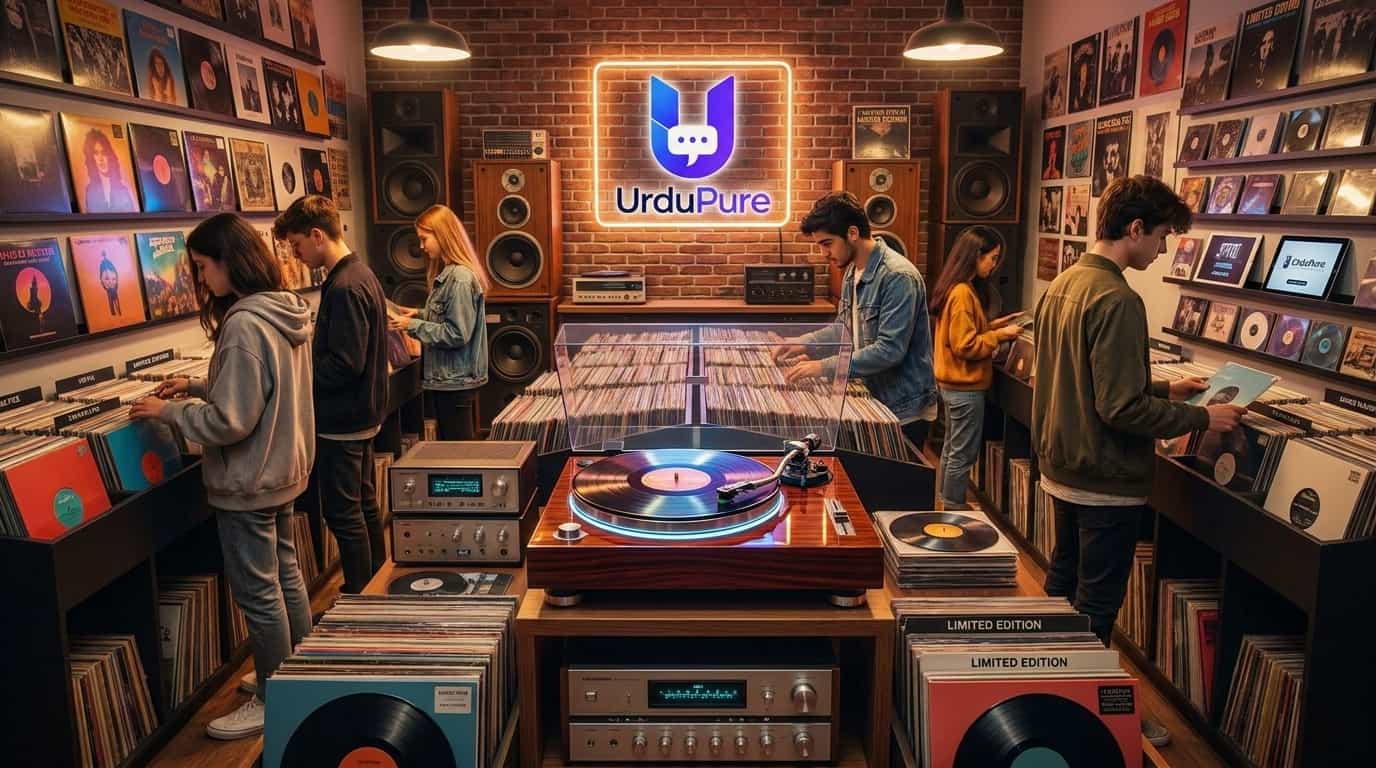
Vinyl Is Back and It's Not Going Away: Why Record Sales Have Now Outsold CDs for Three Years Running
On March 16, 2026, the Recording Industry Association of America published its annual year-end revenue report and confirmed what record store owners had known for years: US vinyl sales passed $1 billion in 2025 — the first time the format has crossed that threshold since 1983. Forty-two years. Vinyl was dead for forty-two years. Now it is selling 46.8 million records a year, growing for the 19th consecutive year, generating three times the revenue of CDs, and being driven primarily by listeners who were not even born the last time the format was this popular.
This is not a nostalgia story. It is something stranger and more interesting: a format invented in 1948, built on a technology that has not fundamentally changed in seven decades, defeating every economic and technological argument against its survival. While streaming gives you access to 100 million songs for ten pounds a month, tens of millions of people are choosing to spend thirty-seven dollars on a single album pressed into polyvinyl chloride and played with a diamond stylus. The question worth asking is not whether vinyl is back — the numbers answer that definitively. The question is why, and what it says about how music actually functions in human lives.
1. The Sales Data in Full: Vinyl vs CD vs Streaming Revenue
The RIAA's 2025 Year-End Report: The Complete Picture
The Recording Industry Association of America's 2025 Year-End Recorded Music Revenue Report, released on March 16, 2026, established the following benchmark figures for the US market:
Total US recorded music revenue: $11.5 billion — a new all-time high.
Streaming revenue: $9.5 billion, representing 82% of the total. Paid subscription accounts grew to 106.5 million, generating $6.4 billion in revenue. Premium paid subscriptions grew 6.8% to $5.88 billion.
Vinyl revenue: $1.04 billion+, up 9.3% year-over-year. Units sold: 46.8 million, up from 43.4 million in 2024. The format has grown for 19 consecutive years. US vinyl represents nearly 50% of the format's total global revenue.
CD revenue: $312.4 million on 29.5 million units — a 7.8% revenue decline and 11.6% unit decline compared to the prior year.
Digital downloads: declining by approximately 0.8% year-over-year, continuing a sustained multi-year fall.
The ratio that matters: vinyl generated more than three times the revenue of CDs in 2025 and outsold them in units by 46.8 million to 29.5 million. This is not a marginal lead. It is a categorical statement about which physical format the music-buying public has chosen. CDs have not disappeared — 29.5 million units is still a meaningful number — but the format's trajectory is a steady downward slope while vinyl's is a steady upward one.
The Global Picture
The IFPI Global Music Report 2026 confirms that the vinyl trend is not a US anomaly. Globally, vinyl grew 13.7% in 2025 — the 19th consecutive year of growth. Brazil posted a 136% revenue increase in 2023 (the most recent available global data point) as Latin American markets caught the format resurgence. Japan recorded a 14% increase in volume and 24% in value in 2024. In the UK, vinyl album sales grew 10.5% in 2024 to £196 million, with 6.7 million discs sold — the 17th consecutive year of growth for the British market. Global forecasts project a further 8 to 9% market growth for vinyl in 2026.
The Price of a Record in 2026
One data point that contextualises the extraordinary nature of vinyl's growth: the average price of a new vinyl record has risen 24% from 2020 to 2025, reaching $37.22 on average according to Discogs — with limited-edition pressings regularly exceeding $50 to $70. The format is not growing despite getting more expensive. It is growing while getting more expensive. For an analyst trained in conventional consumer economics, this behaviour does not compute. For anyone who has watched 22-year-olds spend two hours at a record store on a Saturday afternoon, it makes complete sense.
"Streaming is an important part of industry revenues that also creates pathways to new formats and experiences. US vinyl sales grew for a 19th consecutive year, representing nearly 50% of the format's global value."
— RIAA Chairman and CEO Mitch Glazier, 2025 Year-End Revenue Report, March 16, 2026
Vinyl vs Streaming: Not Competitors — Complements
The framing of vinyl versus streaming misunderstands the market. These formats serve different functions in music consumption and the data reflects this. The IFPI 2026 report found that 36% of Gen Z vinyl buyers discover music on Spotify first and then buy the record. Streaming functions as the discovery and sampling mechanism; vinyl functions as the ownership and commitment mechanism. The same customer does both, and the growth of one is partly fuelled by the other. Streaming's abundance creates the context that makes vinyl's scarcity meaningful.
2. Why Younger Listeners Are Driving Vinyl Growth — Not Nostalgic Boomers
The most common misconception about the vinyl revival is demographic. The caricature — a middle-aged man with a beard and a room full of classic rock albums — is not who is buying records in 2026. The most important demographic driving the format's growth is Generation Z, defined roughly as those born between 1997 and 2012, currently aged approximately 14 to 27.
The Statistics Are Unambiguous
The Vinyl Alliance's Gen Z and Vinyl Report 2025 found that 76% of surveyed Gen Z vinyl fans buy records at least once a month. That is not occasional collectors — it is regular, committed buying behaviour.
80% of Gen Z vinyl buyers own a turntable — directly contradicting the widespread assumption that young people are buying records as decorative objects without intending to play them. (About 40% of all record buyers do not own a turntable, per Futuresource Consulting, but within Gen Z specifically, the listening intention is high.)
29% of Gen Z vinyl fans describe themselves as hardcore collectors.
Gen Z listeners are 27% more likely to purchase vinyl records than the average music consumer, per Luminate's entertainment report.
Approximately 60% of Gen Z say they buy records, per Futuresource Consulting's Audio Tech Lifestyles report.
Vinyl has grown on average 18% annually in the past five years, driven heavily by younger buyers.
Why Gen Z Is Choosing Vinyl: The Actual Reasons
The reasons Gen Z gives for buying vinyl are illuminating — and they are not what their parents' reasons would have been.
"It provides a break from digital life." This was cited by 50% of Gen Z respondents in the Vinyl Alliance survey — versus 49% of millennials and only 34% of Gen X. The generation that grew up most thoroughly immersed in digital interfaces is the most likely to seek a physical, tactile alternative. Vinyl is analogue friction in an optimised world. The needle drop, the A-side and B-side structure, the album as a complete sequential experience you listen to rather than skip through — these are features, not limitations.
Mental health and intentional listening. 61% of Gen Z say they replace digital habits with vinyl listening to improve their mental wellbeing — significantly more than millennials (53%) or Gen X (27%). In the context of a generation that has grown up with smartphone anxiety, digital comparison culture, and algorithmic feed management, vinyl's insistence on your full attention and its inability to be interrupted by notifications represents something close to meditation.
Ownership in a subscription world. Gen Z has never known music ownership as the default. Their music library has always been a service, not a possession — one that can be revoked, algorithmically modified, or made unavailable by licensing disputes. Buying a vinyl record is an act of definitional ownership: this music is mine, physically, irrevocably, playable without internet access or a monthly fee, seventy years from now if the record is cared for.
Aesthetic and community identity. 56% of Gen Z fans cite aesthetics as a key reason for buying vinyl, and 37% use records as home decor. Social media has been transformational: TikTok alone has generated over 252 million posts related to "vinyl" or "vinyl records." The visual culture around record collecting — walls of album art, needle drops on camera, the unboxing of coloured pressings — is native Gen Z content that simultaneously drives discovery and community formation. Record Store Day has become a cultural event rather than a niche trade exercise.
Artist support as values expression. 62% of Gen Z vinyl buyers say they purchase records specifically to financially support their favourite artists — recognising, correctly, that streaming royalties are fractions of pennies while vinyl purchases deliver direct, meaningful revenue to artists and labels.
Taylor Swift as a Case Study in Artist-Driven Vinyl Sales
No artist better illustrates the current vinyl market dynamics than Taylor Swift. Her 2025 album The Life of a Showgirl sold approximately 1.6 million vinyl units in the US, making it the biggest vinyl album of the year. Swift's approach — releasing multiple variant pressings (different cover art, different coloured vinyl, limited regional exclusives, deluxe editions with exclusive tracks) — converts fandom into collecting behaviour. Each variant is a distinct purchase proposition. A dedicated fan does not buy The Life of a Showgirl once; they buy every pressing. This strategy, adopted by artists from Billie Eilish to Olivia Rodrigo to Bad Bunny, has transformed the vinyl release from a music delivery format into a merchandise category with higher per-unit margins than almost anything else in the industry.
3. The Pressing Plant Crisis: Why Vinyl Still Takes 6 Months to Manufacture
Vinyl's comeback has a supply side problem that has not been solved by the format's growth, and in some ways has been made worse by it. Manufacturing a vinyl record in 2026 takes between 6 and 12 months from the point at which an artist delivers final audio and artwork files to a pressing plant. Two decades ago, the same process took 6 weeks.
The Structural Capacity Problem
The global vinyl supply chain is built around pressing plants — facilities that use hydraulic presses to stamp molten PVC into records using metal stampers derived from lacquer disc masters. These machines are expensive, heavy, specialised, and old. Most of the pressing equipment currently in use dates from the 1970s and 1980s, when vinyl was the dominant music format. During the lean years of the 1990s and 2000s, pressing plants were closed, their equipment was scrapped, and the specialist engineers who maintained the machines retired. The knowledge base for building and operating new pressing machinery was allowed to atrophy for a generation.
When demand began recovering in the late 2000s and then surging through the 2010s, the plants that remained could not scale quickly. New pressing machines are not readily available: the market of manufacturers who make them is extremely small, lead times for new equipment are long, and training skilled operators requires years rather than months. The industry research firm market data now puts pressing plant utilisation at 78 to 85% of theoretical capacity — meaning the plants are running near their physical ceiling and backlogs are structural, not temporary.
The global capacity problem is stark. Global pressing capacity is estimated at approximately 160 to 200 million records per year. Global demand has been running well above this figure — one industry estimate places unfulfilled demand at 400 million units. New plants have been built or expanded: new facilities opened in the US, UK, and Europe through 2022 to 2025, and Universal Music Group, Sony Music, and Third Man Records (Jack White's label) have all invested in proprietary pressing capacity. But none of this construction closes the gap within a two-to-three-year window.
PVC Shortages and Raw Material Constraints
The base material for vinyl records — polyvinyl chloride (PVC) — is an industrial chemical with a supply chain entirely separate from the music industry. When global supply chain disruptions affect PVC production (as occurred during the pandemic and in subsequent logistics shocks), pressing plants receive insufficient raw material regardless of how many machines they have running. A 20% shortage in raw PVC materials occurred in 2022 and directly reduced record availability. PVC prices have remained elevated since, contributing to the 24% rise in average record prices from 2020 to 2025.
The Major Label Queue-Jumping Problem
Large record labels exacerbate the capacity crunch by the sheer volume of their orders. When a major label commissions 300,000 units of a Taylor Swift variant pressing or a deluxe reissue of a classic rock catalogue title, that order consumes pressing plant capacity that would otherwise be available for independent artists and small labels. Multiple industry sources have documented how independent labels are disproportionately affected by backlogs: their orders are smaller in volume, their negotiating power is lower, and they are frequently pushed to the back of the manufacturing queue by major label account commitments. The result is that a first-time independent artist who records an album and files a vinyl pressing order in January 2026 may not receive finished records until late 2026 or early 2027 — by which point the album's launch momentum has long dissipated.
Coloured Vinyl Makes It Worse
Coloured vinyl pressings — which now account for approximately 32% of the total market — require additional production steps compared to standard black vinyl: the PVC must be dyed or combined with colour pigments during the manufacturing process, additional quality control is required, and run changeovers between colours slow the overall plant throughput. The Gen Z affinity for colourful, visually distinctive pressings (which drive the social media visual culture around vinyl) directly contributes to the production bottleneck that makes all vinyl harder to manufacture quickly.
4. Best Turntables Under $300 and $600 for 2026 — Ranked
The turntable market has responded to vinyl's growth with an expanding range of options from entry-level to audiophile. Here is what the independent expert consensus from What Hi-Fi?, VinylPickup, and Turntable Lab recommends in 2026 — by budget.
Under $300: The Best Entry-Level Decks
Audio-Technica AT-LP120XUSB — $299 / ~£250 | Editor's Pick for Most People The AT-LP120XUSB is the most consistently recommended first turntable across nearly every authoritative source in 2026 — and for good reason. It includes a built-in phono preamp (meaning you can connect it directly to any speaker or amplifier without buying additional equipment), USB output for digitising your collection, plays at 33⅓, 45, and 78 RPM, and is built to a standard that will not damage your records. Its Audio-Technica VM95E stylus is a genuine moving-magnet cartridge, not the cheap ceramic cartridges found in suitcase-style record players. VinylPickup's 2026 ranking is unambiguous: "The right deck for most people. It works out of the box, sounds good, and will not damage your records." If you want one turntable that does everything without requiring additional purchases or technical knowledge, this is the answer.
Pro-Ject Primary E — $299 / ~£199 | Best for Sound Quality at Budget What Hi-Fi? has awarded the Pro-Ject Primary E its budget turntable recommendation for multiple consecutive years, most recently in its 2026 turntable guide. Unlike the AT-LP120XUSB, the Primary E is a purist design: no USB output, no Bluetooth, no automatic operation. What it offers instead is superior sound quality for the price. The belt-drive mechanism isolates the motor vibration from the platter more effectively than many rivals; the OM 5E cartridge is excellent at this price point; and the Pro-Ject build quality is meaningfully better than mass-market alternatives at similar prices. The catch: you need a separate phono preamp (add approximately $50–80) or an amplifier with a phono input. For listeners who prioritise sound over features, this is the better buy.
U-Turn Orbit Plus — $329 / ~£280 | Best US-Made Option The U-Turn Orbit Plus is manufactured in Massachusetts — one of a very small number of turntables with US domestic production. It features a hand-assembled chassis, acrylic platter (better resonance control than standard plastic platters), and an Ortofon OM5E cartridge. The build quality is exceptional for the price, and U-Turn's modular design means upgrades (better cartridges, acrylic platters, built-in phono stages) can be added over time as your system evolves. VinylPickup describes it as "a step up in build quality for $70 more" over the AT-LP120XUSB.
Under $600: Where Listening Stops Being Casual
Rega Planar 1 — $595 / ~£350 | Best Sound Under $600 (with separate phono stage) The Rega Planar 1 is the entry point to what serious vinyl listeners call a different listening experience. What Hi-Fi? has given it five stars and an Award recommendation every year since 2016 — a near-unprecedented consistency in a market where audio products frequently disappoint at launch and then fade. The Rega's RB110 tonearm is designed and manufactured to tolerances that exceed its price point; the Carbon cartridge (included) is a genuine audiophile-quality moving magnet; and the belt-drive mechanism reflects Rega's three-decade obsession with minimising noise and vibration in the signal path. VinylPickup's description captures the qualitative difference: "Drop the needle on Fleetwood Mac Rumours and Mick Fleetwood's kick drum has a physical weight the AT-LP120XUSB does not deliver. The Rega pulls you forward through the music." The trade-off: the Planar 1 does not include a built-in phono stage; budget an additional $79 for a Pro-Ject Phono Box E. Total system cost with phono stage: approximately $674.
Rega Planar 1 Plus — $649 / ~£499 | Best Plug-and-Play at This Level The Planar 1 Plus is the Planar 1 with Rega's award-winning Fono Mini A2D phono stage built in — eliminating the separate preamp purchase and its associated cables. What Hi-Fi? has given it five stars, noting it combines "hugely enjoyable sound, excellent clarity and subtlety, and agile and precise rhythms" with the convenience of plug-and-play operation. If you want the Rega sound without the additional component purchases, this is the cleaner choice.
Pro-Ject Debut Carbon EVO — $549 / ~£449 | Best Value for Audiophile Sound The Pro-Ject Debut Carbon EVO is the alternative recommendation at this price tier — preferred by some experts for its Ortofon 2M Red cartridge (a significant upgrade over the stylus options on cheaper decks), its carbon fibre tonearm (which reduces unwanted resonance), and its broad colour palette (the EVO comes in more finish options than most of its competitors). CNET called it "the best sound quality of turntables under the $600 mark." The trade-off compared to the Rega is a question of personal priorities: the Pro-Ject sounds excellent and features better out-of-the-box cartridge quality; the Rega has a slight edge in rhythmic precision and system upgradability over time.
The One to Avoid: Cheap All-in-One "Retro" Players
Every major turntable authority — What Hi-Fi?, VinylPickup, Turntable Lab — includes a variation of the same warning: avoid cheap, trendy, suitcase-style record players (Crosley, Victrola, and similar mass-market products priced at $50–$100). These units use ceramic cartridges with excessive tracking force that physically damages records over time. The needle pressure required to keep the stylus in the groove with a ceramic cartridge is multiple times higher than a proper moving-magnet design, and the resulting groove damage is irreversible. Buying a $60 record player to spin your $300 record collection will ruin the collection. Buy from the list above, or buy nothing.
5. How Dominican and Latin Music Is Performing in the Vinyl Market
The vinyl revival is not a culturally monolithic phenomenon — it is playing out differently across genres, and the Latin music segment of the vinyl market has its own distinctive dynamics.
The Broader Latin Vinyl Market
Latin music is one of the most collectible genres in the vinyl secondary market and one of the fastest growing in terms of new pressings. The category encompasses salsa, merengue, bachata, cumbia, reggaeton, bolero, bossa nova, and regional Mexican styles — a breadth of sound that maps to a diaspora community of over 60 million Spanish-speaking people in the US alone, and a global Spanish-speaking market of half a billion. Brazil's 136% revenue increase in 2023 reflects the broader Latin American market's rapid adoption of the format.
Major labels and independent imprints have expanded their Latin vinyl catalogues significantly since 2022. Turntable Lab — one of the US's most respected independent vinyl retailers — maintains a dedicated Latin section covering contemporary and classic titles across bachata, merengue, reggaeton, salsa, and cumbia. Bad Bunny, Rosalía, and Selena all appear consistently among the best-selling Latin vinyl artists on both Amazon and independent retail channels in 2025–2026.
Dominican Music on Vinyl: The Collector's Market
Dominican music has a particularly rich and valuable vinyl collector's market rooted in the golden age of merengue and bachata from the 1970s through 1990s. Original Dominican pressings from this era are among the most sought-after Latin vinyl at auction. ValueYourMusic's Latin vinyl auction data from March 2025 shows original Dominican bachata and merengue pressings regularly selling for $150 to $500 at competitive auction — with rare titles exceeding these figures. A rare original pressing of Joey Aponte's Angelito sold for $510 in March 2025 after 18 competitive bids. A Marino Perez bolero LP from the Dominican Republic reached $177.50.
The artists commanding the most collector interest in Dominican and Caribbean-influenced Latin vinyl include Juan Luis Guerra — who holds the most Latin Grammy wins in the Merengue/Bachata Album category with four — alongside Aventura, Romeo Santos (whose Fórmula, Vol. 3 was a 2023 Latin Grammy winner in the category), and Cuco Valoy, whose fusion of Afro-Caribbean rhythms with merengue is regarded as foundational to Dominican musical identity. Classic orchestra merengue — Los Compadres, Las Chicas del Can, Wilfrido Vargas — represents the most historically valuable tier of Dominican vinyl collecting.
New Dominican and Latin Pressings in 2026
The new pressing market for Latin music faces the same constraint as every other genre: pressing plant capacity. The practical reality is that Caribbean and Latin American artists and labels are competing for the same limited pressing slots as every other format in global demand. Independent Dominican and Puerto Rican artists releasing new music on vinyl face lead times of 6 to 12 months, which creates significant album launch planning challenges in a market accustomed to the immediacy of streaming release.
The structural opportunity for Dominican and Latin music in the vinyl market is significant. The Dominican diaspora in the United States — concentrated in New York, New Jersey, Florida, and Massachusetts — represents a large, culturally cohesive market with strong musical identity and the purchasing power to support vinyl releases. As more US-based Dominican-American artists reach mainstream commercial platforms, their vinyl releases will reach both the Latin diaspora collector market and the broader Gen Z vinyl-buying public that is increasingly exploring Latin music through streaming discovery pathways.
For Dominican listeners at home, the vinyl collecting culture is developing rather than mature. Physical music retail in the Dominican Republic has historically been limited by the availability of international pressings and the higher relative cost of vinyl in an import-dependent market. However, as streaming-first music consumption becomes dominant globally, the vinyl counterculture is beginning to reach Dominican record shops and independent music events. The specific aesthetic and community values driving Gen Z vinyl buying in the US and UK — intentional listening, ownership, physical connection to music — resonate no less powerfully in Santo Domingo or Santiago than in Brooklyn or London.
The Argument the Numbers Are Making
The combined data from the RIAA, IFPI, Vinyl Alliance, Luminate, and Futuresource Consulting tells a coherent story that goes beyond format nostalgia. Vinyl's growth is not an accident of cultural fashion that will reverse when the next trend arrives. It is a structural response to a specific problem created by streaming's success: music has become so abundant and so frictionless that it has, for a significant segment of listeners, lost the quality that makes it meaningful.
When any song ever recorded is always available, no song is special. When you can listen to 10,000 albums without choosing to commit to any of them, music becomes ambient rather than intentional. Vinyl reintroduces the act of choosing — choosing which album you care enough about to spend thirty-seven dollars on, choosing which side to play first, choosing to sit down and listen to it in sequence without skipping. That is not a technological regression. It is a deliberate cultural act, and 46.8 million Americans did it enough in 2025 to generate a billion dollars in revenue.
The format that was supposed to die when the cassette arrived is now outselling the format that was supposed to be permanent. The format invented the year before the Berlin Blockade is now being bought by people who use AI to plan their days and Spotify to discover new music, then spending Saturday afternoons in record stores. The music industry's own year-end report cannot fully explain why this is happening. Neither can pure economics. The answer is something simpler: people still want to love specific music, specifically, and vinyl remains the format most designed to make that possible.
Key Takeaways
US vinyl sales hit $1.04 billion in 2025 — the first time the format has crossed $1 billion since 1983. Vinyl has grown for 19 consecutive years and outsold CDs by 3 to 1 (46.8M units vs 29.5M). Source: RIAA 2025 Year-End Report, March 16, 2026.
Streaming generated $9.5 billion (82% of US recorded music revenue) in 2025. Vinyl and streaming are not competing — 36% of Gen Z vinyl buyers discover music on Spotify first, then buy the record.
Gen Z — not boomers — is the primary driver of vinyl growth. 76% of Gen Z vinyl fans buy records at least once a month; 80% own a turntable; 62% buy vinyl specifically to support artists they love.
Vinyl takes 6 to 12 months to manufacture in 2026, up from 6 weeks two decades ago. Global pressing capacity (~160-200 million records/year) is far below global demand. PVC shortages and major label queue-priority compound the problem for independent artists.
Best turntable under $300: Audio-Technica AT-LP120XUSB ($299) for plug-and-play simplicity; Pro-Ject Primary E ($299) for best sound if you add a phono stage. Best under $600: Rega Planar 1 ($595 + phono stage) for audiophile sound; Pro-Ject Debut Carbon EVO ($549) for best out-of-box value.
Avoid Crosley/Victrola-style suitcase players — ceramic cartridges with excessive tracking force permanently damage records.
Latin vinyl is a growing and highly collectible market. Dominican bachata and merengue originals from the 1970s–1990s fetch $150–$500+ at auction. Juan Luis Guerra, Romeo Santos, Bad Bunny, and Rosalía are among the most collectible Latin vinyl artists in the current market.
This article draws on the RIAA 2025 Year-End Recorded Music Revenue Report (March 16, 2026), the IFPI Global Music Report 2026, the Vinyl Alliance Gen Z and Vinyl Report 2025, Luminate's entertainment consumer report, Futuresource Consulting's Audio Tech Lifestyles report, Hollywood Reporter and Music Week reporting on the RIAA data, ValueYourMusic auction data (March 2025), What Hi-Fi? Best Turntables 2026 guide (updated May 2026), VinylPickup Best Turntables 2026 (April 2026), and CNN Business Gen Z vinyl consumer reporting (December 2025). All pricing is correct at time of writing and subject to change.






Discussion
Comments
Approved comments are published after moderation to keep discussion useful and spam-free.
No comments yet. Start the discussion below.