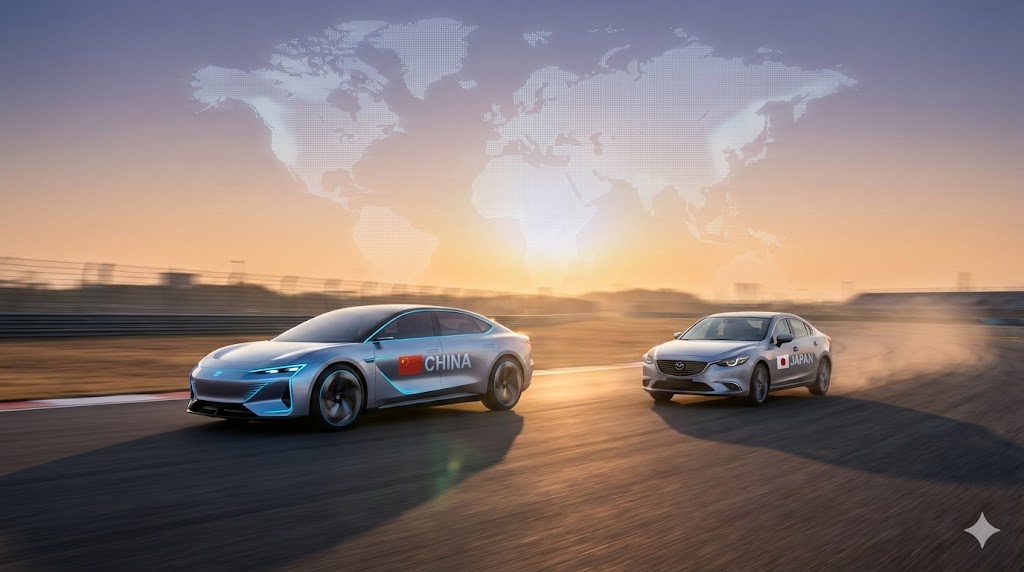
The global automotive industry is on the cusp of a historic transformation. For decades, Japan has been synonymous with automotive excellence and a dominant force in global car sales, a testament to its engineering prowess, quality, and vast export networks. However, a seismic shift is underway, with industry analysts and projections indicating that China is poised to dethrone Japan and emerge as the world's largest car seller by 2025. This isn't merely a change in rankings; it signifies a profound reordering of the global economic and industrial landscape, driven by China's aggressive push into electric vehicles (EVs), its massive domestic market, and an ambitious export strategy.
The Shifting Global Automotive Landscape
For much of the 21st century, Japan has maintained its position as a top-tier automotive exporter and a significant player in total global vehicle sales, often vying with Germany and the United States. Brands like Toyota, Honda, Nissan, and Suzuki have built formidable reputations for reliability, innovation, and fuel efficiency. Their global reach has been unparalleled, establishing manufacturing plants and sales networks across continents. This long-standing dominance, however, is now facing its strongest challenge yet from an unexpected quarter: China.
China’s ascent in the automotive world has been nothing short of meteoric. From being primarily a manufacturing hub for foreign brands and a market dominated by joint ventures, China has rapidly cultivated its own powerful domestic industry. This evolution, spurred by strategic government initiatives and significant investments, has seen Chinese brands not only capture an increasing share of their home market but also aggressively expand their footprint internationally. The projected milestone of surpassing Japan by 2025 underlines the speed and scale of this transformation, reflecting years of sustained growth and strategic foresight.
Key Catalysts Behind China's Ascendancy
Several interconnected factors are propelling China's automotive industry to the forefront of global sales, creating a compelling narrative of innovation, scale, and strategic ambition.
Domestic Market Powerhouse
China's sheer population size and a rapidly expanding middle class represent an unparalleled consumer base. As disposable incomes rise, so does the demand for personal transportation. This vast domestic market provides an invaluable launchpad for Chinese automakers, allowing them to achieve economies of scale and refine their products before venturing overseas. It acts as a resilient buffer against global economic fluctuations and enables continuous investment in research and development, fostering a fiercely competitive environment that drives innovation among local brands.
The Electric Vehicle Revolution
Perhaps the most significant driver of China's rise is its overwhelming dominance in the electric vehicle (EV) sector. Recognizing the strategic importance of new energy vehicles (NEVs), the Chinese government implemented a comprehensive strategy involving substantial subsidies, favorable policies for manufacturers, and massive investments in charging infrastructure. This proactive approach has made China the world's largest producer and consumer of EVs, fostering a vibrant ecosystem of battery manufacturers, component suppliers, and pioneering EV brands like BYD, Nio, Xpeng, and Geely.
These companies are not just producing EVs; they are innovating rapidly in battery technology, smart connectivity features, and autonomous driving capabilities, often outpacing established Western and Japanese rivals. The cost-effectiveness of Chinese EV production, combined with technological advancements, makes their offerings highly attractive both domestically and increasingly in international markets.
Aggressive Export Strategy
While China's domestic market is immense, its export ambitions are equally significant. Chinese automakers are no longer content with merely satisfying local demand. They have embarked on an aggressive global expansion strategy, initially targeting developing markets in Southeast Asia, Africa, and Latin America, where their cost-effective and increasingly high-quality vehicles find strong demand. More recently, however, Chinese brands have begun making inroads into mature markets in Europe and Australia, often leveraging their EV expertise.
This export boom is supported by state-of-the-art manufacturing facilities, efficient logistics, and a growing international sales and service network. Brands like SAIC (with MG and Maxus), Chery, and Great Wall Motors are expanding their global footprint, building brand recognition and challenging the long-held market shares of traditional automotive giants. The rapid growth in vehicle exports, particularly EVs, is a critical component of China's journey to becoming the world's leading car seller.
Robust Supply Chains and Innovation
China has strategically built incredibly robust and vertically integrated supply chains, particularly crucial for the EV industry. From controlling a significant portion of the world's rare earth minerals to leading in battery manufacturing (CATL and BYD are global giants), China possesses a degree of supply chain resilience and self-sufficiency that few other nations can match. This strategic advantage mitigates risks associated with global supply disruptions and ensures a steady pipeline for production.
Furthermore, significant government and private sector investment in research and development has propelled Chinese automotive innovation. This extends beyond electric powertrains to encompass advanced manufacturing techniques, intelligent cockpit systems, and sophisticated autonomous driving solutions, positioning China as a technology leader rather than just a manufacturer.
Japan's Enduring Strengths and Emerging Challenges
While the focus is on China's rise, it's crucial to acknowledge Japan's enduring strengths and the challenges it faces in this evolving landscape.
Legacy of Quality and Reliability
Japanese automakers have cultivated an unmatched reputation for vehicle quality, reliability, and durability. Toyota's lean manufacturing principles and focus on continuous improvement (Kaizen) have been emulated worldwide. Brands like Honda and Subaru are celebrated for their engineering excellence and consumer trust. Japan also pioneered hybrid technology, with Toyota's Prius setting a global benchmark for fuel efficiency and lower emissions before the full EV revolution took hold.
Slower EV Transition
One of Japan's most significant hurdles is its comparatively slower transition to pure battery electric vehicles (BEVs). While Japanese brands excel in hybrids, they have been more cautious in fully embracing BEVs, often citing concerns about charging infrastructure, battery costs, and consumer range anxiety. This cautious approach, while understandable from a business perspective, has allowed Chinese and other global players to gain a significant head start in the rapidly expanding EV market, potentially impacting future market share and technological leadership.
Competitive Pressures
Japanese automakers face intensifying competitive pressures from multiple fronts. Beyond China's rapid ascent, European and American manufacturers are also heavily investing in their own EV strategies. The global market is becoming more fragmented and competitive, demanding quicker adaptation and bolder strategic shifts than perhaps previously anticipated.
Implications of a New Global Leader
China surpassing Japan as the world's largest car seller will have far-reaching implications across the globe:
- Economic Shift: It signifies a further shift in global economic power towards Asia, bolstering China's industrial influence and potentially impacting trade balances.
- Technological Race: The focus on EVs and intelligent vehicles will intensify the technological arms race, pushing all manufacturers to innovate faster. China's lead in specific EV technologies could set new industry standards.
- Supply Chain Dominance: China's control over critical raw materials and battery production will become even more pronounced, potentially giving it significant leverage in the global automotive supply chain.
- Consumer Choice and Market Dynamics: Consumers globally will benefit from increased competition, potentially leading to more diverse and technologically advanced vehicle options, especially in the EV segment. It will also force traditional automakers to reconsider their product offerings and market strategies.
- Geopolitical Impact: Automotive leadership is not just economic; it’s a symbol of industrial strength and national prestige, contributing to geopolitical narratives and relationships.
Looking Ahead: The Future of Global Car Sales
The projection for 2025 is a snapshot of an ongoing evolution. While China's trajectory is strong, the global automotive landscape remains highly dynamic. Japanese automakers are certainly not static; they are investing heavily in new EV technologies and partnerships to regain momentum. The race for advanced autonomous driving and sustainable manufacturing practices will continue to define the industry's future. The increasing competition from Chinese brands will undoubtedly spur innovation and efficiency across the board, ultimately benefiting consumers worldwide.
The prospect of China surpassing Japan as the world's largest car seller by 2025 marks a pivotal moment in automotive history. It underscores the profound impact of strategic industrial policy, rapid technological adoption, and the sheer scale of the Chinese market. This shift is not just about sales figures; it represents a fundamental rebalancing of power within one of the world's most critical industries, heralding a new era where innovation and sustainability will continue to drive global leadership.



Discussion
Comments
Approved comments are published after moderation to keep discussion useful and spam-free.
No comments yet. Start the discussion below.