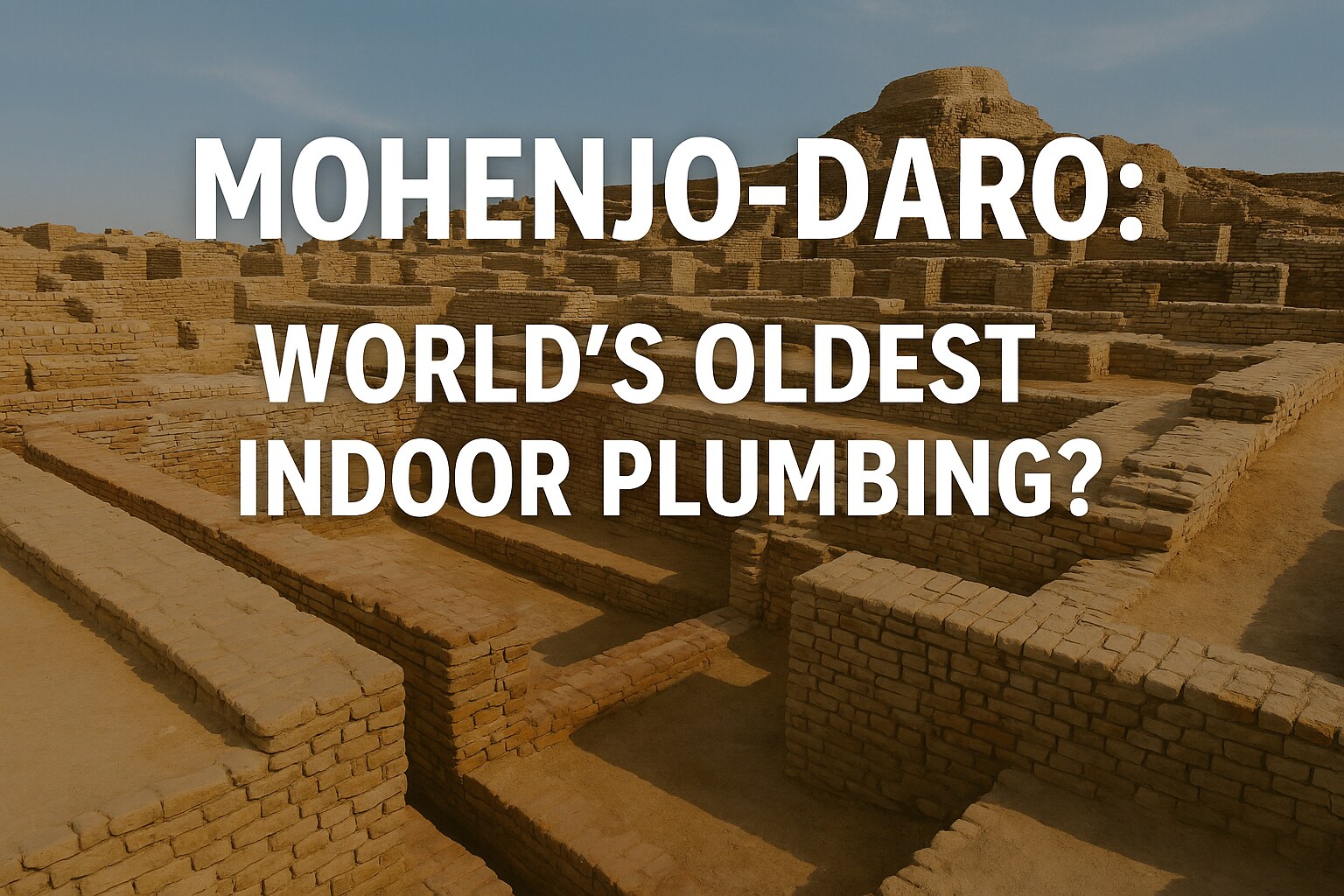
Imagine a bustling city, over 4,500 years ago, where residents enjoyed the luxury of indoor plumbing and flush toilets, a technological marvel that wouldn't become commonplace in many parts of the world until millennia later. This isn't a scene from a futuristic novel, but a reality unearthed in the ancient city of Mohenjo-daro, part of the sophisticated Indus Valley Civilization in what is now Sindh, Pakistan. The sheer scale and ingenuity of their water management and sanitation systems continue to astound historians, archaeologists, and engineers, challenging our perceptions of early human civilization.
While ancient Rome often receives accolades for its aqueducts and public baths, the inhabitants of Mohenjo-daro were designing and implementing complex domestic sanitation solutions long before the Roman Empire even began to rise. Their achievements speak volumes about their advanced understanding of urban planning, public health, and civil engineering, placing them in a league of their own in the ancient world.
A Masterclass in Ancient Urban Planning
Mohenjo-daro, along with Harappa, was one of the largest and most developed cities of the Indus Valley Civilization (c. 2500–1900 BCE). Its meticulous planning is evident in its grid-like street layout, which divided the city into distinct blocks. Streets were broad and straight, typically running north-south and east-west, demonstrating a sophisticated understanding of urban design principles. Buildings, largely constructed of standardized baked bricks, lined these thoroughfares, indicating a high degree of central authority and skilled labor.
Beyond the visible structures, what truly sets Mohenjo-daro apart is its hidden infrastructure. Beneath the streets and within individual homes lay an intricate network of water supply and wastewater disposal systems that rivaled, and in some aspects surpassed, the capabilities of many civilizations centuries, even millennia, later. This wasn't merely a rudimentary system; it was a comprehensive, city-wide network designed to provide clean water and efficiently remove waste, contributing significantly to public health and overall quality of life.
The Genius of Mohenjo-daro's Water Management
Wells: The Lifeline of the City
Water scarcity was a challenge for many ancient civilizations, but Mohenjo-daro had an abundance of water sources. The city was remarkably well-supplied with wells, estimated to be around 700 throughout the urban area. These weren't just simple holes in the ground; many were brick-lined, deep structures that provided a reliable supply of fresh water to both public and private areas. This widespread access to clean water for drinking, bathing, and domestic use was a foundational element of their advanced sanitation.
The wells were strategically placed, often near public spaces or at accessible points within residential blocks, ensuring that every household had relatively easy access to this vital resource. This commitment to widespread water access suggests a society that prioritized the well-being of its citizens, rather than reserving such amenities for an elite few.
The Great Bath and Public Hygiene
Among Mohenjo-daro's most iconic structures is the Great Bath, a large, waterproof tank constructed with finely fitted bricks and sealed with natural tar. While its exact purpose remains debated, it is widely believed to have served a ritualistic bathing function. The Great Bath featured a sophisticated drainage system that allowed for regular emptying and refilling, demonstrating the city's mastery over water containment and disposal on a large scale. This public facility, alongside numerous smaller public baths, highlights a cultural emphasis on cleanliness and communal hygiene.
Advanced Drainage Systems
Perhaps the most astonishing aspect of Mohenjo-daro's infrastructure is its elaborate drainage system. Most major streets were flanked by covered drains, typically constructed of brick and sometimes topped with removable stone slabs for cleaning and maintenance. These drains were carefully sloped to ensure efficient wastewater flow, channeling dirty water away from homes and into larger municipal sewers that eventually emptied outside the city limits.
Key features of their drainage engineering included:
- Covered Drains: Preventing disease vectors and foul odors.
- Gradual Slopes: Ensuring continuous flow without stagnation.
- Inspection Holes: Regularly spaced manholes or access points for cleaning and maintenance, a testament to foresight in infrastructure management.
- Soak Pits: In some areas, wastewater would filter into soak pits, allowing for natural purification before seeping into the ground.
Individual Homes: A Glimpse into Domestic Comfort
What truly sets Mohenjo-daro apart from many contemporary civilizations is the extent of its domestic sanitation. Unlike most ancient cities where communal latrines or basic waste disposal pits were the norm, almost every house in Mohenjo-daro had its own private bathroom and toilet facilities.
Indoor Plumbing and Proto-Flush Toilets
Archaeological excavations have revealed that many homes featured dedicated bathing areas, often with finely paved floors and well-constructed drains that connected to the main street sewers. Adjacent to these bathing areas, or sometimes in separate rooms, were toilet facilities. These weren't exactly modern flush toilets with a cistern, but they were remarkably sophisticated:
- They consisted of a commode-like structure, often made of brick, with a deep chute.
- Water, likely carried from nearby wells, would have been poured down these chutes to wash away waste into the municipal drainage system.
- Some evidence suggests that some toilets were even designed to be flushed by diverting water from household bathing areas.
This system of private, water-flushed latrines connected to a city-wide sewage network was unparalleled in its time. While other ancient cultures like the Minoans on Crete had some indoor plumbing, Mohenjo-daro's system appears to have been more widespread and systematically integrated into the entire urban fabric.
Societal Implications of Advanced Sanitation
The presence of such advanced sanitation systems has profound implications for our understanding of Mohenjo-daro society:
- Public Health: Effective waste removal and access to clean water would have drastically reduced the incidence of waterborne diseases, leading to a healthier population.
- Quality of Life: Indoor plumbing and private toilets represent a significant leap in domestic comfort and convenience, offering a higher standard of living than many of their contemporaries.
- Civic Administration: The construction, maintenance, and regulation of such an extensive system required a highly organized and authoritative civic administration. It suggests a strong central government or a powerful communal organization capable of orchestrating massive public works and ensuring their ongoing functionality.
- Egalitarianism: The widespread availability of these amenities, rather than their restriction to an elite class, hints at a more egalitarian society where basic services were accessible to a broad segment of the population.
A Mystery of History
Despite their astonishing achievements, the Indus Valley Civilization, including Mohenjo-daro, mysteriously declined around 1900 BCE. Reasons remain debated, ranging from climate change and shifting river courses to invasions or internal societal collapse. What remains undisputed is the incredible legacy of innovation they left behind.
The sophisticated urban planning, robust water supply, and unparalleled sanitation systems of Mohenjo-daro stand as a testament to the ingenuity and forward-thinking nature of an ancient people. Their flush toilets and indoor plumbing were not mere luxuries but fundamental components of a well-organized, healthy, and advanced urban society, thousands of years ahead of its time. The ruins of Mohenjo-daro continue to challenge our understanding of history, reminding us that true innovation often predates the narratives we commonly associate with progress.






Discussion
Comments
Approved comments are published after moderation to keep discussion useful and spam-free.
No comments yet. Start the discussion below.