
From individual developer accounts spending $1,000 a month to national-level infrastructure projects, South Korea's AI playbook is unlike anywhere else on Earth.
By Javaid Ahmed Solangi | July 20, 2026
The world’s most intense artificial intelligence experiment is not happening in Silicon Valley. It is unfolding across the tech hubs of Seoul, Pangyo, and Suwon.
In a staggering financial revelation, alternative market data reveals that South Koreans are spending nearly 1 trillion won—roughly $6.8 billion annually—on generative AI subscriptions. Remarkably, this means the country’s workforce is now spending more money every month on AI subscription plans than on streaming services like Netflix.
Even more surprising is where that money is going. While OpenAI’s ChatGPT maintains a massive overall user base, Anthropic’s Claude has officially overtaken ChatGPT in South Korea’s paid enterprise market. Corporate cards now account for over 61% of Claude’s local billing, with individual software engineers routinely paying upwards of $100 to $200 per month for heavy "Claude Max" tiers—frequently buying extra API credits to push their monthly spend past 1 million won ($750 USD).
Why is South Korea burning through billions of dollars on Claude? What specific engineering workflows are justifying these costs? And is there a deeper, strategic play at hand—like using frontier American models to "teach" and clone localized Korean AI systems?
Here is the full breakdown of South Korea’s massive AI spending spree, its engineering workflows, and its long-term strategy for technological survival.
1. The Workflows: Why South Korean Engineers Choose Claude Over ChatGPT
To understand the money, you have to look at the code. South Korea's tech ecosystem is defined by hyper-dense, fast-moving digital conglomerates (Naver, Kakao, Coupang) and hardware giants (Samsung, SK Hynix). For these institutions, an AI model is not a chat partner; it is a mechanical cog in a high-speed production line.
While ChatGPT excels as a broad, conversational consumer assistant, Anthropic built Claude with structural traits that appeal directly to software engineers and enterprise architects:
Massive Codebase Refactoring: Claude’s industry-leading context window allows developers to upload entire, multi-layered codebases—written in complex stacks—and ask the model to refactor legacy infrastructure without breaking dependencies.
Low Hallucination Rates for High-Stakes Operations: Anthropic’s "Constitutional AI" approach yields significantly fewer hallucinated functions or invented software libraries compared to rival models. For developers building financial technology or embedded hardware software, a hallucinated library is an unacceptable security vulnerability.
The "Claude Max" Heavy-User Trap: Developers are utilizing Claude for continuous code generation. Because complex coding tasks rapidly exhaust basic API token limits, developers willingly upgrade to $100–$200 monthly tiers and buy cascading blocks of additional credits just to keep their automated build pipelines running.
[Developer Prompts / Codebase]
       │
       ▼
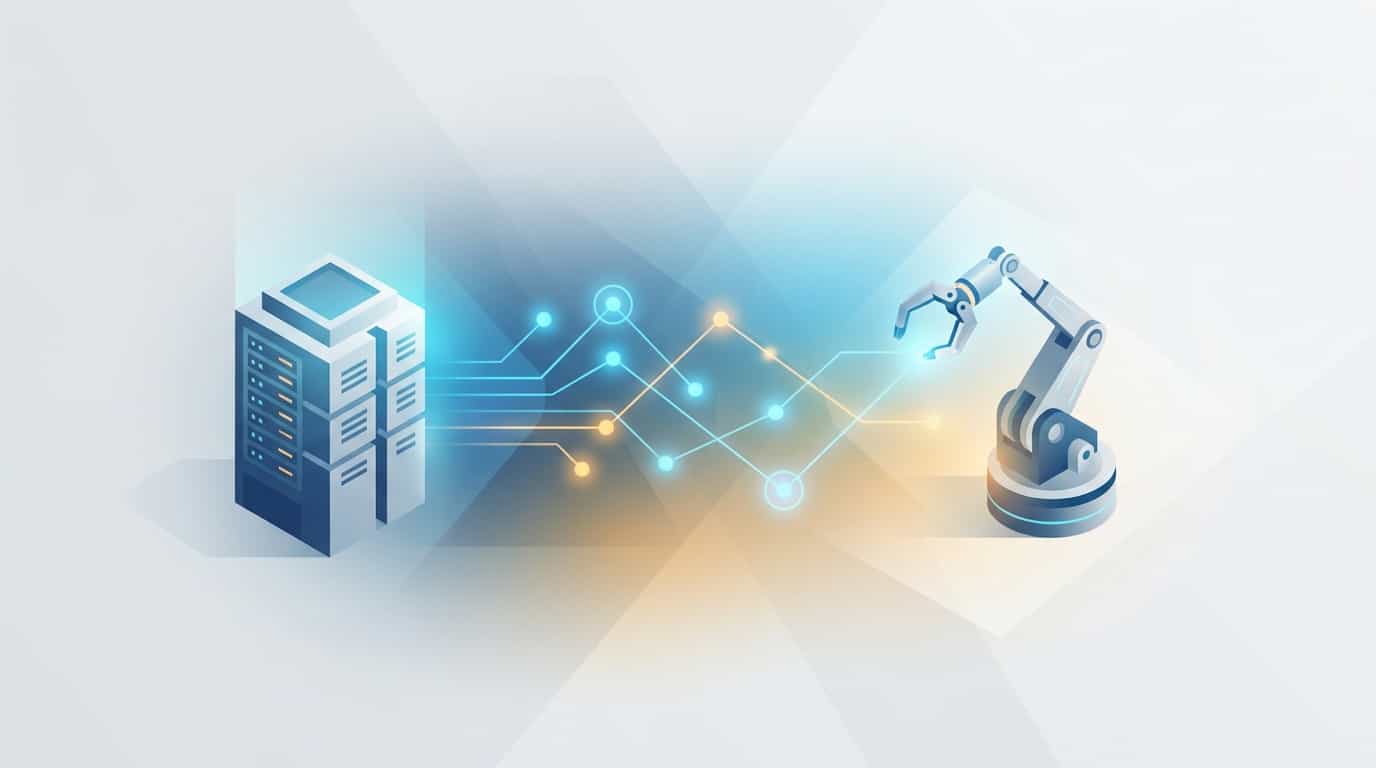
[Claude Engine (Anthropic)] ──► Refactors Code & Generates High-Reasoning Logs
       │
       ▼
[High-Tier API Spend: $200-$1000/mo]
2. The Strategic Play: "Cloning" Models Through Distillation
This brings us to the core question: Is South Korea simply consuming American software, or is it using frontier models to build its own replacements?
The answer lies in a technique known as Model Distillation.
In machine learning, distillation occurs when a smaller, cheaper "student model" is trained on the synthetic outputs, reasoning chains, and structured dataset responses generated by a massive, highly expensive "teacher model" (like Claude 3.5 Sonnet or Opus). By systematically querying a teacher model millions of times, engineers can capture the teacher's advanced logic, reasoning patterns, and problem-solving abilities—essentially compressing a trillion-parameter intelligence into a lightweight, localized model at a fraction of the original training cost.
The Distillation Paradox: Frontier AI Teaches Its Own Competition
By operating publicly and exposing its reasoning processes, a frontier system inadvertently teaches the world how to recreate its capabilities. When Anthropic trained Claude to perform step-by-step reasoning (often called "Chain-of-Thought" prompting), they created an unprecedented educational tool. When a developer asks Claude to explain its logic, the model exposes its internal diagnostic method.
South Korean labs, research institutes, and tech startups are actively taking advantage of this:
Harvesting Chain-of-Thought Data: By prompting Claude to articulate its step-by-step logic across complex technical, scientific, and linguistic tasks, engineers gather millions of high-quality, synthetic reasoning logs.
Linguistic Localization (Korean Fine-Tuning): Western models often struggle with subtle Korean honorifics, localized legal frameworks, and regional slang. Korean developers use Claude to generate massive, perfectly structured bilingual datasets. They then feed these datasets into open-weight models, effectively transferring Claude's reasoning engine into a model that speaks native, culturally accurate Korean.
Building Domain-Specific Alternatives: Companies use frontier outputs to grade and fine-tune internal models for engineering, legal, and financial sectors.
While frontier AI labs strictly forbid using their API outputs to train competing commercial models in their Terms of Service, enforcement is notoriously difficult. By masking queries across distributed enterprise accounts, developers around the world have turned API access into a university where the master AI continuously trains its future replacements.
3. The National Strategy: Escaping the "Dollar Outflow" Trap
South Korea’s massive current spend on American AI models is not viewed by the government as a permanent state of affairs. A financial analysis from Korea highlighted that sending $6.8 billion annually to Big Tech firms in Silicon Valley creates a structural "dollar outflow channel" that depletes the domestic economy.
To break free from this dependency, South Korea has launched a massive, unified counter-offensive.
The "National Survival Strategy" and Mega-Project
South Korea is launching a 1,350 trillion won ($880 billion) plan in corporate investments to build out critical AI infrastructure and cement its global dominance in the semiconductor market. President Lee Jae Myung called the sweeping mega-project a "national survival strategy" for the AI era. Bloomberg's Avril Hong broke down the press conference where President Lee was joined by the CEOs of tech giants Samsung and SK Hynix to outline the multi-year roadmap.
This immense capital will be channeled directly into the country's technological foundations. While exact allocations evolve, the overarching strategy requires:
Massive new semiconductor fabrication plants dedicated to producing the high-bandwidth memory (HBM) and specialized AI chips that power global data centers.
Integrating localized AI models directly into physical manufacturing and industrial automation to maintain Korea's export supremacy.
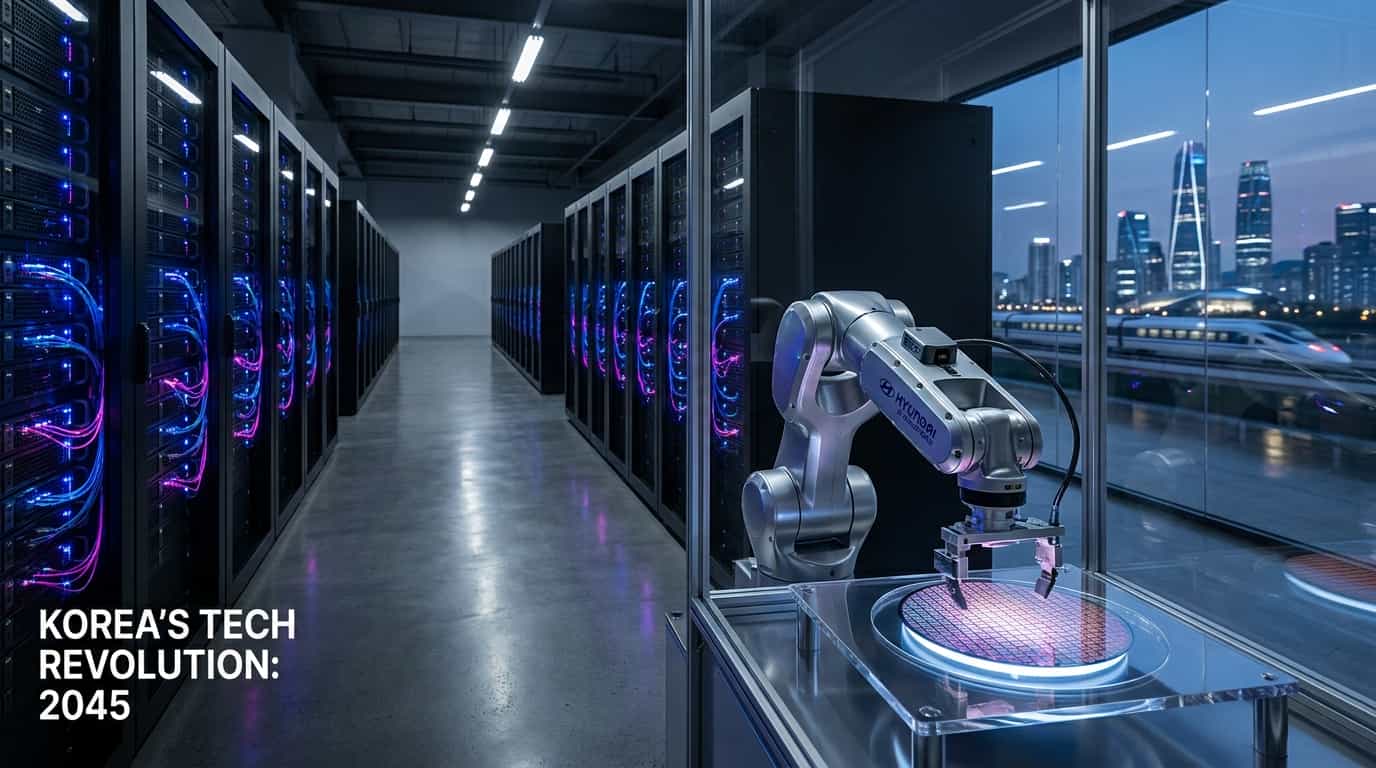
Building massive domestic compute centers to house independent "Sovereign AI" models, ensuring sensitive corporate and national data never leaves Korean soil.
To ensure domestic firms and developers can survive the transition period while local models catch up, the South Korean government continues to heavily subsidize AI adoption, allowing small businesses and venture firms to experiment with advanced AI systems without bearing the full financial burden.
4. The Future: From Importer to AI Sovereign
South Korea’s strategy can be broken down into three distinct historical phases:
| Phase | Timeline | Primary Objective | Key Mechanism |
| Phase 1: Mass Adoption | 2023 – 2025 | Workflow Integration | Heavy individual & enterprise spending on ChatGPT and Claude. |
| Phase 2: Distillation & Extraction | 2025 – 2027 | Capability Capture | Leveraging API queries to generate synthetic datasets and fine-tune local models. |
| Phase 3: Sovereign Independence | 2027 – 2030+ | Economic Autonomy | Deploying domestic LLMs running on native chips in local data centers. |
The Bottom Line
South Korea is currently spending billions on Claude and ChatGPT because its hyper-competitive workforce recognizes that raw intelligence is the ultimate productivity multiplier.
South Korea is currently spending billions on Claude and ChatGPT because its hyper-competitive workforce recognizes that raw intelligence is the ultimate productivity multiplier.



Discussion
Comments
Approved comments are published after moderation to keep discussion useful and spam-free.
No comments yet. Start the discussion below.