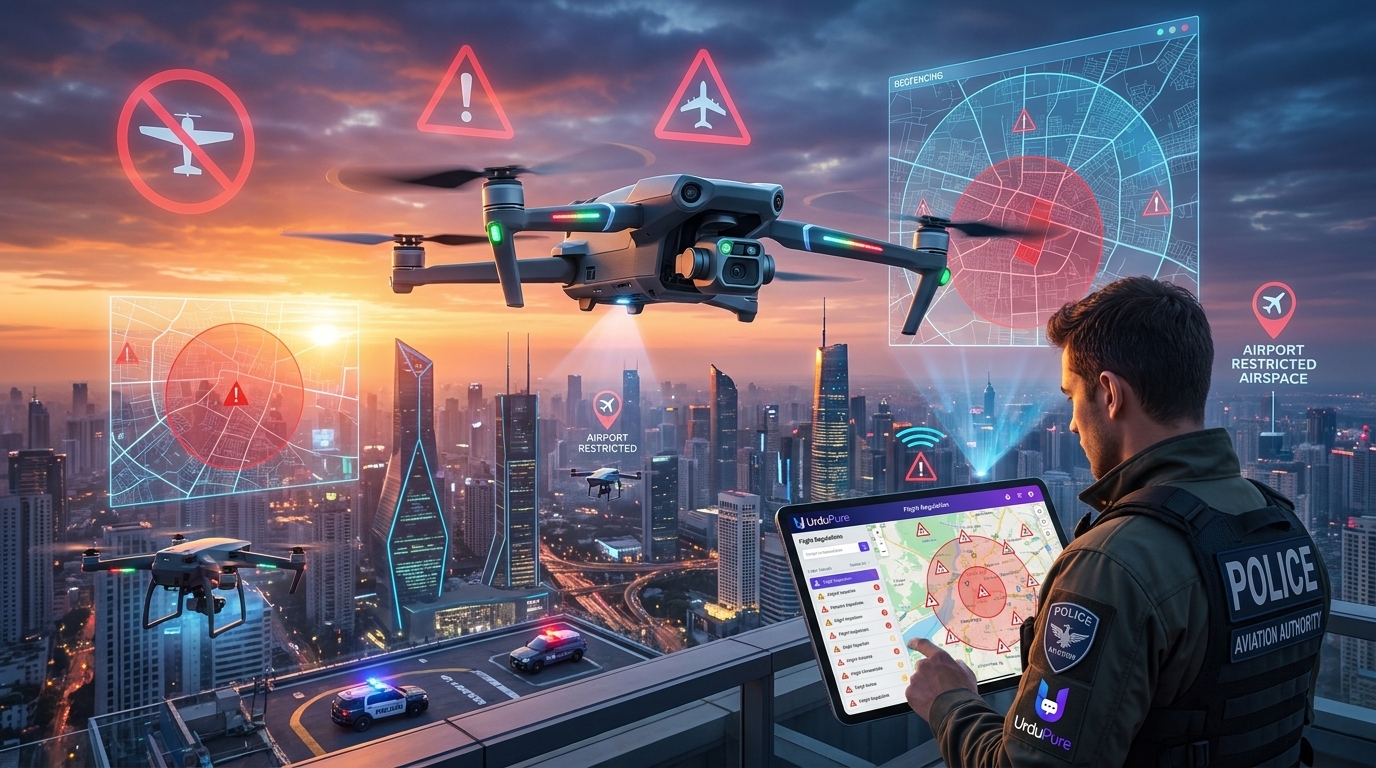
Drone Laws in 2026: Everything You Need to Know Before You Fly
Drone regulations changed significantly in 2025–26. Before you fly — whether for recreation, photography, or commercial work — here's what's legal, what's not, and what could land you a fine or criminal charge.
Why Drone Law Matters More Than Ever
Drone ownership has increased dramatically over the past five years — the FAA estimated over 900,000 registered recreational drones in the US alone by 2025, with millions more small consumer drones operating without registration. This proliferation has created genuine safety, privacy, and security challenges that have driven regulatory tightening across virtually every jurisdiction.
In 2026, drone law is more complex, more enforced, and more consequential for violations than at any previous point. Fines for operating in restricted airspace now reach $25,000+ in the US; criminal charges are possible in both the UK and US for certain violations. Understanding the rules before flying is not optional — it's the legal and ethical obligation of every drone operator.
This guide covers the regulatory frameworks in the US and UK, the most important no-fly zone categories, remote ID requirements, and the practical tools that make staying compliant straightforward.
United States: FAA Drone Regulations in 2026
The Three Operational Categories
The FAA's drone regulatory framework, introduced through Part 107 rulemaking and substantially updated in 2024–2025, organises drone operations into three operational categories that determine what rules apply:
Recreational (Hobby) Flyers
Flying purely for fun — not for any compensation or business purpose — falls under recreational rules. Key requirements in 2026:
Registration: Required for drones weighing 0.55 lbs (250g) or more. Registration costs $5, is valid for three years, and must be renewed. The registration number must be affixed to the drone.
TRUST certification: All recreational drone operators must pass The Recreational UAS Safety Test (TRUST) — a free online safety course and test, completing in approximately 30 minutes. Certificate must be carried when flying.
Remote ID: All drones manufactured after September 2023 must broadcast Remote ID (a digital identification signal) when flying. Drones without built-in Remote ID can use an add-on Remote ID module, or must fly only in FRIA (FAA-Recognized Identification Areas) — designated locations where Remote ID is not required.
Altitude limit: Maximum 400 feet (approximately 120 metres) above ground level in uncontrolled airspace
Visual line of sight: The drone must remain within the operator's unaided visual line of sight at all times
Controlled airspace: Flying in controlled airspace (near airports, in Class B/C/D airspace) requires authorisation through the FAA's LAANC (Low Altitude Authorization and Notification Capability) system or manual waiver
Part 107 Commercial Operators
Any drone operation that involves compensation — photography for a client, real estate aerial shots, agricultural surveys, delivery operations — requires a Part 107 Remote Pilot Certificate. Requirements:
Pass the FAA's Aeronautical Knowledge Test at an approved testing centre ($175 fee)
Be at least 16 years old
Pass a TSA security background check
Certificate renewal every 24 months via an online recurrent training course
Part 107 operators can fly in conditions not permitted for recreational flyers — over people (under certain conditions), at night (with proper lighting), and with approved waivers for BVLOS (Beyond Visual Line of Sight) operations.
Key No-Fly Zones and Restricted Areas
Within 5 nautical miles of airports without authorisation: The most commonly violated rule. LAANC authorisation is required — obtainable instantly through apps like B4UFLY, AirMap, or Aloft for many locations.
National Parks: The National Park Service prohibits drone takeoff, landing, and operation in all National Parks without a special use permit. This is a common and costly mistake for tourists.
Temporary Flight Restrictions (TFRs): Created for Presidential movements, major events (Super Bowl, large concerts), wildfire operations, and other special situations. TFRs can appear with little notice and violations carry severe penalties. Always check for active TFRs before flying.
Washington DC: An extensive SFRA (Special Flight Rules Area) around Washington DC prohibits drone flight across a 15-mile radius without special authorisation. This is one of the most restricted airspaces in the country.
Military installations: Permanent no-fly zones around all military bases, with criminal penalties for violations.
Critical infrastructure: Power plants, water treatment facilities, correctional facilities, and similar infrastructure are restricted.
Remote ID: The Most Important 2024–2025 Update
Remote ID is the drone equivalent of a vehicle licence plate — a digital broadcast that identifies the drone, its location, altitude, and the operator's location, transmitted to nearby devices. The FAA's Remote ID rule, which came into full effect in September 2023, has transformed drone accountability and enforcement.
Law enforcement can now identify drone operators in real time. Flying without Remote ID (on a drone that requires it) is a civil violation with fines up to $25,000. The practical impact: compliance is enforced and the days of anonymous drone flying are effectively over.
United Kingdom: CAA Drone Regulations in 2026
The UK's Operator ID and Flyer ID System
The UK's Civil Aviation Authority operates a two-registration system:
Operator ID: Required for anyone who owns a drone weighing 250g or more, or any drone with a camera regardless of weight. Annual fee: £10.33. The Operator ID label must be displayed on the drone.
Flyer ID: Required for anyone who flies a drone weighing 250g or more, or any camera drone. Obtained by passing an online theory test (free, approximately 20 questions on safety and airspace rules). Valid for 5 years.
The Three Category System (A1, A2, A3)
The UK aligns with the EU's category system for drone operations:
Category A1 (Open): Drones under 250g. Can fly over people (but not crowds), no distance restrictions from uninvolved people. Most consumer drones like DJI Mini 4 Pro fall here when operating under 250g.
Category A2 (Open): Drones 250g–4kg. Must stay at least 30 metres from uninvolved people (reducible to 5m in low-speed mode for C2 class drones). Requires passing an A2 Certificate of Competency theory test (£75 from a CAA-approved provider) plus a practical skills assessment.
Category A3 (Open): Drones 250g–25kg. Must fly at least 150 metres from residential, commercial, industrial, and recreational areas. Most practical for open countryside flying away from people.
UK-Specific Restricted Areas
Flight Restriction Zones around aerodromes: 5km radius around airports and many smaller aerodromes requires specific authorisation. NATS's Drone Assist app shows these zones in real time.
Congestion zones: Cannot fly over or within 50m of a crowd of 1,000+ people
Prisons and correctional facilities: 51m no-fly zone; criminal offence to fly over
Royal palaces, power stations, water treatment works: Restricted by specific legislation
Scotland's outdoor access rights: Scotland's Land Reform Act gives a right of responsible access to land — but this does not extend to drone flight, which remains subject to CAA rules
The Essential Apps for Legal Drone Flying
United States
B4UFLY (FAA): Official FAA app showing airspace classifications, TFRs, and LAANC availability. The primary compliance tool for recreational flyers.
Aloft (formerly Kittyhawk): LAANC-authorised platform for both recreational and commercial operators. Provides instant authorisation for LAANC-enabled airspace. The most used professional drone management app in the US.
AirMap: Comprehensive airspace intelligence, LAANC integration, and fleet management tools for commercial operators.
United Kingdom
NATS Drone Assist: The primary UK drone safety app, developed in partnership with the CAA and NATS. Shows airspace restrictions, flight restriction zones, and points of interest in real time. Free.
DJI Fly: DJI's native app includes built-in geofencing that prevents the drone from flying in restricted areas and alerts to nearby restrictions — a useful safety backstop but not a substitute for independent airspace checking.
Commercial Drone Flying: What's Changed in 2025–2026
The commercial drone sector has seen significant regulatory development in 2025–2026, primarily around Beyond Visual Line of Sight (BVLOS) operations — the capability that enables drone delivery, infrastructure inspection at scale, and agricultural applications:
FAA BVLOS rulemaking: The FAA published proposed rules for BVLOS operations in 2025, with final rules expected in 2026–2027. The framework would enable scalable commercial BVLOS operations through Remote ID, detect-and-avoid technology requirements, and operational approvals.
UK CAA Advanced Operations: The CAA's Advanced and Specific category operations require Operational Authorisation and increasingly support commercial BVLOS operations for operators with appropriate risk assessments and mitigation.
Drone delivery expansion: Wing (Google), Amazon Prime Air, and Zipline have all expanded delivery operations in 2025–2026, operating under specific FAA operational authorisations that demonstrate what scaled commercial drone operations look like.
drone laws 2026, FAA drone rules, UK drone regulations 2026, drone registration guide, remote ID drones, no fly zones drones, Part 107 commercial drone, CAA drone UK, best drone apps 2026, LAANC authorisation guide




Discussion
Comments
Approved comments are published after moderation to keep discussion useful and spam-free.
No comments yet. Start the discussion below.