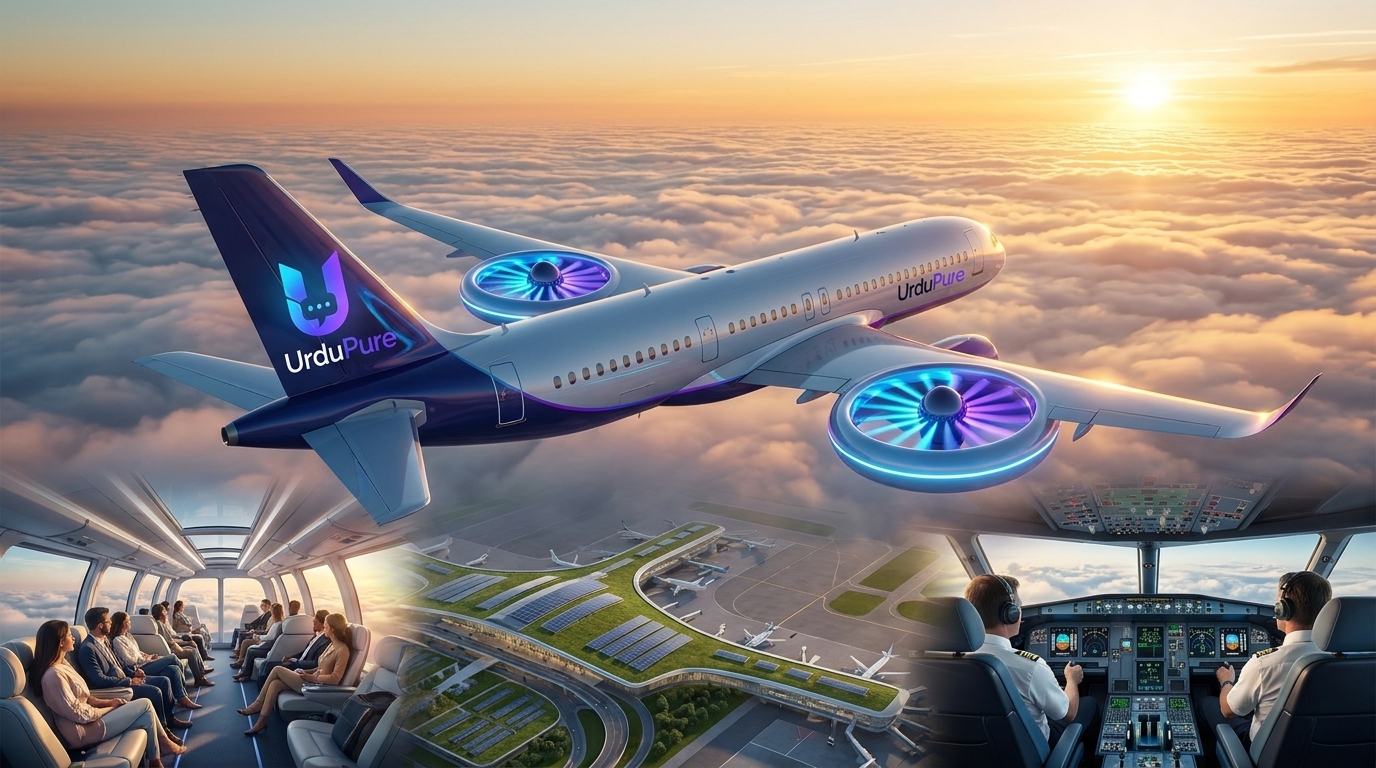
Inside the Rise of Electric Aircraft: Will We Fly Carbon-Free by 2030?
Airlines have pledged net-zero. Electric planes are quietly entering service. But what does the realistic timeline actually look like — and what will flying feel like in 2030 and beyond?
Aviation's Inconvenient Carbon Problem
Aviation accounts for approximately 2.5% of global CO₂ emissions — a figure that sounds modest until you understand the aviation industry's outsized warming effect. When contrail formation, water vapour, and nitrogen oxide emissions at altitude are included, aviation's total climate forcing effect is estimated at 3.5–5% of total anthropogenic warming. And aviation demand is projected to grow — air passenger numbers are expected to double between 2019 and 2040 if no structural changes occur.
Airlines have made ambitious commitments: IATA's net-zero by 2050 pledge covers the industry's major carriers. The UK government's Jet Zero Strategy commits to net-zero domestic aviation by 2040. The European Union's ReFuelEU Aviation regulation mandates increasing sustainable aviation fuel (SAF) blending. But commitments and timelines are not technologies, and the path from pledges to carbon-free flying requires solving genuinely difficult engineering problems.
This is where the story gets interesting — because the engineering progress since 2022 has been faster than most aviation analysts predicted, and the timeline to meaningful electric aviation is compressing.
The Three Technologies Competing to Decarbonise Flight
1. Sustainable Aviation Fuel (SAF)
SAF is currently the aviation industry's primary decarbonisation tool — and it's a bridge technology rather than a final solution. SAF is produced from biomass (agricultural waste, municipal solid waste, cooking oils), synthetic fuel (power-to-liquid using green hydrogen and captured CO₂), or other non-petroleum sources. It is chemically similar to conventional jet fuel, works in existing aircraft engines without modification, and reduces lifecycle CO₂ emissions by up to 80% compared to conventional jet fuel.
The scale problem is significant: SAF currently represents approximately 0.3% of global jet fuel consumption. The supply constraints are both feedstock (the biomass available for fuel production is limited and competes with other uses) and production capacity (SAF production facilities are expensive to build and slow to scale). The EU's mandate requires 6% SAF blending by 2030 and 70% by 2050 — targets that require enormous production expansion.
SAF will be the dominant decarbonisation tool for long-haul aviation well beyond 2030. The physics of energy density make battery-electric or hydrogen-electric long-haul flight extremely unlikely within this timeframe.
2. Electric Aircraft (Battery-Powered)
Battery-electric aviation faces a fundamental physics constraint: energy density. The best aviation battery systems in 2026 store approximately 300–400 Wh/kg. Jet fuel contains approximately 12,000 Wh/kg — a 30-40x advantage. Even accounting for electric motors' superior efficiency (90%+) versus jet engines (40%), the energy density gap means that battery-electric aircraft are currently limited to short ranges and small passenger counts.
Where battery-electric aviation is genuinely viable:
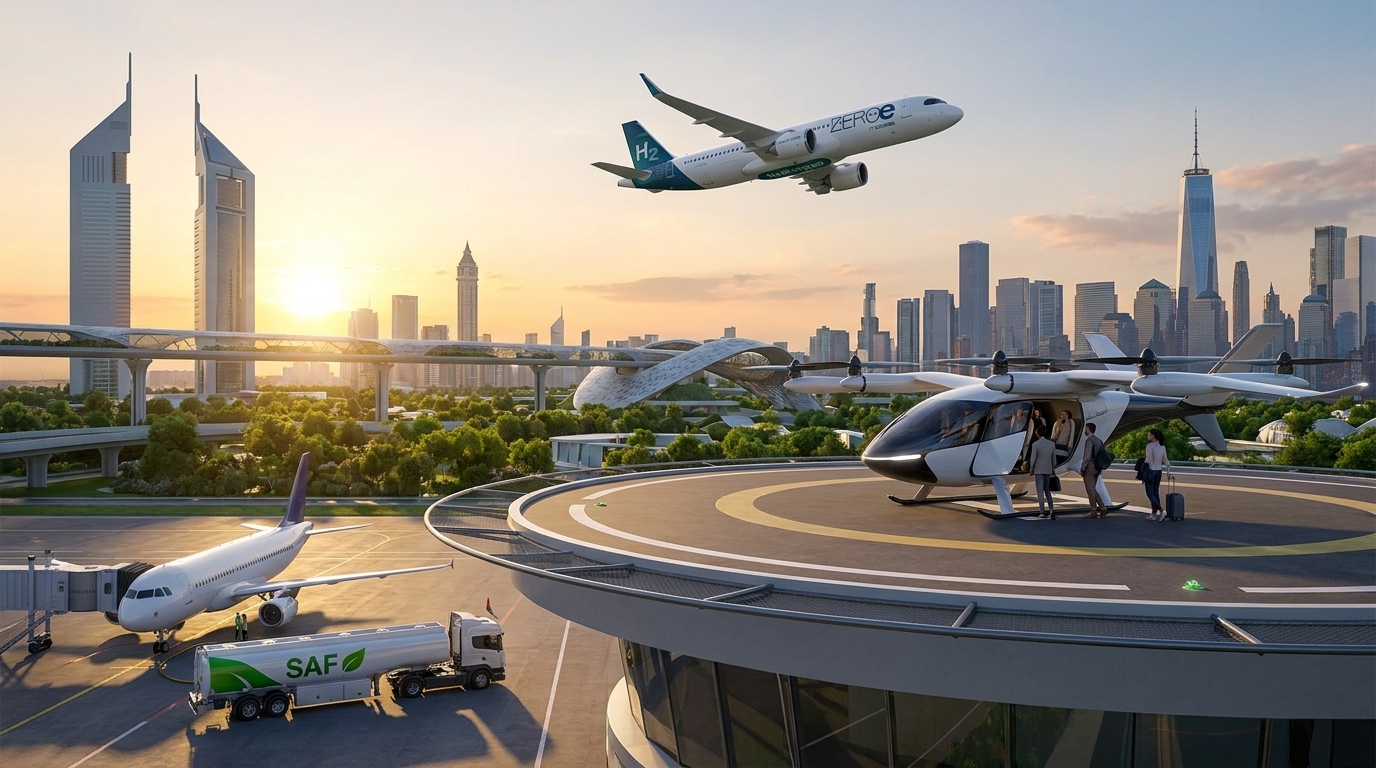
eVTOL (electric Vertical Take-Off and Landing) aircraft: Air taxis for urban mobility. Joby Aviation, Archer, Lilium, and Wisk are all in advanced certification stages with the FAA. Joby received FAA Special Airworthiness Certification in 2024 and is targeting commercial operations in 2026. Range: 50–100 miles. Passenger capacity: 4–5. These are genuinely close to commercial reality.
Short-hop regional flights: Routes of 100–300 miles with 9–19 passengers. Heart Aerospace's ES-19, Eviation Alice, and Pipistrel's Velis Electro (already certified for training) all target this segment. Commercial operations for 9–19 seat electric aircraft are realistic by 2027–2029.
Training and general aviation: Already happening. The Pipistrel Velis Electro is the first FAA/EASA certified electric aircraft and is used for pilot training in multiple countries. Bye Aerospace's eFlyer and Tecnam's P-Volt are both entering certification processes.
3. Hydrogen Aviation
Hydrogen offers energy density advantages over batteries (120 MJ/kg versus approximately 1–1.5 MJ/kg for current batteries) and produces only water when combusted — making it the most attractive long-term solution for commercial aviation decarbonisation.
Airbus's ZEROe programme is the most significant industrial commitment to hydrogen commercial aviation. The three ZEROe concept aircraft — a turbofan, a turboprop, and a blended wing body — target entry into service by 2035, powered by liquid hydrogen stored in cryogenic tanks. This timeline has slipped from the original 2035 target as technical challenges have proven more complex than initially anticipated, but Airbus maintains the programme is on track for 2035–2040.
The infrastructure challenge for hydrogen aviation is significant and independent of the aircraft technology: liquid hydrogen requires specialised handling, storage at -253°C, and fuelling infrastructure that doesn't exist at commercial airports. Building this infrastructure globally is a trillion-dollar challenge that extends the realistic timeline for hydrogen commercial aviation well beyond 2035 for anything other than initial demonstration operations.
What's Actually Flying Electric Right Now
eVTOL Progress in 2026
The eVTOL sector has reached a genuine inflection point in 2026. Joby Aviation completed its first commercial passenger demonstration flights in early 2026 and has announced launch operations in Dubai and Los Angeles. Archer Aviation's Midnight aircraft has completed over 400 test flights and received conditional FAA type certification. Wisk (backed by Boeing and Google) is pursuing a fully autonomous eVTOL that eliminates the pilot — arguably the most transformative long-term vision in the sector.
These aircraft are not replacing commercial aviation — they are creating a new category of urban air mobility, serving routes of 10–50 miles that are currently served by ground transport or short helicopter flights. The economics remain to be proven at scale, but the technology is unambiguously operational.
Regional Electric Certification Progress
Heart Aerospace's ES-19 — a 19-seat all-electric regional aircraft targeting routes up to 250 miles — is in advanced development with Air Canada and SAS committed as launch customers. Certification target: 2028. Eviation's Alice completed its first flight in 2022 and has accumulated significant test flight hours through 2025–2026; the certification pathway is being refined following performance data from the test programme.
Will We Fly Carbon-Free by 2030?
The honest answer requires separating the different elements of the question.
Short-hop electric flights (under 100 miles): Yes, in limited commercial service by 2028–2030. eVTOL urban air mobility and short-range 9–19 seat electric aircraft will be commercially operating before 2030 in select markets.
Regional electric flights (100–500 miles): Possibly, in initial commercial service from 2028–2032. Battery energy density improvements and the entry into service of the Heart Aerospace and Eviation aircraft would make this viable for the shortest regional routes.
Short-haul commercial aviation (500–1,500 miles, narrowbody aircraft like A320/B737): No realistic prospect by 2030. Battery technology would need to advance approximately 3–5x current energy density to make narrowbody electric flight practical. SAF blending and incremental efficiency improvements are the dominant decarbonisation tools for this segment through 2035.
Long-haul commercial aviation (1,500+ miles): No realistic carbon-free solution before 2040 at the earliest. High-blend SAF is the only technically viable decarbonisation pathway for widebody long-haul aviation within any plausible near-term timeframe.
The trajectory is encouraging. The progress since 2022 — eVTOL certification, the first fully certified electric training aircraft, significant battery energy density improvements, and hydrogen aircraft programme advancement — is faster than most 2019 forecasts predicted. The challenge is the enormous scale of commercial aviation and the gap between certification of individual aircraft types and the replacement of an existing global fleet of 25,000+ commercial aircraft.
What Flying Will Look Like in 2030
A realistic picture of commercial aviation in 2030:
Urban air mobility (eVTOL) commercially operating in 5–15 major global cities for selected routes
Small electric regional aircraft (9–19 seats) commercially operating on short routes in Europe, North America, and Australia
SAF blending at 5–10% across most commercial aviation, reducing lifecycle CO₂ by 4–8% versus 2020
Hydrogen aircraft demonstration flights, but no commercial scheduled service
Conventional long-haul aviation essentially unchanged technically, offset by SAF blending and carbon credits
Carbon pricing increasingly incorporated into ticket pricing, with premium "lower-carbon" options available
Carbon-free flying by 2030 is not happening. Meaningfully lower-carbon flying, beginning to happen at scale, is genuinely achievable — and the trajectory is one of accelerating rather than stalling progress.
electric aircraft 2026, sustainable aviation future, carbon free flying timeline, eVTOL commercial flights, Joby Aviation 2026, Airbus ZEROe hydrogen, sustainable aviation fuel SAF, electric planes commercial, aviation net zero 2050, Heart Aerospace ES-19



Discussion
Comments
Approved comments are published after moderation to keep discussion useful and spam-free.
No comments yet. Start the discussion below.