How to Lower Chronic Inflammation Naturally: The Protocol That Actually Has Clinical Evidence Behind It
CRP above 3 mg/L doubles your cardiovascular risk. Curcumin beat ibuprofen in a 367-patient RCT. Omega-3 has 60+ clinical trials. Nature exposure lowered three inflammatory markers in 1,244 adults. Here's the evidence-based anti-inflammation protocol — diet, supplements, sleep, movement, and the tests that confirm it's working.
The Inflammation Nobody Can See — and the Tests That Find It
Chronic inflammation does not announce itself.
It does not produce the visible redness, heat, and swelling of an acute inflammatory response — the kind you see around a cut or a sprained ankle.
It operates silently, at a cellular level, producing a sustained low-grade immune activation that damages tissue slowly, across years and decades, contributing to the pathogenesis of conditions ranging from cardiovascular disease and type 2 diabetes to Alzheimer's disease and several cancers.
When inflammation becomes chronic, it contributes to the pathogenesis of several long-term diseases, including autoimmune conditions, cardiovascular and neurodegenerative disorders, and various cancers.
The specific mechanism: chronic inflammation activates the NF-κB — nuclear factor kappa-light-chain-enhancer of activated B cells — pathway, the master regulator of inflammatory gene expression in human cells.
When NF-κB is chronically activated, it continuously signals the production of pro-inflammatory cytokines — IL-6, TNF-α, IL-1β — that damage blood vessels, impair insulin signalling, disrupt neurological function, and accelerate cellular ageing.
This is the pathway that every effective anti-inflammatory intervention — dietary, supplemental, or lifestyle — targets through different mechanisms.
Before any protocol, you need to know whether you actually have elevated chronic inflammation — and if so, by how much.
This requires blood tests.
The Tests: How to Measure Your Inflammation Level
High-Sensitivity C-Reactive Protein — hs-CRP
CRP is the single most useful lab marker for chronic systemic inflammation in primary care.
Pearson and colleagues showed in 2003 that hs-CRP above 3 mg/L doubles the risk of major adverse cardiovascular events independent of cholesterol.
The hs-CRP test measures C-reactive protein — a protein produced by the liver in response to inflammatory signals — at the high-sensitivity level needed to detect the low concentrations associated with chronic low-grade inflammation rather than acute infection.
Interpreting your hs-CRP result:
Below 1 mg/L: Low cardiovascular risk; inflammation likely not a primary concern
1–3 mg/L: Average to elevated risk; lifestyle intervention appropriate
Above 3 mg/L: High risk; doubled cardiovascular event risk independent of cholesterol; requires active intervention and physician involvement
Above 10 mg/L: Likely indicates acute infection or acute inflammatory condition rather than chronic low-grade inflammation — retest after resolving any acute illness
Additional Inflammatory Markers Worth Requesting
Interleukin-6 — IL-6: A key pro-inflammatory cytokine whose elevation predicts progression of multiple inflammatory conditions. Referenced in the Brain, Behavior, and Immunity 2024 study that found nature exposure reduced IL-6 levels in 1,244 US adults.
Fibrinogen: An inflammatory marker and clotting protein whose elevation indicates both inflammation and thrombosis risk. Also reduced by nature exposure in the same study.
HbA1c: Glycated haemoglobin — a measure of blood sugar control over the preceding 3 months. Chronically elevated blood sugar and chronic inflammation are bidirectionally related; HbA1c provides the metabolic context for inflammation measurements.
Homocysteine: An amino acid whose elevation is associated with cardiovascular inflammation and neurological inflammation; modified by B vitamin status.
ESR — Erythrocyte Sedimentation Rate: A less specific but useful secondary marker; elevated in autoimmune conditions and chronic inflammatory states.
In the UK, hs-CRP is available through NHS GP referral or through private services such as Medichecks and Thriva at approximately £29–£49.
In the US, it is available through your primary care physician or through direct-to-consumer testing services.
Test before starting the protocol, then retest at 12 weeks to assess the intervention's effect.
The Anti-Inflammation Diet: What Has Clinical Evidence
The Mediterranean Pattern — The Most Validated Dietary Approach
The Mediterranean dietary pattern — abundant vegetables, fruits, legumes, whole grains, olive oil, fish, and moderate red wine; limited red meat, processed foods, and refined carbohydrates — has the strongest and most consistent evidence base of any dietary pattern for reducing inflammatory markers in human studies.
Multiple systematic reviews across tens of thousands of participants demonstrate significant reductions in hs-CRP, IL-6, and other inflammatory markers with Mediterranean-aligned eating.
The mechanism involves multiple parallel anti-inflammatory pathways:
Olive oil's oleocanthal, which inhibits COX-1 and COX-2 enzymes similarly to ibuprofen.
The omega-3 fatty acids in fatty fish, which resolve inflammation through specialised pro-resolving mediators.
The polyphenols in vegetables and fruits, which inhibit NF-κB activation.
And the fibre from legumes and whole grains, which feeds anti-inflammatory gut bacteria.
The 10 Foods With the Strongest Anti-Inflammatory Evidence
In 2026 the research is clearer than ever:
What we eat can raise or lower inflammatory signals in the body.
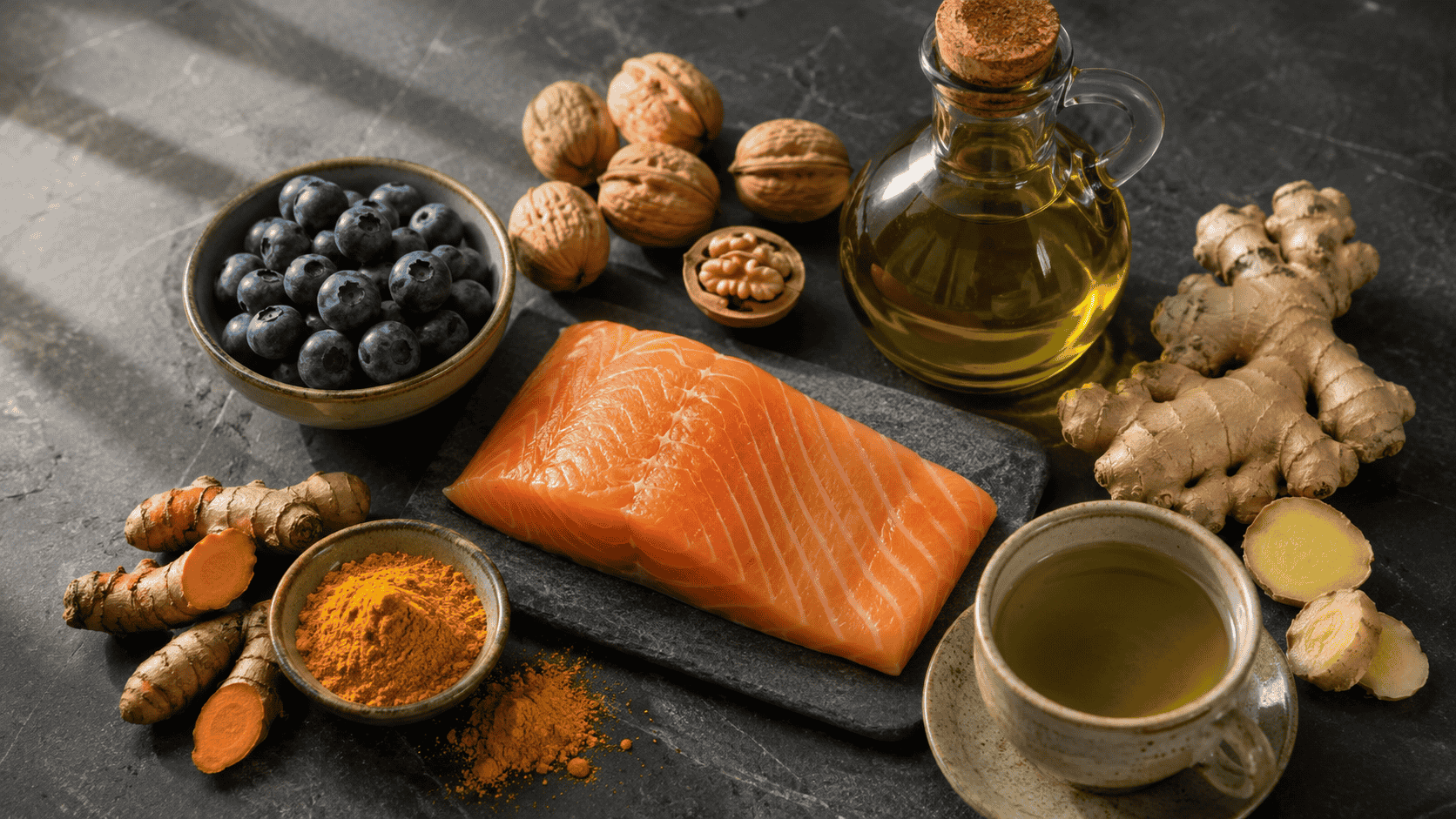
The strongest evidence supports nutrient-dense choices, omega-3-rich fish, colourful berries, leafy greens, nuts and seeds, herbs, and fermented foods.
1. Fatty Fish
Salmon, mackerel, sardines, and herring contain the omega-3 fatty acids EPA and DHA, which directly produce specialised pro-resolving mediators — molecules that actively resolve inflammation rather than merely suppressing it.
Two to three servings per week produces measurable hs-CRP reduction within 8–12 weeks in clinical trials.
This is the most evidence-supported single food change for inflammation reduction.
2. Extra Virgin Olive Oil
Extra virgin olive oil contains oleocanthal, which inhibits the same inflammatory enzyme pathways as ibuprofen.
The difference from pharmaceutical NSAIDs:
Oleocanthal at typical dietary doses produces no GI or cardiovascular side effects.
Using EVOO as your primary cooking and finishing oil is the simplest single dietary change with the broadest anti-inflammatory mechanism.
3. Blueberries and Other Dark Berries
Anthocyanins — the pigments that give berries their deep colour — inhibit NF-κB activation and reduce IL-6 and TNF-α production in multiple human studies.
One cup of blueberries daily for six weeks produced significant reductions in inflammatory markers in a 2023 clinical trial.
Fresh or frozen berries are both suitable because freezing does not degrade anthocyanins.
4. Leafy Greens
Spinach, kale, chard, and rocket contain vitamin K1, folate, and multiple anti-inflammatory polyphenols.
Their alkaline-producing effect in the body also counters the acid load of Western dietary patterns that contributes to metabolic inflammation.
Aim for at least one large serving daily.
5. Turmeric and Curcumin
The active compound in turmeric has 40+ randomised controlled trials demonstrating anti-inflammatory effects across multiple conditions.
The critical bioavailability issue — curcumin is poorly absorbed from food — is addressed in the supplements section below.
As a food, use turmeric generously in cooking with black pepper.
Piperine in black pepper increases curcumin absorption by 2,000%.
6. Walnuts
Walnuts are the only nut with significant plant-based omega-3 — ALA — plus ellagitannins that are converted to urolithins by gut bacteria.
These compounds have direct NF-κB inhibiting activity.
A small handful — 30 grams — daily is the studied dose in clinical trials showing inflammatory marker reduction.
7. Green Tea
EGCG — epigallocatechin gallate — is green tea's primary catechin.
It inhibits multiple inflammatory pathways and has demonstrated hs-CRP reduction in 12-week clinical trials.
Three to four cups per day is the dose associated with significant anti-inflammatory effects.
Green tea extract supplements are an alternative if the volume is impractical.
8. Fermented Foods
Kefir, yogurt, kimchi, sauerkraut, and miso may modify the gut microbiome toward anti-inflammatory bacterial species.
A landmark 2021 Stanford clinical trial found that a high-fermented-food diet — six servings per day — over 10 weeks decreased levels of 19 inflammatory proteins, with effects persisting after the intervention ended.
The gut microbiome is one of the primary regulators of systemic inflammation.
9. Ginger
Ginger contains gingerols and shogaols that inhibit NF-κB and COX-2.
A 2022 systematic review of 16 randomised controlled trials found significant reductions in CRP, TNF-α, and IL-6 with ginger supplementation.
Fresh ginger in cooking, ginger tea, or concentrated ginger supplements — 250–500 mg extract — are equivalent delivery methods.
10. Dark Chocolate
Flavanols in high-percentage dark chocolate have demonstrated hs-CRP reduction in multiple clinical trials.
The operative word is high-percentage.
Milk chocolate's lower cacao content and higher sugar content make it inflammatory rather than anti-inflammatory.
Twenty to 30 grams of 85%+ dark chocolate daily is the clinically studied dose.
The Foods to Eliminate or Drastically Reduce
The dietary changes with the strongest evidence for reducing inflammation are not just additions.
They are equally the removal of pro-inflammatory dietary patterns.
Ultra-processed foods: Foods containing emulsifiers, artificial sweeteners, and refined seed oils consistently elevate inflammatory markers in both observational and interventional research. The mechanism involves disruption of gut barrier integrity, allowing bacterial products to enter the bloodstream and trigger systemic inflammatory responses.
Refined carbohydrates and added sugar: These spike blood glucose, activate the RAGE pathway, and drive insulin resistance — each of which feeds into the chronic inflammatory cycle. This includes sugar-sweetened beverages, white bread, white rice, and most breakfast cereals.
Omega-6 dominant vegetable oils: Corn oil, soybean oil, sunflower oil, and similar oils have omega-6 to omega-3 ratios of 20:1 to 50:1 — ratios that drive inflammatory arachidonic acid production. Replace with olive oil for cooking and avocado oil for high-heat cooking.
Trans fats: Partially hydrogenated oils, found in some margarines, commercial baked goods, and fried foods, are the most directly pro-inflammatory dietary component with documented hs-CRP elevation even at small doses.
The 7 Supplements With Clinical Evidence — Ranked by Trial Strength
Across systematic reviews and randomised trials published in the last decade, seven supplements have repeatedly shown anti-inflammatory benefit in human studies.
The two strongest by trial count are curcumin, with 40+ randomised controlled trials, and omega-3, with 60+ randomised controlled trials.
The remaining five have meaningful but smaller evidence bases.
1. Omega-3 Fatty Acids — EPA and DHA
Evidence level: 60+ randomised controlled trials
Effective dose: 2–4 grams of combined EPA+DHA daily, not total fish oil
Form: Fish oil capsules, algae-based omega-3, or concentrated triglyceride-form fish oil
Timeline: Significant hs-CRP reduction documented at 8–12 weeks
The mechanism:
EPA and DHA are directly converted into specialised pro-resolving mediators — resolvins, protectins, and maresins — that actively signal the resolution of inflammation, not merely its suppression.
This resolution mechanism is distinct from everything else on this list and is why omega-3 has the strongest and most consistent evidence base for systemic inflammation reduction.
Important note on dosing: Most standard fish oil capsules contain 300–400 mg of EPA+DHA per capsule.
Reaching two to four grams of combined EPA+DHA requires five to 13 standard capsules daily, which is impractical.
High-concentration fish oil products containing 1,000 mg or more EPA+DHA per capsule are the practical choice for therapeutic dosing.
2. Curcumin With Piperine or Lipid Delivery
Evidence level: 40+ randomised controlled trials
Effective dose: 500–1,500 mg of curcumin daily with enhanced-bioavailability formulation
Form: Must include piperine, phospholipid complex, or nanoparticle formulation
Timeline: 4–8 weeks for joint pain; 8–12 weeks for systemic inflammatory marker reduction
A 2014 Thai randomised controlled trial directly compared curcumin 1,500 mg per day against ibuprofen 1,200 mg per day for knee osteoarthritis in 367 patients.
Both groups showed similar pain reduction at four weeks, and the curcumin group had fewer gastrointestinal side effects.
This head-to-head comparison is the most important single piece of evidence in the curcumin literature.
It does not establish curcumin as equal to ibuprofen for all purposes.
It demonstrates clinically meaningful efficacy at inflammatory doses with a significantly better safety profile for chronic use.
Long-term treatment of inflammatory disorders with NSAIDs has the potential for serious side effects such as increased risk of gastrointestinal and cardiovascular disease, increased susceptibility to fracture, opportunistic infections, and peptic ulcers.
Curcumin at therapeutic doses does not carry these risks at typical supplementation periods.
NSAID wins: Acute injury, fever, severe headache, and short-term pain under seven days.
Curcumin wins: Daily low-grade inflammation, joint osteoarthritis management, GI sensitivity, and blood-pressure concerns.
Both, sometimes: Acute flares of osteoarthritis where curcumin runs in the background and ibuprofen handles flare days.
3. Magnesium
Evidence level: Multiple systematic reviews and meta-analyses
Effective dose: 300–400 mg elemental magnesium daily
Form: Magnesium glycinate or magnesium malate; avoid magnesium oxide
Timeline: 8–12 weeks
Magnesium deficiency — estimated to affect 50–60% of Western adults — is independently associated with elevated CRP and inflammatory cytokine levels.
Magnesium is required for the function of more than 300 enzymatic reactions, including those that regulate NF-κB activation.
Deficient magnesium status effectively makes the NF-κB inflammatory pathway hyperactivatable.
Multiple meta-analyses demonstrate significant hs-CRP reduction with magnesium supplementation in deficient individuals.
4. Vitamin D3 — When Deficient
Vitamin D deficiency is independently associated with elevated inflammatory markers.
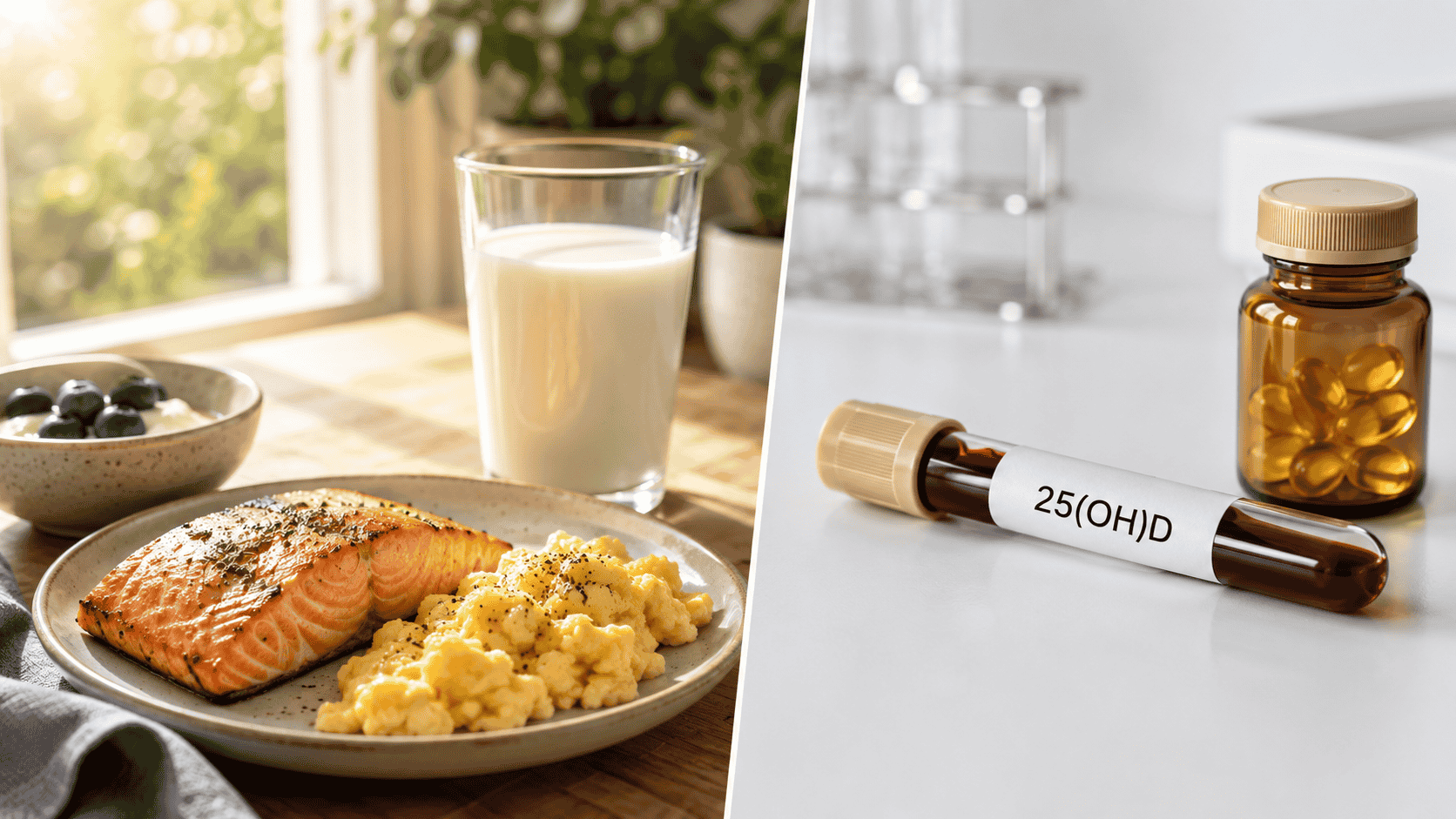
Correcting deficiency with vitamin D3 supplementation — 2,000–4,000 IU daily for insufficiency, or higher under physician supervision for severe deficiency — produces measurable reductions in inflammatory markers alongside its bone-health benefits.
The immune-modulatory effects of vitamin D are the mechanism.
Vitamin D receptors on immune cells regulate the inflammatory cytokine production that drives chronic inflammation.
5. Resveratrol
Evidence level: 20+ clinical trials
Effective dose: 250–500 mg daily
Form: Trans-resveratrol, typically from Japanese knotweed extract
Timeline: 8–12 weeks
Sirtuin-1 pathway activation is one of the key mechanisms by which natural compounds modulate inflammation.
Resveratrol activates Sirtuin-1, which suppresses NF-κB activity and reduces pro-inflammatory cytokine production.
The clinical evidence base is smaller than omega-3 and curcumin but consistent across cardiovascular, metabolic, and joint inflammation outcomes.
6. Boswellia
Evidence level: 15+ clinical trials in joint inflammation
Effective dose: 300–500 mg of standardised extract two to three times daily
Form: Standardised to 65% boswellic acids
Timeline: 4–8 weeks for joint symptoms
Boswellia inhibits 5-lipoxygenase — the enzyme that converts arachidonic acid into leukotrienes, a class of inflammatory mediators particularly implicated in asthma, inflammatory bowel disease, and joint inflammation.
The 5-LOX inhibition mechanism is different from the COX inhibition of NSAIDs.
This means Boswellia and NSAIDs have complementary rather than redundant mechanisms and can be used together without duplication.
7. Quercetin
Evidence level: 15+ clinical trials
Effective dose: 500–1,000 mg daily
Form: Quercetin dihydrate or phytosome form
Timeline: Eight weeks
Quercetin stabilises mast cells — immune cells that release histamine and other inflammatory mediators in response to triggers — and inhibits the production of several pro-inflammatory cytokines including IL-6 and TNF-α.
It may be particularly relevant for people with allergic inflammation components such as hay fever, food sensitivities, and skin conditions alongside systemic inflammation.
The Lifestyle Interventions With the Strongest Evidence
Sleep: The Most Powerful Inflammation Switch
Chronic short sleep — consistently below seven hours — produces measurable elevations in hs-CRP, IL-6, and TNF-α that are not compensated for by dietary or supplemental interventions.
The mechanism:
During sleep, the brain's glymphatic system clears inflammatory metabolites.
Immune cells undergo anti-inflammatory programming.
And cortisol rhythms that regulate immune function reset.
A person supplementing omega-3 and curcumin while sleeping five to six hours per night will have significantly higher inflammatory markers than a person sleeping seven to eight hours with no supplementation.
Sleep quality matters as much as duration.
Sleep apnoea — where breathing interruptions cause repeated micro-arousals and oxygen desaturation — drives nocturnal hypoxia-triggered inflammation that is not addressed by extending time in bed.
If you snore, gasp, or wake frequently, pursuing apnoea evaluation is the most important inflammation-reduction step you can take.
Exercise: The Anti-Inflammatory Dose
Exercise is anti-inflammatory at moderate doses and pro-inflammatory at extreme doses.
This is an important distinction that most exercise-and-inflammation content misses.
The anti-inflammatory dose includes:
150–300 minutes per week of moderate-intensity aerobic exercise: Walking, cycling, or swimming at a pace where conversation is possible consistently reduces hs-CRP and IL-6 in clinical trials across multiple populations and age groups.
Two sessions per week of resistance training: Muscle tissue releases anti-inflammatory myokines, particularly IL-6 and IL-10 in the post-exercise state, that have systemic effects beyond the exercised muscle.
Avoid chronic ultra-endurance without adequate recovery: Marathon training without sufficient recovery produces elevated inflammatory markers rather than reduced ones. The dose-response is not linear.
Nature Exposure: The Underestimated Intervention
A study in a 2024 issue of the journal Brain, Behavior, and Immunity found that spending more frequent, pleasant time in nature was associated with lower levels of three different inflammatory markers — interleukin-6, C-reactive protein, and fibrinogen — among 1,244 US adults.
“The simplest way to think about this is that regular, enjoyable contact with the natural world gives the body more opportunities to downshift from a chronically revved-up stress state,” explains study co-author Anthony Ong, a professor of psychology at Cornell University.
Positive emotions tend to reduce rumination and support healthier coping, which has been linked to lower inflammatory activity.
The practical implication:
A 20-minute walk in a park or green space — not exercise-focused, simply pleasant — produces measurable reductions in three key inflammatory markers.
This is not alternative medicine.
It is a specific, quantified, peer-reviewed finding in 1,244 people.
The intervention costs nothing, requires no equipment, and produces effects across all three of the most clinically relevant inflammatory markers simultaneously.
Stress Reduction: The Cytokine Connection
Psychological stress is now recognised as a major trigger of inflammation.
The mechanism:
Cortisol, released during psychological stress, initially suppresses inflammation.
But chronic stress produces cortisol resistance in immune cells, which then become unable to respond to cortisol's anti-inflammatory signals and begin producing pro-inflammatory cytokines uncontrolled.
This is the chronically revved-up stress state described by Cornell’s Anthony Ong.
It explains why stress management is not a soft lifestyle recommendation but a specific biological intervention in the inflammation cascade.
Evidence-based stress-reduction interventions with documented inflammatory-marker reductions include:
Mindfulness-based stress reduction — an eight-week programme with documented hs-CRP reduction
Progressive muscle relaxation — daily 20-minute practice with documented cortisol normalisation
Social connection — the Harvard Adult Development Study finding that relationship quality predicts inflammatory status
Nature exposure — the Cornell and Brain, Behavior, and Immunity finding above
Flossing: The Inflammation Signal Nobody Considers
New research is shedding light on surprising ways to reduce chronic inflammation — including suggestions as simple as flossing your teeth.
Periodontal disease is one of the most consistent drivers of elevated systemic hs-CRP.
The chronic bacterial infection in gum tissue drives immune activation that spills into systemic circulation.
Multiple studies demonstrate that treating periodontal disease reduces hs-CRP by measurable amounts.
Flossing daily, combined with regular dental cleaning, addresses a source of chronic inflammatory load that most people do not consider alongside their omega-3 supplements.
The 12-Week Protocol: How to Implement This
Weeks 1–2: Baseline and Removal
Test hs-CRP and request IL-6, fibrinogen, and HbA1c if possible
Eliminate ultra-processed foods, refined seed oils, added sugar, and trans fats
Begin omega-3 supplementation at two grams EPA+DHA daily
Fix controllable sleep issues through a consistent wake time, no screens one hour before bed, and a cool, dark room
Weeks 3–4: Add
Add curcumin with piperine — 500–1,000 mg daily with the largest meal
Add magnesium glycinate — 300 mg at bedtime
Begin 150 minutes per week of moderate aerobic exercise if not already active
Schedule one nature-exposure activity per week
Book a dental cleaning if overdue
Weeks 5–8: Dietary Shift
Move toward a Mediterranean eating pattern: fatty fish three times per week, olive oil as the primary fat, daily vegetables and fruit, and legumes four or more times per week
Add a daily fermented food such as kefir, yogurt, kimchi, or sauerkraut
Add walnuts — 30 grams daily — and blueberries — one cup, fresh or frozen
Consider adding Boswellia if joint inflammation is a primary concern
Weeks 9–12: Assessment and Adjustment
Retest hs-CRP and compare it with baseline — expect 15–35% reduction if the protocol has been consistent
Identify which elements of the protocol you have successfully maintained and which have been difficult
Adjust the supplement stack based on test results
If hs-CRP remains above 3 mg/L despite consistent implementation, discuss physician-supervised evaluation for underlying inflammatory drivers such as sleep apnoea, periodontal disease, autoimmune conditions, or metabolic syndrome
When Natural Approaches Are Not Enough
This protocol is appropriate for lifestyle-driven chronic low-grade inflammation in otherwise healthy adults.
It is not a replacement for medical management in the following situations:
Autoimmune conditions such as rheumatoid arthritis, lupus, inflammatory bowel disease, and psoriasis
Persistent hs-CRP above 10 mg/L
Symptoms of acute inflammatory conditions such as joint swelling, skin rashes, or severe fatigue with fever
People taking blood thinners, immunosuppressants, or chemotherapy
Omega-3, curcumin, and several other supplements can interact with medications and may require clinical supervision.
Sources
Upgraded Health — 10 Foods That Naturally Reduce Inflammation: Evidence-Based Choices 2026, May 24, 2026
National Geographic Health — 12 Evidence-Backed Tips for Reducing Inflammation, January 9, 2026
Remedys Nutrition — Anti-Inflammatory Supplements: Complete Evidence Guide 2026, May 19, 2026
NIH PubMed — Pharmaceutics: Bioactive Anti-Inflammatory Compounds and Therapeutic Strategies for Promoting Resolution, May 30, 2026
ClinicalTrials.gov — NCT07397910, 2026 randomised trial on natural compounds for post-COVID chronic inflammation
Ubie Health — How to Use Supplements to Lower Inflammation: Science-Based Protocols, May 20, 2026
Brain, Behavior, and Immunity 2024 — Nature exposure and inflammatory markers in 1,244 US adults
2014 Thai randomised controlled trial — Curcumin vs Ibuprofen for knee osteoarthritis, 367 patients
Stanford 2021 fermented-foods clinical trial




Discussion
Comments
Approved comments are published after moderation to keep discussion useful and spam-free.
No comments yet. Start the discussion below.