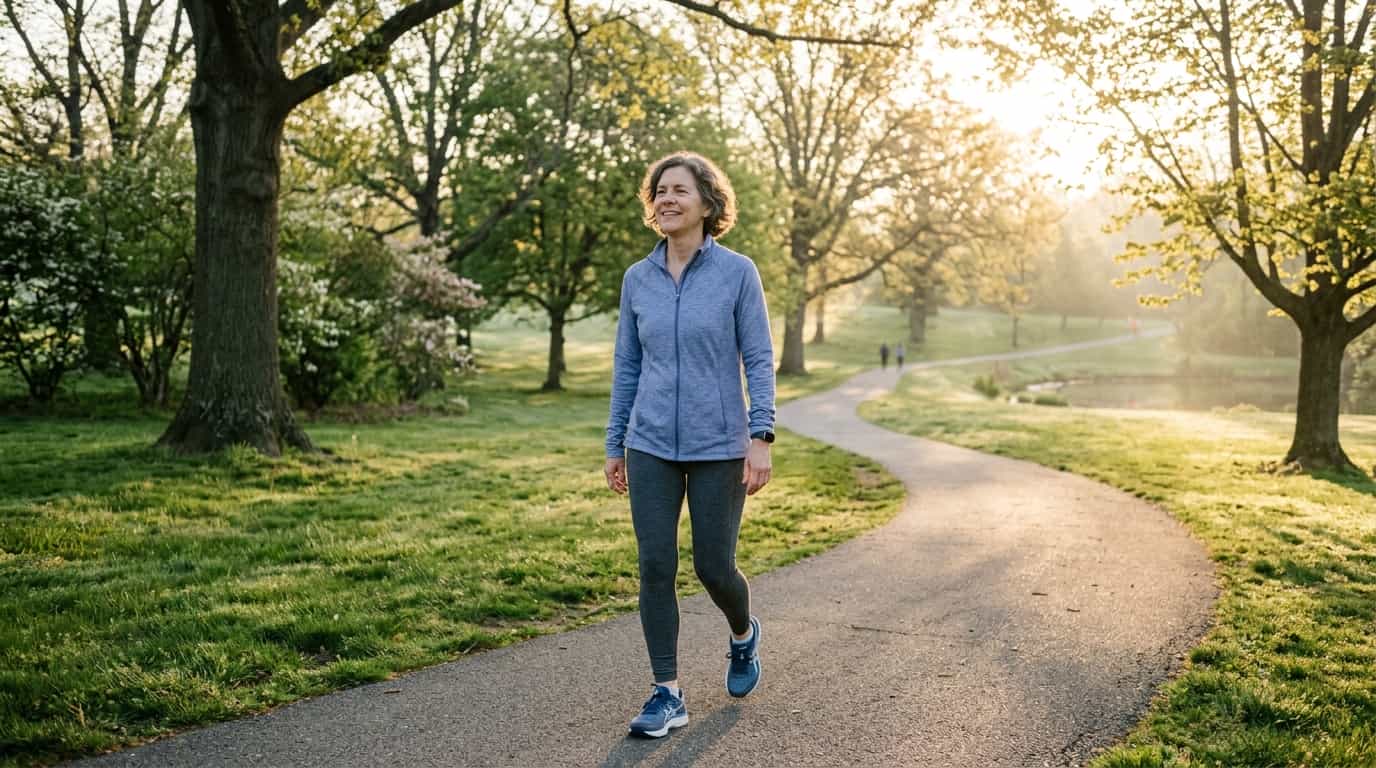
The One Daily Habit That New Research Says Could Slow How Fast You Age
My grandmother is 84. She still gardens, still drives, still beats people at cards who are thirty years younger than her.
People ask her secret constantly, looking for something dramatic. A supplement. A diet. Some ancient remedy.
She tells them she walks every morning. Has done it for sixty years. They look a little disappointed, like they were hoping for something more exotic.
They shouldn't be disappointed. Because the research building up around daily walking — and specifically around what consistent, moderate movement does to the biological machinery of aging — is more interesting than most people realize.
What Does "Slowing Aging" Actually Mean?
Before we get into what the research shows, it's worth being precise about language, because "slowing aging" gets used loosely.
Aging has two tracks. Chronological aging — the calendar — doesn't change for anyone. But biological aging, which is measured by things like telomere length, inflammatory markers, cellular senescence, and organ function, varies significantly between people of the same chronological age.
Two 60-year-olds can have bodies that look, functionally, like different decades of life. The goal isn't to freeze time. It's to keep the biological clock running slower than the calendar one. And that gap, researchers are increasingly confident, is movable.
What the Research Actually Found
A study published in the British Journal of Sports Medicine tracked biological aging markers across thousands of adults over time. The finding that made headlines: people who engaged in 150 minutes of moderate activity per week — roughly 20 minutes a day — showed biological aging markers up to nine years younger than sedentary people of the same chronological age.
Nine years. That's not a marginal improvement. That's a decade's worth of biological difference, from a 20-minute daily walk.
Separately, researchers studying telomeres — the protective caps on chromosomes that shorten as we age, like the plastic tips on shoelaces — found that regular moderate exercisers had measurably longer telomeres than their sedentary counterparts. Longer telomeres correlate with slower cellular aging and lower risk of age-related disease.
The effect was most pronounced in people who had been doing it consistently for years. Which is the part that matters.

Why Walking Specifically Keeps Coming Up
There are plenty of ways to move your body. Why does walking keep appearing in longevity research?
Partly accessibility — it's what most research subjects actually do consistently, so there's more data on it. But there's also something specific about low-impact, sustained, rhythmic movement that turns out to be particularly good for the biological systems associated with aging.
Walking at a moderate pace — fast enough to raise your heart rate slightly, slow enough to hold a conversation — is aerobic exercise your body can do indefinitely without triggering the stress response that high-intensity exercise activates. That stress response, in the short term, is how intense exercise builds strength. But chronically elevated cortisol and inflammatory markers from overtraining can actually accelerate certain aging processes.
Moderate walking hits a sweet spot. It gets your heart rate up. It keeps inflammatory markers low. It promotes insulin sensitivity, which is closely tied to metabolic aging. And because it's sustainable, people actually do it — which is the variable that matters more than almost anything else in longevity research.
The Inflammation Connection Nobody Talks About Enough
Chronic low-grade inflammation — sometimes called "inflammaging" — is increasingly understood as one of the central drivers of biological aging. It accelerates cellular damage, contributes to most major age-related diseases, and is measurable in blood markers that have become increasingly useful in predicting health outcomes.
Daily moderate exercise is one of the most reliably anti-inflammatory interventions researchers have found. Not because it eliminates inflammation — some inflammation is necessary and healthy — but because it regulates the chronic, low-level kind that builds up with sedentary living.
According to research from the National Institute on Aging, regular physical activity is associated with reduced inflammatory markers, better immune function, and improved mitochondrial health — which is essentially the energy-production capacity of your cells, and which declines with age faster in inactive people.
The mitochondria piece is worth pausing on. Your cells' ability to produce energy efficiently is one of the core mechanisms of biological aging. Exercise — including walking — is one of the few things proven to maintain and even partially restore mitochondrial function in aging cells.
How Much Do You Actually Need to Do?
The 150 minutes per week figure keeps coming up in research because it's where the data shows the steepest benefit curve. That works out to about 20–22 minutes a day, seven days a week. Or 30 minutes five times a week if you prefer thinking about it that way.
The good news: it doesn't have to be done in one block. Studies have found that three 10-minute walks distributed through the day produce similar cardiovascular and inflammatory benefits to a single 30-minute walk. If you can't carve out a chunk of time, small accumulations count.
The other good news: the bar for "moderate intensity" is lower than most people assume. You should be moving enough to feel slightly warm and breathe a little harder than usual. You should still be able to talk. That's it.
What Happens If You Start Late?
The researchers asked this question too. And the findings are genuinely encouraging.
Studies on people who became consistently active in their 50s, 60s, and even 70s showed meaningful biological improvements — lower inflammatory markers, better telomere maintenance, improved metabolic function — compared to age-matched peers who remained sedentary. The gains were smaller than in people who had been active for decades. But they were real.
Your biology responds to the inputs you give it now, not just the history of inputs you gave it twenty years ago. Starting at 60 is not the same as starting at 30. It's also not futile. Not even close.
The Honest Catch
Walking 20 minutes a day is simple. It is not easy — not in the sense of being effortless, and especially not in the sense of being consistent across months and years and life disruptions.
The research is clear that the benefits compound over time, which means consistency is more important than intensity. A perfect exercise program you do for six weeks helps you less than a modest walking habit you maintain for six years.
My grandmother knows this. She doesn't think of her walk as exercise. She thinks of it as something she does in the morning, the same way she makes coffee. It's just part of what a day is.
That framing — habit, not heroism — turns out to be the secret most longevity researchers would rather you knew.
👉 Also read: The 4 Foods Longevity Experts Eat Every Day — And the 4 They Always Avoid






Discussion
Comments
Approved comments are published after moderation to keep discussion useful and spam-free.
No comments yet. Start the discussion below.