
Zone 2 Training in 2026: What the Latest Science Shows
Why Zone 2 Is the Fitness Conversation of 2026
In a fitness landscape crowded with trending protocols, Zone 2 training has earned its moment through a rare quality: the science genuinely supports the hype. The ACSM named longevity-focused fitness the second-biggest fitness trend of 2026, and Zone 2 cardio sits at the direct intersection of everything that research identifies as most impactful for long-term health — mitochondrial density, metabolic flexibility, and VO2 max improvement.
The Life Time Wellness Survey of December 2025 found that 37.8 percent of respondents identified longevity as the wellness trend most likely to define 2026 — placing it above GLP-1 medications (24.4 percent) and AI-guided training (14.6 percent). Zone 2 training is the most directly actionable longevity fitness intervention with robust evidence behind it. Here is everything you need to understand it and start doing it correctly.
What Exactly Is Zone 2?
Exercise physiologists divide cardiovascular intensity into five zones, defined by lactate production, heart rate, and perceived effort. Zone 2 sits below the first lactate threshold (LT1) — the point at which lactate begins to accumulate in the blood. Below LT1, the body predominantly uses fat as fuel and runs primarily on slow-twitch, mitochondria-rich muscle fibres. Above LT1, fast-twitch fibres and carbohydrate metabolism become increasingly dominant.
The practical definition most people use: Zone 2 is the highest intensity at which you can still hold a comfortable conversation. You are clearly working — breathing is elevated, you are sweating — but you could speak in full sentences without gasping. The moment conversation becomes difficult, you have crossed into Zone 3.
In heart rate terms: approximately 60-70 percent of your maximum heart rate for most people. Maximum heart rate can be estimated as 220 minus your age (a rough approximation) or more accurately measured via a VO2 max test or a verified field test protocol.
The Science: Why Zone 2 Matters So Much
Mitochondrial Density and Function
The primary adaptation produced by consistent Zone 2 training is mitochondrial biogenesis — the creation of new mitochondria in muscle cells, and the improvement of existing mitochondrial function. Mitochondria are the cellular energy factories that produce ATP (adenosine triphosphate) from oxygen and fuel. More mitochondria, functioning more efficiently, means more energy available for all physical and cognitive tasks.

Mitochondrial density declines with age — it is one of the primary biological mechanisms underlying the reduction in physical capacity that most people experience from middle age onward. Zone 2 training is the most direct lifestyle intervention for slowing and partially reversing that decline. Research by exercise physiologist Inigo San-Millan (who has published extensively on Zone 2 and is closely associated with its mainstreaming through podcasts with Peter Attia) has documented that elite endurance athletes have mitochondrial densities several times higher than sedentary individuals of the same age — and that these densities can be significantly improved through consistent Zone 2 training in non-athletes.
VO2 Max: The Longevity Biomarker
VO2 max — the maximum volume of oxygen the body can consume and utilise per minute per kilogram of bodyweight — has emerged as perhaps the strongest single modifiable predictor of long-term health outcomes. A 2022 study in JAMA Network Open tracking over 122,000 participants over a median of 8.8 years found that VO2 max was more predictive of all-cause mortality than any other standard clinical variable — including blood pressure, blood sugar, or smoking status.
Individuals with very high VO2 max had a five-fold reduction in all-cause mortality compared to individuals with low VO2 max. The dose-response relationship was steep: even moving from the lowest to the second-lowest VO2 max category was associated with a 50 percent reduction in mortality risk. No medication or intervention currently available in clinical medicine comes close to this effect size.
Zone 2 training is the most time-efficient way to improve VO2 max for most non-elite exercisers — more effective per training hour than higher-intensity work for individuals who are not already fit, because it can be sustained for longer and repeated more frequently without requiring recovery days.
Metabolic Flexibility
Zone 2 training improves what researchers call metabolic flexibility — the ability to efficiently switch between fat and carbohydrate as fuel sources based on demand. Metabolically inflexible individuals (common in sedentary, high-carbohydrate dietary contexts) cannot access fat stores efficiently and depend primarily on carbohydrates, which are limited. Metabolically flexible individuals (trained in Zone 2, with well-functioning mitochondria) can sustain activity on fat oxidation for much longer before needing carbohydrate fuel.
Zone 2 training (60-70% max heart rate, the highest intensity at which you can hold a conversation) improves mitochondrial density, metabolic flexibility, and VO2 max — the strongest modifiable predictor of longevity. Research suggests 3+ hours per week divided across 3-4 sessions. Use cycling, running, rowing, or brisk walking. Combine with 1-2 weekly HIIT sessions and 2-3 strength sessions for the optimal longevity training protocol.
The metabolic health implications extend far beyond athletic performance. Insulin resistance — the root driver of type 2 diabetes, metabolic syndrome, and a significant contributor to cardiovascular disease — is fundamentally a failure of metabolic flexibility. Zone 2 training addresses insulin resistance through multiple simultaneous mechanisms: improving glucose uptake by trained muscles, increasing the insulin sensitivity of muscle tissue, and improving mitochondrial function that governs how efficiently cells process energy.
How to Do Zone 2 Training: The Practical Protocol
The Minimum Effective Dose
Research by Inigo San-Millan and others suggests that meaningful adaptation requires approximately 3 hours of Zone 2 training per week, divided across at least 3 sessions. Elite endurance athletes perform 6-10+ hours of Zone 2 weekly. For health and longevity purposes, 3-4 sessions of 40-60 minutes each is the recommended starting point.
Finding Your Zone 2
The talk test is the simplest real-world method: maintain the highest intensity at which you can speak in full sentences comfortably. If speaking a paragraph requires a pause for breath, slow down. A heart rate monitor adds precision — target 60-70 percent of maximum heart rate. The Maffetone Method (180 minus age = aerobic maximum heart rate) is a useful starting approximation for those new to heart rate-based training.

Best Zone 2 Activities
Any sustained aerobic activity works: cycling (indoor or outdoor) is the most popular choice because it is low-impact and easy to maintain a precise intensity; running or brisk walking for those without joint limitations; rowing (engages the full body, slightly higher Zone 2 heart rate for the same perceived effort); swimming; elliptical trainer. The activity matters less than the intensity and consistency. Many people find cycling on a stationary bike while reading or watching content the most sustainable approach for the required duration.
Monitoring Progress
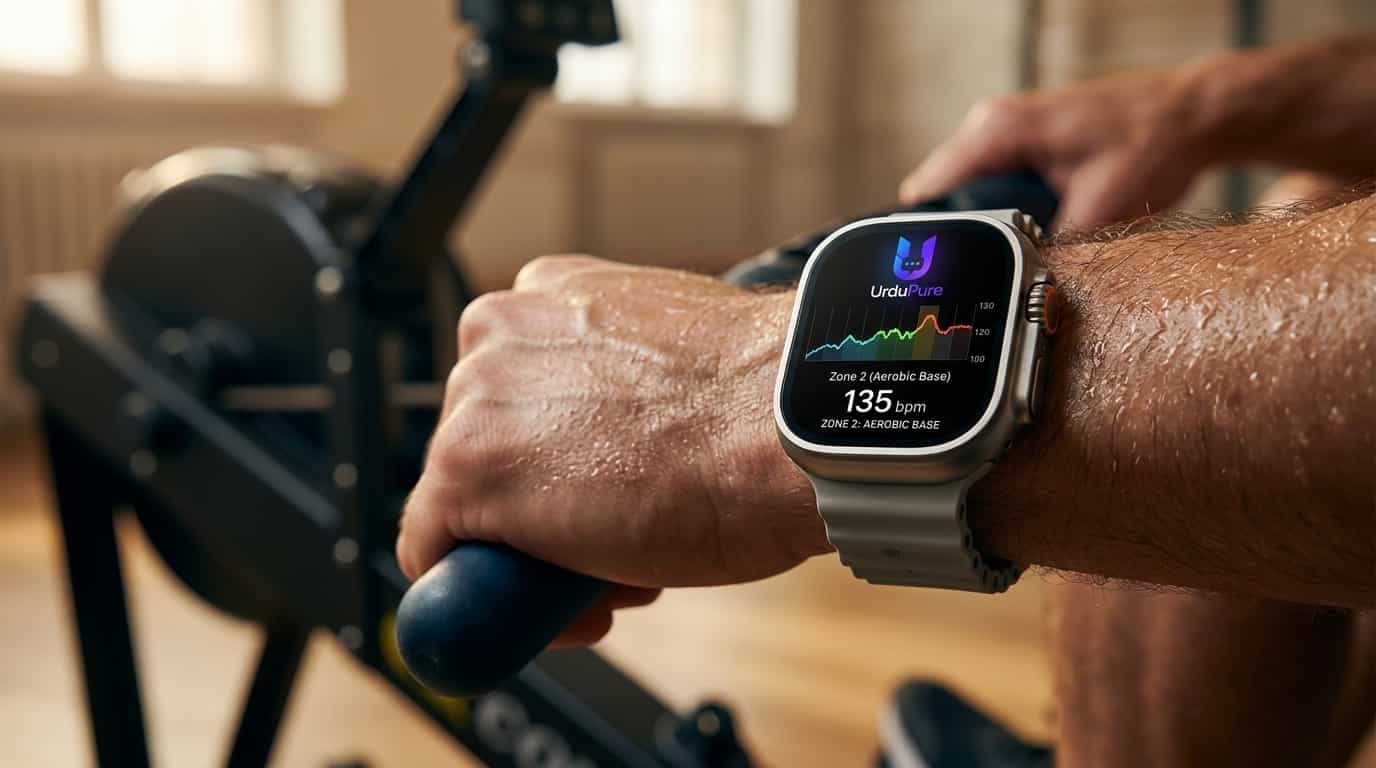
VO2 max can be estimated by consumer wearables (Garmin, Apple Watch, Whoop, Polar) with reasonable accuracy. A genuine VO2 max test via a sports medicine clinic provides the most accurate baseline. Track the heart rate at which you cross from Zone 2 into Zone 3 — as fitness improves, your Zone 2 ceiling rises, meaning you can work harder at the same heart rate.
Zone 2 and the Longevity Protocol: How It Fits
Zone 2 training is most effective as part of an integrated exercise protocol rather than in isolation. The longevity-focused training architecture recommended by sports medicine physicians and longevity researchers in 2026 typically includes: 3-4 hours Zone 2 weekly (the aerobic base); 1-2 higher-intensity sessions weekly, such as HIIT or threshold work (to train the upper end of the aerobic system and add VO2 max stimulus); and 2-3 strength training sessions weekly (to maintain muscle mass, bone density, and functional capacity). Zone 2 provides the foundation that makes everything else more effective — and the health outcomes more durable.
Frequently Asked Questions
Is Zone 2 better than HIIT for health?
They serve different purposes and are best combined. Zone 2 builds the aerobic base, improves mitochondrial density, and can be performed daily without excessive recovery demand. HIIT produces faster VO2 max improvements and develops different energy system adaptations but requires more recovery and cannot be sustained at the same volume. For most health-focused individuals, a ratio of roughly 80 percent Zone 2 to 20 percent higher-intensity work (the "80/20" principle from elite endurance training) produces the best long-term adaptations.
How do I know if I am truly in Zone 2?
The talk test is the most accessible check: if you can speak a full sentence without pausing for breath, you are in or below Zone 2. If you cannot, slow down. For more precision, a heart rate monitor targeting 60-70 percent of maximum heart rate (where max HR ≈ 220 minus age) works well. Lactate testing (a small blood draw mid-exercise) provides the most accurate Zone 2 identification but is typically only available in sports science settings.
Can I do Zone 2 training if I am a complete beginner?
Yes — and beginners typically spend more time in Zone 2 than experienced athletes because their aerobic threshold is lower. A brisk walk may be sufficient to reach Zone 2 for a deconditioned beginner. This is exactly where to start. As fitness improves over weeks and months, the pace required to reach Zone 2 will increase, and longer sessions become manageable.
zone 2 training 2026, zone 2 cardio benefits, zone 2 heart rate, longevity fitness 2026, VO2 max improvement, mitochondrial health, zone 2 vs HIIT, best cardio for longevity, Peter Attia zone 2






Discussion
Comments
Approved comments are published after moderation to keep discussion useful and spam-free.
No comments yet. Start the discussion below.