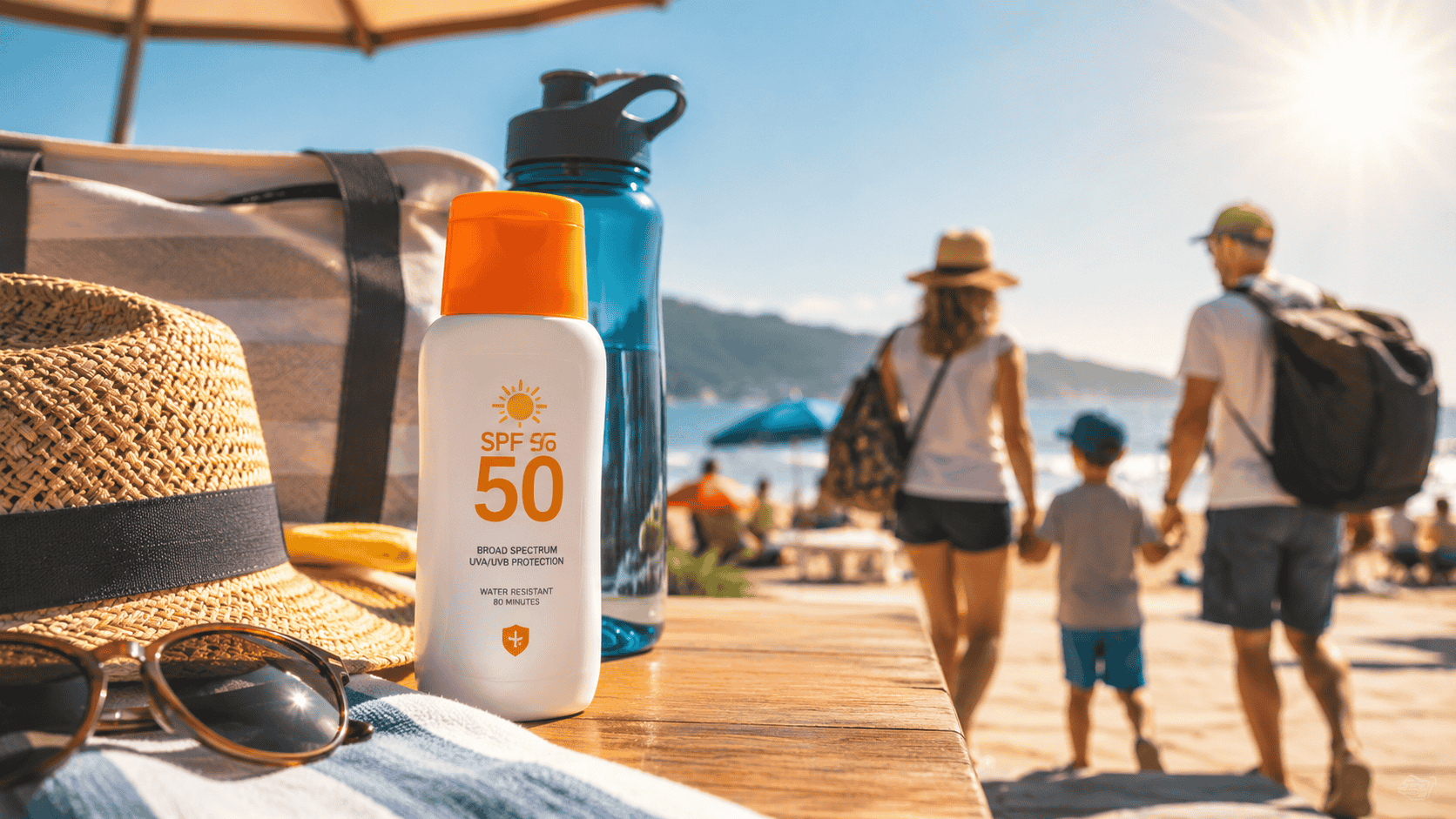
SPF 50 is trending because summer heat is harder to ignore
SPF 50 sunscreen is not just a beach product anymore. During heatwaves, summer travel, outdoor events and school holidays, it becomes part of everyday safety.
People are asking practical questions: Is SPF 50 better than SPF 30? How often should sunscreen be reapplied? Can sunscreen go bad in a hot car? Is spray sunscreen enough? What should families pack for travel?
Those questions matter because sun protection is easy to misunderstand.
The U.S. Food and Drug Administration recently added bemotrizinol to the permitted list of sunscreen active ingredients, calling it the first new active ingredient added to the over-the-counter sunscreen monograph since the late 1990s.
That news adds to public interest, but the basic sunscreen rules remain simple: choose broad-spectrum protection, use enough product, reapply properly and do not rely on sunscreen alone.
What does SPF 50 actually mean?
SPF stands for Sun Protection Factor. It measures protection against UVB rays, the type of ultraviolet radiation most closely linked with sunburn.
SPF 50 means the sunscreen allows a much smaller fraction of UVB rays to reach the skin compared with no protection. But SPF does not mean you can stay outside fifty times longer without risk. Real life is messier. Sweat, swimming, rubbing, under-application and missed spots reduce protection.
This is the first big sunscreen mistake: people use too little.
Most adults need more sunscreen than they expect for full-body coverage. A thin layer applied quickly may not deliver the protection shown on the label.
The second mistake is forgetting reapplication.
Sunscreen is not a one-time morning shield. It must be reapplied, especially outdoors, during sweating or after swimming.
Is SPF 50 better than SPF 30?
SPF 50 provides more UVB protection than SPF 30, but the difference is not as dramatic as many people imagine.
The real advantage of SPF 50 is that it gives a slightly higher margin of protection, which can be useful for travel, heatwaves, long outdoor days, beach trips, sport events and people who burn easily.
But SPF 50 only works if applied correctly.
An SPF 30 sunscreen used generously and reapplied often can perform better in real life than SPF 50 applied too thinly once in the morning.
So the best sunscreen is not simply the highest number. It is the one you will use properly.
For daily urban use, SPF 30 or SPF 50 may both be reasonable depending on skin type and exposure. For beach days, hiking, outdoor work, sports, travel or heatwave events, SPF 50 often makes sense.
How often should you reapply sunscreen?
For most outdoor situations, sunscreen should be reapplied at least every two hours. It should also be reapplied after swimming, heavy sweating or towel drying.
This is where many people fail. They apply sunscreen before leaving home and assume the job is done.
During a hot day, sunscreen may be reduced by sweat, clothing friction, touching the face, drying with towels or sitting against car seats and beach chairs. Children may rub sunscreen off while playing. Travelers may forget reapplication while moving between airports, stadiums, beaches and outdoor attractions.
A practical rule is to set phone reminders.
If you are going to a World Cup match, beach, theme park, hiking trail, festival or outdoor lunch, reapply before the skin feels hot or irritated.
Can sunscreen go bad in a hot car?
Yes, sunscreen can be affected by heat.
Leaving sunscreen in a hot car, direct sun or beach bag for long periods may reduce product quality over time. The texture, smell or separation can also change. If sunscreen looks strange, smells odd or is past expiry, replace it.
A hot car is especially risky because interior temperatures can rise quickly. Sunscreen is meant to protect skin, but the product itself should be stored sensibly.
For travel, keep sunscreen in a shaded bag, hotel room or cooler pocket when possible. Carry smaller bottles so they are used before they degrade.
Do not treat last year’s half-used bottle as automatically reliable.
Check the expiry date.
Mineral vs chemical sunscreen
Sunscreens are often grouped into mineral and chemical types.
Mineral sunscreens commonly use zinc oxide or titanium dioxide. They sit on the skin and help block or scatter UV rays. Some people prefer mineral sunscreen for sensitive skin, children or reef-conscious choices, though formulas vary.
Chemical sunscreens use organic UV filters that absorb ultraviolet radiation. They often feel lighter and may blend more easily, especially for daily wear.
Neither category is automatically perfect for everyone. The best choice depends on skin type, climate, activity and personal preference.
For oily skin, a lightweight gel or fluid may feel better. For dry skin, a moisturizing cream may be useful. For darker skin tones, white cast can be a concern, so texture and finish matter. For children, fragrance-free and sensitive-skin formulas may be preferable.
The best sunscreen is the one that gives broad-spectrum protection and is easy enough to use every day.
Is spray sunscreen enough?
Spray sunscreen can be convenient, especially for families. But it is easy to under-apply.
People often mist the skin lightly and assume coverage is complete. Wind can blow product away. Some areas may be missed. Inhaling spray is also a concern, so sprays should be used carefully and not sprayed directly into the face.
A better method is to spray generously into the hands and then rub onto the face. For the body, spray enough to visibly cover the area, then rub it in to avoid gaps.
Spray sunscreen may be useful for reapplication, but it should not become an excuse for careless coverage.
Sunscreen checklist for travel
Travel makes sunscreen more important because people spend more time outside than usual.
Pack sunscreen in both checked luggage and a day bag where rules allow. Use travel-size containers for flights. Bring enough for the whole family. Do not assume destination shops will have the right brand, price or formula.
For beach trips, pack SPF 50 sunscreen, lip balm with SPF, sunglasses, hats, rash guards, cover-ups and water.
For city travel, apply sunscreen before sightseeing and reapply before afternoon walks.
For sports events, apply before leaving the hotel, then reapply before entering the stadium or fan zone.
For children, use sunscreen along with hats, shade and protective clothing.
Sunscreen is not enough by itself
This is the most important point.
Sunscreen helps, but it is not a complete heatwave safety plan.
During extreme heat, people also need shade, water, lighter clothing, rest breaks and awareness of heat illness symptoms. Sunburn and heat exhaustion are different problems, but they often happen in the same conditions.
Avoid peak sun where possible. Wear a hat and UV-protective clothing. Use sunglasses. Keep babies and very young children out of direct sun as much as possible.
In a serious heatwave, the safest choice may be staying indoors during the hottest part of the day.
The bottom line
SPF 50 sunscreen is useful, but it is not magic.
It works best when applied generously, reapplied regularly and used with shade, clothing and smart timing. During heatwaves and summer travel, sunscreen should be treated like water and phone charging: a basic part of leaving the house.
The mistake is not buying the wrong sunscreen.
The mistake is assuming one quick morning application can protect a full day outside.
Internal links to add
Also read: Heat Exhaustion vs Heatstroke, Beach Safety During Extreme Heat, Women’s Heatwave Wellness, Men’s Skincare in a Heatwave, World Cup 2026 Heat Guide.
FAQ
What does SPF 50 mean?
SPF 50 measures protection against UVB rays. It offers more UVB protection than lower SPF numbers, but only when applied properly.
Is SPF 50 better than SPF 30?
SPF 50 gives a higher margin of protection, but correct application and reapplication matter more than the number alone.
How often should I reapply SPF 50 sunscreen?
Reapply at least every two hours outdoors, and after swimming, sweating or towel drying.
Can sunscreen expire or go bad in heat?
Yes. Heat, age and poor storage can affect sunscreen. Check expiry dates and replace products that smell, separate or look unusual.
What new sunscreen ingredient did the FDA approve?
The FDA added bemotrizinol to the permitted list of sunscreen active ingredients in June 2026, describing it as the first new active ingredient added since the late 1990s.





Discussion
Comments
Approved comments are published after moderation to keep discussion useful and spam-free.
No comments yet. Start the discussion below.