Tepito: The Heart, The Hustle, and The Horror of Mexico City’s Underworld
It's midday in Mexico City’s Centro Historico. The sun is beating down, and the streets are alive. You’ve got hundreds of tourists wandering around, snapping photos of colonial architecture, and dining at fancy, overpriced restaurants. It’s vibrant, it’s beautiful, and it feels entirely safe.
But just a few blocks from there, the picture completely shatters.
If you take a wrong turn and walk just a little too far north, you’ll find yourself in a place most tourists wouldn't dare visit. A place your hotel concierge will explicitly tell you to avoid. Although, funnily enough, I have actually been there. I don’t know why. I must have been feeling particularly insane that day. I was also a younger, dumber man.
Known locally as El Barrio Bravo—the Fierce Neighborhood—Tepito is an odd, intoxicating fusion of commerce, chaos, criminals, and working-class families trying to make a living. For years, it’s been lazily labeled by the press as the world’s most violent neighborhood. But honestly? That doesn’t really do it justice.
You see, Tepito isn't just violent. It is the literal heart of Mexico City’s underworld. It’s the home of Santa Muerte, the deity of death. It is a place where you can just as easily buy a fake Real Madrid jersey as you can buy a military-grade assault rifle or hire a hitman. It is the birthplace of one of Mexico City’s most vicious cartels. Violence isn’t just a byproduct here; it is an ecosystem.
Hundreds of people have been brutally murdered in these few square blocks. Even the police don’t go into certain parts of Tepito, and when they do, they tend to leave rather quickly.
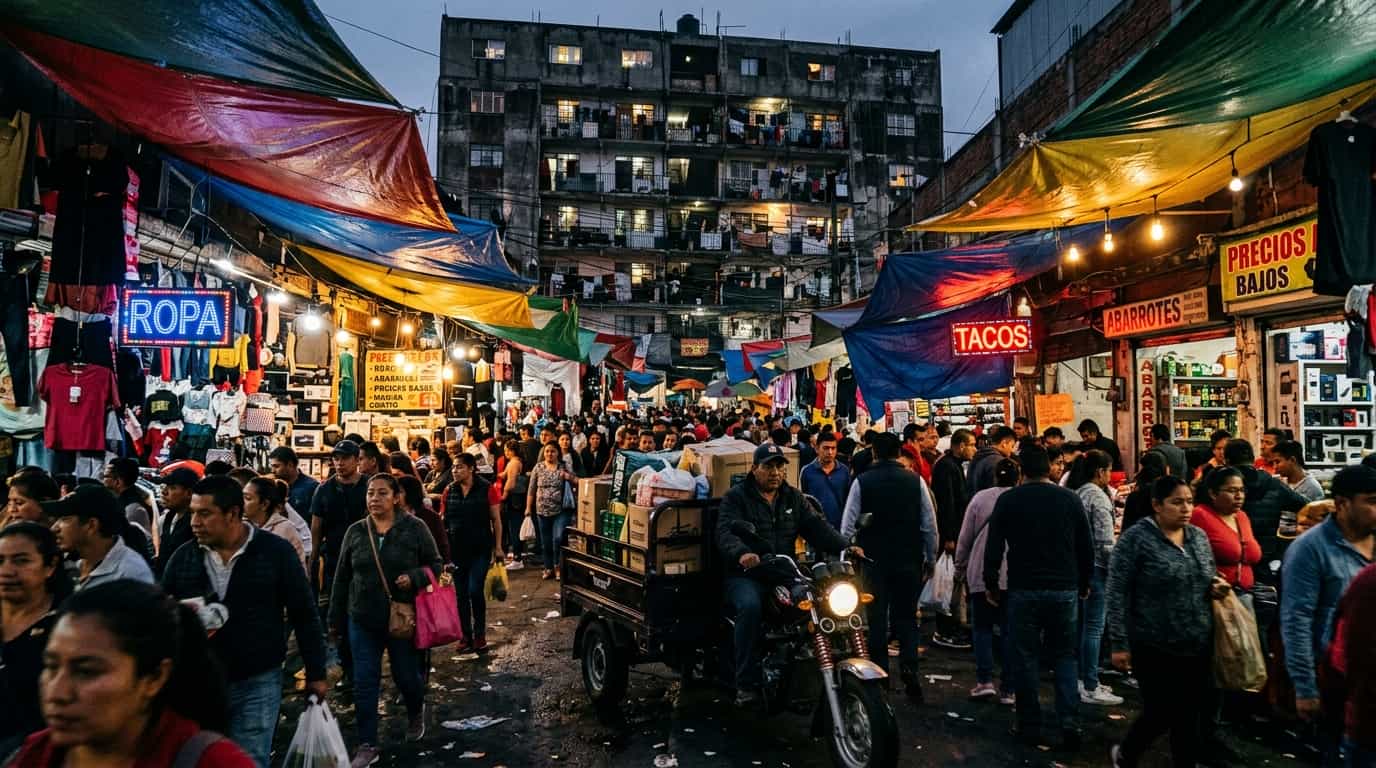
But here is the strangest part: if you were to visit Tepito today, you might not immediately understand why it’s considered so dangerous. At first glance, it just looks like a massively busy, slightly overwhelming flea market. You’ll see family-run shops, vendors yelling out prices, and kids kicking a football. You might even spot a few oblivious tourists.
However, beneath this bustling, colorful scene is something truly frightening.
The Statistics of Survival
Ask virtually anyone who has ever lived in Mexico City about Tepito, and they will tell you the same thing: Don't go. Travel guides highlight it in red. Locals avoid it, even though they know they could save half their paycheck by shopping there. To this day, there are many Mexicans who swear they will never set foot in the neighborhood.
So, is Tepito really that bad?
The short answer is yes. It has some of the highest crime and homicide rates in all of Mexico City. It is on par with, or even worse than, the most notorious, crime-ridden neighborhoods in the United States.
In 2018, the think tank Mexico Evalúa published a massive report after analyzing more than 5,000 homicides in the capital between 2008 and 2016. (I think I went there in 2012. Seems a bit silly in retrospect, doesn’t it?) They found that Tepito had the absolute highest homicide rate of any part of the city. Lethal violence in this neighborhood increased by an astonishing 300% within just three years, between 2016 and 2018.
The fact that Tepito is considered one of the most dangerous neighborhoods in a country where ruthless, militarized drug cartels control vast swaths of territory should tell you everything you need to know.
American novelist Francisco Goldman, a long-time resident of Mexico City, notes that violence is a constant hum in Tepito. But occasionally, the killings become rampant, and the bloodshed literally spills out of the neighborhood's borders. When this happens, the rest of the city gets a grim reminder of why they stay away.
"As long as the violence seems confined to Tepito," Goldman wrote, "people on the outside of the walled barrio shrug it off and say, 'Well, of course, it's Tepito after all.'"
The Symbiosis of the Streets
Tepito is filled with shady characters: thieves, drug dealers, addicts, gunrunners, and assassins. But it is also home to thousands of remarkably ordinary people. Over the decades, these two groups have developed a strange, necessary symbiosis.
During the daytime, you’ll find residents trading at their stalls, chatting with neighbors, and going about their business. But as the sun sets, the market empties out, and a heavy, ominous feeling descends on the neighborhood. The ordinary people barricade themselves inside their homes behind heavy iron gates, effectively surrendering the streets to the criminals.
The notorious cartel La Unión Tepito claims this neighborhood as its absolute home turf. They control the drug flow, and they extort almost every shop owner for "protection money."
For many people living in Tepito, the only goal is to keep their heads down and survive. If you live here, you learn to turn away and stay perfectly quiet in the face of extreme criminal acts. According to the Spanish newspaper El País, people in Tepito are known to carry fake phones—cheap dummy units they can readily hand over to thieves when stopped and robbed on the street.
And it’s not like they have a choice. The consequences for resisting robbery, refusing extortion, or—God forbid—reporting criminals to the police, are brutal and usually fatal. Besides, many of the cops are on the exact same payroll as the gangs.
So why do people stay? Mostly because rent is dirt cheap. Others stay because their families have owned a market stall there for four generations. Today, many residents would leave in a heartbeat if they had the financial means.
But it hasn't always been like this. Tepiteños have historically been fiercely, almost aggressively loyal to their home. In the 70s and 80s, the government literally tried to bulldoze the neighborhood and displace them. The residents fought back and won.
Even today, that fiery loyalty survives, despite the intense discrimination they face. If an employer finds out you have a Tepito address on your resume, your job interview is essentially over.
A History of Defiance
To understand Tepito, you have to understand that resistance is baked into its DNA. There’s a local saying: "Tepito exists because it resists."
It was right here in Tepito that the last Aztec king, Cuauhtémoc, took a final, desperate stand against the Spanish conquistador Hernán Cortés in 1521, withstanding a grueling 93-day siege before he was captured. Today, a small plaque next to a neighborhood church casually marks the spot where an empire fell.
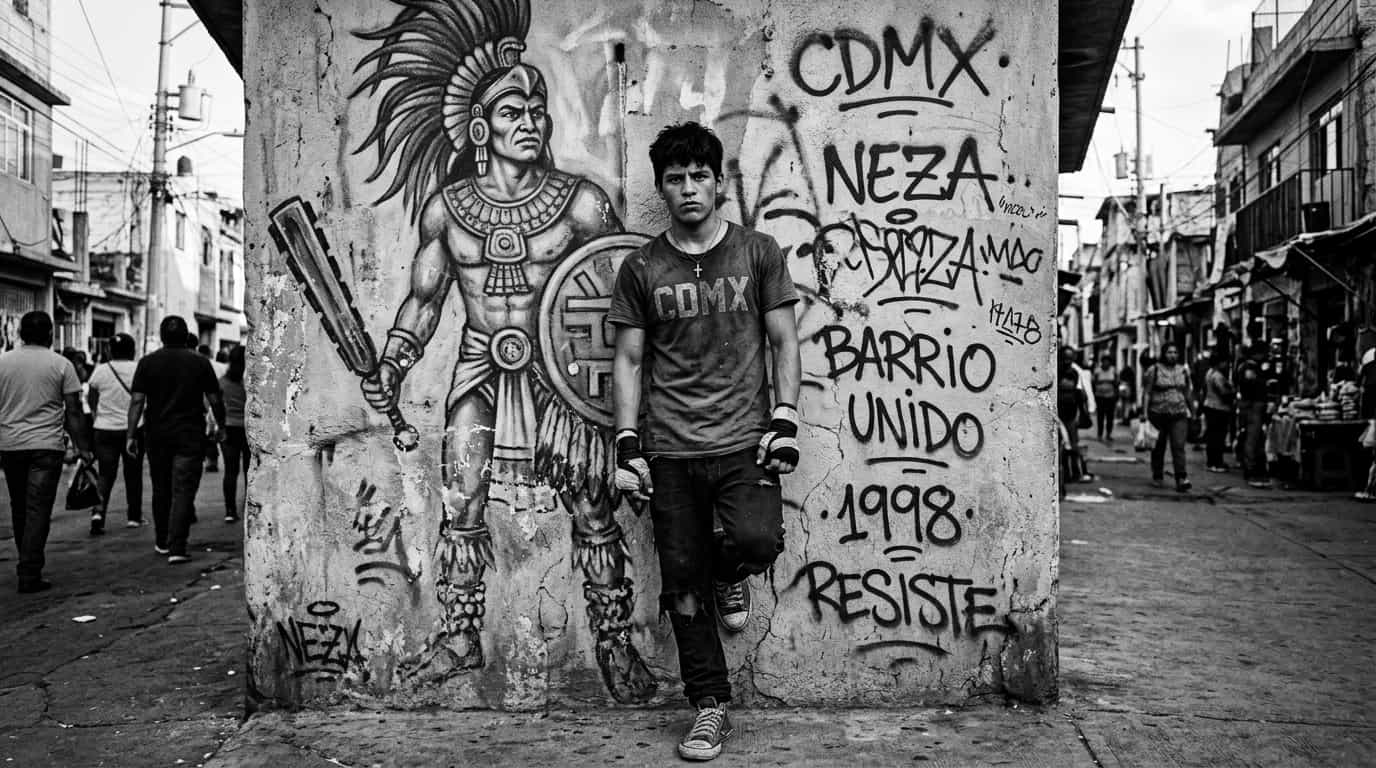
During the Mexican-American War in 1847, the residents of this neighborhood fought the invading American army with literal stones. Tepiteño sex workers would lure American soldiers into dark alleyways and murder them. When the American commander, Winfield Scott, found out, he was so furious he ordered the entire neighborhood to be bombed and razed to the ground.
But Tepito survived.
Today, that culture of defiance continues to thrive. It’s just being channeled differently—usually to defy the laws of the state and the authority of the police.
The Ecosystem of the Black Market
Tepito sits in the central part of Mexico City, covering 72 densely packed blocks. Although it is more than three times smaller than New York’s Central Park, most estimates put its population at around 120,000 people.
For outsiders, the only reason to visit is the Tianguis, the sprawling open-air flea markets. If you want a good deal, or if you want to buy contraband, this is where you go. The markets occupy more than 25 streets, but Tepito isn't just a marketplace; it is a living, breathing ecosystem.
It is often impossible to tell where a shop ends and someone’s living room begins. The ground floors of homes are converted into massive warehouses. Vendors set up colorful tarpaulins that block out the sun, turning the streets into a dimly lit, chaotic labyrinth. People walk shoulder-to-shoulder down the middle of the street, competing for the right of way with cargo motorcycles and hand-pulled carts.
Up to 1.3 million people visit these markets every single week.
On a typical day, there is deafeningly loud reggaeton and cumbia music blasting from every corner. But if you listen closely, you'll hear the real business happening. Journalists and daring visitors report that drug dealing is so pervasive and blatant that vendors will literally call out to you, offering cocaine and marijuana as easily as if they were selling tacos.
The dealers don't work alone. The crowds are filled with lookouts, known locally as Halcones (Falcons). Their job is to stand on corners with walkie-talkies and alert the dealers the second a police patrol approaches.
But drug dealers are actually the least of your worries here. Criminals on dirt bikes routinely snatch bags and phones. Sometimes, the Halcones will track a wealthy-looking shopper, note how much cash they are spending, and then alert a gang to trail them to a secluded side street and rob them blind.
The Cult of Santa Muerte
While the rest of Mexico City follows the federal constitution, Tepito follows its own rules. There is a high price for naivety here.
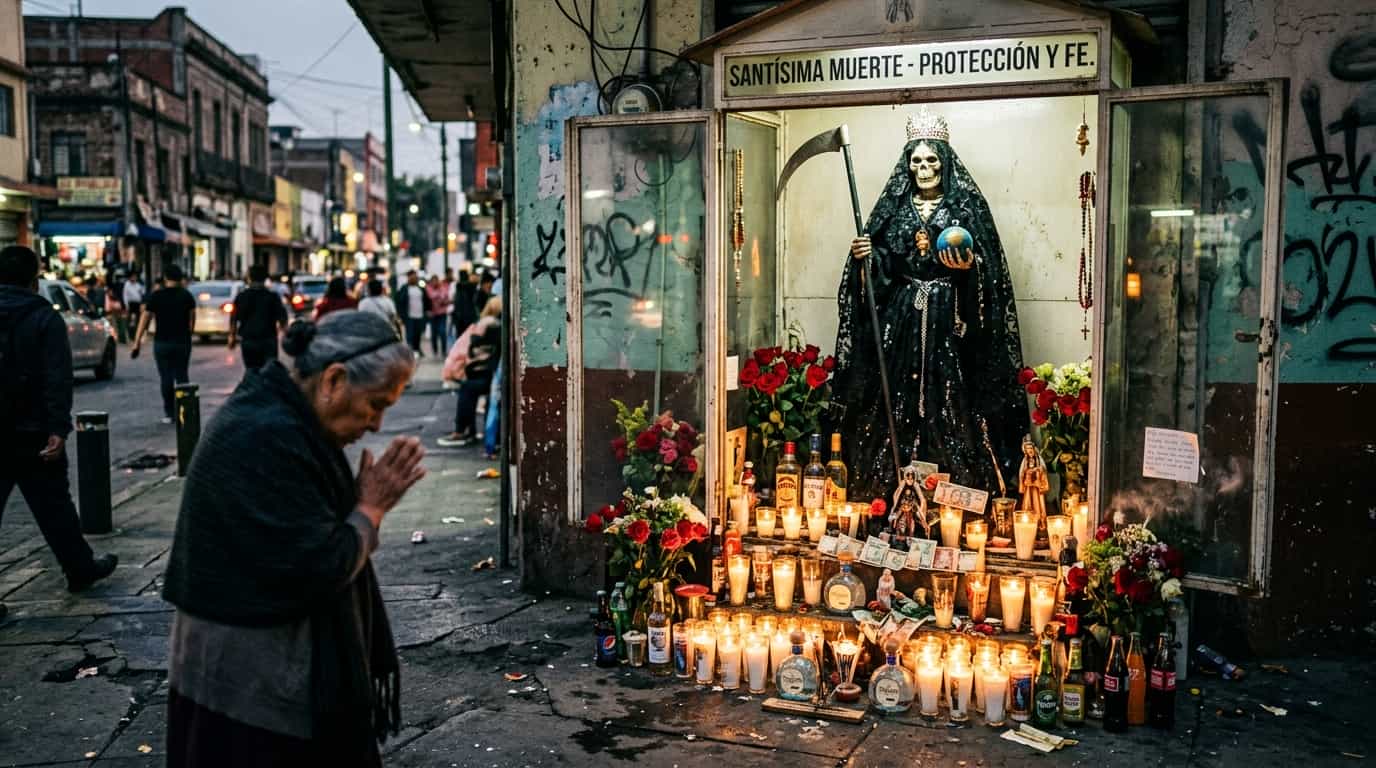
And in a place where life is this fragile, religion takes on a completely different shape. You will find standard images of the Virgin Mary, of course. But right next to her, you will find massive, elaborate altars dedicated to Santa Muerte.
Tepito is the undisputed home of the Santa Muerte cult. She is the personification of death—a grim reaper figure depicted as a skeleton, often holding a scythe and wearing flowing robes.
While the Catholic Church heavily condemns her, the people of Tepito—both the hardened cartel assassins and the innocent fruit vendors—worship her fiercely. They pray to her for everything from good health to protection from police bullets. Her altars on the streets of Tepito are constantly piled high with offerings: fresh flowers, sweets, lit cigarettes, and shots of tequila.
The Evolution of Contraband
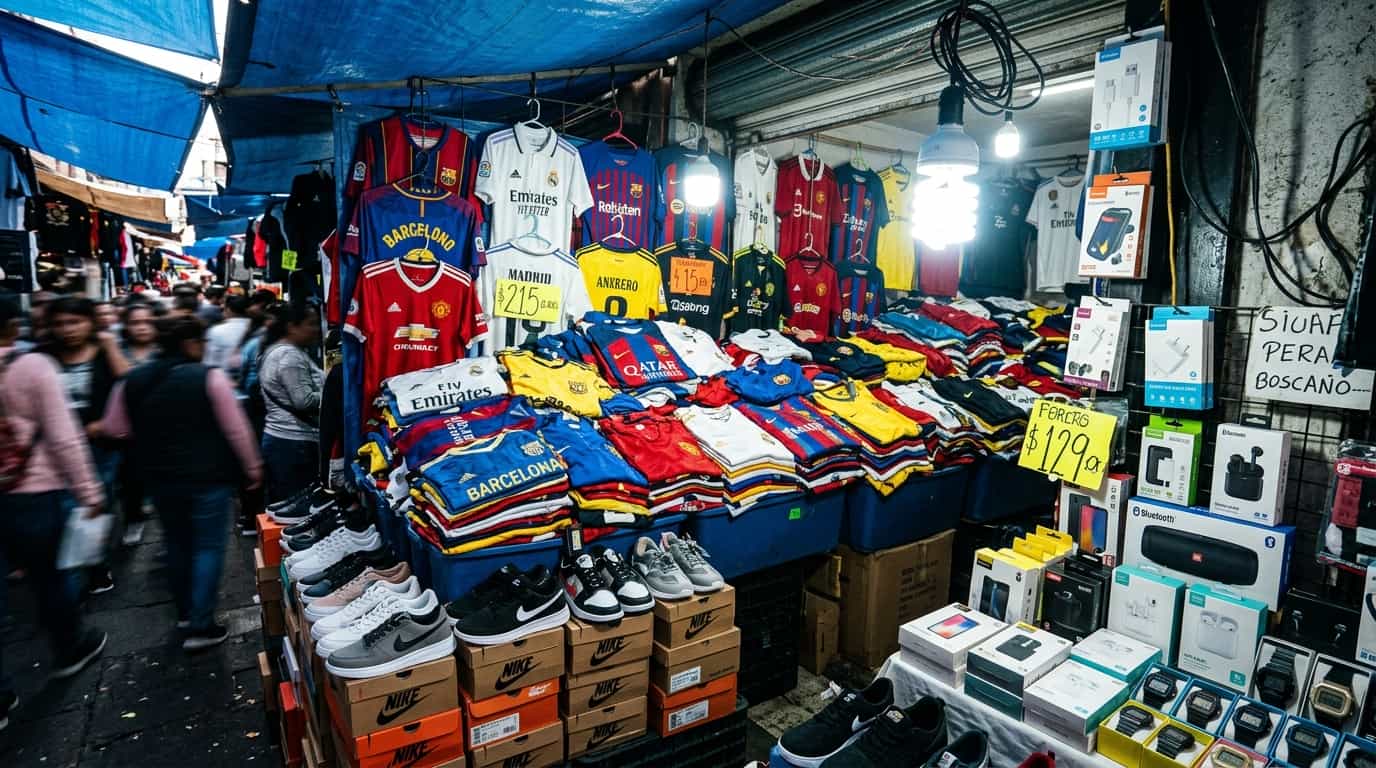
There’s an old local saying: "Everything is for sale at Tepito, except dignity." It’s more literal than you might think. You can buy anything. A shop owner once proudly told a reporter, "Tepito is blessed. There's nothing that can't be bought or sold here."
A massive percentage of the products for sale are counterfeit, stolen, or illegally imported—a trade the locals call Fauca. In the 70s and 80s, Tepiteños would travel to the US, buy electronics that weren't available in Mexico, and smuggle them back, bribing customs officials along the way. Up to 70% of the counterfeit items in all of Mexico used to pass through this single neighborhood.
But when Mexico signed free trade agreements in the 90s, the bottom fell out of the Fauca market. Cheap, legal electronics flooded the country. The smugglers of Tepito lost their livelihoods overnight.
But they didn't give up. They adapted.
The logistics networks used to smuggle stereos were seamlessly transitioned to smuggle guns and cocaine. The guys who used to sell pirated DVDs realized there was infinitely more money in running synthetic drug labs.
Today, you can still buy 25 tons of fake World Cup jerseys (which even the Argentinian national team famously bought and wore during the 1986 World Cup against England), but you can also buy an AK-47, pink cocaine, or an endangered exotic animal.
The Rise of La Unión Tepito
Once drug trafficking became the primary economic engine of the neighborhood, it didn’t take long for organized, militarized cartels to take over.
For a long time, the dominant force was the Tepito Cartel. But around 2009, a local resident named "Pancho Cayagua" recruited local young men to form a neighborhood watch, ostensibly to protect local shop owners from extortion by outside gangs. They wore red shirts and called themselves La Unión Tepito.
But absolute power corrupts absolutely. By 2017, the "neighborhood watch" realized they had all the guns. They began extorting the exact same shop owners they had promised to protect. The "protection fees" skyrocketed to thousands of dollars. If a vendor couldn't pay, they were beaten, or their shop was burned down.
At the peak of their power, La Unión Tepito monopolized drug trafficking, piracy, and human trafficking in the capital. They recruited corrupt police officers and politicians, essentially buying immunity.
They also went to war with rival cartels like the Zetas and the Sinaloa Cartel for control of the city. Rivals were executed in the streets of Tepito, their bodies often dismembered and left as warnings. In one infamous incident, La Unión hitmen kidnapped 13 people from a bar in the upscale Zona Rosa district in broad daylight. Their mutilated bodies were found months later.
By the time the dust settled, La Unión Tepito had won. They became the third most powerful cartel in Mexico.
A City Within a City
The violence in Tepito has claimed thousands of lives. So why doesn't the government just send in the military, clear out the cartel, and end it?
Because it would trigger a bloodbath. If the government went to full-scale war with La Unión in the heart of the capital, the streets would become a war zone for years. And as always, the innocent working-class residents of Tepito would be caught in the crossfire.
Instead, the government plays a game of whack-a-mole. Since 2020, they have arrested hundreds of cartel members and frozen bank accounts. But veteran journalists will tell you that arresting the leaders does nothing. There are thousands of impoverished teenagers in the slums surrounding Tepito who view cartel members as rock stars, ready to pick up a gun and fill the vacancy tomorrow.
Today, in 2026, the story remains largely unchanged. Tepito is still synonymous with crime, violence, and the black market.
But if you look past the chaos, past the cartel lookouts and the counterfeit sneakers, you see something else. You see a neighborhood of 120,000 people trying to survive by any means necessary.
The drugs and illegal goods that flow through Tepito don't stay there. They end up in the hands of wealthy professionals across Mexico City, and in suburbs across the United States. In many ways, Tepito only exists to satisfy the dark urges of the outside world.
It is easy to point at Tepito and call it a cesspool. But Tepito is as much a reflection of Mexico City as the glittering skyscrapers of Polanco or the historic cathedrals of the Centro Historico. It is just the reflection that the city would rather not look at.
Tepito Mexico City, La Unión Tepito cartel, Barrio Bravo, Santa Muerte cult, Mexico City crime, Tepito flea market, dangerous neighborhoods Mexico, Fauca contraband, Mexican cartels, Tepito history.




Discussion
Comments
Approved comments are published after moderation to keep discussion useful and spam-free.
No comments yet. Start the discussion below.