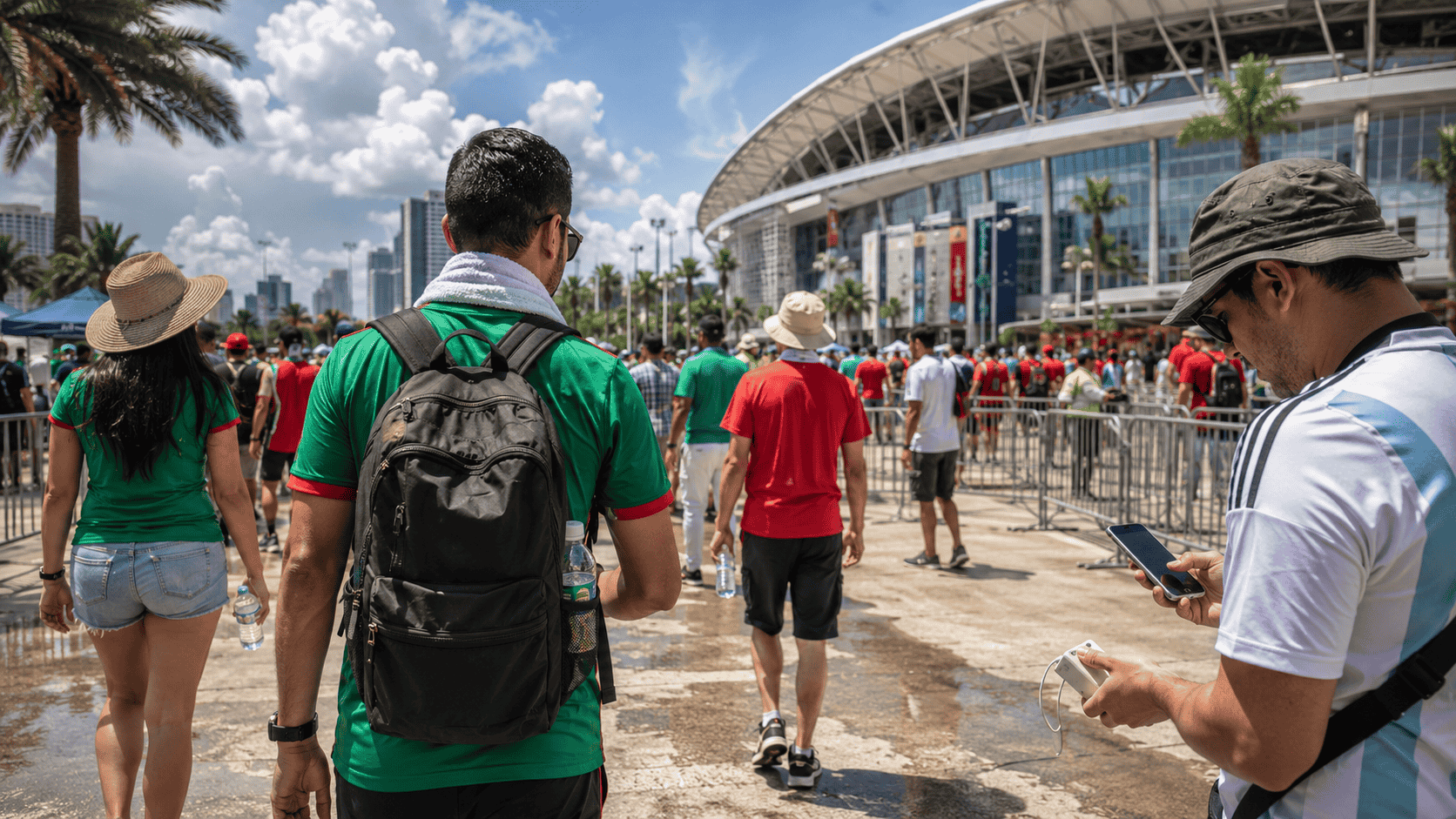
The World Cup heat story is now impossible to ignore
The World Cup 2026 heat guide is no longer a side note for cautious travelers. It has become one of the most important matchday planning topics of the tournament.
The 2026 World Cup was always going to be huge. It is spread across North America, with fans moving through the United States, Canada and Mexico. That scale creates excitement, but also cost, crowd pressure and weather risk.
Reuters reports that a heat dome across the eastern U.S. and parts of Canada is creating dangerous conditions for World Cup fans and players. A match in Philadelphia between Paraguay and France is expected to face heat index values in the 105°F to 115°F range, above heat-safety recommendations from players’ union FIFPRO.
This is not only a sports story.
It is a travel story, a health story and a money story.
Fans who plan well may still have an unforgettable matchday. Fans who ignore the heat may find the day harder, more expensive and less safe than expected.
Why fans in U.S. host cities need a heat plan
Many international fans are used to football weather that feels very different from a North American summer.
A supporter traveling from England, Scotland, Germany, France, the Netherlands or Canada may not be prepared for high humidity, long walks, hot asphalt, crowded fan zones and stadium queues in extreme heat.
Reuters reported that fans in Philadelphia have been trying to keep the World Cup spirit alive despite temperatures near 100°F, with officials emphasizing hydration, shade and light clothing.
The problem is not simply the temperature. It is the full matchday environment.
Fans may walk long distances from transit stops. They may stand in security lines. They may drink alcohol. They may arrive early for fan events. They may wear heavy jerseys, face paint, costumes or flags. They may spend hours outside before kickoff.
That is how heat risk builds.
It rarely feels dangerous at first. It begins as discomfort, thirst or tiredness. Then it becomes dizziness, headache, nausea, confusion or weakness.
A good matchday plan treats heat as seriously as tickets and transport.
Tickets: buy official and plan entry carefully
Ticket demand for World Cup 2026 is intense, and fans should be careful where they buy.
The UK government’s World Cup travel advice says fans should only purchase tickets through the official FIFA ticketing platform, and notes that no tickets will be sold at stadiums. It also says entry may require an official ticket in the FIFA World Cup app, while printed copies or screenshots may not be accepted.
This matters for safety and budgeting.
Fake tickets do not only waste money. They can leave fans stuck outside a stadium in dangerous heat, separated from friends or forced to deal with expensive last-minute options.
Before leaving for the stadium, fans should check:
Is the ticket inside the official app?
Is the phone charged?
Is mobile data working?
Is ID required?
Is the ticket linked to the right person?
Are stadium bag rules understood?
Is there enough time for security?
Heat makes delays more serious. A ticket problem that might be annoying in cool weather can become exhausting in 100°F conditions.
Travel costs are part of the matchday risk
World Cup travel is expensive because many costs rise together.
Flights, hotels, city transport, meals, fan merchandise, ride-hailing, parking and event tickets can all become more expensive around high-demand matches.
Heat can add extra costs too.
Fans may need more water, taxis instead of walking, cooling breaks, sunscreen, hats, lighter clothing or a hotel closer to the stadium. A delayed flight or missed train can mean an extra night in a hotel. A heat-related illness may require medical care.
This is why World Cup budgeting should include an emergency cushion. A trip planned too tightly becomes stressful when one thing changes.
For families, the budget should also include rest time. Children and older travelers may need slower days, shaded indoor activities and fewer back-to-back events.
Trying to do too much in extreme heat can ruin the whole trip.
What to pack for a hot matchday
A hot World Cup matchday needs a different packing list from a normal stadium visit.
Start with water, but remember that stadium rules may restrict bottle types. Check venue guidance before leaving. If refill stations are available, use them early. Do not wait until you feel thirsty.
Pack sunscreen, sunglasses and a hat. Light clothing is better than heavy layers. A breathable football shirt is fine, but avoid costumes that trap heat.
Bring a portable phone charger. Your phone may hold tickets, maps, ride-share apps, payment cards and emergency contacts. Heat can drain batteries faster, and heavy network use around stadiums can make phones work harder.
Carry essential medications and basic first-aid items if allowed. Keep a copy of travel insurance details and emergency contact information.
For children, pack snacks, cooling towels where allowed, and a clear meeting plan if the group gets separated.
Hydration, alcohol and fan zones
World Cup fan zones are exciting, but they can also intensify heat risk.
Crowds, music, alcohol, long standing times and limited shade make it easy to lose track of hydration. Drinking alcohol in extreme heat can increase dehydration risk, especially if fans are also walking long distances.
A practical rule: drink water before alcohol, between alcoholic drinks and after leaving the fan zone.
Fans should also avoid standing in direct sun for long periods simply to keep a good viewing spot. Shade is not a luxury during extreme heat. It is part of safety planning.
Cities may offer cooling zones or shaded public areas. Use them before symptoms appear.
Travel insurance and cancellation questions
World Cup travelers should not assume travel insurance covers every heat-related problem.
Insurance may cover medical emergencies, trip delays, missed connections or cancellation for certain covered reasons, depending on the policy. But coverage varies. Some policies require a minimum delay time. Others exclude known events or do not cover a traveler simply choosing not to attend because the weather is uncomfortable.
For example, travel delay coverage often reimburses extra costs only when the delay is caused by a covered reason and lasts beyond the minimum time stated in the plan.
Fans should check policy wording before buying.
Key questions include:
Does the policy cover medical treatment abroad?
Does it cover heat-related illness?
Does it cover trip delay?
Does it cover missed connections?
Does it cover event cancellation or postponement?
Does it cover prepaid tickets or only travel expenses?
Does it exclude known weather warnings?
This is especially important for fans traveling across multiple cities.
How families should plan stadium days
Families need a slower matchday plan.
Arrive early, but not so early that children spend unnecessary hours in the sun. Identify shaded areas, restrooms, water points and medical stations. Decide in advance where to meet if someone gets separated.
Children may not recognize heat symptoms quickly. Parents should watch for unusual tiredness, irritability, dizziness, headache, nausea or confusion.
Dress children in light clothing and use sunscreen properly. Build recovery time after the match. Do not plan a full day of sightseeing, fan events and a night match without breaks.
For older relatives, check walking distances carefully. A stadium that looks close on a map may still require long detours because of security zones and road closures.
Local safety information matters
Philadelphia’s official city information says it is hosting six World Cup matches in June and July, including a Round of 16 match on July 4. City event pages are useful because they provide local safety, transportation and event guidance that national travel pages may not include.
Before attending any match, fans should check:
Official host city updates
Stadium rules
Local weather alerts
Public transport changes
Road closures
Bag policies
Cooling zones
Emergency instructions
Relying only on social media can be risky. Use official event, city and transport sources.
The bottom line
World Cup 2026 is still a celebration. The heat does not cancel the excitement.
But it changes the preparation.
Fans need official tickets, charged phones, smart transport plans, water, shade, sunscreen and realistic budgets. They also need to understand what travel insurance can and cannot do.
The best matchday is not the one where you arrive earliest or wear the biggest flag.
It is the one where you get home safely, with the memory intact.
Internal links to add
Also read: SPF 50 Sunscreen Questions, Travel Insurance for Heatwaves and Flight Delays, Heat Exhaustion vs Heatstroke, Airport Delays This Summer, UK Staycations Surge.
FAQ
Why is heat a concern at World Cup 2026?
Extreme heat and humidity are affecting several host areas, with dangerous heat index values reported around some matches.
Where should fans buy World Cup 2026 tickets?
Fans should use the official FIFA ticketing platform. The UK government advises that tickets will not be sold at stadiums and that official app tickets may be required.
What should fans bring to a hot World Cup match?
Bring sunscreen, sunglasses, a hat, a charged phone, allowed water containers, essential medication and a backup transport plan.
Does travel insurance cover World Cup heat disruption?
It depends on the policy. Heat-related medical issues, travel delays or interruptions may be covered only under specific conditions.
How can families stay safer at hot matches?
Plan shade breaks, use sunscreen, monitor children for heat symptoms, arrive with enough time and avoid overloading the day with extra activities.




Discussion
Comments
Approved comments are published after moderation to keep discussion useful and spam-free.
No comments yet. Start the discussion below.