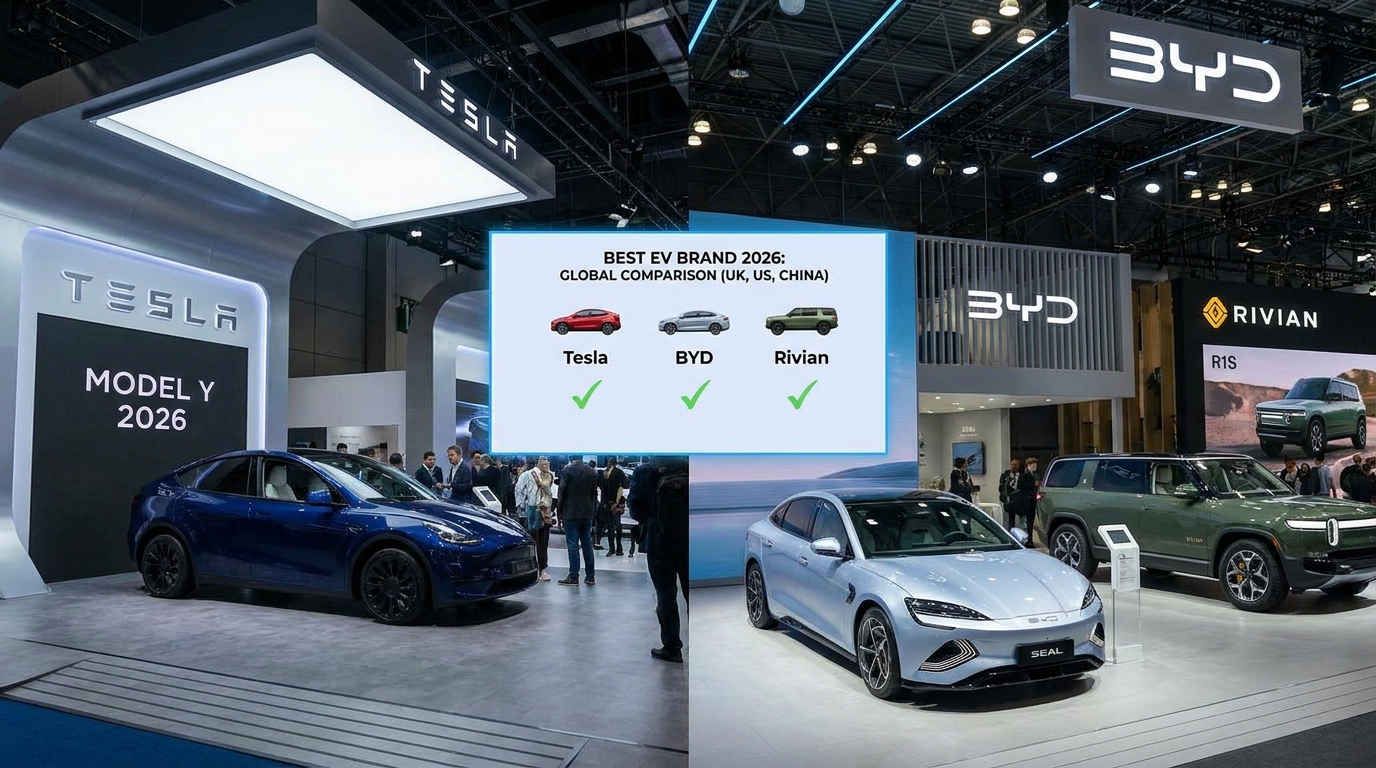
Tesla vs BYD vs Rivian: Which EV Brand Is Actually Worth Your Money in 2026?
Three very different visions for the future of electric driving — we break down which brand wins on price, technology, reliability, and real-world ownership in 2026.
The EV Brand War Has a Clear Shape
In 2026, the global electric vehicle market is defined by three genuinely distinct philosophies. Tesla built the template for aspirational electric motoring and still sets the benchmark for software, charging infrastructure, and brand cachet. BYD — the Chinese manufacturer that overtook Tesla as the world's largest EV seller by volume in 2023 and has maintained that position — offers the most technologically sophisticated and value-forward approach to electrification at scale. And Rivian has carved out the most distinct niche of the three: premium, adventure-oriented American electric trucks and SUVs for buyers who want capability alongside electrification.
These aren't simply different price points of the same product. They represent genuinely different answers to what an electric vehicle should be, what it should prioritise, and who it should serve. Here is the honest, detailed case for each.
Tesla: The Innovator With a Tarnished Reputation
The Case For
Tesla's advantages in 2026 remain real and significant. The Supercharger network — now over 60,000 charging stalls globally — is by a considerable margin the most reliable, most widely distributed fast charging network in existence. The NACS connector standard, which Tesla pioneered, has been adopted by Ford, GM, Honda, and now the majority of US manufacturers, cementing Tesla's infrastructure advantage for years. Over-the-air software updates continue to add meaningful functionality — Tesla vehicles purchased three years ago have features today they didn't have when new, a capability no other mass-market manufacturer has yet matched. And Tesla's Autopilot and Full Self-Driving systems, whatever their limitations and controversies, remain the most widely deployed advanced driver assistance systems in the world.
The Model Y — the world's best-selling vehicle overall in 2023 and still among the top sellers globally in 2026 — delivers competitive range, strong performance, and the Tesla software and charging ecosystem in an SUV form factor that suits the broadest possible range of buyers. The refreshed Model 3 Highland is genuinely excellent.
The Honest Problems
Tesla's brand has faced significant headwinds since 2024, largely connected to Elon Musk's political activities and public statements. Multiple market research studies in the UK, Germany, and the US show meaningful decline in purchase intent among previously sympathetic demographics — particularly younger, environmentally-motivated buyers. Tesla's market share in Europe fell in 2024 and 2025 even as the overall EV market grew, a pattern that industry analysts attribute at least partly to brand sentiment.
Quality control remains inconsistent — panel gaps, paint quality, and interior fit and finish are below what European luxury competitors at equivalent price points deliver. Customer service, primarily phone and app based, receives mixed reviews. And the absence of a genuine entry-level vehicle (the much-promised $25,000 / £20,000 Tesla remains in production ambiguity) leaves the brand without a product for the fastest-growing price segment of the EV market.
Best Tesla in 2026: Model Y Long Range — the sweet spot of range (330+ real-world miles), space, and Supercharger access
Starting price: From £44,990 / $47,990
Best for: Buyers who prioritise charging infrastructure and software above all else, and whose purchase decision is not affected by the brand's current political associations
BYD: The Challenger That Won on Technology
The Case For
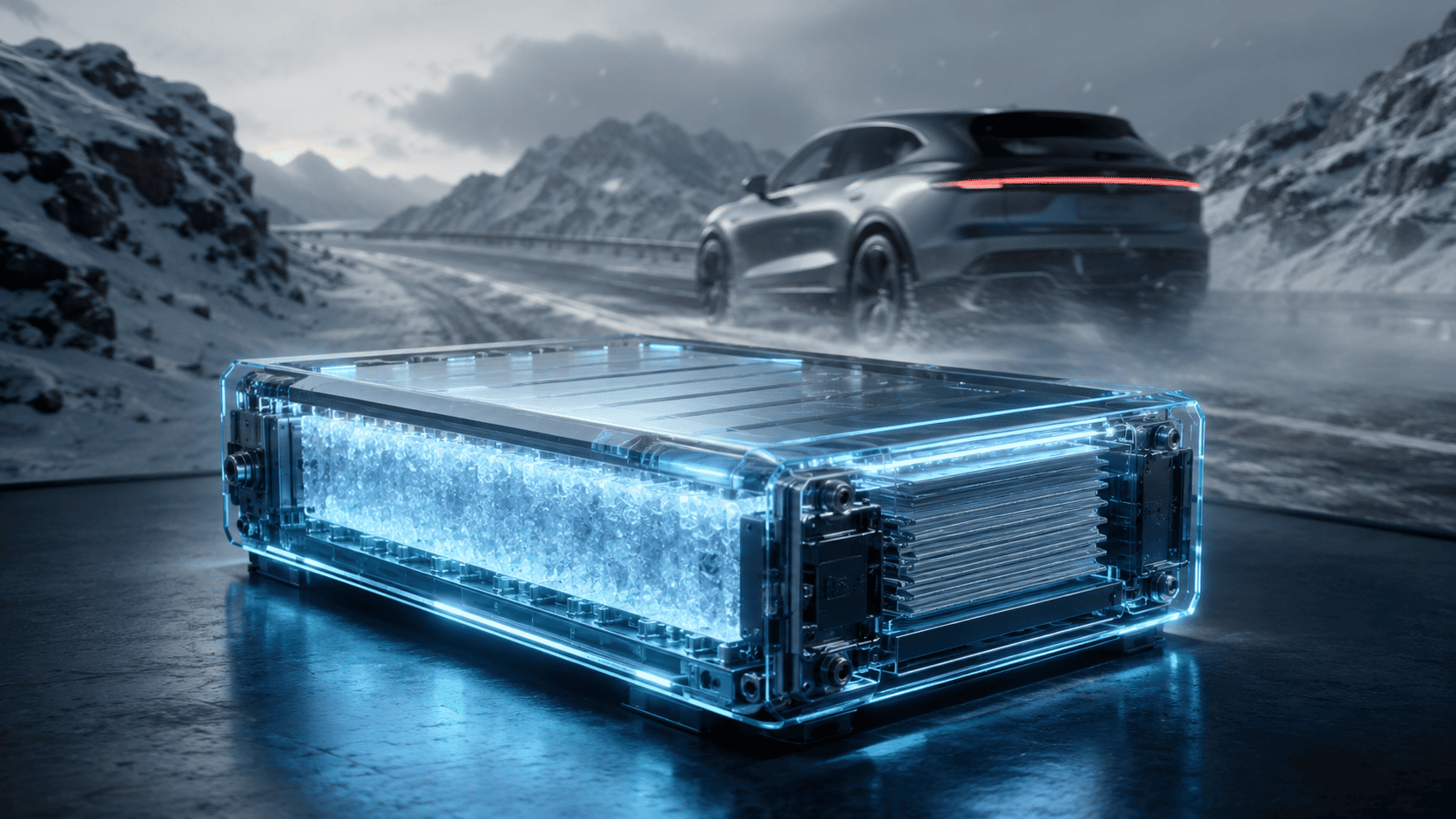
BYD's rise to become the world's largest EV manufacturer is not a story of cheap imitation — it's a story of genuine technological leadership in specific areas. The company's vertically integrated supply chain (BYD manufactures its own batteries, semiconductors, and electric motors) gives it cost advantages and quality control that most competitors cannot match. Its Blade Battery technology — a lithium iron phosphate chemistry engineered into blade-shaped cells that form part of the vehicle's structural floor — is genuinely superior to conventional NMC battery packs in safety, longevity, and full-charge cycling tolerance.
The BYD Seal, launched in the UK and Europe in 2023–2024 and significantly updated for 2026, is a direct Tesla Model 3 competitor that undercuts it by £5,000–£8,000 while offering comparable or superior interior quality and an 800V ultra-fast charging architecture. The BYD Han and Tang models sit further up the range and offer luxury car quality at prices that challenge European premium brands.
In its home market China — which accounts for approximately 60% of global EV sales — BYD commands a dominant position across all price segments. The export expansion into Europe, Southeast Asia, Australia, and increasingly the US (where tariff barriers have slowed but not stopped its progress) continues to accelerate.
The Honest Problems
BYD's charging network infrastructure outside China is almost entirely dependent on public third-party networks — the company has no proprietary charging network comparable to Tesla's Superchargers in the UK or US. For long-distance drivers, this is a meaningful disadvantage in regions where public DC fast charging reliability remains inconsistent.
Brand recognition and trust among Western consumers remains a work in progress. Concerns about Chinese government data access to vehicles connected to Chinese-owned servers have been raised by regulators in both the UK and US. Resale values for BYD vehicles in Western markets are less established than for Tesla or established European brands, introducing uncertainty into five-year ownership cost projections. And dealership and servicing networks, while expanding, are significantly thinner than established manufacturers.
Best BYD in 2026: BYD Seal (Long Range AWD) — 400+ real-world miles, 150kW DC charging, premium interior
Starting price: From £34,990 / $41,990
Best for: Buyers who prioritise technology, interior quality, and value and primarily charge at home or at reliable public networks
Rivian: The Adventure Brand That Nailed Its Niche
The Case For
Rivian has done something genuinely difficult: built a compelling brand identity and a loyal customer base in the crowded and capital-intensive EV market. The R1T pickup truck and R1S SUV are not merely capable off-road vehicles — they are among the most technically sophisticated trucks ever built, with independent air suspension, four individual motors (in quad-motor configuration), a unique front storage "frunk" of extraordinary capacity, and adventure-focused features like an integrated gear tunnel and camp kitchen accessories that competitors have not matched.
Customer satisfaction scores for Rivian are consistently among the highest in the automotive industry — a remarkable achievement for a manufacturer that only began volume production in 2021. The R1 platform's over-the-air update capability has meaningfully improved vehicle performance and feature sets post-purchase. And the company's Adventure Network of DC fast chargers, while smaller than Tesla's, is strategically positioned at trailheads, national park entrances, and outdoor destinations that perfectly serve Rivian's target customer.
The R2 — Rivian's smaller, more affordable SUV launching in 2026 at approximately $45,000 / £38,000 — is potentially the company's most important product, expanding the addressable market significantly beyond the premium truck buyer.
The Honest Problems
Rivian's financial position has been precarious for much of its short existence — the company burned through capital at alarming rates during its ramp-up and has only recently approached production efficiency targets. Profitability on individual vehicles remains elusive, though per-vehicle economics have improved significantly in 2025–2026. The company's survival is no longer in serious question following Amazon's continued fleet partnership and a VW Group investment, but the premium pricing (R1T from £68,000 / $71,900; R1S from £72,000 / $75,900) limits the addressable market substantially.
Service infrastructure in the UK and Europe remains thin — the brand has limited presence outside the US, where its sales are concentrated. For UK buyers, this creates meaningful service risk.
Best Rivian in 2026: R1S Performance Dual-Motor — best balance of range (350+ real-world miles), performance, and value within the R1 family
Starting price: From £72,000 / $75,900
Best for: US buyers who genuinely use trucks and SUVs for outdoor adventure and want the best possible electric capability for that specific use case
Head-to-Head Comparison: The Verdict by Use Case
Best for Daily Commuting and Urban Driving
Winner: BYD. Superior interior quality, competitive range, and lower purchase price make BYD the rational choice for buyers whose primary use case is urban and suburban daily driving with home charging.
Best for Long-Distance Road Trips
Winner: Tesla. The Supercharger network advantage remains decisive for frequent long-distance drivers. Knowing that fast, reliable charging is available every 50–100 miles on major routes in both the UK and US eliminates the range anxiety that affects competitors.
Best for Off-Road and Adventure Use
Winner: Rivian. Not even close. The R1 platform's off-road capability, ground clearance, air suspension, and adventure-specific features are in a different category from anything Tesla or BYD offer.
Best Overall Value
Winner: BYD. At equivalent price points, BYD's technology, interior quality, and battery warranty consistently outperform the competition. For most buyers without specific use cases that favour Tesla's network or Rivian's capability, BYD offers the most car per pound or dollar.
Best Brand to Own in 5 Years
Winner: Tesla. Software support, Supercharger network expansion, and established resale value data give Tesla the most predictable and lowest-risk long-term ownership proposition despite the brand's current challenges.
Tesla vs BYD 2026, Rivian vs Tesla comparison, best EV brand 2026, BYD Seal review, Tesla Model Y 2026, Rivian R1S review, which electric car brand to buy, EV brand comparison UK US, Tesla vs Chinese EVs, best electric car manufacturer


Discussion
Comments
Approved comments are published after moderation to keep discussion useful and spam-free.
No comments yet. Start the discussion below.