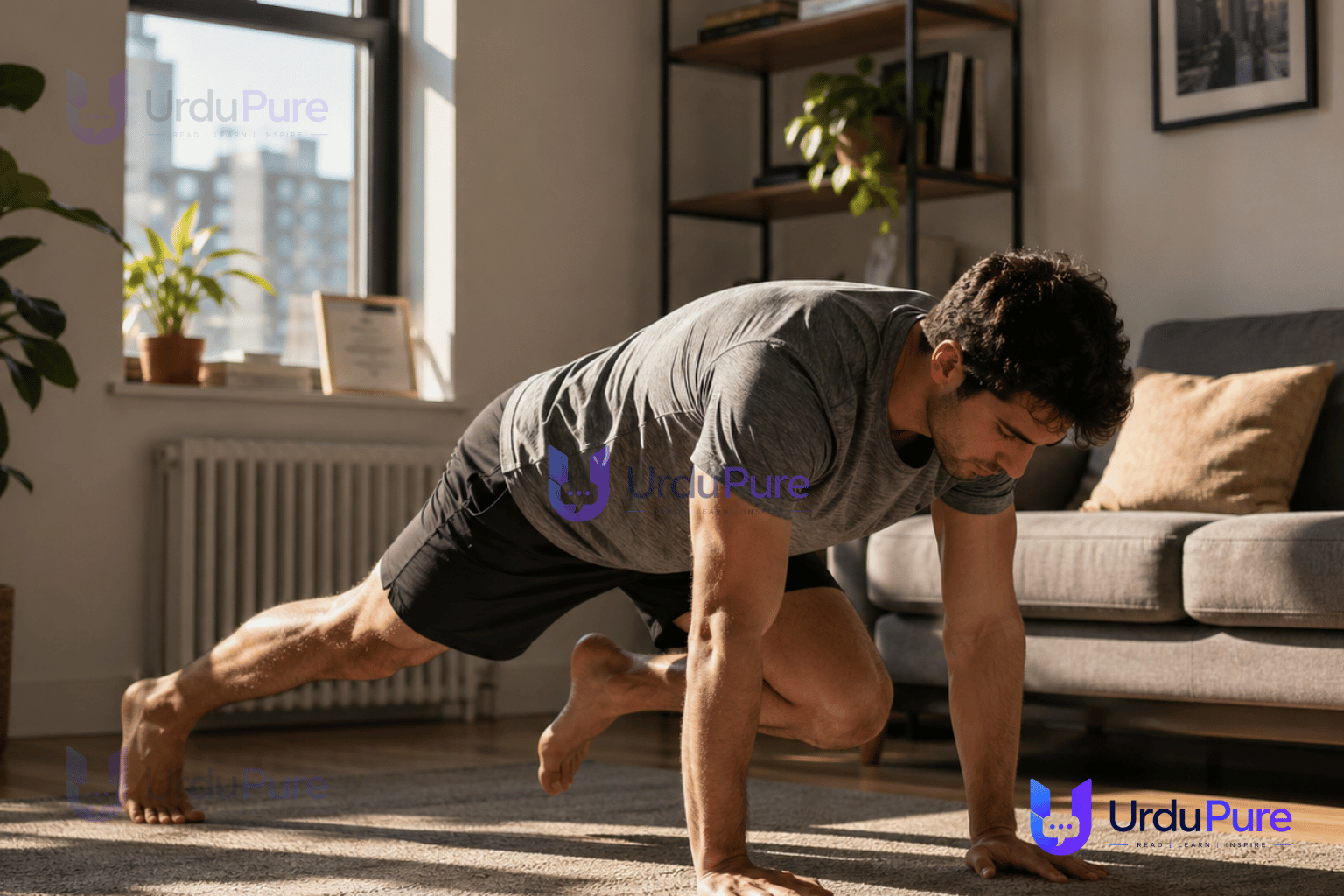
The Best Home Workout Plan for 2026: No Gym, No Equipment Needed
The best gym is the one you'll actually use. This science-backed 12-week plan builds real, visible fitness using nothing but your bodyweight — and works whether you have 20 minutes or an hour.
Why Home Workouts Beat the Gym for Most People
The fitness industry will never tell you this, but for a significant majority of people, home workouts deliver better results than gym memberships. Not because the gym is inferior — it isn't — but because the gym requires a commute, a schedule, a bag, a changing room, and the psychological hurdle of showing up in public. Home workouts require none of these things. You roll out of bed, move ten feet, and start.
The single biggest predictor of fitness results is consistency. And consistency is determined overwhelmingly by convenience. A moderately effective workout done five days per week will always outperform an optimal workout done twice a week — and home training has a structural consistency advantage that no gym can replicate.
The science backs this up too. A 2024 meta-analysis in the British Journal of Sports Medicine found that bodyweight resistance training produces comparable strength and hypertrophy gains to free-weight training in beginners and intermediate exercisers when volume and progressive overload are properly applied. The critical caveat: you need to do it properly, with genuine progressive challenge. "Going through the motions" at home produces nothing.
This plan is designed to ensure you never just go through the motions.
What You Actually Need
Nothing. A clear floor space roughly 2m x 1m. That's it.
Optional additions that improve the programme but are not required:
A resistance band (£10–£15 / $12–$18): Adds resistance to lower body exercises and allows rows and pull-apart movements
A pull-up bar (£20–£30 / $25–$40): Doorframe-mounted, allows the single most effective upper body bodyweight exercise
A yoga mat (£15–£40 / $20–$50): Comfort for floor work, not functionally necessary
Total optional spend: under £65 / $85. Compare this to the average UK gym membership of £45 per month or US membership of $58 per month, and the economics are obvious.
The Principles Behind This Plan
Before the plan itself, three principles that make the difference between a programme that produces results and one that produces nothing.
Progressive Overload
Your body adapts to stress. For continued improvement, the stress must increase over time. In a gym, progressive overload means adding weight. At home, it means increasing reps, reducing rest time, adding sets, slowing the tempo, or progressing to harder exercise variations. Every week of this plan is slightly harder than the last — that is by design and is non-negotiable.
Movement Pattern Balance
The plan covers all six fundamental movement patterns: push (chest, shoulders, triceps), pull (back, biceps), hinge (hamstrings, glutes), squat (quads, glutes), carry (core stability), and locomotion (cardiovascular). Imbalanced training — doing only push movements, for example — creates postural problems and injury risk. This plan trains all patterns weekly.
Recovery Is Training
Muscles grow during rest, not during exercise. Exercise is the stimulus; sleep and nutrition are the response. The plan includes mandatory rest days that are as important as the training days. Skipping rest days to "do more" is the fastest route to overtraining, injury, and quitting.
The 12-Week Home Workout Plan
Training Schedule
The plan runs on a 3-days-on, 1-day-off rotating schedule — or can be done Monday / Wednesday / Friday with weekends off if a fixed schedule is preferred. Each session takes 30–45 minutes. A fourth optional session of 20–30 minutes low-intensity cardio (walking, cycling, swimming) can be added on rest days for those with additional fitness goals.
Phase 1: Foundation (Weeks 1–4)
Goal: establish movement quality, build base endurance, and prepare joints and connective tissue for the higher intensity of later phases. Every exercise should feel controlled — never rushed.
Session A — Push and Core
Incline push-ups (hands on a chair or table): 3 sets of 10–15 reps
Pike push-ups: 3 sets of 8–10 reps
Tricep dips (using a chair): 3 sets of 10–12 reps
Plank hold: 3 sets of 20–30 seconds
Dead bug: 3 sets of 8 reps each side
Mountain climbers: 3 sets of 20 reps (10 each side)
Session B — Squat, Hinge, and Carry
Bodyweight squat: 3 sets of 15–20 reps
Romanian deadlift (single leg, hands on hips): 3 sets of 10 reps each side
Glute bridge: 3 sets of 15 reps
Reverse lunge: 3 sets of 10 reps each side
Side plank: 3 sets of 15–20 seconds each side
Farmer's carry (holding any household weight): 3 sets of 30 seconds
Session C — Full Body and Conditioning
Burpees (modified if needed — step feet back instead of jumping): 3 sets of 8 reps
Jump squats (or squat pulses for low impact): 3 sets of 10 reps
Push-up to downward dog: 3 sets of 8 reps
Alternating reverse lunge with reach: 3 sets of 10 reps each side
Bear crawl: 3 sets of 20 seconds
Flutter kicks: 3 sets of 20 reps
Rest between sets: 60–90 seconds in Phase 1. Focus on form over speed.
Phase 2: Build (Weeks 5–8)
Goal: increase intensity and volume. All exercises become harder variations of Phase 1 movements. Rest times shorten to 45–60 seconds.
Session A — Push and Core (Harder)
Standard push-ups: 4 sets of 12–15 reps
Wide push-ups: 3 sets of 10–12 reps
Diamond push-ups: 3 sets of 8–10 reps
Pike push-ups: 4 sets of 10–12 reps
Long-lever plank: 3 sets of 30–40 seconds
Ab wheel rollout (or towel slide): 3 sets of 8–10 reps
Session B — Squat, Hinge, and Carry (Harder)
Bulgarian split squat (rear foot elevated on a chair): 4 sets of 10 reps each side
Single-leg Romanian deadlift: 4 sets of 10 reps each side
Single-leg glute bridge: 3 sets of 12 reps each side
Lateral lunge: 3 sets of 10 reps each side
Copenhagen side plank (foot on chair): 3 sets of 10–15 seconds each side
Suitcase carry: 3 sets of 40 seconds each side
Session C — Full Body and Conditioning (Harder)
Full burpees with jump: 4 sets of 10 reps
Jump squats: 4 sets of 12 reps
Plyometric push-ups (or clap push-ups): 3 sets of 6–8 reps
Walking lunges: 3 sets of 12 reps each side
Lateral bear crawl: 3 sets of 30 seconds
V-ups: 3 sets of 10–12 reps
Phase 3: Peak (Weeks 9–12)
Goal: maximum intensity and volume. This phase is genuinely challenging. Rest times drop to 30–45 seconds. Supersets (performing two exercises back-to-back without rest) are introduced.
Session A — Push Superset Circuit
Superset 1: Archer push-ups × 8 each side + Pike push-ups × 10. Rest 45 seconds. Repeat 4 times.
Superset 2: Diamond push-ups × 10 + Tricep dips × 12. Rest 45 seconds. Repeat 3 times.
Core finisher: 3 rounds of — Plank 45 seconds / Ab rollout × 10 / Mountain climbers × 30
Session B — Lower Body Superset Circuit
Superset 1: Bulgarian split squat × 12 each side + Jump squat × 10. Rest 45 seconds. Repeat 4 times.
Superset 2: Single-leg deadlift × 12 each side + Glute bridge with 3-second hold × 12. Rest 45 seconds. Repeat 3 times.
Carry finisher: 3 rounds of — Farmer's carry 30 seconds + Copenhagen plank 15 seconds each side
Session C — Full Body AMRAP (As Many Rounds As Possible)
Set a 20-minute timer. Complete as many rounds as possible of the following circuit with 30 seconds rest between each round:
Burpees × 8
Push-ups × 10
Jump squats × 10
Mountain climbers × 20
V-ups × 10
Track your round count each session. Aim to beat your previous total every week.
Nutrition: The Other Half of the Equation
No workout programme delivers full results without adequate nutrition. For home training focused on building fitness and changing body composition, three nutritional principles matter above all others.
Eat Enough Protein
Aim for 1.6–2.0g of protein per kilogram of bodyweight per day. For a 75kg person, that's 120–150g of protein daily. Good sources: chicken breast, Greek yoghurt, eggs, tinned fish, lentils, tofu, and cottage cheese. Protein is the primary driver of muscle repair and growth after training.
Don't Under-Eat
A common mistake in home training programmes is combining exercise with significant caloric restriction. Unless deliberate fat loss is the goal, eating at or near maintenance calories ensures your body has the fuel to adapt and improve. Chronic under-eating combined with training leads to muscle loss, fatigue, and stalled progress.
Hydration Matters More Than Most People Think
A 2% reduction in body water reduces exercise performance by up to 10–20%. Drink 2–3 litres of water daily, and an additional 500ml per hour of training. This is among the simplest and most impactful performance interventions available.
How to Stay Consistent: The Three Rules That Work
Rule 1: Never Miss Twice
Missing one session is normal — life happens. Missing two in a row is the beginning of a habit break. Whatever happens, never let two missed sessions become three. One missed workout has zero long-term impact. A broken habit does.
Rule 2: Make It Stupidly Easy to Start
The hardest part of any workout is beginning. Remove every friction point: keep your mat out rather than rolled up, wear your workout clothes to bed on training mornings, and commit only to the warm-up. You'll almost always continue once you've started.
Rule 3: Track Progress Visibly
Write down your reps and sets after every session. Watching the numbers increase week on week is one of the most powerful motivators available. Progress that is invisible is progress that feels absent — tracking makes it real.
What to Expect: A Realistic Timeline
Weeks 1–2: Soreness and adaptation. The work feels hard. This is normal and temporary.
Weeks 3–4: Movement quality improves. The foundation sessions start to feel manageable.
Weeks 5–8: Visible strength improvements. Push-up capacity typically doubles for beginners in this phase.
Weeks 9–12: Significant fitness improvements. Endurance, strength, and body composition all visibly change.
After 12 weeks: You have a foundation for a lifetime of training. Repeat the plan with harder variations, add equipment, or transition to a gym with a meaningful base level of fitness already established.
Disclaimer: Consult a healthcare professional before beginning any new exercise programme, particularly if you have existing injuries or health conditions. Stop any exercise that causes sharp or joint pain.
home workout plan 2026, no equipment workout routine, best bodyweight workout, 12 week home workout plan, workout without gym, home fitness plan beginners, bodyweight strength training, how to get fit at home 2026






Discussion
Comments
Approved comments are published after moderation to keep discussion useful and spam-free.
No comments yet. Start the discussion below.