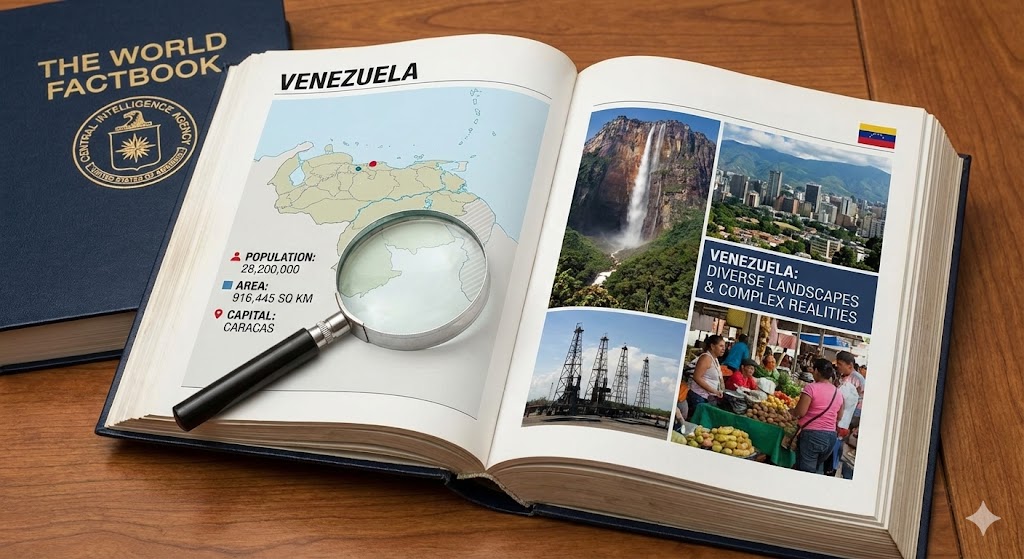
Venezuela, a nation perched on the northern coast of South America, has long captured global attention due to its vast oil reserves, complex political landscape, and ongoing socio-economic challenges. For those seeking an objective, data-driven understanding of this fascinating yet troubled country, the Central Intelligence Agency's (CIA) World Factbook stands as an indispensable resource. Often referred to as a "snapshot" of the world's nations, the Factbook provides a comprehensive, unclassified overview of Venezuela's geography, people, government, economy, energy, communications, transportation, military, and transnational issues.
This deep dive into the World Factbook's entry on Venezuela aims to distill the key facts and figures, painting a journalistic portrait of a nation grappling with its rich potential and profound difficulties.
A Nation of Contrasts: Geographical and Environmental Overview
Venezuela's geography is as diverse as its history. Bordered by the Caribbean Sea and the Atlantic Ocean to the north, Guyana to the east, Brazil to the south, and Colombia to the west, its strategic location has always played a significant role in its development. The Factbook highlights a landscape that transitions from the Andes mountains in the northwest to the central plains (llanos), and further to the Guiana Highlands in the southeast.
Key Geographical Features:
- Area: Approximately 916,445 sq km, making it the 33rd largest country in the world, slightly more than twice the size of California.
- Coastline: Over 2,800 km, dotted with numerous islands and an extensive maritime claim.
- Climate: Tropical; hot, humid; more moderate in the highlands. This variation supports a rich biodiversity, though also presents challenges for agriculture and human settlement.
- Natural Resources: Immense proven crude oil reserves (the largest in the world), natural gas, iron ore, gold, bauxite, other minerals, hydropower, and diamonds. Oil, in particular, has been both a blessing and a curse, shaping its economic trajectory and political destiny.
Environmentally, Venezuela faces significant challenges. Deforestation, particularly in the Amazon region, soil degradation, and water pollution from industrial and mining activities are critical issues. The Factbook implicitly underscores the tension between resource exploitation and environmental preservation.
The Human Landscape: People and Society
The human dimension of Venezuela, as detailed by the Factbook, reveals a nation in flux, heavily impacted by economic crisis and political instability. Demographics offer a window into the country's social fabric.
Population Dynamics:
- Population: Estimated at around 28.5 million (though subject to significant fluctuation due to migration).
- Ethnic Groups: A rich mosaic, primarily mestizo (mixed Amerindian and European ancestry), white, black, and Amerindian. This diversity contributes to a vibrant cultural heritage.
- Languages: Spanish (official), numerous indigenous languages.
- Religion: Predominantly Roman Catholic, with a growing Protestant minority.
- Urbanization: Highly urbanized, with over 89% of the population residing in urban areas, particularly along the northern coast. Caracas remains the largest city and capital.
Social indicators, while not always explicitly detailed in narrative form, are reflected through statistical data on life expectancy, literacy rates, and health expenditures. Recent trends show a decline in public health services, an increase in poverty, and a massive outward migration—one of the largest displacement crises globally—as millions of Venezuelans have sought refuge and better opportunities in neighboring countries and beyond. These factors collectively paint a picture of severe social strain and humanitarian concerns.
Economic Realities: A Deep Dive into Venezuela's Economy
Perhaps no section of the Factbook on Venezuela is more stark than its economic overview. Historically one of the wealthiest nations in Latin America, Venezuela's economy has been in a prolonged crisis, marked by hyperinflation, severe shortages, and a dramatic decline in GDP. The Factbook attributes this largely to the country's excessive reliance on oil revenues, mismanagement, and the impact of international sanctions.
Key Economic Indicators and Challenges:
- Oil Dominance: Crude oil production and refining account for roughly 95% of export earnings and a substantial portion of GDP and government revenue. Volatility in global oil prices directly impacts the national budget.
- Economic Contraction: Venezuela has experienced one of the longest and deepest economic contractions in modern history, with its GDP shrinking significantly over the past decade.
- Hyperinflation: The country has battled persistent hyperinflation, eroding purchasing power and making long-term economic planning virtually impossible for citizens and businesses alike.
- Shortages: Widespread shortages of food, medicine, and basic goods have become a grim reality for many Venezuelans, exacerbating humanitarian concerns.
- External Debt: A significant and complex external debt situation, including arrears on bond payments, further complicates economic recovery efforts.
Despite these challenges, there are ongoing, albeit nascent, efforts towards economic liberalization, including increased private sector activity and dollarization, as the government seeks alternative revenue streams and stability outside its traditional socialist policies. However, structural issues and political instability remain formidable obstacles to sustainable growth.
Governance and Political Climate
The World Factbook describes Venezuela as a federal presidential republic, though its political system has faced significant international scrutiny regarding democratic processes and human rights. The executive branch holds considerable power, and recent elections have been widely criticized for lacking transparency and fairness.
Political Landscape:
- Government Type: Federal Presidential Republic.
- Capital: Caracas.
- Administrative Divisions: 23 states, 1 capital district, and 1 federal dependency.
- Political System: Characterized by a strong executive presidency. The Factbook often highlights the concentration of power and challenges to the separation of powers.
- International Relations: Venezuela is a member of various international organizations but has strained relations with many Western democracies, while fostering alliances with countries like China, Russia, and Cuba.
Concerns regarding human rights, freedom of speech, and the independence of the judiciary are frequently cited by international bodies and are implicitly reflected in the Factbook's portrayal of the political environment.
Security and Defense: Internal and External Challenges
Venezuela's military and security apparatus are detailed, reflecting the government's efforts to maintain internal order and protect its borders, amidst internal dissent and transnational threats.
Military and Security Overview:
- Military Branches: Bolivarian National Armed Forces (FANB) comprise the Army, Navy (including Naval Infantry and Coast Guard), Air Force, and National Guard (GNB).
- Paramilitary Groups: The Factbook also acknowledges the existence and influence of various armed civilian groups, which play a role in the security landscape.
- Transnational Issues: Venezuela remains a major transit country for illicit drugs, particularly cocaine, destined for the US and Europe. Border disputes, especially with Guyana over the Essequibo region, and cross-border criminal activity also feature prominently.
The military's role extends beyond traditional defense, often involved in internal security and public order, particularly during periods of political unrest.
Infrastructure and Connectivity
The Factbook provides insights into the country's infrastructure, which is vital for economic activity and daily life. While Venezuela boasts significant infrastructure built during its oil boom years, maintenance and modernization have suffered during the economic crisis.
Transportation and Communications:
- Airports: A network of airports, including major international hubs like Simón Bolívar International Airport (Maiquetía).
- Railways: Limited but existing rail network, primarily for cargo and some passenger services.
- Roadways: An extensive road network, though the condition of roads varies significantly.
- Ports: Key seaports such as La Guaira, Puerto Cabello, and Maracaibo facilitate international trade.
- Communications: While mobile phone penetration is high, internet access and reliability have been inconsistent, impacted by infrastructure issues and government controls.
The state of infrastructure often mirrors the broader economic health, and in Venezuela, significant investment is needed to restore and expand critical networks.
A Complex Nation Through Data
The CIA World Factbook offers an invaluable, if sobering, perspective on Venezuela. It systematically compiles data that underscores the nation's profound complexities: a land rich in natural resources and cultural heritage, yet ensnared in a protracted crisis. From its diverse geography to its struggling economy, fractured society, and contentious political environment, Venezuela presents a stark case study of the challenges confronting developing nations, particularly those heavily reliant on single commodities.
While statistics alone cannot fully capture the human experience, the Factbook provides a crucial framework for understanding the forces at play in Venezuela. It serves as a reminder that behind the headlines and political rhetoric, there lies a nation with immense potential, striving to navigate a path towards stability and prosperity.






Discussion
Comments
Approved comments are published after moderation to keep discussion useful and spam-free.
No comments yet. Start the discussion below.