America's National Park Permit Crisis: Why Your Favourite Parks Are Now Inaccessible and Where to Go Instead
Zion, Yosemite, Grand Canyon — America's most beloved national parks have become nearly impossible to access without months of advance planning, lottery luck, or both. Here's the complete permit system, the genuine workarounds, and the overlooked parks that deliver identical magic without the queues.
When Did America's Parks Become This Difficult to Visit?
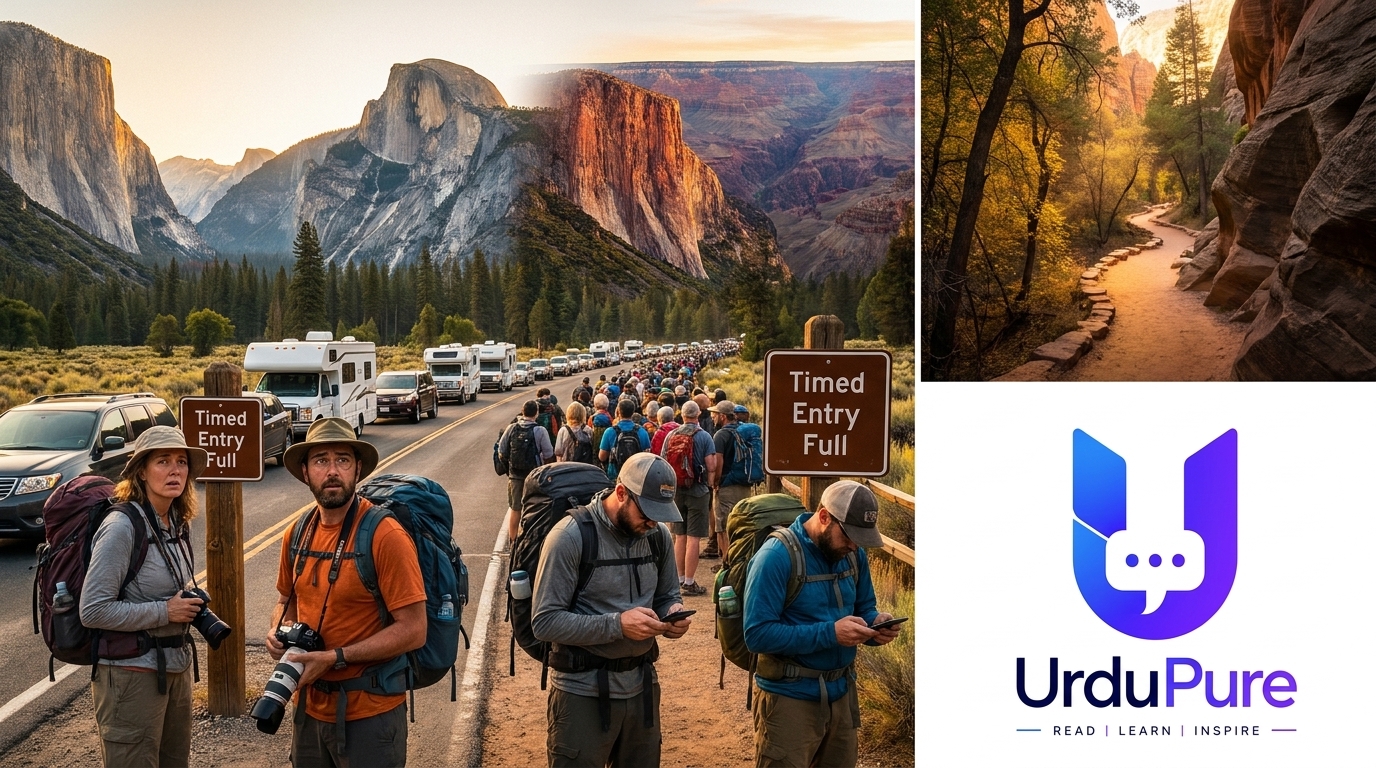
There is a particular kind of disappointment reserved for a trip that cost thousands of dollars and months of planning — and ended at a park entrance booth being told there are no available timed-entry slots today. It is happening to tens of thousands of American families and international visitors every year, and the number is growing.
The National Park Service recorded 325 million visits in 2024 — an all-time record that represented a 14% increase from pre-pandemic 2019 levels. The parks themselves have not grown. The trails have not expanded. The iconic viewpoints that attracted visitors in the first place — Half Dome's summit, The Narrows at Zion, the rim of the Grand Canyon at sunrise — remain exactly as they were, now shared with dramatically more people competing for the same moments of natural transcendence.
The permit and timed-entry systems that now govern access to most major parks were introduced as solutions to this overcrowding. Whether they have solved the problem or simply redistributed it — from the parks themselves to the digital lottery rooms where access is competed for — is debatable. What is not debatable is that navigating them requires knowledge, planning, and strategy that most visitors simply don't have.
This guide gives you all of it.
The Full Permit System Explained: Every Major Park in 2026
The permit landscape varies enormously by park, by season, by specific trail, and by year. The 2026 updates to several major park systems have changed both requirements and strategies. Here is the most current overview of each major system.
Yosemite National Park
Timed Entry Requirement: May through September, a timed entry permit is required to enter Yosemite Valley between 5am and 4pm. These are released in two batches: approximately two months in advance (the primary release) and three days before the visit date (the rolling release for cancellations).
Half Dome Permit: Separate from timed entry, hiking to Half Dome's summit requires a permit for the cables section (Memorial Day through mid-October). Day hike permits are released via lottery in March (for the entire season) and daily via lottery for the following two days.
Current reality: The March lottery receives approximately 150,000 applications for approximately 300 daily permit slots. The three-day rolling lottery is slightly more accessible. Planning a Half Dome summit requires either exceptional lottery luck, a willingness to backpack (which uses the backpacker permit system and is less competitive), or targeting weekdays in late September and early October when demand drops.
Key 2026 update: Yosemite has expanded the no-permit window — arrivals before 5am or after 4pm do not require timed entry, allowing early-rising visitors to enter freely, secure parking, and position for sunrise.
Zion National Park
The Narrows: No permit required for the bottom-up day hike (entering from the Temple of Sinawava). The top-down through-hike and overnight trips require permits via the Zion lottery system.
Angels Landing: Permit required year-round for the chains section. Two lottery windows: seasonal (releasing in the months before the season) and walk-up (a smaller daily allocation released the evening before). Weekend permit demand is approximately 40 times supply; weekday permits are significantly more accessible.
Timed Entry (Shuttle): The Zion Canyon Scenic Drive is closed to private vehicles year-round; the park shuttle system operates from the visitor centre. No shuttle reservation is required, but capacity is finite and early-morning queues form by 7am in peak season.
Key 2026 update: Zion has introduced a new permit category for The Subway (Left Fork) that requires a lottery application 3 months in advance, consolidating what was previously a first-come first-served walk-up system.
Grand Canyon National Park
Rim access: No permit required to visit the South Rim. No permit required for day hiking — including the Bright Angel Trail to the Colorado River and back (though the NPS strongly discourages this as a single-day attempt in summer).
Havasupai Falls: Technically on Havasupai Tribal Land, not NPS jurisdiction, but adjacent to the Grand Canyon and the most sought-after permit in the region. The tribal lottery releases permits online in February for the following calendar year. Demand is extraordinary — the permit server has crashed every year since 2022 from simultaneous access attempts. Setting multiple alarms, having fast internet access, and having multiple family members attempting simultaneously is the standard strategy.
Backcountry (Rim-to-Rim): Backcountry permits for overnight camping at Phantom Ranch and backcountry campsites are among the most competitive in the NPS system. Apply by mail or online lottery 4 months before the desired month of travel.
Key 2026 update: The Grand Canyon has introduced timed-entry parking reservations for Mather Point and Desert View during peak season (May–September), accessible via Recreation.gov.
Glacier National Park
Going-to-the-Sun Road vehicle reservation: During peak season (late May through mid-September), a vehicle reservation is required to drive the Going-to-the-Sun Road between 6am and 3pm. Released via Recreation.gov in two tranches: 60 days in advance and 2 days in advance.
2026 context: Glacier is one of the parks where the reservation system has most improved the actual visitor experience — the road, previously paralysed by traffic, now flows. Getting a reservation requires acting on both release dates.
Rocky Mountain National Park
Timed Entry Permit: Required May through October for the Bear Lake Road corridor (the most popular hiking area) between 5am and 6pm. The park entrance itself requires a separate timed entry permit during peak season.
Strategy note: Rocky Mountain has the most complex permit system of any national park — requiring separate reservations for park entry, the Bear Lake corridor, and specific trailhead parking. The Recreation.gov app is essential.
The Best Lottery-Free Alternatives Near Every Major Park
The most immediately actionable insight in this guide: within 30–90 minutes of every massively overcrowded national park is typically a state park, national forest, or less-famous national park unit offering comparable landscapes without the permit machinery.
Near Yosemite
Stanislaus National Forest: Surrounds Yosemite on multiple sides and offers virtually identical Sierra Nevada granite, waterfalls, and high-elevation wilderness with zero permit requirements for most day use and a straightforward first-come-first-served backcountry permit for overnight trips. The Carson-Iceberg and Emigrant Wilderness areas within Stanislaus are genuinely spectacular and nearly empty by comparison.
Hetch Hetchy (Yosemite's own valley): Inside Yosemite but excluded from the timed entry zone. The reservoir valley that controversially replaced a second Yosemite Valley in the early 20th century offers free access (with Yosemite entry fee) to dramatic cliffs, waterfalls, and long reservoir rim trails — typically with far fewer visitors than Yosemite Valley.
Near Zion
Grand Staircase-Escalante National Monument: 1.9 million acres of canyon, mesa, and geological spectacle with essentially no permit requirements and infrastructure sparse enough that you can disappear into it entirely. The slot canyons at Spooky Gulch and Peekaboo rival anything in Zion; almost nobody is there.
Red Cliffs National Conservation Area: 20 minutes from Zion's entrance. The same Navajo sandstone geology, dramatically fewer visitors, and the most accessible slot canyon experience in the region at Moe's Valley.
Near the Grand Canyon
Havasu Canyon (already covered in permits section above — if unavailable): Coyote Buttes in the Paria Canyon-Vermilion Cliffs Wilderness. The Wave, the most famous formation, requires its own competitive permit — but lesser-visited formations including White Pocket and the Coyote Buttes South area require only a day-use permit that is dramatically more obtainable.
Sycamore Canyon Wilderness (Kaibab National Forest): Adjacent to the Grand Canyon's South Rim, this wilderness area provides canyon rim walking and descent trails that feel genuinely Grand Canyon-adjacent without any permit requirement.
Near Glacier
Bob Marshall Wilderness: One of the largest wilderness areas in the lower 48 states, immediately adjacent to Glacier. Requires a wilderness permit for overnight use, but day access is unrestricted and the landscape — the Chinese Wall escarpment, the South Fork Sun River corridor — is among the most dramatic in North America.
Shoulder Season Strategy: When to Visit Each Park Without a Permit
The permit systems are season-specific. Most major park permit requirements apply May through September, with varying shoulder periods. The windows immediately before and after peak season offer the best compromise between weather, accessibility, and reduced permit requirements.
The Shoulder Season Calendar
Yosemite: Late September through October — Half Dome cables remain up through mid-October; fall colour begins; no timed entry requirement; temperatures ideal. This is the single best compromise window for Yosemite access without lottery luck.
Zion: November through March for The Narrows bottom-up (cold water, neoprene required, but no Angels Landing permit needed). October for Angels Landing with dramatically reduced weekend demand. Spring (March–April) before peak season is Zion's most beautiful and most accessible period.
Grand Canyon: October and November for rim hiking and the Bright Angel Trail. The South Rim is accessible year-round with no timed entry in winter; the North Rim closes mid-October through mid-May due to weather.
Glacier: Late September after the Going-to-the-Sun Road vehicle reservation expires (vehicle reservations end mid-September). Early June before the peak season begins, when some of the road may still be closed to vehicles but is open to cyclists and hikers providing an extraordinary crowd-free experience.
Great Smoky Mountains: The most-visited national park in the US has no timed entry or permit requirements — but Clingmans Dome parking and the Alum Cave trail parking fill by 8am on summer weekends. October's fall colour brings its own crowds; mid-week visits in October and any visit in January–March offer the emptiest experience.
10 Underrated National Parks That Match the Big 5 Without the Crowds
1. North Cascades National Park, Washington
Often called "the American Alps," North Cascades contains more glaciers than any park outside Alaska, a road (the North Cascades Highway) that provides one of the most dramatic drives in the US, and hiking trails that range from accessible day hikes to serious technical mountaineering approaches. Despite this, visitation is a fraction of Olympic or Rainier. No timed entry. No permit for most day hikes.
2. Great Basin National Park, Nevada
The only national park where you can walk through an ancient bristlecone pine forest (the world's oldest living trees), explore a marble cave system, and summit a 13,063-foot peak — often on the same day. Average annual visitors: approximately 135,000. Yosemite sees that many in a week. Zero permit requirements.
3. Isle Royale National Park, Michigan
An island wilderness in Lake Superior accessible only by ferry or floatplane, Isle Royale is the least-visited national park in the lower 48 states — and arguably the most rewarding for serious backcountry hikers. Wolf and moose populations visible in ways impossible in more visited parks. Backcountry camping permits via Recreation.gov are available with essentially no lottery pressure.
4. Guadalupe Mountains National Park, Texas
Contains the highest point in Texas, the finest fossil reef complex in the world (the ancient Permian Reef), and autumn colour in McKittrick Canyon that rivals anything in the Northeast — in a park that receives approximately 200,000 visitors annually. No timed entry. Limited permit requirements.
5. Congaree National Park, South Carolina
The largest intact expanse of old-growth bottomland hardwood forest in the southeastern United States. Ancient trees, synchronized firefly events (May–June — timed-entry required for the firefly event specifically, but not the park generally), and a boardwalk system through floodplain wilderness unlike anywhere else in the US.
6. Black Canyon of the Gunnison, Colorado
A canyon deeper and more dramatic than many Grand Canyon viewpoints — with the added spectacle of Precambrian rock so dark it absorbs light. The South Rim drive provides viewpoint access without hiking; the inner canyon requires a permit but receives a fraction of Grand Canyon permit demand. Visitation: approximately 450,000 annually.
7. Saguaro National Park, Arizona
Two districts surrounding Tucson that together contain the world's most impressive stands of saguaro cactus — the defining icon of the American Southwest. Spring wildflower blooms, accessible hiking, and the extraordinary sight of cactus forests covering mountain slopes. No timed entry. Free and accessible.
8. Capitol Reef National Park, Utah
Positioned between Zion and Arches on Utah's Scenic Byway 12, Capitol Reef is the Utah park that most visitors drive past. The Waterpocket Fold — a 100-mile warp in the Earth's crust — creates canyon, mesa, and arch scenery that is genuinely comparable to any other Utah park. An orchid in the desert: the historic Fruita district allows picking fresh fruit from pioneer-era orchards. No permit requirements for most use.
9. Lassen Volcanic National Park, California
The only place in the lower 48 where all four types of volcanic terrain — plug dome, shield, cinder cone, and stratovolcano — exist in a single park. Boiling mud pots, steaming fumaroles, and pristine alpine lakes. Receives approximately 500,000 visitors annually — roughly what Yosemite receives in a busy week.
10. Apostle Islands National Lakeshore, Wisconsin
Twenty-one islands on Lake Superior featuring sea caves, lighthouses, winter ice caves (accessible only when Lake Superior freezes), and a maritime wilderness that feels more Scandinavian than Midwestern. In winter ice cave years — which have become less reliable due to climate change but still occur — the ice formations draw visitors who discover a park they had no idea existed.
The Apps and Alert Services That Give You a Real Shot at Last-Minute Slots
The permit systems are not closed boxes. Cancellations happen daily — people's plans change, weather intervenes, family situations shift. The difference between a traveller who gets a slot and one who doesn't is often simply having the tools that surface these cancellations the moment they appear.
Recreation.gov (Essential — Free)
All NPS permit lotteries and reservations are managed through Recreation.gov. The mobile app provides real-time notifications for lottery results, and the website shows cancellation availability updated in real time. Set up saved searches for your target parks and check the "availability" calendar daily in the weeks before your intended visit — cancellations appear and disappear within minutes.
Campnab ($20–$30 one-time)
A third-party service that monitors Recreation.gov for cancellations at specific campgrounds and permit systems and sends SMS or email alerts when slots appear. Significantly more effective than manually checking — the system monitors continuously and alerts you within seconds of availability appearing. Has a documented success rate for Yosemite Half Dome, Zion Angels Landing, and Grand Canyon backcountry permits.
Arrive (Free app)
Similar functionality to Campnab, monitoring multiple permit and reservation systems for cancellations. The free tier covers basic monitoring; the paid tier adds priority alerts and multi-location monitoring. Particularly effective for campground cancellations across the national park system.
The NPS App (Free)
The National Park Service's official app now integrates permit information, timed entry availability, and real-time park condition updates in a single interface. The park-specific pages show real-time timed entry availability — useful for same-day decisions about which parks have open slots.
The Three-Day Rolling Window Strategy
For Yosemite timed entry, Half Dome day permits, and several other systems, reservations become available exactly three or five days before the target date. Setting calendar reminders to check Recreation.gov at the exact release time — typically 7am Pacific — provides the best chance at the rolling release. Being at a computer at that exact moment, with the date pre-selected and payment information pre-loaded, reduces the transaction time to seconds in a system where available slots disappear in minutes.
"The parks belong to all Americans — but navigating access to them has become a skill that disproportionately rewards those with the time, internet access, and planning capacity to game a complex system. The alternative parks don't have this problem. They just have fewer people who know about them." — National Parks Conservation Association, 2025 Annual Report
national park permits 2026, national park alternatives US, overcrowded national parks, Yosemite Half Dome permit, Zion Angels Landing permit, Grand Canyon Havasupai permit, Glacier timed entry, underrated national parks US, Recreation.gov tips, national park permit cancellation alerts



Discussion
Comments
Approved comments are published after moderation to keep discussion useful and spam-free.
No comments yet. Start the discussion below.