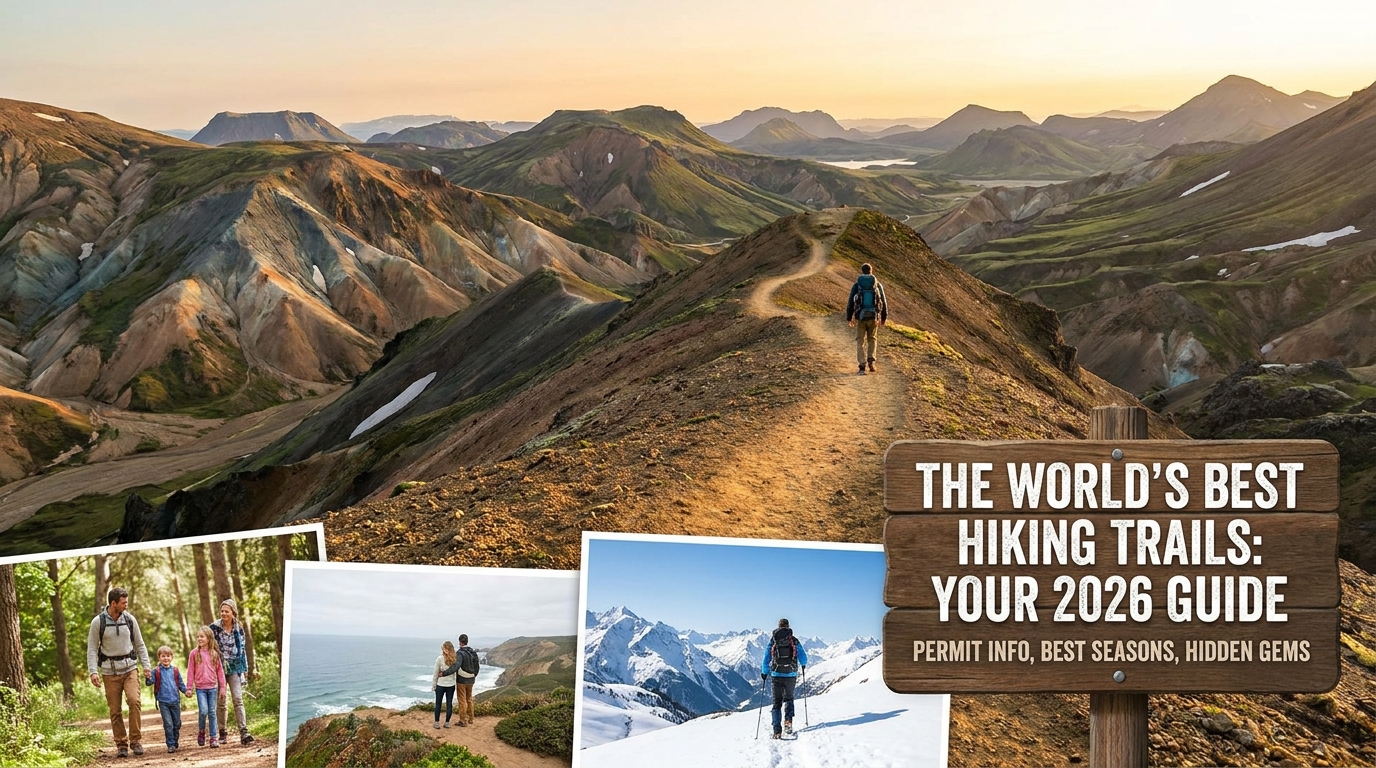
The 15 Best Hiking Trails in America for 2026: Ranked by Scenery and Difficulty
From beginner-friendly walks to backcountry epics — the trails worth building your 2026 outdoor calendar around, with permit info, best seasons, and the hidden gems near each one.
America's Trail Network: The World's Best
The United States contains the most extraordinary diversity of hiking terrain on earth — from Arctic tundra in Alaska to subtropical jungle in Hawaii, from desert slot canyons in Utah to temperate rainforest in Washington, from the ancient rounded ridges of the Appalachians to the jagged granite cathedrals of the Sierra Nevada. The trail network connecting this landscape spans approximately 200,000 miles of maintained path, managed by the National Park Service, the Forest Service, the Bureau of Land Management, and state park systems.
This guide focuses on the 15 trails that offer the most rewarding experiences relative to effort and logistics in 2026 — not necessarily the most famous (the Appalachian Trail and Pacific Crest Trail are obvious but require months), but the ones that deliver genuinely outstanding experiences within realistic timeframes.
1. The Narrows — Zion National Park, Utah
Difficulty: Moderate | Length: Up to 16 miles / 26 km one-way (most do 4–8 miles) | Permit: Required for overnight; day hike permit required March–November
The Narrows is the defining slot canyon experience in America — wading upstream through the Virgin River as 2,000-foot sandstone walls close to within 20 feet on either side. The light that penetrates the canyon is unlike anything in photography or experience, shifting from shadow to amber to bright white as the walls twist and the sun angle changes. Unlike most hikes, The Narrows is walked primarily in water — waterproof boots or canyoneering shoes, a walking stick, and neoprene socks are the equipment list, available for rental at the park entrance.
The day hike version — walking upstream from the Temple of Sinawava for 3–4 miles before returning — delivers the most spectacular scenery without the permit complexity of the full through-hike. Morning starts avoid the worst crowds and catch the best light.
Hidden gem nearby: Subway, in Zion's Left Fork of North Creek, is a more technical version of the slot canyon experience requiring a permit but seeing a fraction of the crowds. Apply for the lottery permit well in advance.
2. Half Dome — Yosemite National Park, California
Difficulty: Strenuous | Length: 14–16 miles / 22–26 km round trip | Permit: Lottery system, highly competitive (cable season May–October)
Half Dome is the most iconic day hike in America — and the most dramatic. The final 400 feet to the summit requires climbing fixed steel cables at a 45-degree angle, with wooden planks for footing, above a sheer 4,800-foot drop to Yosemite Valley floor. The view from the summit — the full sweep of Yosemite Valley, El Capitan, Yosemite Falls, the High Sierra stretching to the horizon — is unmatched.
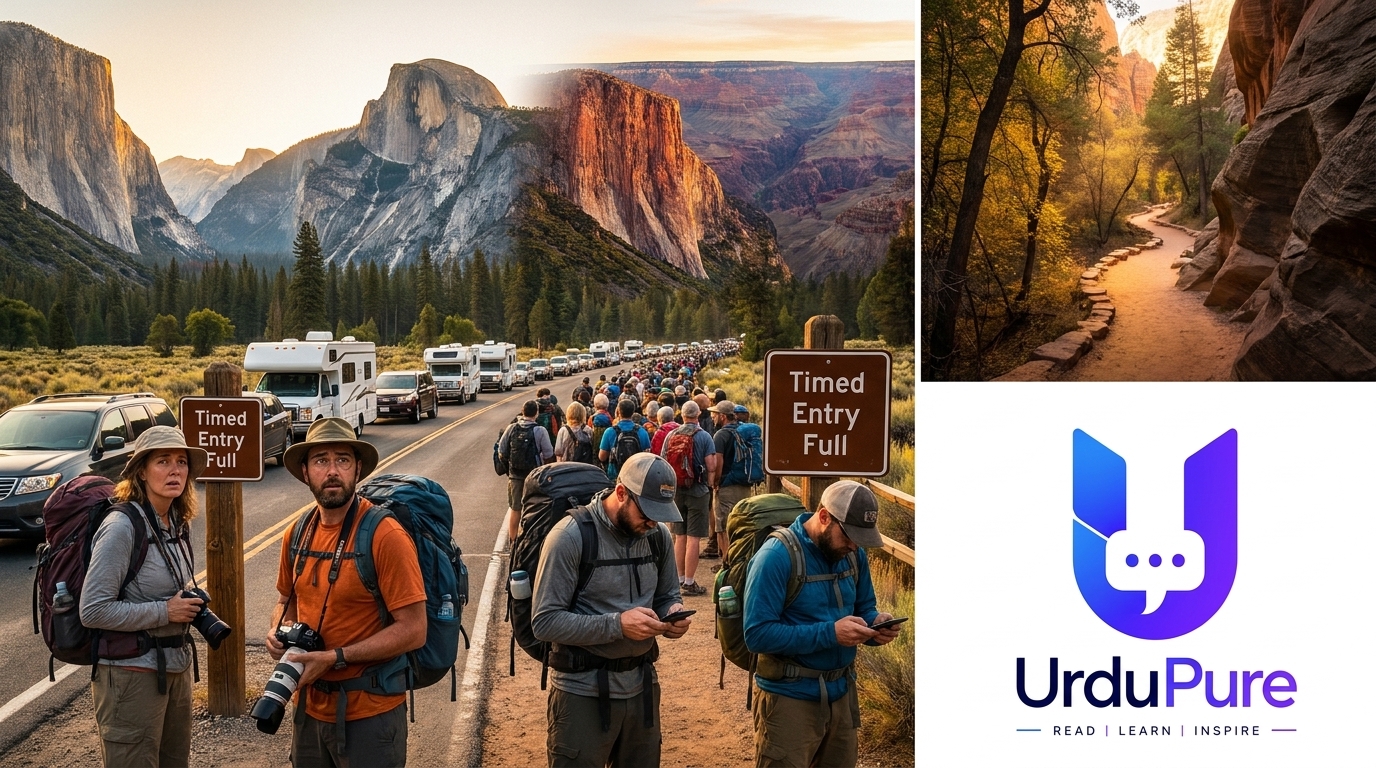
The permit lottery is the primary challenge. Pre-season lottery applications (in March for the following season) give the best odds. Daily lottery slots are also available starting two days before intended hike date. The cables are only installed during the main season; off-season attempts without cables have resulted in fatalities.
Physical requirement: This is a genuinely demanding hike — approximately 4,800 feet of elevation gain over the full round trip. Standard fitness is not sufficient; specific preparation involving loaded hiking over elevation gain is recommended.
3. Havasu Falls — Havasupai Tribal Land, Arizona
Difficulty: Moderate | Length: 10 miles / 16 km each way to campground | Permit: Extremely competitive — lottery system managed by the Havasupai Tribe
The turquoise-blue waterfall cascading into travertine pools that Havasu Falls produces is genuinely one of the most visually extraordinary places in the American Southwest — a landscape that looks like a Caribbean island has been deposited in the Arizona desert. The colour of the water (produced by calcium carbonate in the groundwater) is real, not a photographic enhancement, and it is as spectacular in person as in photographs.
The permit system is controlled by the Havasupai Tribe — not the National Park Service — and requires applying through the tribe's online system when reservations open (typically in February for the following year). Demand dramatically exceeds supply; alternative strategies include checking for cancellations in the weeks before desired visit dates.
Practical note: The 10-mile trail to the campground is moderately graded but exposed — summer temperatures can exceed 100°F / 38°C in the canyon. Spring and autumn visits are significantly more comfortable.
4. Angels Landing — Zion National Park, Utah
Difficulty: Strenuous/Exposed | Length: 5.4 miles / 8.7 km round trip | Permit: Required year-round (lottery system)
The most famous viewpoint hike in America — and justifiably so. The final half-mile to Angels Landing's summit involves ascending chains bolted into a narrow sandstone spine with 1,500-foot drops on either side. The exposure is genuine and not suitable for those with vertigo or acrophobia. For those comfortable with it, the summit view over Zion Canyon from a perch that feels genuinely precarious is extraordinary.
The Zion Canyon shuttle makes the trailhead easily accessible from the park entrance. Morning permits produce smaller crowds and better light on the canyon walls.
5. Enchantments — Okanogan-Wenatchee National Forest, Washington
Difficulty: Very Strenuous | Length: 18.5 miles / 30 km through-hike | Permit: Extremely competitive lottery — one of the hardest permits to obtain in the US
The Enchantments through-hike in the Alpine Lakes Wilderness is frequently cited by serious hikers as the most beautiful day hike (or overnight backpack) in America. The route traverses a series of pristine alpine lakes — the Core Enchantments — beneath the jagged granite peaks of the Stuart Range, through terrain populated with mountain goats and larch trees that turn gold in late September and early October.
The permit lottery is Washington State's most competitive. Alternative access: entering from the Colchuck Lake or Snow Lakes trailheads (which require separate, more accessible permits) gives access to portions of the Enchantments without the through-hike permit, though the full traverse is the superlative experience.
6. Bright Angel Trail — Grand Canyon National Park, Arizona
Difficulty: Moderate to strenuous (depending on depth descended) | Length: Up to 18 miles / 29 km round trip to Colorado River | Permit: Day hiking requires no permit; overnight requires backcountry permit
The Grand Canyon's primary maintained trail is the most accessible introduction to inner canyon hiking in the US — and the experience of descending from the South Rim through geological time (each layer of rock represents millions of years) to the Colorado River 4,380 feet below is genuinely extraordinary. The National Park Service warns against attempting the full round trip to the river and back in a single day in summer — the elevation change, heat, and distance make it a genuine endurance challenge even for fit hikers.
The most rewarding approach: descend to Havasupai Gardens (formerly Indian Garden), 3 miles from the rim with water available, and return — a manageable 6-mile round trip that delivers full canyon immersion without the challenge of the full descent.
7. Kalalau Trail — Nā Pali Coast, Kauai, Hawaii
Difficulty: Very Strenuous | Length: 11 miles / 18 km one-way to Kalalau Beach | Permit: Required for any hiking beyond Hanakāpī'ai (2 miles); Kalalau overnight permit extremely competitive
The Nā Pali Coast trail traverses the most dramatic coastal scenery in the United States — 4,000-foot fluted green ridges dropping directly to the Pacific, accessible only on foot or by sea. The full 11 miles to Kalalau Beach involves significant exposure, stream crossings that can be dangerous after rain, and sections of trail that rank among the most vertiginous in American hiking. The destination — a remote beach with a waterfall camping area accessible by no road — rewards the effort substantially.
The first 2 miles to Hanakāpī'ai Beach require no permit and give a taste of the Nā Pali scenery accessible to all visitors. The full Kalalau trail requires planning months in advance for overnight permits.
8. Rim-to-Rim — Grand Canyon National Park, Arizona
Difficulty: Very Strenuous | Length: 21–24 miles / 34–39 km (North to South rim) | Permit: Backcountry permit required; highly competitive
The definitive Grand Canyon experience — walking from one rim to the other through the full depth of the canyon. Most hikers do this over 3–5 days, camping at Phantom Ranch or backcountry campsites along the Bright Angel or North Kaibab trails. The permit system is managed by lottery, with applications recommended 4–6 months in advance for popular dates.
9. Delicate Arch — Arches National Park, Utah
Difficulty: Moderate | Length: 3 miles / 4.8 km round trip | Permit: Timed entry permit for the park required April–October
The most famous natural arch in the world, reached by a trail that traverses slickrock sandstone to emerge at a natural rock amphitheatre with the arch framing the La Sal Mountains beyond. Sunset visits, when the arch glows red-gold, are the most photographed but also the most crowded. Sunrise visits offer similar light quality with dramatically smaller crowds.
10–15: The Rest of the Essential List
10. Observation Point, Zion National Park, Utah — The best view of Zion Canyon, looking down on Angels Landing, with dramatically fewer crowds than the landing itself. 8 miles round trip, strenuous.
11. Emerald Lake Trail, Rocky Mountain National Park, Colorado — The most accessible alpine scenery in the Rocky Mountains. 3.6 miles round trip, easy to moderate. Timed entry permit for the park required.
12. Highline Trail, Glacier National Park, Montana — Traverses the Continental Divide with views that rank among the most spectacular in the Rockies. 11.8 miles point-to-point, moderate. Park entry timed entry required.
13. The Presidential Traverse, White Mountains, New Hampshire — The defining challenge hike of the Northeast, summiting multiple 4,000-foot peaks including Mount Washington. 20+ miles, very strenuous, subject to extreme weather year-round.
14. Mount Rainier Skyline Trail, Washington — Circumnavigates the iconic volcano through wildflower meadows at subalpine elevation. 5.5 miles loop, moderate.
15. Lost Coast Trail, King Range National Conservation Area, California — California's most remote coastal hike, traversing 25 miles of roadless coastline accessible only on foot. Permit required May–September.
Essential Preparation for All Hikers
The Ten Essentials: Navigation (map and compass/GPS), sun protection, insulation (extra layers), illumination (headlamp), first-aid supplies, fire starting, repair tools, nutrition, hydration, and emergency shelter. These are non-negotiable on any trail beyond an easy day hike.
Leave No Trace: Pack out all waste, stay on marked trails, camp in designated sites, and leave natural features undisturbed. The increasing popularity of American trails has made LNT practices more important, not less.
Check conditions before you go: Trail conditions, weather, permit requirements, and closures can change rapidly. The National Park Service website and the AllTrails app provide current information for all trails on this list.
best hiking trails America 2026, national park hikes US, best day hikes America, Zion hiking guide, Yosemite Half Dome permit, Grand Canyon hike guide, best trails western US, hiking permits US national parks, scenic hikes America, bucket list hikes USA



Discussion
Comments
Approved comments are published after moderation to keep discussion useful and spam-free.
No comments yet. Start the discussion below.